>
China's garden provincial capital on the Yong River: banyan-lined avenues, the karst-fringed Qingxiu Hill, a night market that does not sleep, the sour-hot laoyou noodle bowl, and the jump-off point for the Detian transnational waterfall and the Friendship Pass into Vietnam.
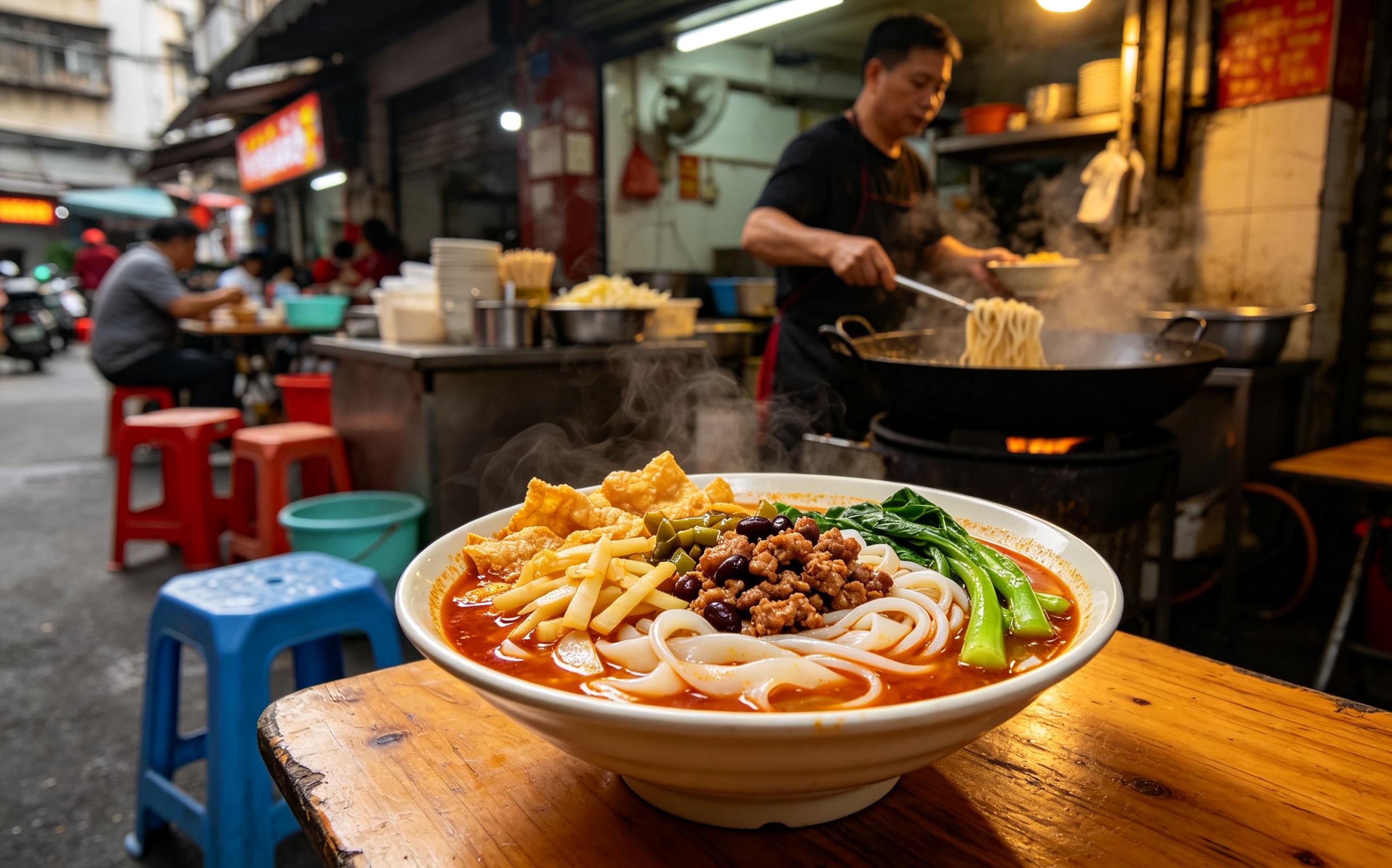
Any laoyou fen — the sour-hot bowl of pickled bamboo shoots, chili and fermented beans that Nanning people eat for breakfast. Shiji on Qixing Road or Fuji in the old city: about RMB 5, and you will sweat happily through it.
Nanning calls itself the Green City for a reason — Nanhu Park, People's Park and Liangfengjiang Forest Park are free, shaded and full of locals doing tai chi, dancing and fishing. Pick one on a hot afternoon.
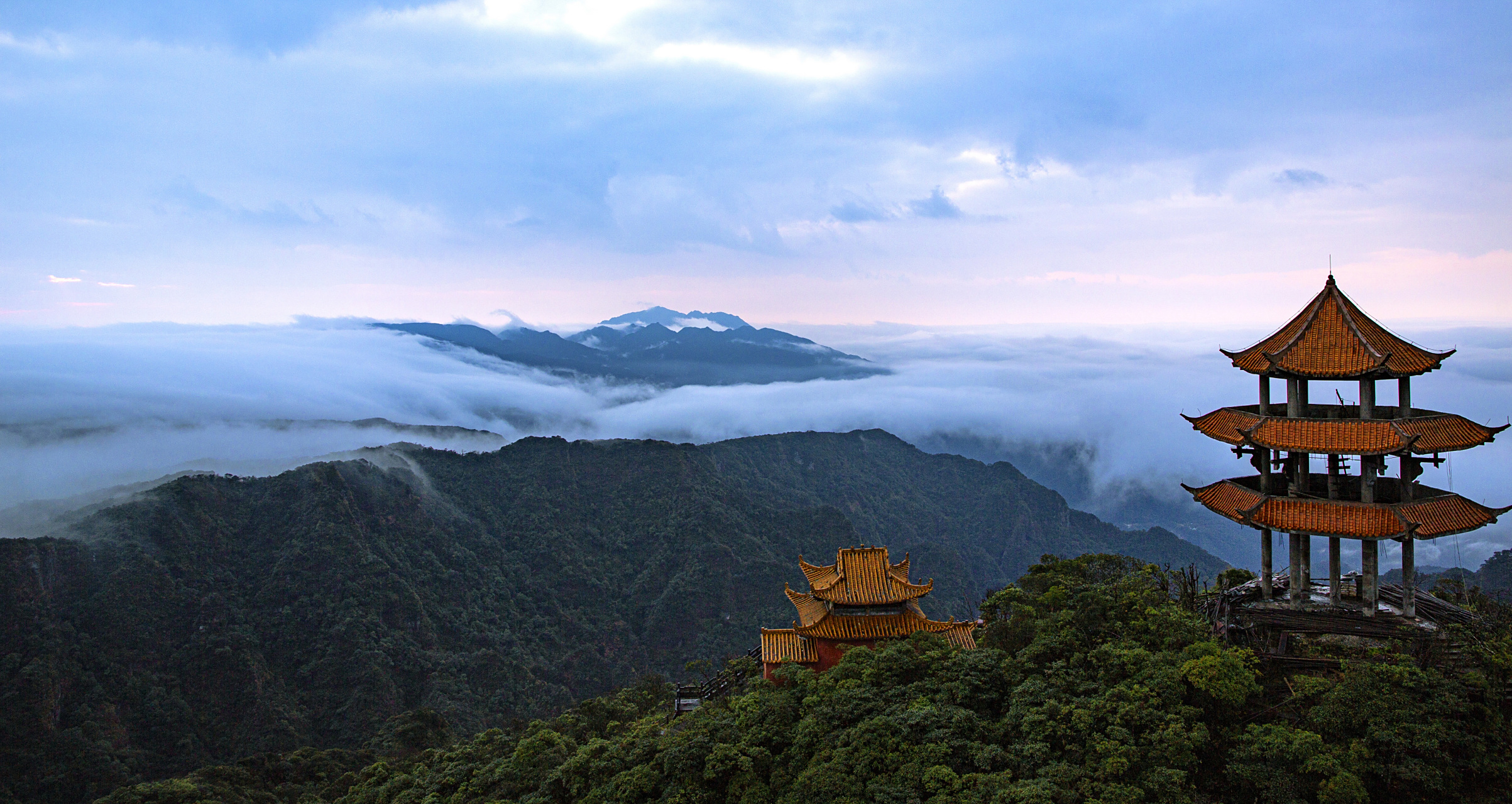
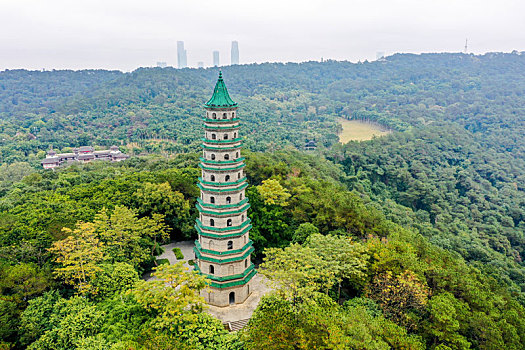
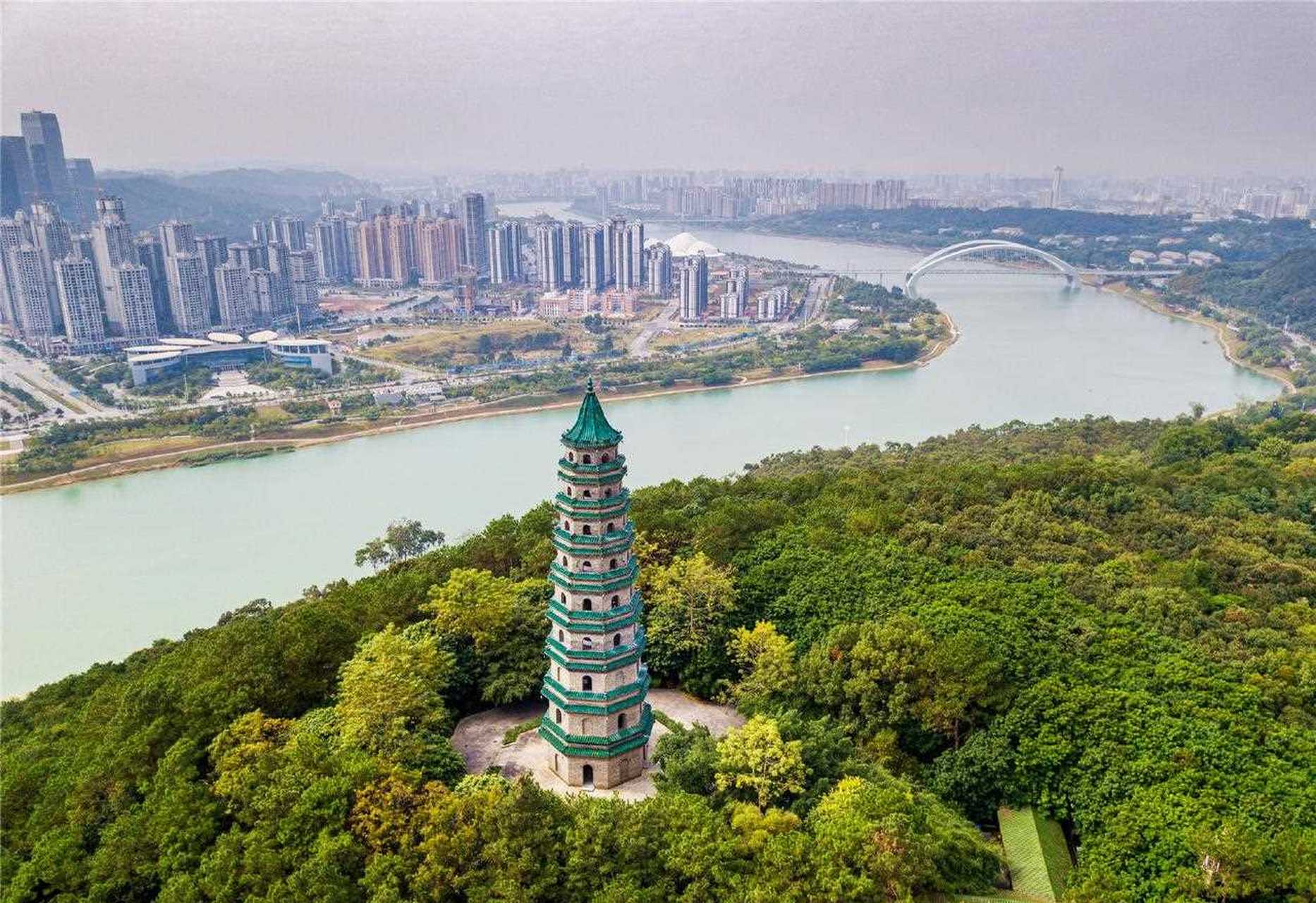
Qingxiu is in the city and crowned by the Ming-style Longxiang Pagoda; Daming Mountain two hours north is the cool-room of Guangxi, 93% forest and 130,000 negative ions per cubic centimetre.
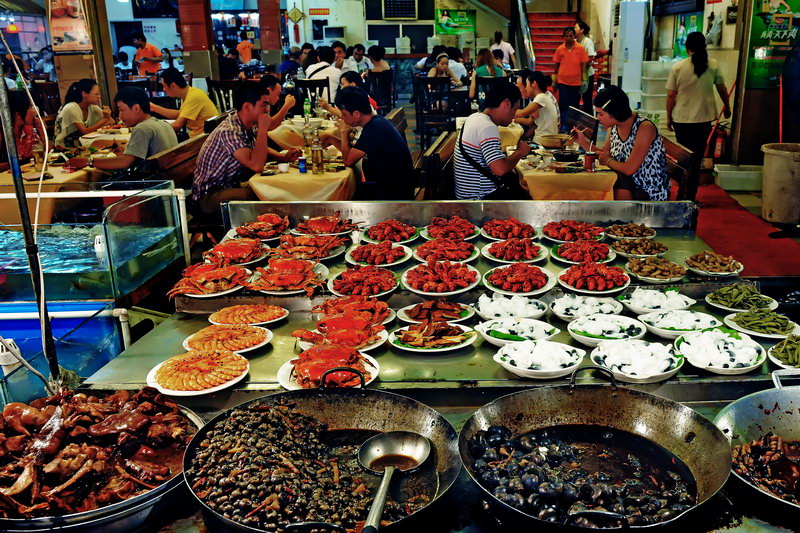
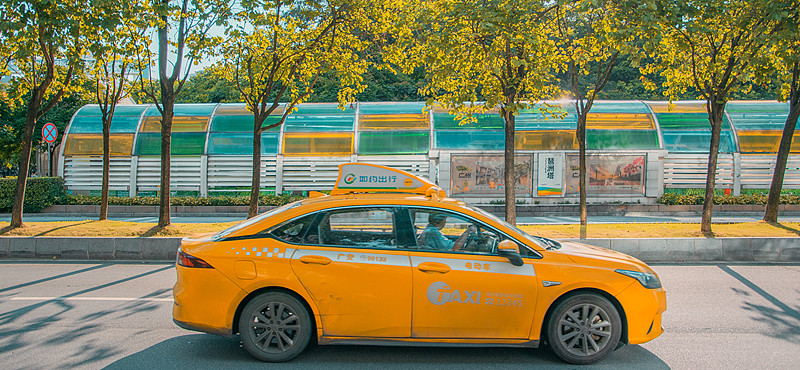
Nanning's cab drivers are famously proud of their city — they will tell you which night market the locals actually use (not Zhongshan Road these days), where to eat river seafood across the Yong River, and the new CBD at Wuxiang.
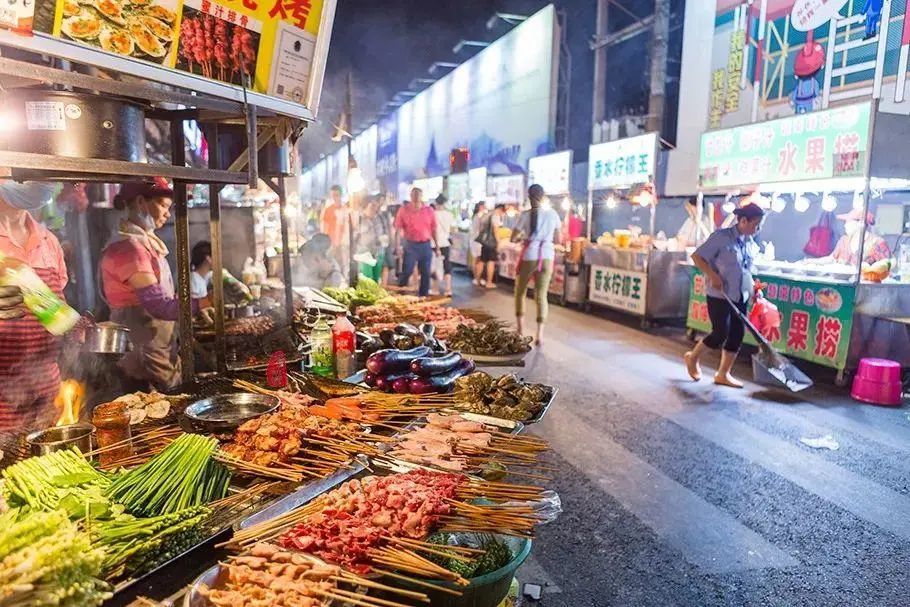
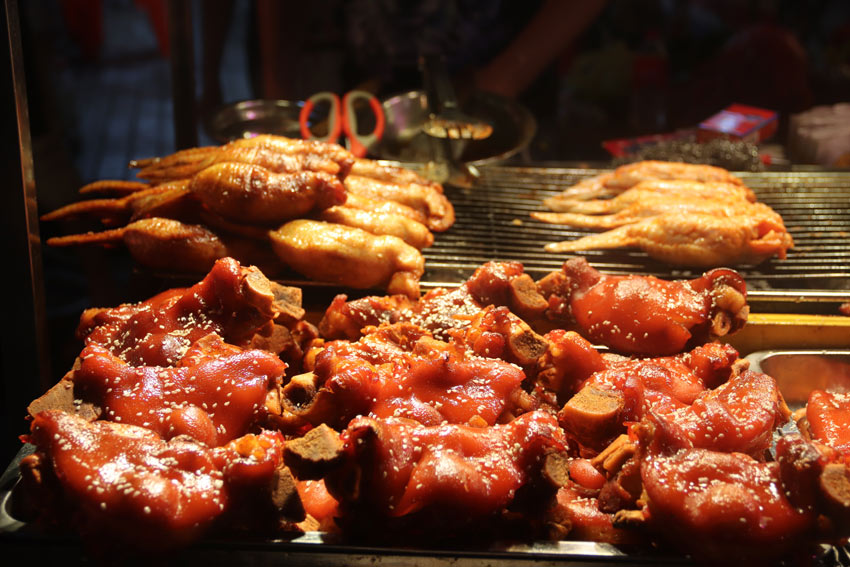
Whether or not you are hungry, walk Zhongshan Road at 9 pm — grilled pig trotters, snail pots, sour pickled fruit, stir-fried river snails and plastic stools packed four deep. This is the night the Green City comes alive.
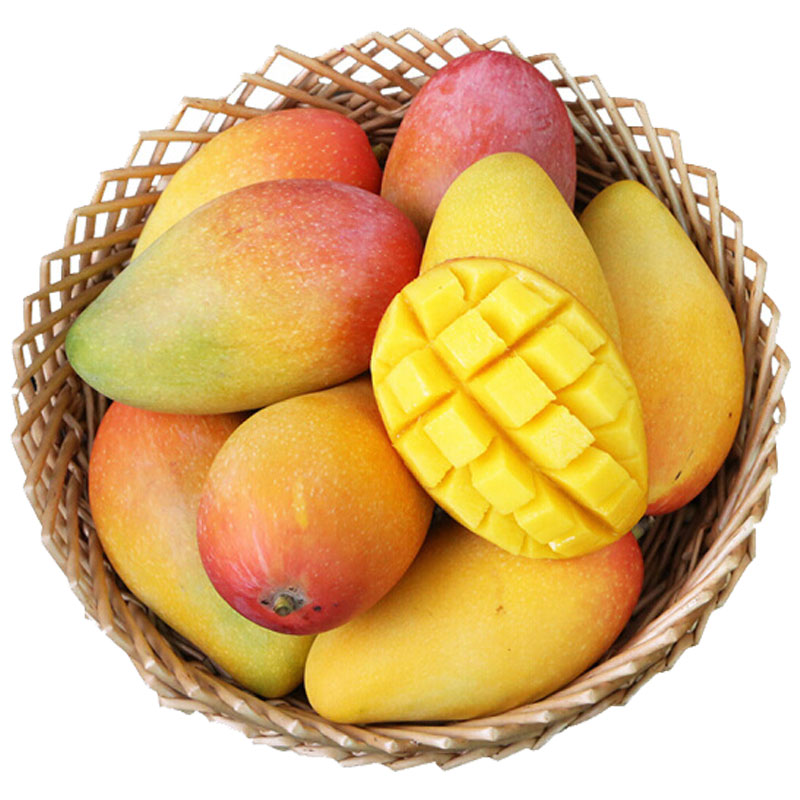
Mangoes, durian, litchis, pineapples and longan by the bag on every street — Guangxi is China's fruit orchard, and in Nanning you eat it at the source. Plus a packet of dried longan to take home.
The whole city is a natural oxygen bar — banyans, flame trees and bamboos line every avenue, and parks such as Nanhu, People's and Qingxiu are free to walk. Locals say grass never withers in winter and flowers bloom outside spring.
Nanning is the seat of the Guangxi Zhuang Autonomous Region and home to 12 native ethnic groups. The Museum of Nationalities, the bronze drums, the silk-ball throws and the San Yue San song fairs are the living culture of the Zhuang.
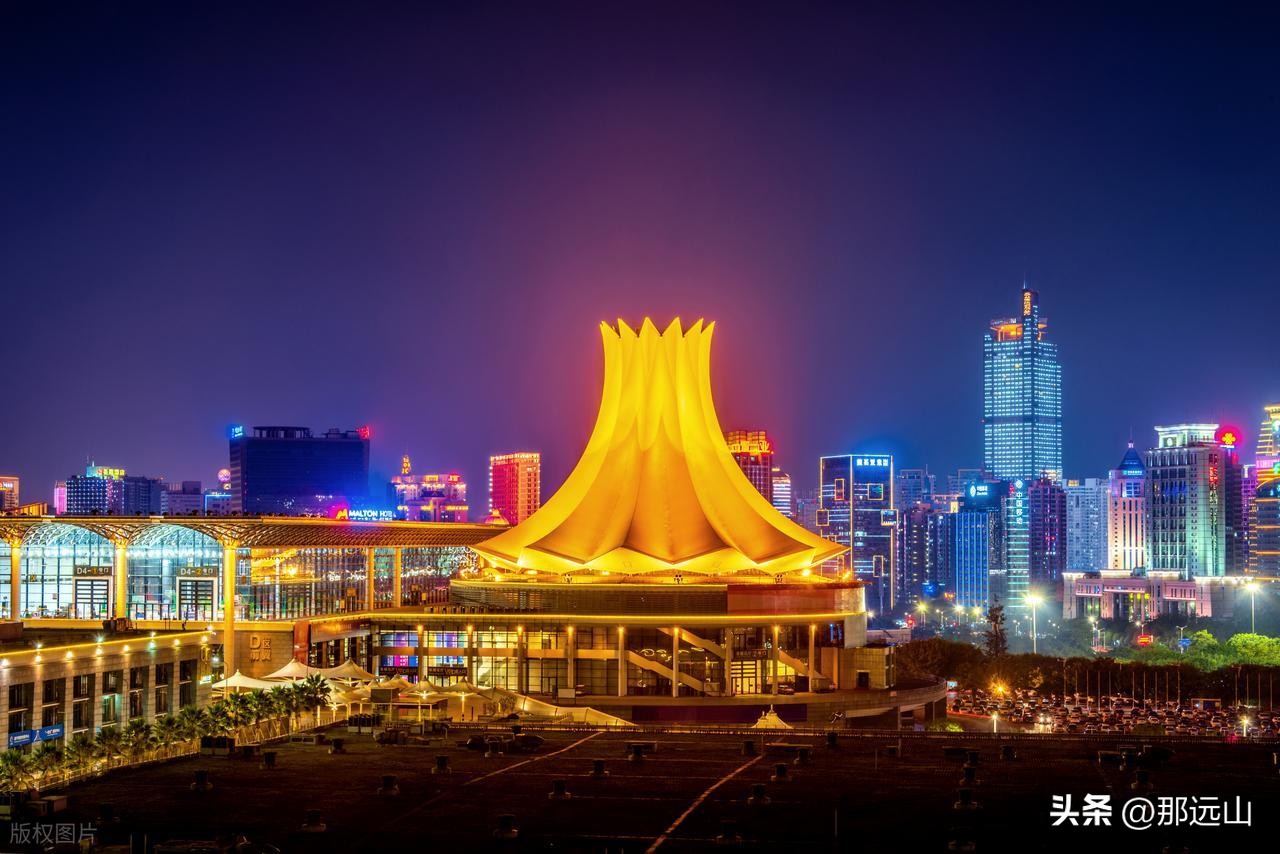
Every September the China-ASEAN Expo takes over the jasmine-flower-shaped International Convention and Exhibition Center — for one week you can shop Lao coffee, Thai silk and Vietnamese wooden puppets without a passport.
Zhongshan Road is not a pretty food street — it is a loud, fragrant, plastic-stool warren of grilled pig trotters, snail pots, sour pickled fruit and laoyou noodles. Spend an evening eating your way down it.
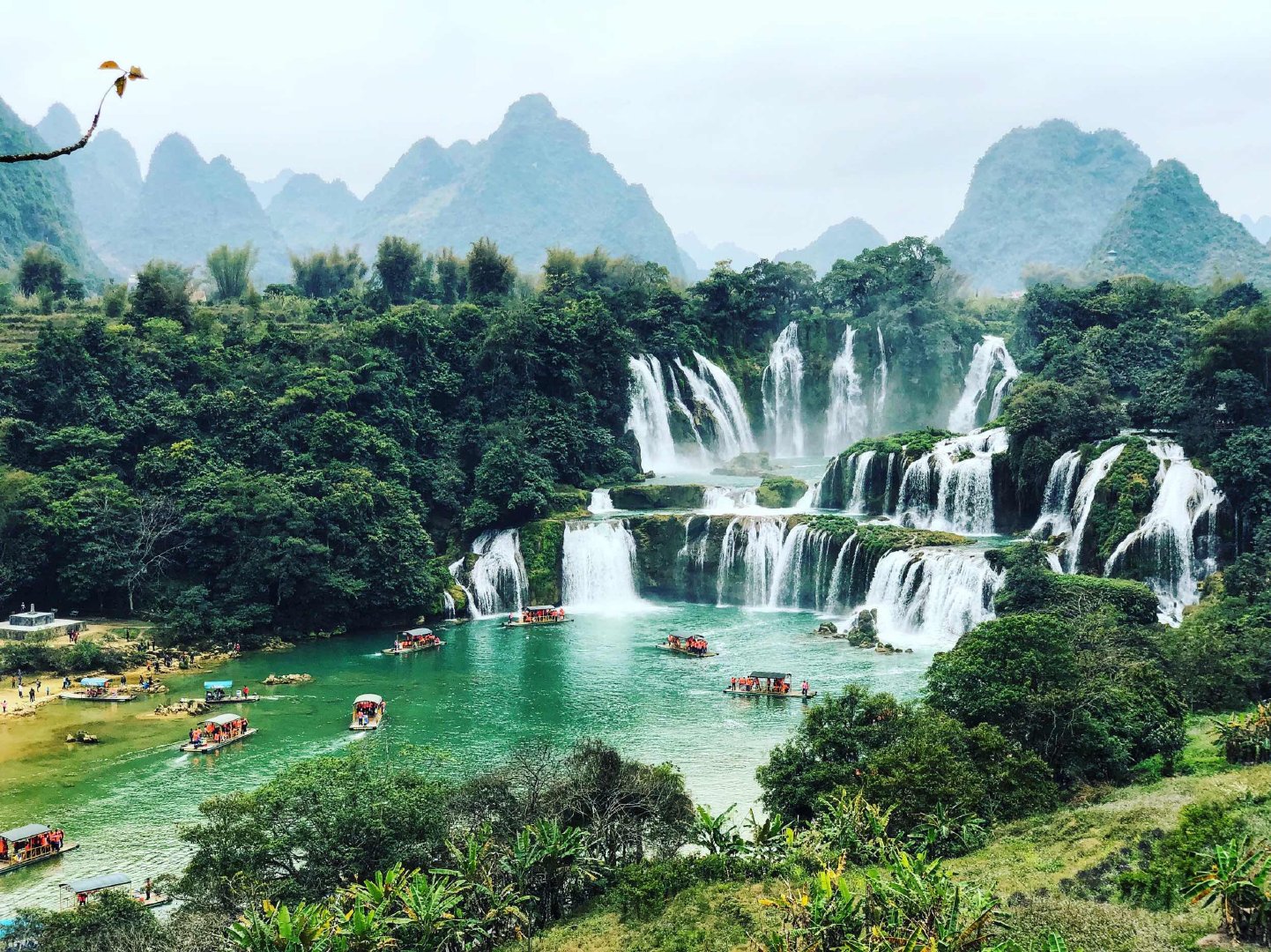
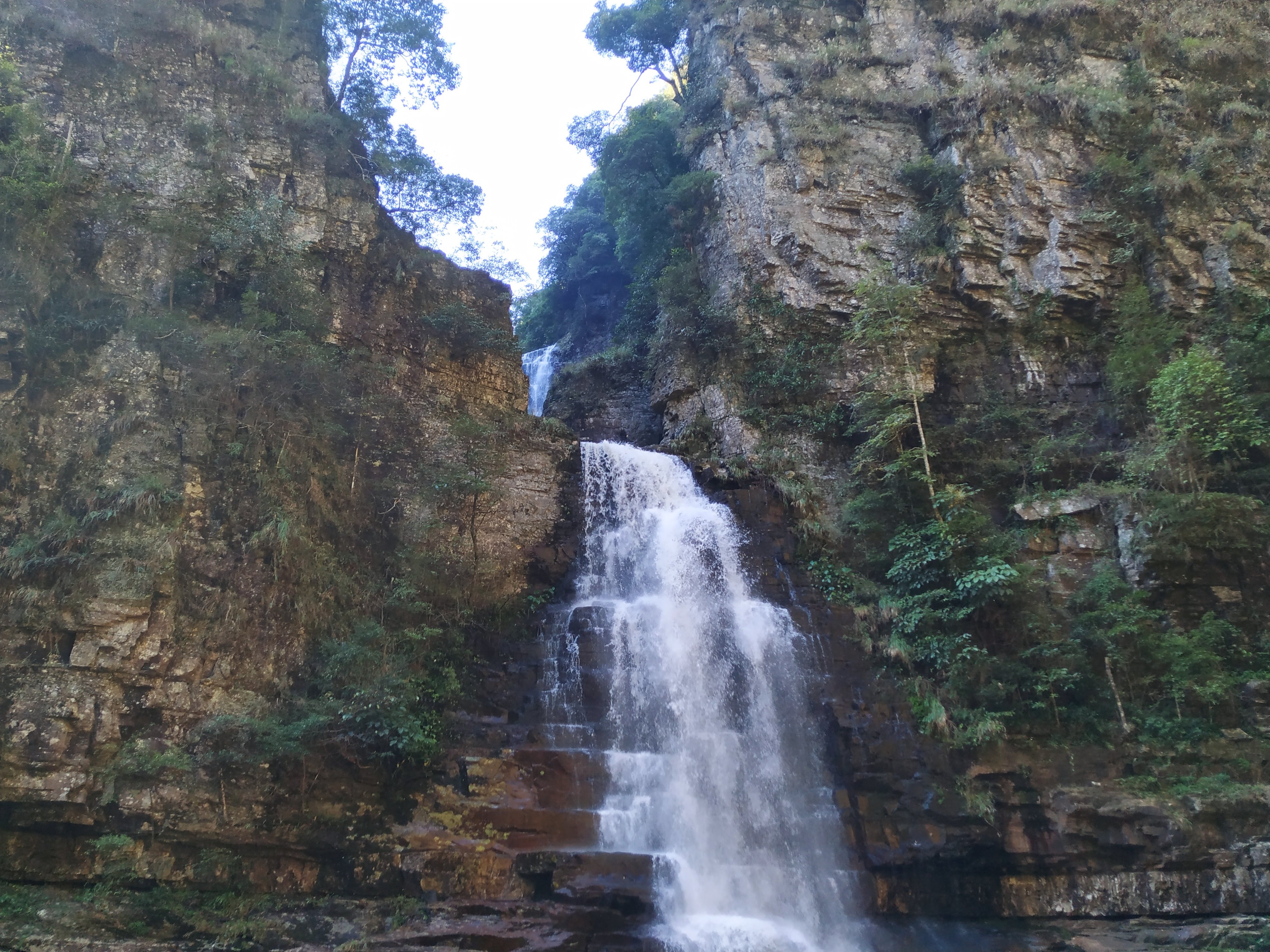
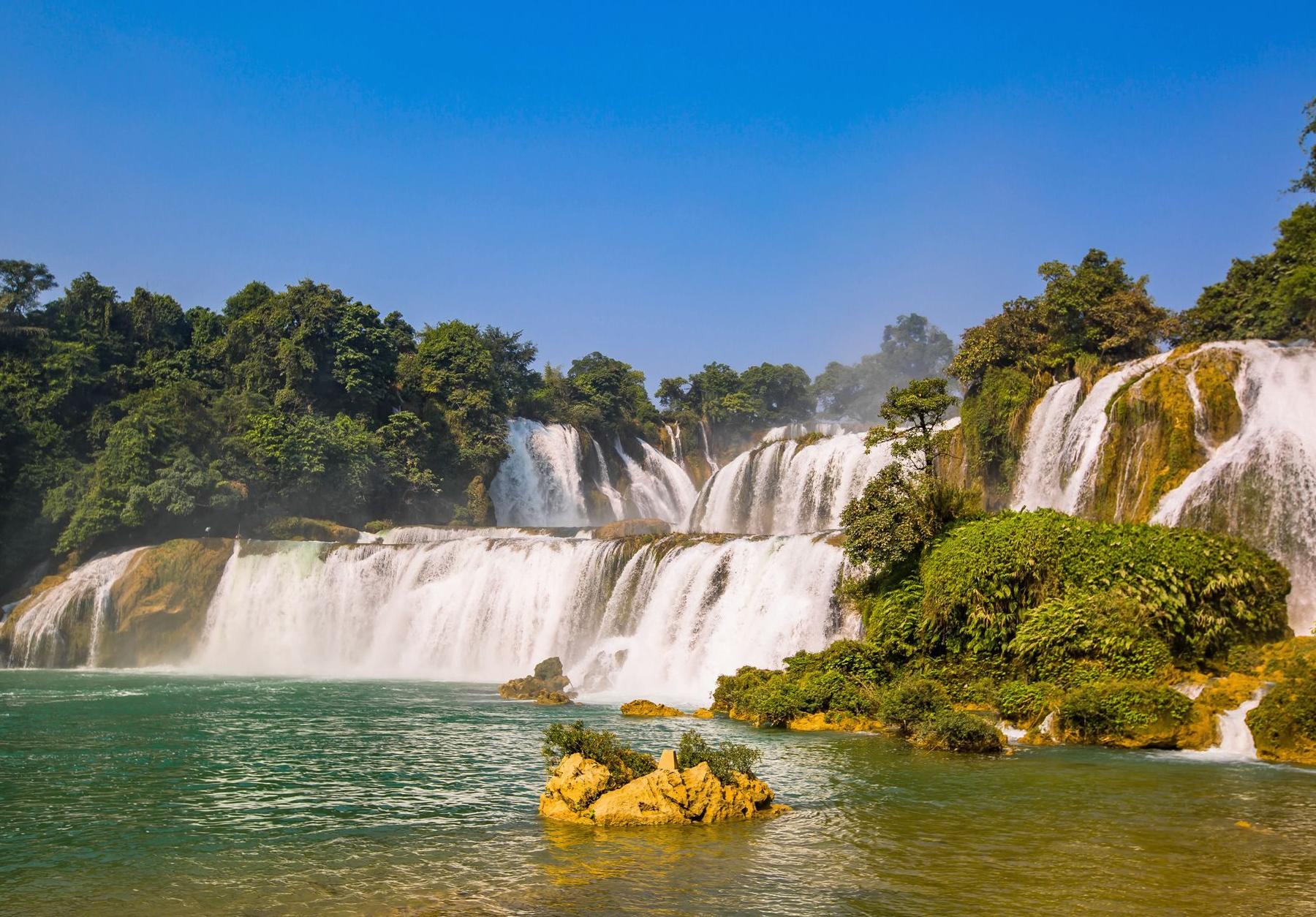
Detian on the Sino-Vietnamese border is Asia's largest transnational waterfall and the world's second-largest — a 200-metre-wide curtain of jade water dropping two tiers, with bamboo rafts nosing up to the spray. A day trip from Nanning.
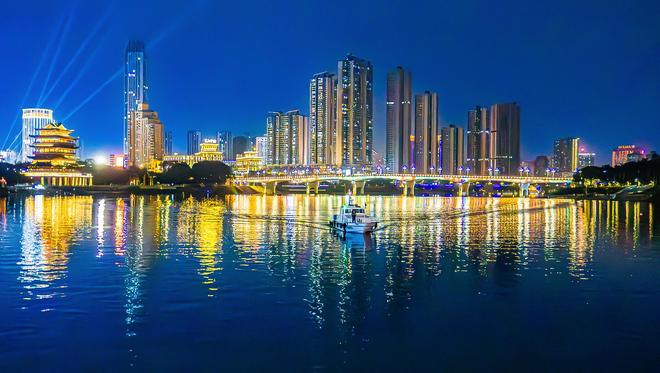
Skyscrapers at the Wuxiang CBD, the 276-metre Diwang Tower observation deck, and Qingxiu's forested slopes all sit within a half-hour of each other — modern Nanning never feels more than a step from the green.
In 634 AD the Tang court named the place Yongzhou after the Yong River that loops through it; in 1314 the Yuan government renamed the road "Nanning" — "bringing peace to the southern border". The city has been the provincial capital of Guangxi since 1958 and calls itself the Green City, Yong City and Phoenix City.
Technically all year — banyans and flame trees never lose their leaves. The sweet window is late October to early November, when the International Folk Song Arts Festival fills the streets with singing, silk-ball throwing and board-shoe dances. July-August is hot and humid (28-38°C); carry sun and rain gear.
Laoyou fen noodles (sour-hot), lemon duck (sweet-sour with dried lemon), rice-noodle rolls (juanzhou fen), pink dumplings (fen jiao), fermented-sheng pressed noodles, congee, snail pots, grilled oysters, and the famous suanye — pickled fruit and vegetables sold by the bag on every corner.
No. Street noodles are RMB 5, a night-market meal RMB 10-30, a budget hostel bed RMB 50. Even the top tickets are modest: Qingxiu RMB 20, Daming Mountain RMB 128, Detian RMB 80. Plan RMB 500-1,000 a day all-in.
Trains K9319 (13:05, RMB 44.5) and K9301 (13:40, RMB 37.5) run to Beihai in about three hours; coaches leave every 40 minutes from Jiangnan Station for RMB 55. For Vietnam, direct buses from the Langdong tourism centre run to Hanoi, Ha Long and Mong Cai; the morning train 5517 reaches Pingxiang by noon for Friendship Pass.
Yes — email [email protected] or message us on WhatsApp. We arrange hotels, Detian tickets, Daming shuttles, train seats and Vietnam border transfers free of charge, no obligation.
The city essence: Qingxiu Mountain and the Guangxi Museum of Nationalities in the morning, Nanhu Park in the afternoon, Zhongshan Road at night; Daming Mountain air on day two. Highlights: Qingxiu · Museum of Nationalities · Nanhu · Zhongshan Road · Daming Mountain View day-by-day plan →
Qingxiu, Museum, Nanhu & Zhongshan Road. Morning: Qingxiu Mountain (¥20, buses 10/32/33/62) — climb to the Ming-style Longxiang Pagoda over the Yong River, walk the cycad garden and the ASEAN friendship gardens. From the gate take bus 71 branch six stops to the Guangxi Museum of Nationalities (free, Tue–Sun 09:30–16:30) for the bronze drums and Zhuang wooden houses. Lunch on Minzu Avenue at the Lvdao Yangguang restaurant for Guangxi dishes. Afternoon: Nanhu Park (free; buses 3/8/14/20/32/33/51/62/86/89) for boating and the 1984 Baise Uprising memorial. Evening: bus 60 six stops to the First People's Hospital and walk two minutes to Zhongshan Road — grilled pig trotters, snail pots, laoyou noodles and a bottle of iced sour plum drink.
Daming Mountain air. Take the organised tour or shuttle north to Daming Mountain (¥128 + ¥30 shuttle, 08:00–17:00) — the "back garden of Nanning", 93% forest cover, 130,000 negative ions per cubic centimetre and 8-10°C cooler than the city. Walk the canyon viewpoint, Wanzhong Mountain buddha-light overlook and the Golden Turtle waterfall; lunch up top. Return to the city in late afternoon and, if energy remains, wander People's Park (free) and climb the 141 steps to Wangxian Slope and the 1890 German Krupp cannon.
The city sights, then a day out to the Sino-Vietnamese border for the Detian transnational waterfall, the Ban Gioc view and the Number 53 boundary stele. Highlights: Qingxiu · Detian Waterfall · Ban Gioc · Border stele View day-by-day plan →
The Green City line-up. Morning: Qingxiu Mountain (¥20) and the Guangxi Museum of Nationalities (free). Lunch on Minzu Avenue. Afternoon: International Convention & Exhibition Center outside (the jasmine-flower dome) and Nanhu Park for the lake and banyans. Evening: Zhongshan Road night market — laoyou noodles, snail pots and lemon duck.
Detian transnational waterfall. Take the 08:30 special coach from Langdong Coach Station (186 Minzu Avenue · +86 771 5508 333 ) southwest to the Sino-Vietnamese border — the road runs through the "little Guilin" karst around Daxin and the Black River. At Detian (¥80) walk the boardwalk behind the bamboo rafts, take in the two-tier 200-metre drop, look across at Vietnam's Ban Gioc waterfall and the Number 53 boundary stele . The coach returns at 15:30; back in Nanning by early evening.
The old city. Morning: People's Park (free) and the Wangxian Slope cannon; the Guangxi Zhuang Autonomous Region Museum (free, Tue–Sun 09:00–17:00). If it is a weekend, catch the morning Yong-opera show at Xinhui Academy (42 Jiefang Road, gate ¥2, show ¥25–35). Afternoon: buy Zhuang brocade and silk balls on Qixing Road , then a farewell bowl of laoyou noodles at Shiji before the train or flight out.
Qingxiu and Detian, then Friendship Pass at Pingxiang and the Huashan rock art, finishing with the beach at Beihai on the Gulf of Tonkin. Highlights: Detian · Friendship Pass · Huashan · Beihai Silver Beach View day-by-day plan →
The Green City. Qingxiu Mountain (¥20), the Museum of Nationalities (free), Nanhu Park and Zhongshan Road at night. Base yourself in the new CBD.
Detian transnational waterfall. The 08:30 special coach from Langdong to Detian (¥80) — the two-tier 200-metre curtain, Ban Gioc on the Vietnamese side and the Number 53 stele. Return coach 15:30, back in Nanning by early evening.
Friendship Pass & Huashan. Morning: train 5517 at 07:58 to Pingxiang (¥30, arrives 12:00), then a 40-minute charter to Friendship Pass (¥10) — "the second best pass under heaven", the site of the 1885 Zhennan Pass victory and Sun Yat-sen's only armed uprising. If you hold a Vietnam e-visa, walk through to Dong Dang and take a minibus to Hanoi; otherwise return to Pingxiang. Optionally add the Huashan rock art boat (¥35) on the Zuojiang — the 2,000-3,000-year-old red cliff paintings, now protected by no-landing rules.
Beihai Silver Beach. Morning: coach or train south to Beihai (Jiangnan Coach Station ¥55 every 40 min, about 3 hours; or K9319 13:05 ¥44.5). Spend the afternoon on the silver-sand beach, walk Beihai Old Street and eat Beibu Gulf seafood. Overnight in Beihai or return to Nanning by the last evening coach.
All three plans are bookable end-to-end by our team — see the full day-by-day Nanning itineraries hub, or the day-trip pages for single-day options.
Nanning's signature park, 13.54 km² of forested peaks on the Yong River — the Ming-style Longxiang Pagoda, the cycad garden, the ASEAN friendship gardens and 50+ smaller sights. "Mountains not high but elegant, water not deep but clear."
| Admission | ¥20 (students ¥10) |
The flower-shaped golden dome on Minzu Avenue — Nanning's emblem and the permanent home of the September China-ASEAN Expo. Best photographed after dark when the petals light up gold. Buses 6/70 to Zhuxi Overpass.
| Hours | exterior anytime; during expos follow official hours |
| Address | 11 Minzu Ave East, Qingxiu |
A modern museum on Qinghuan Road beside Qingxiu, with the largest bronze-drum collection in the world and Zhuang, Yao, Miao and Dong wooden houses moved here village-by-village. Free entry; book ahead online.
| Admission | free |
| Hours | Tue–Sun 09:30–16:30, closed Mon |
The "back garden of Nanning" — the highest peak in central Guangxi, 93% forest cover, 130,000 negative ions per cubic centimetre and 8-10°C cooler than the city. Known for "spring flowers, summer waterfalls, autumn clouds, winter snow"; the rhododendron sea runs mid-April to early May.
| Admission | ¥128 + ¥30 shuttle |
| Hours | 08:00–17:00 |
| Address | Liangjiang, Wuming |
Asia's largest and the world's second-largest transnational waterfall — 200 metres wide on the Guichun River straddling China and Vietnam, with the Ban Gioc falls cascading on the Vietnamese side. Best in spring and summer when the water runs full.
| Admission | ¥80 (day ticket + shuttle ~¥115) |
| Hours | 08:00–22:00 |
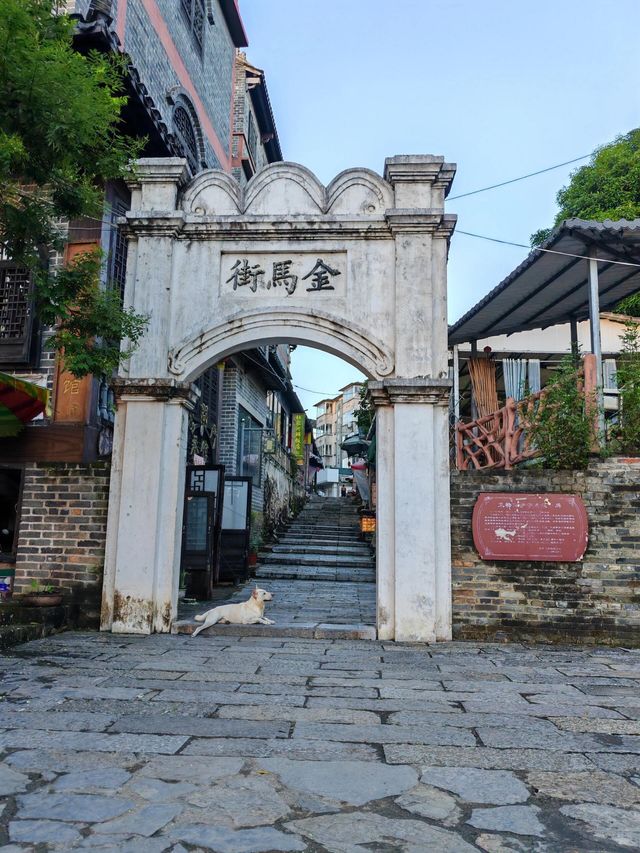
A 1,000-year-old Qing-era port on the Zuojiang River, 30 km southwest of Nanning — Ming-Qing streets, the Kuixing Tower, the Huang family manor and the famous Longtan sunset. The special tourist bus leaves at 09:00/10:00/11:00 from Banqiang Road.
| Admission | ¥10 |
A shaded river valley 6 km south of the city, famous for the only yin-yang bodhi tree in China — half-male, half-female, venerated as a blessing. Pavilions, meadows and 122 families of southern trees. Bus 301 for ¥3.
| Admission | ¥15 |
| Hours | 09:00–17:00 |
A 700-hectare agricultural theme park — banyan welcome avenue, coconut palm drive, a plant maze, flower hills and a black-bear breeding centre. Family day out; special buses leave Anji station at 09:00/11:00/13:00/16:00 for ¥3.
| Admission | ¥25 (online ~¥32) |
| Hours | 09:00–17:00 |
More in and around Nanning: People's Park (free, with the 1890 Krupp cannon on Wangxian Slope), the Guangxi Medicinal Botanical Garden (¥15, 2,130+ species), the Nanning Zoo (¥50), the Guangxi Zhuang Autonomous Region Museum, the Xinhui Academy (Yong opera home), the Huashan rock art boat on the Zuojiang and the Nanning Undersea World (¥45). Browse every Guangxi sight on the Guangxi attractions page.
A wellness resort 13 km north of the city — water from 1,300 m deep Cambrian bedrock at 63-69°C, 103 hot and cold pools, the Maya water park and SPA. Open 09:30–24:00; tickets ¥138. Address: 995 Kunlun Avenue · buses 22/101/606 to Jiahe City.
A rarer heavy-sodium bicarbonate hot spring with radon and metasilicic acid, 30+ trace elements, in a suburban resort with folk-style courtyards. Open 09:00–02:00; tickets ¥168 (online ¥138). Address: 9 Wenxing Road, Santang · bus 22.
Yong opera is the local stage art born in Ming times, sung in the old Yongzhou Mandarin. The 18th-century Xinhui Academy (42 Jiefang Road) stages free-to-watch performances every weekend morning — if you are lucky, the rarely staged Da Bi Men. Gate ¥2, show ¥25–35. Buses 81/202.
Every September 20–24 the jasmine-dome Convention Center hosts the ASEAN Expo — trade stands, cultural shows and Southeast Asian goods from ten countries, turning Nanning into a mini-Singapore for a week. Official site www.caexpo.org.
Late October / early November: the city turns into an open-air song stage — Zhuang silk-ball throwing, board-shoe races, stilt football, firecracker grabbing ("the Oriental rugby") and lion dances up stacked benches. The loudest, most local week of the year.
On the third day of the third lunar month, Zhuang villages hold open-air song fairs — young people exchange lyrics and throw silk balls to choose a partner. Catch it in the minority villages around Chongzuo and Wuming on a day trip out of Nanning.
Nanning is the provincial capital, so beds span every price. Most travellers choose one of two areas: the old city around the railway station and Chaoyang Square (walk to Zhongshan Road), or the new CBD by the Convention Center and Langdong Coach Station (easier for Detian and Vietnam buses). Every hotel below is bookable by our team; browse the full Guangxi hotels directory.
In the new CBD by the Convention Center, minutes from Langdong Station — the obvious choice for Detian and Vietnam departures. Indoor pool, garden and spa. From ¥600. Address: 131 Minzu Avenue, Qingxiu District · +86 771 5366 688
A four-star business hotel opposite the airport-coach stop, five minutes' walk from the railway station and two from the long-distance terminal — the classic transit hotel. From ¥310. Address: 63 Chaoyang Road (near Nanning Railway Station) · +86 771 2119 888
An eco-built hostel on the old arcade street of Jiefang Road, three minutes from the Yong River waterfront Minsheng Square and across from Minsheng Road pedestrian street. Dorm beds from ¥50, doubles ¥130. Address: 3 Jiefang Road, 3F · +86 771 2813 977
Nanning's original backpacker guesthouse — a two-floor house with a bar-cafe, travel notice board and a Vietnam/Cambodia visa service. Standard double room from ¥120. Address: 64 Shanghai Road, Yongning District · +86 771 6773 664
A small 25-room guesthouse in the centre, close to Zhenning Fort, the autonomous-region museum and People's Park. Deluxe room from ¥120. Address: Room 433, Building C2, Jinshan Plaza, 68 Chaoyang Road, Yongning · +86 771 5765 060
A four-star-standard business hotel inside the Post & Telecommunications College in Xixiangtang, by the Guangxi University campus — quiet, cheap and full of student-canteen food around. Standard room from ¥150 incl. breakfast. Address: 3 Qingchuan Avenue, Xixiangtang
The reliable chain next to the main gate of Guangxi University — banks, fast food and the Biyuan shopping mall on the doorstep. Standard double from ¥200. Address: 1 Huoju Road, Xixiangtang · +86 771 6115 000
Nanning's golden-signboard snack, descended from a century-old "old friend" noodle dish — sour-hot broth of pickled bamboo shoots, garlic, fermented black beans, chili and pork, said to open the appetite and drive off cold. Street bowls are ¥5. The locals' pick: Shiji (44 Qixing Road, opposite the First People's Hospital · +86 771 2852 525) and Fuji on Zhongshan Road.
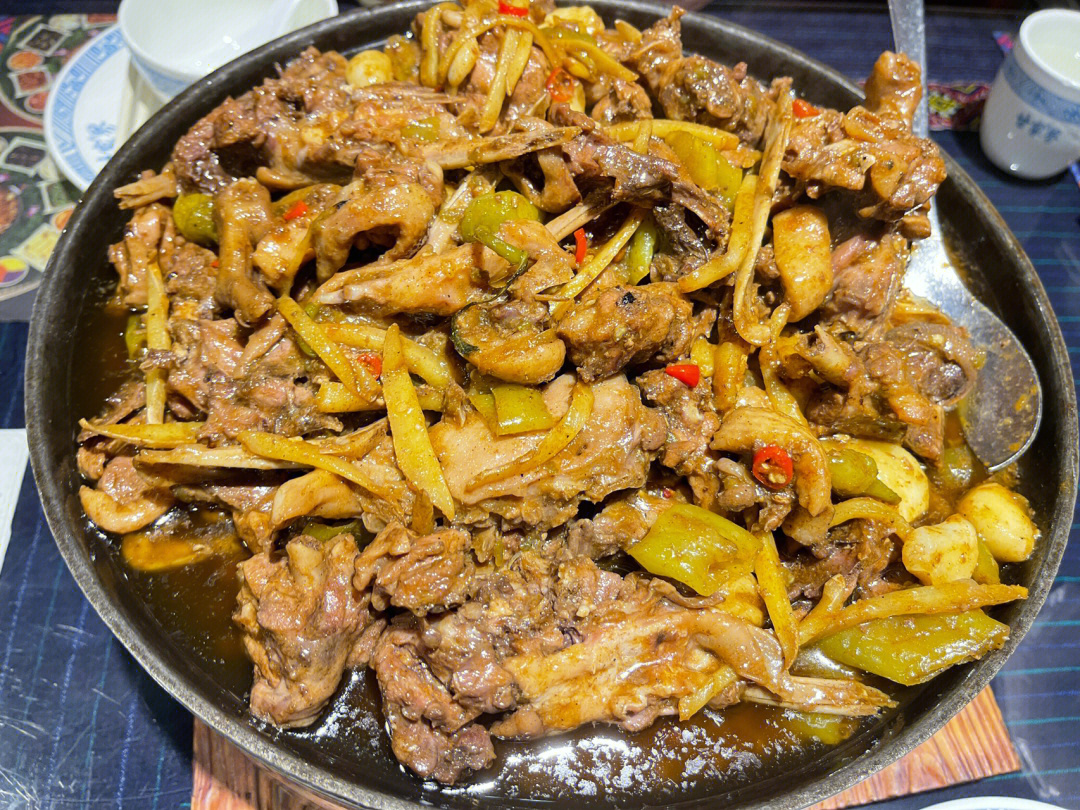
The dish outsiders must try — duck stir-fried or cut white with salted dried lemon, sour chilli, garlic and ginger; sweet-sour and utterly moreish. Two schools: baiqie (poached, found in old-family homes and star hotels) and shengchao (wok-fried, the street version). Try Ganjiajie Brand Lemon Duck (12-2 Yuanhu South Road, near the Hawaii Hotel · +86 771 5855 585).
The city's most famous food street — plastic stools, steam, garlic and smoke. Must-orders: laoyou fen, ba zhen yi mian at Xianchi (north end, sells out by 13:00), stir-fried river snails (Yuenanzai, Junji Litang king), grilled oysters (¥2.5 each / ¥10 three), white-nut taro mash and the suanye pickled-fruit stalls. Spend RMB 30 and eat for a week's worth.
Tangjia Juanzhou Fen — paper-thin steamed rice rolls stuffed with corn, beans, minced pork and pickles (Jianzheng South Road, Qingxiu). Suanpin Wang — the clean suanye chain, pickled fruit and vegetables plus chicken wings (Qixing Xinmin Road · +86 771 5637 778, 08:30–23:30). Weidao Zhizao — refined Guangxi flavours in private rooms (29 Zhuxi Avenue, Qingxiu). Guangzhou Zhouwang — congee of a dozen kinds on Yuanhu Road.
Jianzheng / Sixian / Yuanhu / Xinzhu roads in a row of under 1 km: steak sets, Liuzhou river-snail noodles, zongzi and glutinous rice cakes at Jianzheng Food Shop, congee at Guangzhou Zhouwang, all-meat dumplings at Cao Ji on Xinzhu. Across the river, locals now eat river seafood in the Jiangnan area; Nongyuan Road by the universities is where the students eat. Water Street (Shui Jie) keeps the oldest stalls — Yi Jiao dumplings, Jiu Ji cake, Huang Apo noodles.
Guangxi is China's fruit orchard — eat mangoes, durian, litchi, pineapple and longan by the bag in season. Local sweets: eight-treasure rice pudding, Nanning meat zongzi (with shrimp, mushroom and lotus seed, fragrant with leaf), taro every way (mashed, candied, in sweet soup) and luohan guo monk-fruit tea to soothe the chilli burn.
Nanning Wuxu International Airport lies 32 km southwest in Wuxu town, with 38 domestic routes plus 5 international and 2 regional services. The airport coach is ¥20 per person: Line 1 runs 05:30–22:30 every 30 min to the Chaoyang civil-aviation ticket office (opposite the railway station); Line 2 runs 05:30–21:00 to the Wuxiang Square city terminal. Metered taxi ~¥100–130, carpool ¥30.
Nanning Station (28 Zhongban Road · +86 771 2222 222) runs daily trains to Beijing, Shanghai, Shenzhen, Chengdu and Changsha, and is the main transfer to Beihai, Guilin, Qinzhou and Baise. Sample: K9319 Nanning–Beihai 13:05–16:01 hard seat ¥44.5; T8722 Nanning–Guilin 08:15–13:19 ¥64.5; T8701 Nanning–Pingxiang 18:20–22:11 ¥32.5.
Jiangnan Coach Station (236 Xingguang Avenue · hotline 96336) runs Nanning–Guilin ¥100 hourly 09:00–21:20, Nanning–Beihai ¥55 every 40 min, Nanning–Chongzuo ¥40 half-hourly, Nanning–Pingxiang ¥33 every 40 min 07:30–20:00. Langdong Coach Station (186 Minzu Avenue · +86 771 5508 333) also runs direct buses to Hanoi, Ha Long and Mong Cai in Vietnam, plus the 08:30 special to Detian.
City buses are ¥1 (air-con "cold buses" ¥2), running roughly 06:00–23:00; enquiry line +86 771 12319. The double-decker sightseeing loop starts at the International Tourism Distribution Center (10 You'ai South Road · +86 771 2102 431), 90 min, 35 km, ¥10. Taxis start at ¥7 + ¥1.6/km with a ¥2 fuel surcharge beyond 2 km; motor-taxis ("mo di") are cheap but unsafe — skip them.
The brand shopping street — department stores and every price tier, from the big Wangfujing-style malls down to street stalls. Buses 3/11/51/60/80 to Qixing-Gucheng crossing.
The golden-mile shopping zone by the railway station — Nanning Department Store (39 Chaoyang Road, one of Guangxi's oldest), Diamond Plaza (66 Chaoyang), Manhattan (76 Chaoyang), Walmart and Nuomat. Buses 3/17/18/36/40/45/57/58/78/81/202/203.
Xingning Street is the gold-and-jewellery street, where several old gold shops craft thin, affordable pieces. Xiguan Road sets out stalls of clothing, accessories and toys every evening — buses 17/18/40/58/78/81/202/203/701.
Zhuang brocade — the silk-and-cotton weave ranked with Hunan and Sichuan brocades; silk balls (xiuqiu), the Zhuang love-token about 6 cm across with a 60 cm streamer, ~¥5; luohan guo monk fruit to soothe the throat; wampee sauce (huangpi jiang), a Nanning-only sweet-sour fruit sauce for noodles and fish; dried longan, mangoes and litchis in season. Full local-product guides live on the Guangxi specialties page.
The First People's Hospital of Nanning (opposite Shiji noodles on Qixing Road) and the Guangxi Zhuang Autonomous Region People's Hospital in the old city are the main emergency options. Hotel front desks keep the nearest 24-hour clinic; for serious issues ask your hotel for an ambulance in English.
City bus enquiry: +86 771 12319. Nanning Railway Station: +86 771 2222 222. Jiangnan Coach Station hotline: 96336 / +86 771 4518 200. Tourist information at the International Tourism Distribution Center, 10 You'ai South Road.
Mandarin works everywhere. The local Yongzhou Mandarin is a southern relative; most Zhuang people in Nanning also speak Mandarin, with Zhuang dress and customs more visible in Chongzuo, Wuming and Baise. A few words of laoyou-fen ordering go a long way.
Street noodles ¥5, a set meal ¥10–15, a night-market dinner ¥30–50, a budget hostel bed ¥50. Even the big tickets — Qingxiu ¥20, Daming ¥128, Detian ¥80 — are modest by Chinese scenic-area standards.
Three routes from Nanning: (1) direct bus from the Langdong International Tourism Distribution Centre to Hanoi / Ha Long / Mong Cai; (2) train 5517 to Pingxiang, then a 40-min charter to Friendship Pass and walk through to Dong Dang; (3) bus to Dongxing and cross the Beilun River to Mong Cai. Have a valid Vietnam e-visa ready; keep your exit slip.
The 08:30 special coach from Langdong to the Sino-Vietnamese border — the 200-metre-wide Detian falls, the Ban Gioc view and the Number 53 boundary stele, with a stop at the pastoral Mingshi scenery on the way.
View the plan →Two hours north to the "back garden of Nanning" — 93% forest, 130,000 negative ions, the gorge viewpoint, Golden Turtle waterfall and, in April, the ten-li rhododendron sea. Cooler by 8-10°C than the city.
View the plan →The special tourist bus 30 km southwest to the Qing-era river port — Ming-Qing streets, the Kuixing Tower, Longtan sunset and the old qilou arcade houses of Xialiang village across the water.
View the plan →It is sour-hot, not the mild broth you may expect. Ask for laoyou shao fen (stir-fried) or laoyou tang fen (in soup); ¥5 is a fair bowl. The famous Shiji and Fuji shops can be touristy — the busy tiny shop next door is often better.
The direct 08:30 special coach from Langdong is the easy option, but it must return by 15:30. On your own you change at Daxin County and connections are awkward — the entrance ticket is ¥80 but the time cost is real. Book the coach tour a day ahead.
The mountain is often wrapped in cloud; on foggy days the road can close. Phone the scenic area (www.gxdms.com) the evening before, and take the organised shuttle rather than driving yourself. Dress warm — it is 8-10°C cooler up top.
July-August hits 30-38°C with heavy rain and high humidity. Sunglasses, a sun hat, a small umbrella and insect repellent are not optional. November to February is the most comfortable walking weather.
Nanning has one of China's highest motorcycle densities; unlicensed "mo di" riders cluster at stations and can charge more than metered taxis. Flag a moving metered taxi (¥7 flag + ¥1.6/km) or use a ride-hailing app — safer and cheaper.
Nanning sits in south-central Guangxi on a basin formed by the wide valley of the Yong River, south of the Tropic of Cancer — a humid subtropical monsoon climate with 2,170 hours of sun a year and 1,300 mm of rain. Average temperature is 21.6°C: January averages 12.8°C, July-August 28.2°C. Dry winters, wet summers; the banyan and flame trees never lose their leaves.
Nanning was Yue territory in ancient times; in 318 AD the Eastern Jin set Jinxing Commandery here, the start of 1,600 years of city administration. In 634 the Tang named it Yongzhou, giving the city its "Yong" abbreviation; in 1314 the Yuan renamed the road Nanning — "peace on the southern border". It was the seat of Lingnan West Circuit as early as 862, moved the Guangxi provincial capital between Guilin and Nanning three times in the 20th century, and in 1958 became the capital of the newly founded Guangxi Zhuang Autonomous Region. Today it is the core city of the Beibu Gulf economic zone and the overland bridge between China and ASEAN.
Nanning is a multi-ethnic city with 12 native groups — Zhuang, Han, Yao, Miao, Dong, Mulao, Maonan, Hui, Jing, Shui, Maonan and Gelao — plus 37 smaller communities. The Zhuang are the original people; their bronze drums, silk balls, board-shoe dances and San Yue San song fairs are the living culture you will meet in the museum, on festival days and on day trips to Wuming and Chongzuo.
Everything on ToursChinaTravel is bookable through our team by email or WhatsApp. Here's where each part of your Nanning trip lives on the site.
Star-rated sight details — hours, tickets, phones and tips for every Guangxi attraction.
Browse Guangxi sightsStar-rated hotels across Guangxi — sorted by rating, all bookable by our team.
Book a Guangxi hotelRoutes, airlines and schedules for Wuxu Airport and Nanning Railway Station.
See China flightsZhuang brocade, silk balls, luohan guo, wampee sauce and tropical fruit.
Browse Guangxi specialtiesLicensed agencies with addresses, phones and booking contacts for Detian, Daming and Vietnam-border tours.
Find a Guangxi agencyGuangxi province, Guilin, Beihai and more — plus the Guangxi guide, the Guilin guide and the Beihai guide.
Browse all guides