China · Shanxi
Wutai Mountain Travel Guide
The first of China's four sacred Buddhist mountains — 2,000 years of temples, a snow-dusted summit at 3,058 metres and the Manjushri pilgrimage.
China · Shanxi
The first of China's four sacred Buddhist mountains — 2,000 years of temples, a snow-dusted summit at 3,058 metres and the Manjushri pilgrimage.
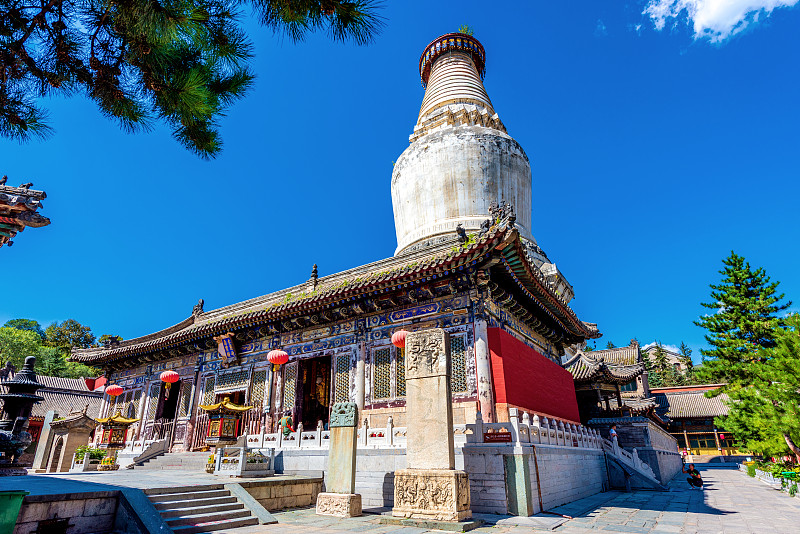
The 56-metre marble stupa of Tayuan Temple is the symbol of Wutai — circumambulate it with the pilgrims and hear the wind-bells chant.

1,080 steps up to the ridge-top temple where all five terrace Buddhas are honoured in one climb — cable car if your knees object.
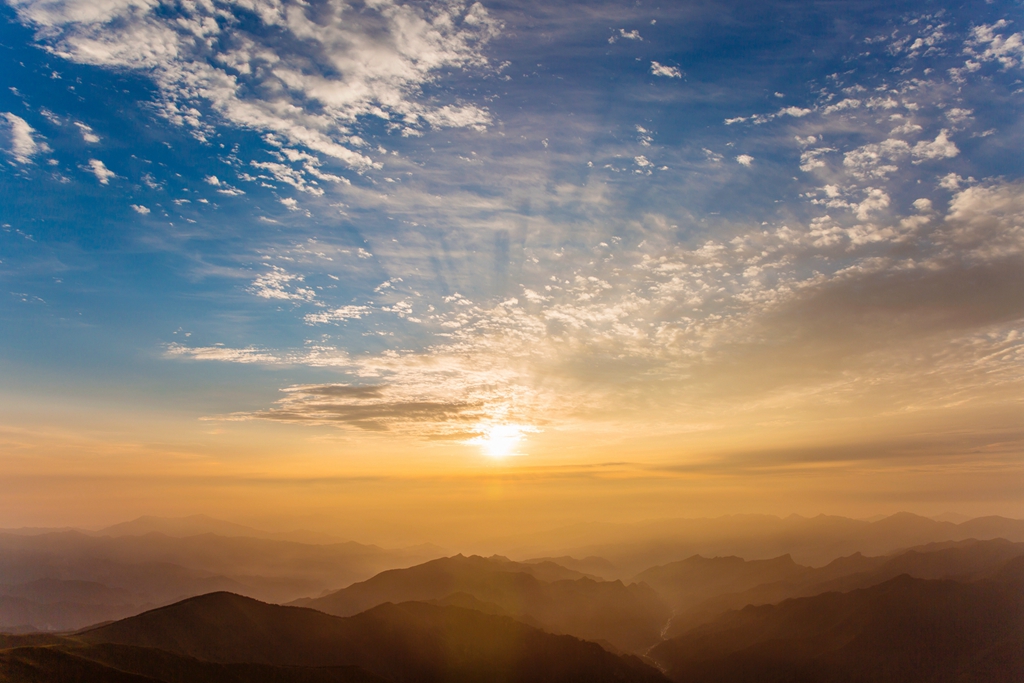
Wanghai Peak, the "sea-watching" terrace — the most famous sunrise in Shanxi, clouds below, golden light above.
The oldest and grandest monastery on the mountain, heir to the Great Fusi Temple of 67 AD — seven halls in a row across one courtyard.
Free vegetarian zhai fan is served daily at the big temples — rice, mountain greens, tofu and the famous Wutai mushrooms.
North Terrace (Yedou Peak) at 3,058 m — the highest point in all of northern China, snow-capped deep into summer.
Manjushri's mountain since the Eastern Han — the oldest continuous Buddhist site in China, and the only one with both Chinese and Tibetan temples side by side.
Tang, Liao, Yuan, Ming and Qing halls still in daily use — murals, statues and incense instead of glass cases.
East, West, South, North and Central — each a flat peak with its own temple, sunrise, flower meadow and legend.
At 2,400–3,000 m the plateau stays refreshingly cool when the plains below bake — "Cool Mountain" has been its nickname since the Tang.
June to September is the classic season — green terraces, cool mountain air (the plateau sits above 2,400 m) and pilgrim festivals. Spring and autumn are quiet and clear; winter is beautiful but fierce, with closed summit roads.
Three days is ideal: a day around Taihuai town's great temples, a dawn climb to East Terrace, and a day on a pilgrimage hike or to the outer temples. Two days covers the essentials.
Taihuai town is the base — the only five-star is Wufeng Hotel (¥480), family inns start at ¥100, and Xiantong Temple offers simple monk dormitories (¥10–70) for the full pilgrim experience.
The five flat-topped peaks (East, West, South, North, Central) can be hiked in a demanding 2–3 day circuit from Hongmenyan, or visited by the summit shuttle fleet (¥70 per person per peak). North Terrace at 3,058 m is the roof of North China.
Very — the monasteries run free lunchtime vegetarian meals (zhai fan) for visitors, and restaurants like One Bright Lantern serve exquisite temple-style banquets.
Taihuai's great temples and Dailuoding on day one; dawn at East Terrace and the outer monasteries on day two. View the plan →
Hongmenyan to East, North and Central terraces — the classic pilgrimage trail across the roof of North China. View the plan →
The Great White Pagoda — Wutai's landmark, built over a relic of the Buddha, circled by pilgrims all day long.
¥5 · 06:30–18:30
The mountain's oldest and grandest monastery — 400 halls, seven main halls in a row and the Wutai Museum of Buddhist relics.
¥10 · 06:30–18:30
The ridge-top "small pilgrimage" — all five terrace Buddhas in one climb of 1,080 steps, or cable car (¥50 up / ¥35 down).
¥10 · 06:30–18:30
2,795 m of sunrise and sea-of-clouds — the classic pre-dawn pilgrimage, 30 minutes by shuttle from Taihuai.
Free · dawn
The 3,058 m roof of North China — the coldest, highest and most austere of the five, with the Lingying Temple at its crown.
Free · shuttle ¥70
The busiest shrine on the mountain — the Dragon King's temple where pilgrims ask for luck; visit before 08:00 to avoid the queues.
¥10 · all day
Stone carvings everywhere — 1,000 dragons, the unique "Six Spirits" guardian statues and a cliff-edge pavilion view.
¥10 · 06:30–18:30
"The temple that calms the sea" below the South Terrace — quiet courtyards and the octagonal Cishan Pagoda.
¥10 · 06:30–18:30
Around the 15th day of the sixth lunar month, lamas perform the masked "jumping" exorcism dance at the Tibetan temples — the mountain's most dramatic festival.
August 21 to September 21 each year: sutra chanting, exhibitions and the great golden stupa illuminated by ten thousand lamps.
In the sixth lunar month the terraces host one of North China's great livestock fairs — horses, pilgrims and market stalls on the high meadow.
Every clear morning, pilgrims and monks climb before light to chant at Wanghai Temple as the sun breaks the cloud sea — join a shuttle at 04:30.
The only five-star on the mountain — elegant rooms in Taihuai town, a short walk from the Great White Pagoda. From ¥480.
Cosy courtyard inn with warm kangs and home cooking, minutes from the temple quarter. From ¥49.
Comfortable mid-range villa with good restaurant and tour desk — from ¥258.
Sleep inside a working monastery — simple dorm beds ¥10, clean twin rooms ¥70, dawn bells included. Book at the temple office.
Dozen of family-run kangs (heated brick beds) from ¥100 — the classic pilgrim stay; most arrange shuttles and meals.
Free zhai fan at lunch in the big temples — rice, mountain greens, tofu and Wutai mushroom dishes that taste nothing like "simple".
Taimo, the prized "table mushroom" of the high meadows — stir-fried, in soup or as a gift; the mountain's greatest delicacy.
Steamed potato shreds tossed with flour and greens, then fried crisp — the Shanxi vegetarian staple, perfect on cold evenings.
Exquisite temple-style banquet in Taihuai (+86 350 6543 456, ¥84) — mushroom hotpot and dozens of small vegetarian plates.
Local Shanxi cooking — oily potatoes, buckwheat fish noodles and a full wall of pickles (+86 350 6661 145, ¥100).
Honest pilgrim food at ¥35 a head — the village favourite near the temple quarter.
The mountain's most famous export — dried Wutai mushrooms for soup, sold along Yanglin Street and at temple gates.
Wutai "five-colour" inkstones carved from local stone — a scholar's souvenir with real craftsmanship.
Pilgrim staffs of the "six-groove" hard wood — practical for the terraces, handsome in the luggage.
Sun-dried jujubes from Baode county, a Kangxi-era imperial tribute — sweet and energising trail food.
Taihuai's shopping lane — prayer beads, Buddhist art, incense and local food in one pilgrimage strip.
Sandalwood incense and printed prayer flags from the temple shops — bring the mountain home.

No airport on the mountain — fly to Taiyuan Wusu (info +86 351 7286 741), then 4–5 h by bus or 2 h by train plus shuttle.

At Fanshi County's Shahe town, 51 km from Taihuai — buses ¥20, about 1 hour. Overnight trains from Taiyuan and Datong.

Taiyuan–Wutai buses (¥38, ~2 h) and Datong services run through the day; the scenic area gate stops private cars — change to the scenic shuttle.
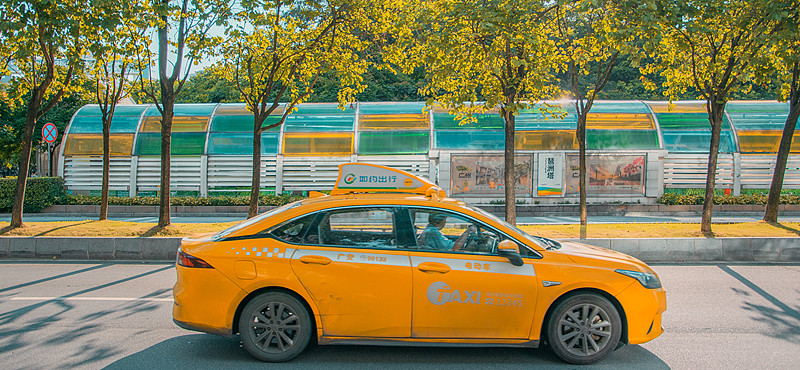
Green scenic shuttles connect Taihuai and the temples (¥2–3); taxis about ¥10 per hop; the terrace fleet charges ¥70 per person per peak.

Private cars cannot enter the core area without a permit — park at the visitor centre and ride the shuttles; this is actually easier than it sounds.
Hongmenyan to East Terrace is a 10 km climb (500 m up) — the first stage of the classic terrace circuit; carry layers, it is cold at 2,800 m.
Shuttle at 04:30, sunrise at 05:30 — the single most rewarding outing on the mountain.
Zhenhai, Foguang (the great Tang hall) and Nanchan — the oldest timber buildings in China, a world heritage circuit.
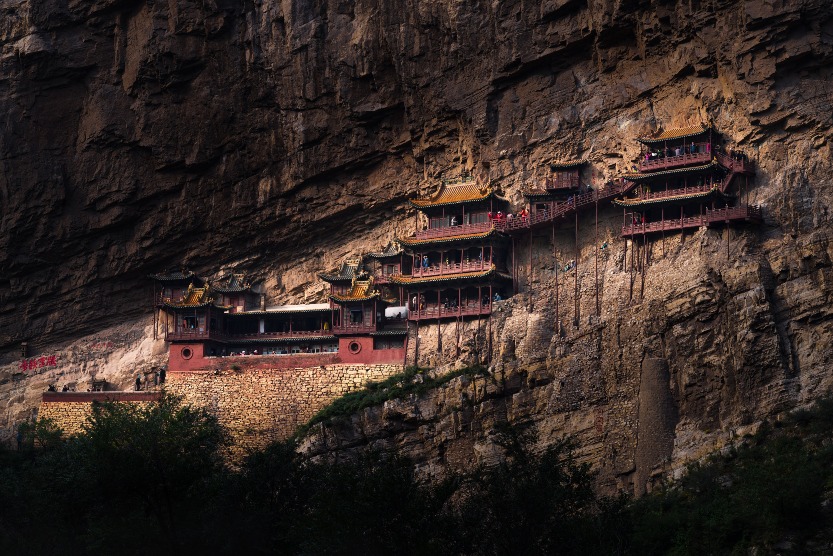
Yungang Grottoes, Xuankong Temple and Yingxian Pagoda — the other half of Shanxi's greatest hits.
Walled Ming city, first bank of China and the best-preserved county town — pair the sacred and the secular.
Even in August the terraces are cold — pack a fleece and windproof layer; at dawn on East Terrace you will need gloves.
The scenic area gate is open 24 hours but vehicles stop ~18:00; confirm shuttle times with your inn the night before.
Lunch zhai fan is served roughly 11:00–12:00 at the big temples — arrive early, sit quietly, wash your own bowl.
Taihuai town health centre +86 350 6543 120; tourism complaints +86 350 6524 664; police +86 350 5551 057.
Photograph monks and worshippers politely, keep voices low in temples, and do not block the kowtow lanes around the White Pagoda.
Email [email protected] or WhatsApp +86 138 0000 0000 — temples, stays, shuttles and guides arranged free.
Monasteries appeared in the Eastern Han (67 AD), flourished to 360 temples in the Tang under Manjushri devotion, and remain today the only mountain with both Chinese and Tibetan Buddhist traditions side by side.
Five flat peaks enclose a high basin at 2,400–3,058 m in northeast Shanxi — cool even in July, hence the ancient name Qingliangshan, "Cool Mountain".
Home of Chinese Buddhism's most important pilgrimage after Lhasa — chanting at dawn, incense all day, and the distinctive blue-grey robes of monks from across China and beyond.