>
A 2,500-year-old city of classical gardens, canal-side water towns and soft Wu ballads — Humble Administrator's Garden, Tiger Hill, Pingjiang Road and Shantang Street in one graceful circuit.
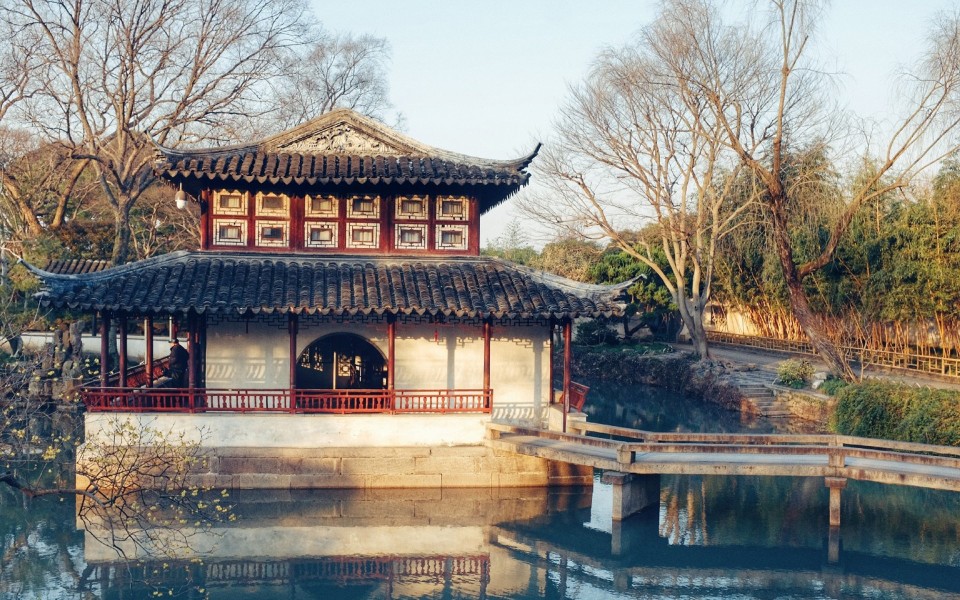
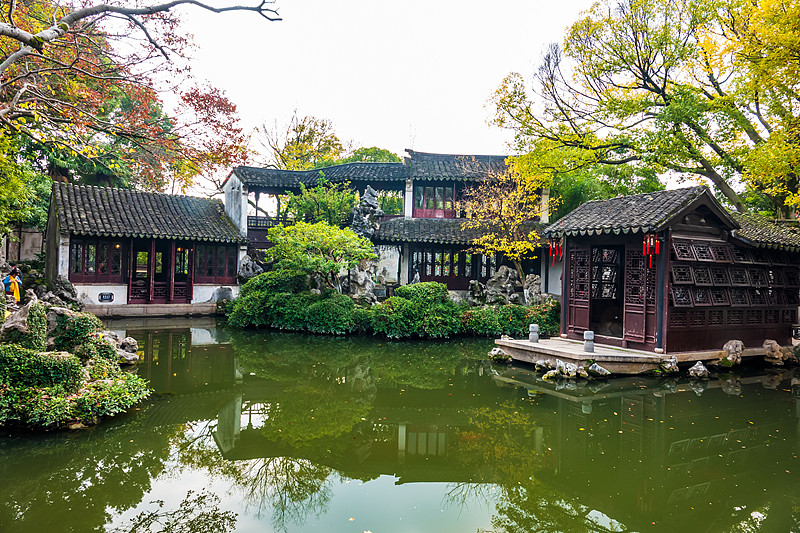
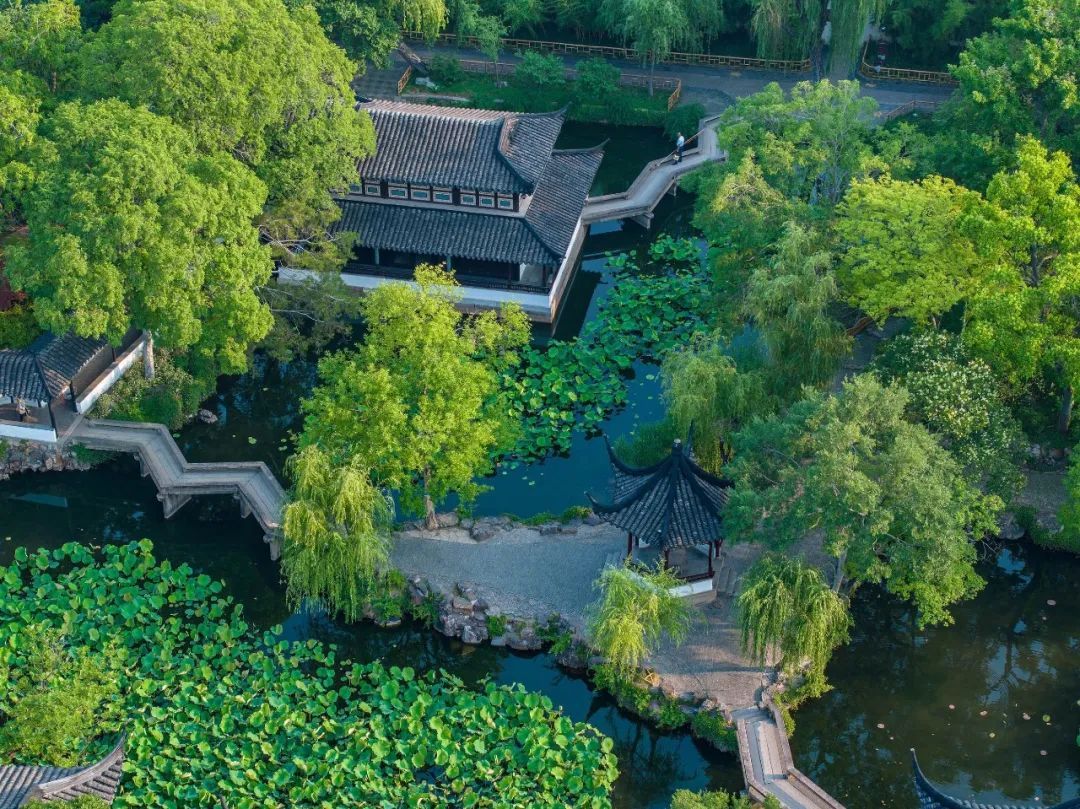
China's largest classical garden — lotus ponds, zigzag bridges and pavilions arranged in perfect borrowed views, the masterpiece of Ming garden design.
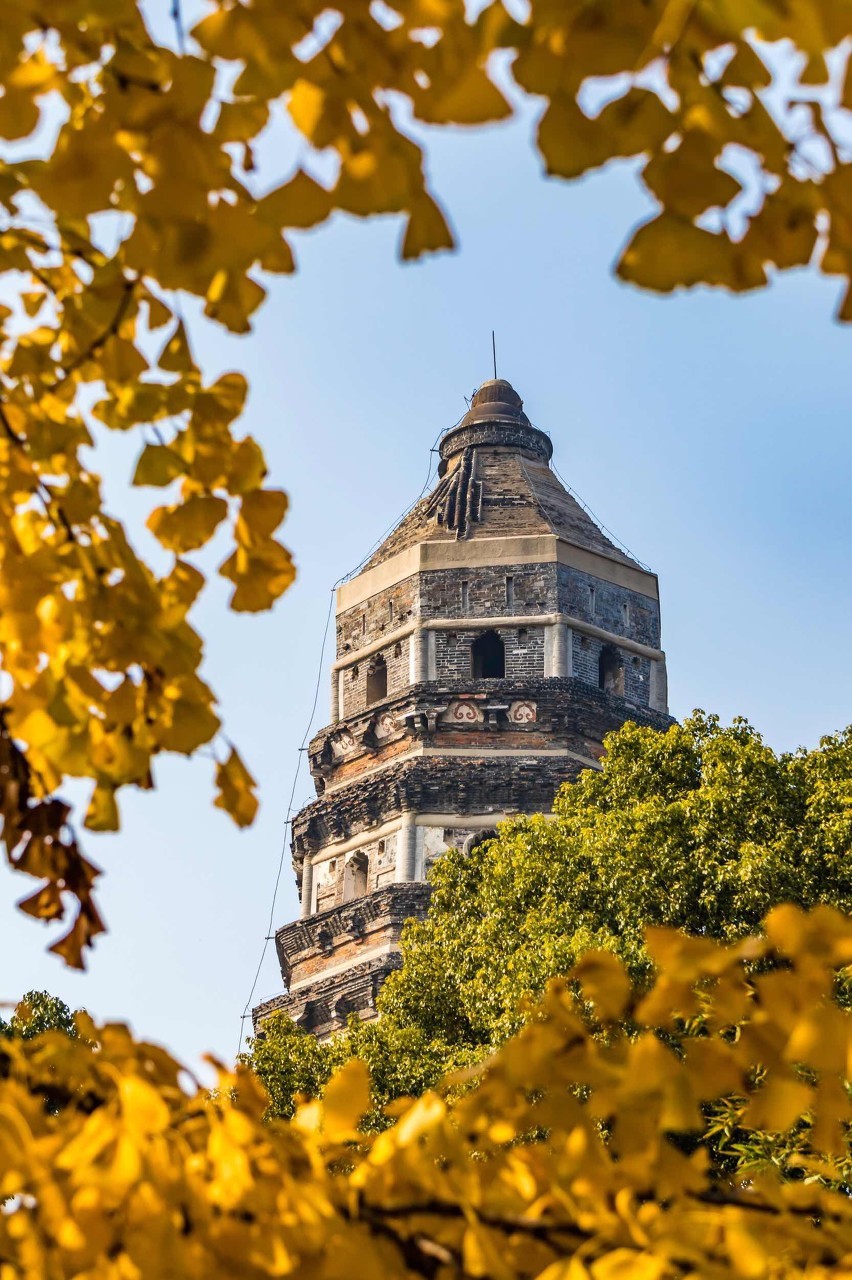
The 47 m Yunyan Pagoda has tilted for over 400 years — with the Sword Pool and the tomb of King Helu of Wu beneath the hill.
Sit in a Pingjiang Road teahouse for an hour of suzhou pingtan — the storytelling-and-singing art of Wu dialect, strings and clappers.
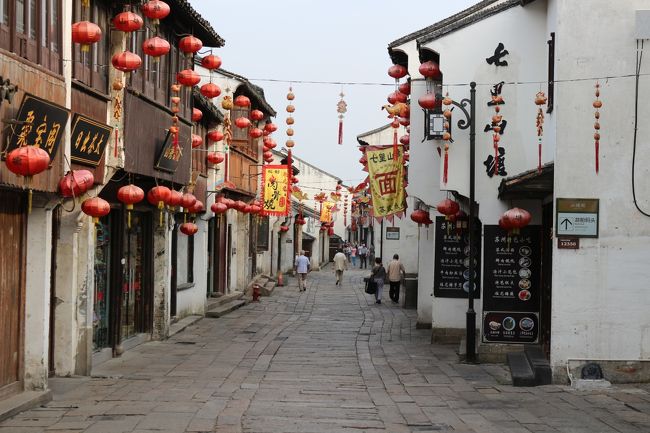
The thousand-year canal street the poet Bai Juyi built — lanterns, candy shops and the best places for a bowl of Suzhou noodles.
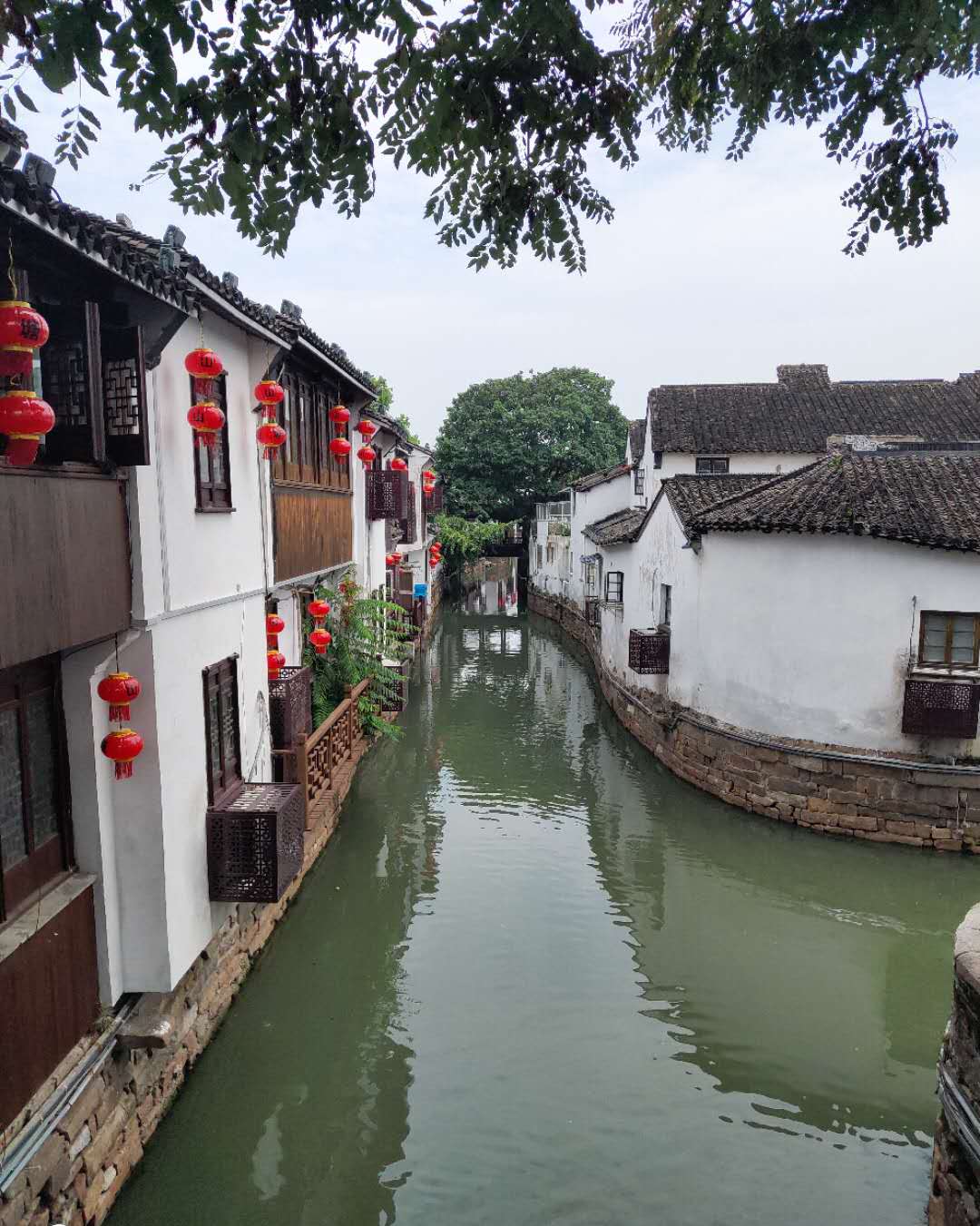
Glide past whitewashed walls, garden gates and 800 years of canal life on the oldest surviving water street in China.
Catch a performance at the Kunqu Museum or the night garden shows — the operatic art that UNESCO first listed in 2001.
The largest and most celebrated of Suzhou's classical gardens — 5 hectares of lotus water, rockeries and halls that change face with every step.
The 34 m hill of King Helu's tomb, crowned by the tilting Yunyan Pagoda — "arriving in Suzhou without seeing Tiger Hill is a wasted trip", say the locals.
Bai Juyi's canal street of 1,200 years — seven li of stone bridges, teahouses and old shopfronts running from the city wall to Tiger Hill.
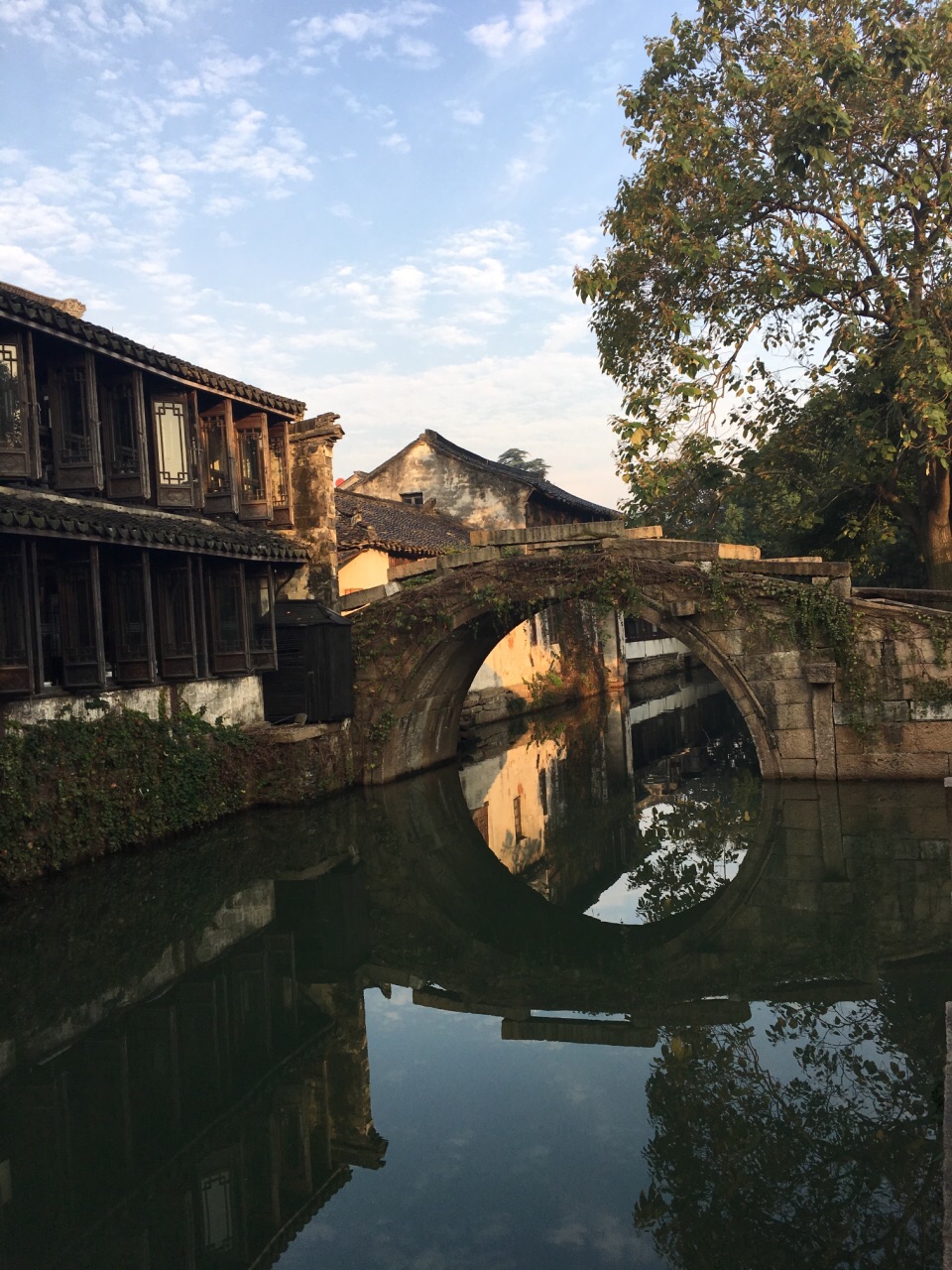
Suzhou's best-preserved water street — one bridge every dozen metres, Kunqu theatres and quiet garden gates along a willow-lined canal.
Individual gardens are modest — Humble Administrator's Garden is ¥70 peak / ¥50 low season, Tiger Hill ¥45, the Lion Grove ¥30 peak / ¥15 low. A combined ticket (¥60) covers the four gardens of Mudu town. Many sights like Suzhou Museum and Pingjiang Road are free.
Two days cover the essentials — one for the gardens (Humble Administrator's Garden, Lion Grove, Museum) and one for Tiger Hill, Shantang and the old lanes. A third day reaches the water towns of Tongli or Zhouzhuang.
Pingjiang Road and Guanqian Street put you in the old city among the lanes and teahouses; Jinji Lake suits business travellers. Boutique courtyard hotels run ¥400–800, chain hotels from about ¥250.
Squirrel-shaped mandarin fish, shengjian buns, Suzhou-style noodle soups, braised eel and the sweet-and-savoury classics of the "Su" cuisine — plus candy and pastries from the old Guanqian Street shops.
High-speed trains link Suzhou with Shanghai (25–40 min), Nanjing (1 h 15) and Beijing (4.5–5 h); Shanghai Hongqiao and Pudong airports are the main gateways, about an hour away by rail.
Golden weeks and weekends are busy at the famous gardens — arrive at opening time, book tickets online, and save the quieter lanes like Cangjie and Zhongzhang for the afternoon.
The essential Suzhou — Humble Administrator's Garden and the Museum on day one, then Tiger Hill, Shantang and a Pingjiang night cruise. View the plan →
Humble Administrator's Garden – Lion Grove – Suzhou Museum – Guanqian Street night
Tiger Hill – Shantang Street – Pingjiang Road night cruise – Kunqu show
Two days in the city plus a full day in the canal town of Tongli — bridges, rowboats and old houses on the water. View the plan →
Humble Administrator's Garden – Pingjiang Road – Shantang Street
Tongli water town – Tuisi Garden – Three Bridges
Tiger Hill – Suzhou Museum – Jinji Lake evening
All plans are bookable end-to-end by our team — see the full day-by-day Suzhou itineraries hub, or the day-trip pages for single-day options.
China's largest classical garden, built in 1509 for a Ming censor who retired to plant cypress trees. Five hectares of lotus water, rockeries and halls borrowed views of the North Temple Pagoda — the benchmark of Jiangnan garden art.
View details →One of the Four Great Gardens of China, famous for its halls, Taihu rockeries and the "garden of four seasons" — the crown of late Ming and Qing landscape design, a UNESCO World Heritage site since 1997.
View details →The hill where King Helu of Wu was buried in 496 BC, with the leaning Yunyan Pagoda (47 m, tilted since the 1600s), the Sword Pool and the tomb itself. Autumn ginkgo and maple colour make it the classic Suzhou outing.
View details →The "first street of Suzhou" — seven li of canal, stone bridges, teahouses and lantern-lit shops built by the poet Bai Juyi in 825. At dusk the street glows and the rowboats line up under the moon bridges.
View details →The oldest water street in Suzhou, running 1.6 km beside a willow-lined canal with one bridge every dozen metres. Kunqu theatres, bamboo workshops and quiet garden gates survive behind the whitewashed walls.
View details →More in the region on the Jiangsu attractions page.
An hour of storytelling-and-singing in Wu dialect — pipa strings, clappers and the voices of Suzhou. Teahouse shows on Pingjiang Road run most evenings, about ¥80–120 per person.
Glide the old water street after dark — lanterns, garden walls and bridge reflections, about 40 minutes, around ¥100–120.
The UNESCO-listed operatic art performed at the Chinese Kunqu Museum theatre and in night shows at the gardens — a moving introduction to six centuries of Suzhou music.
The modern lake district west of the old city — the musical fountain, the "Rainbow" bridge lights and the best skyline views of new Suzhou.
Every hotel below is bookable by our team; browse the full Jiangsu hotels directory.
Boutique inns tucked into restored garden houses along the old water street — the most atmospheric base in the old city, from about ¥450 a night.
Central hotels near the pedestrian shopping street, a 10-minute walk from the gardens and teahouses — chain and mid-range options from ¥250.
Modern business hotels on the lakefront, minutes from the metro and the evening fountain show — quiet, spacious and well connected.
For a night in the canals: family-run guesthouses inside Tongli's lanes, some with balconies over the water, from about ¥200 off-season.
The signature of Su cuisine — a mandarin fish scored, crisped and dressed with sweet-sour sauce, cut to look like a leaping squirrel.
Pan-fried pork buns with crisp bottoms and rich broth — the essential street breakfast, about ¥1.5–2 each at the Guanqian old shops.
Fine-cut noodles in clear broth with toppings like braised eel, shrimp and "three-white" — a Suzhou morning ritual, ¥20–40.
From late September, the famous Yangcheng Lake hairy crabs arrive — steamed and eaten with ginger vinegar, ¥30–80 each depending on size.
Dried fruit, sesame cakes and the famous Suzhou sweets from the old shops of Guanqian and Shantang — perfect gifts and walking snacks.
Fine double-sided silk embroidery — the four great embroidery styles of China start here. The Suzhou Embroidery Research Institute sells museum-quality pieces.
Suzhou has been the silk capital for a thousand years — scarves, quilts and brocade from the silk shops and the old looms of Zhenze town.
One of China's ten famous teas, grown on Dongting Hill at Lake Tai — a delicate green tea, best drunk in early spring.
Sandalwood fans, bamboo carvings and the engraved "Suzhou lamp" — the classical crafts of the garden city, found in the workshops of Pingjiang Road.
Full local-product guides live on the Jiangsu specialties page.
https://media.doubao.com/space/api/box/stream/download/all_by_mount_point/Z23dbYGZEoI2TNxY5i0c7ILvnWh
https://media.doubao.com/space/api/box/stream/download/all_by_mount_point/GK46bT82doid74xwzu3cLiQtnFf
https://media.doubao.com/space/api/box/stream/download/all_by_mount_point/G3lnbKl2fogBuUx4wAEcjM8bnab
Five metro lines cross the city — Line 1 links Guanqian Street, Pingjiang Road and the Jinji Lake area; single rides ¥2–6.
Taxis start at ¥10 (¥11 after 23:00); Didi and other ride apps work well across the city and to the railway stations.
The G2, G15 and G50 expressways ring the city; park at the garden gates is limited, so use the P+R lots and the metro in the old city.
The "little Venice of the East" — fifteen rivers, forty-nine bridges and the late-Qing Tuisi Garden, 30 minutes from Suzhou.
China's most famous water town — the Double Bridges painted by Chen Yifei, Shen's House and lantern-lit canals, 1 h 20 from Suzhou.
The 2,500-year-old water town at the foot of Lingyan Hill, once a garden retreat of Emperor Qianlong — four gardens on one combined ticket.
Pick Biluo Chun tea on the East Dongting hills, cruise the misty lake and eat lake fish in the waterside villages of Wuxian.
Humble Administrator's Garden and Tiger Hill cap visitor numbers — reserve on the official mini-program or through our team a day ahead in season.
Arrive within the first hour for near-empty courts; by 10:00 the tour groups take over the famous bridges.
Suzhou Museum (Pei Lei wing by I.M. Pei) is free but time-slot based — book the day before and go early.
Old-street shops and teahouses sometimes prefer cash or WeChat/Alipay — mobile payment works everywhere in the city.
Suzhou summers are hot and humid, winters damp — light layers and an umbrella serve year-round.
Suzhou lies in the Lake Tai plain south of the Yangtze, threaded by the Grand Canal and dozens of waterways. Mild and rainy, with hot humid summers, cool wet winters and the best weather in April–May and September–November.
Founded in 514 BC as the capital of the state of Wu, Suzhou became the cultural heart of the Jiangnan region — silk capital, seat of the imperial examinations' most successful families, and home of pingtan storytelling and Kunqu opera, both UNESCO-listed.
Between the 11th and 19th centuries, Suzhou's scholar-officials built more than two hundred gardens of water, rock and borrowed view — nine survive as UNESCO World Heritage sites, the highest concentration of classical garden art in China.
Everything on ToursChinaTravel is bookable through our team by email or WhatsApp. Here's where each part of your Suzhou trip lives on the site.
Star-rated sight details — hours, tickets, phones and tips for every Jiangsu attraction.
Browse Jiangsu sightsStar-rated hotels across Jiangsu — sorted by rating, all bookable by our team.
Book a Jiangsu hotelLocal products, crafts and foods of Jiangsu — where to find each one.
Browse Jiangsu specialtiesLicensed agencies with addresses, phones and booking contacts.
Find a Jiangsu agencyMore city and region guides across China, including the Jiangsu guide.
Browse all guides