>
Turquoise pools, forests growing out of the water and the world's finest karst scenery: Libo is Guizhou's most beautiful secret. This guide covers the must-see sights, honest itineraries, where to eat and how to book your whole trip — all in one place.
Four experiences every first-time visitor should not miss — the essence of Libo in a single day's walk.
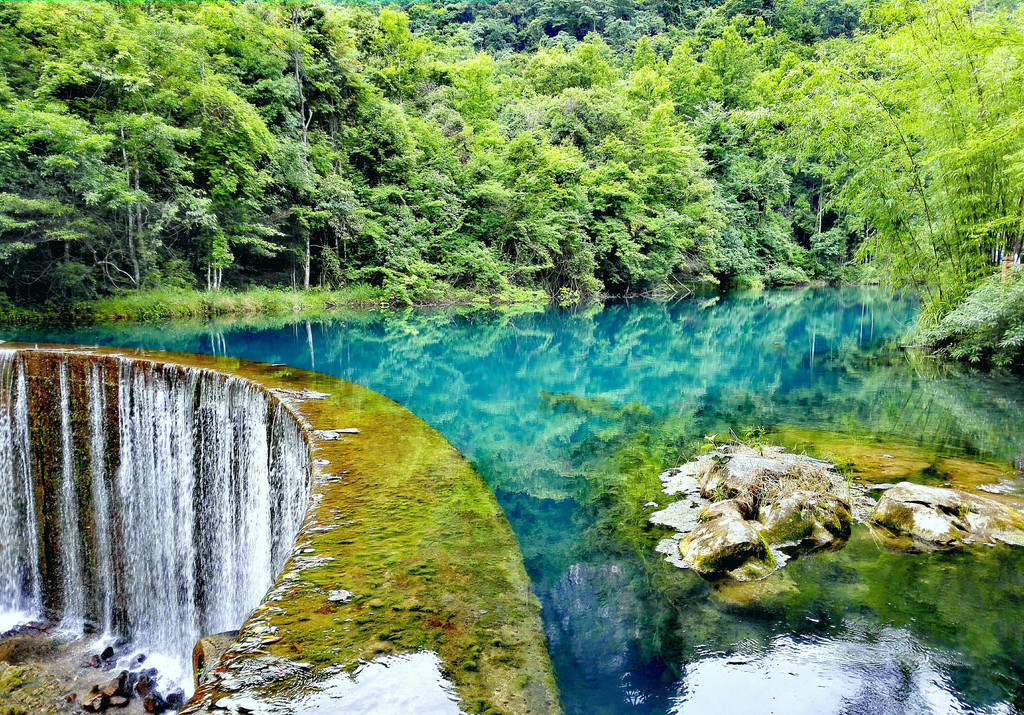
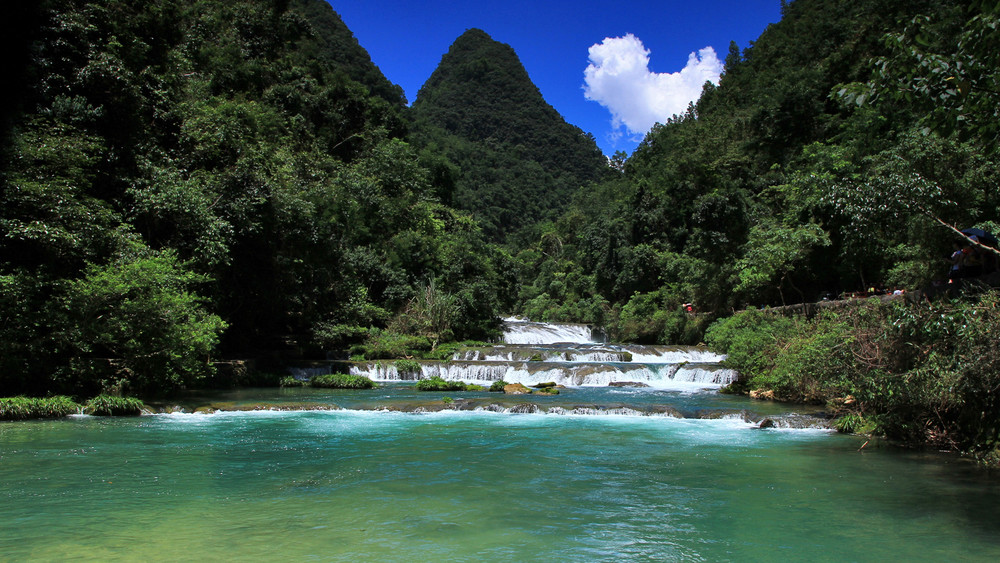
On overcast days the pool shifts through pale blue, bright blue and deep blue in one sweep of the eye — Libo's most photographed sight.
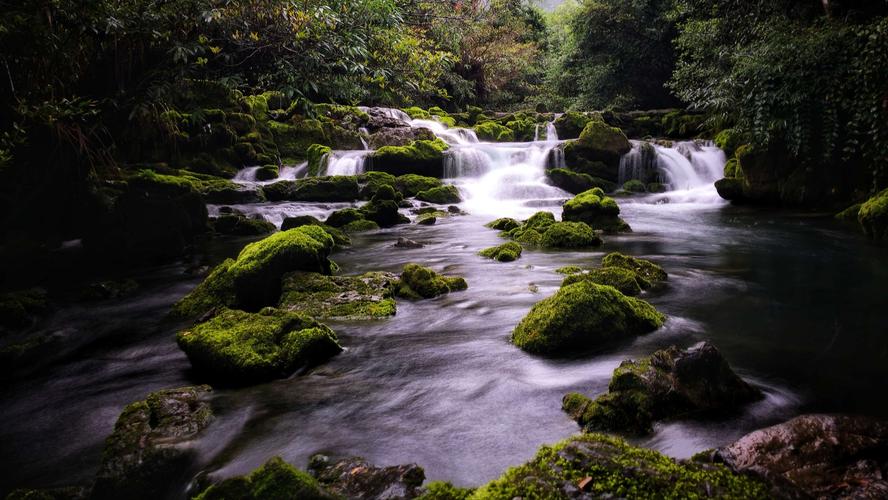
Six hundred metres of trees rooted in rushing water — the water flows over the stone and the trees grow in the water. Take off your shoes and feel it.
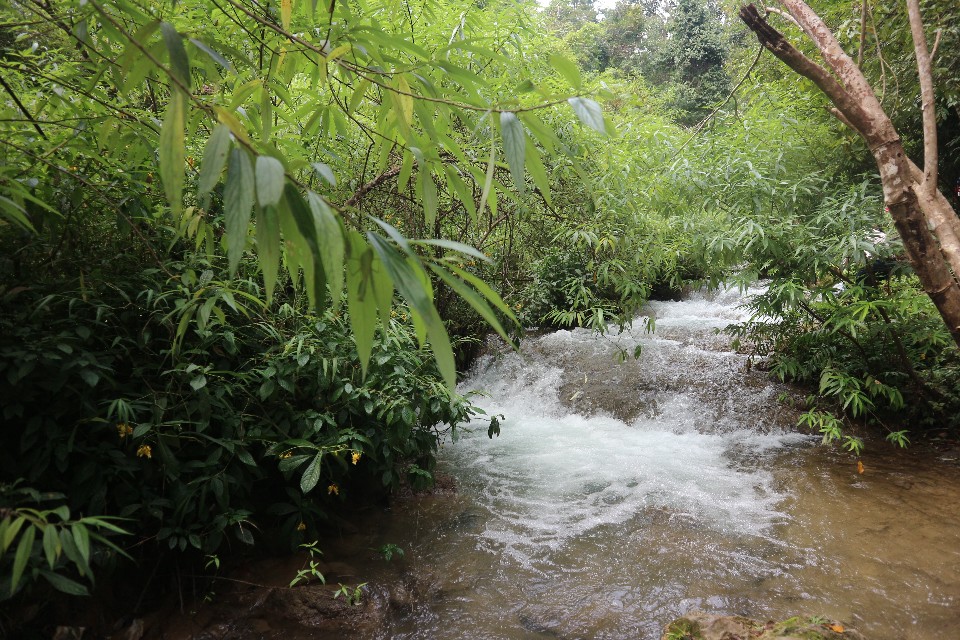
Wild river fish, roasted and topped with soybeans and dried chillies — the dish you cannot find outside Libo, best at the night market on Zhangjiang North Road.
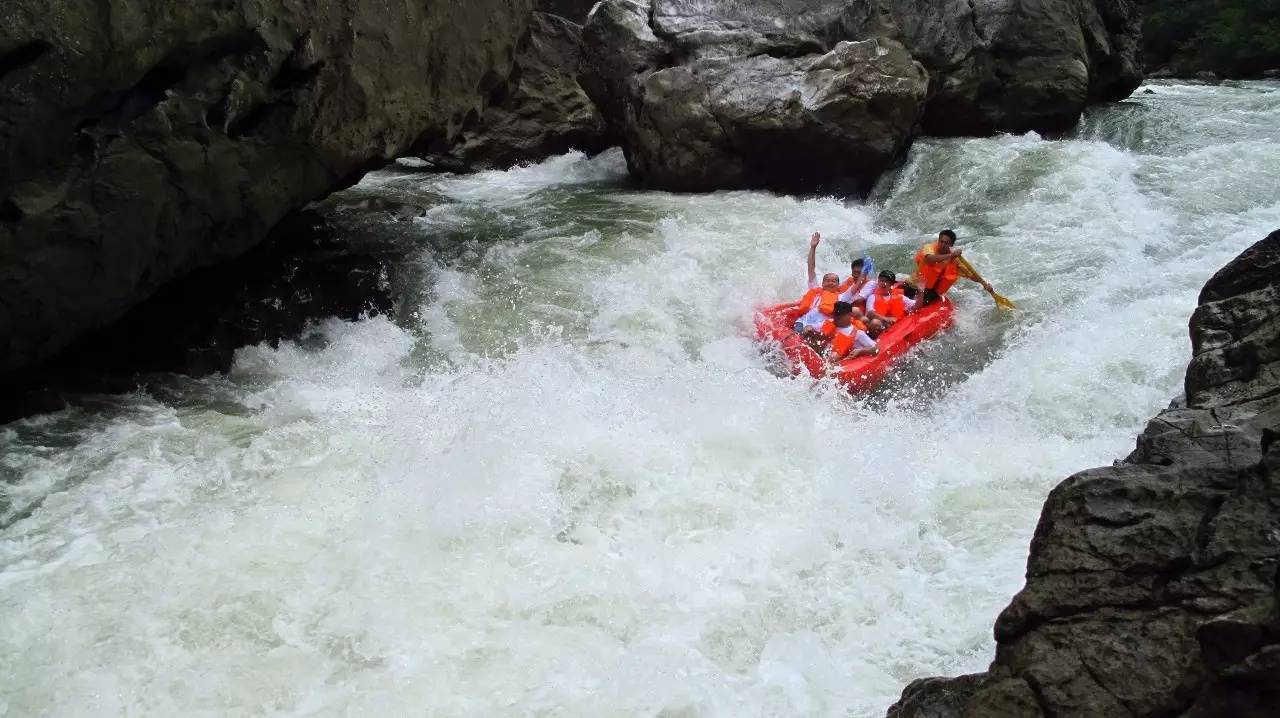
Six kilometres of rapids with nearly 100 metres of drop, threading karst gorges — the most thrilling way to see Libo's landscape.
Libo's signature experiences — the reasons travellers fall for this emerald corner of Guizhou.
An arc of silk-thin waterfall pours into a pool of impossible turquoise — the colour deepens to near-indigo on overcast days. The most beautiful artificial view in the park.
The largest and best-preserved primitive karst forest on earth's same latitude — a UNESCO heritage site of stone-wrapped trees, hidden waterfalls and ancient villages.
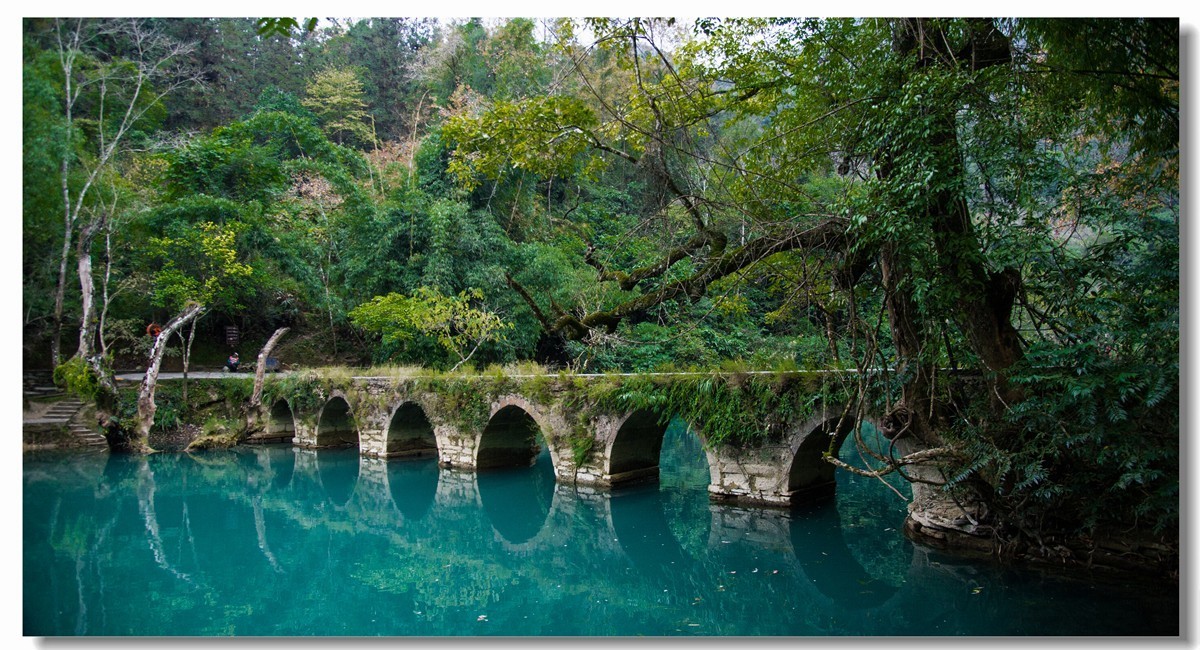
Built in the Daoguang era (1820s), the seven-arch stone bridge once linked Guizhou and Guangxi — this side Guizhou, that side Guangxi. Today it arches over the emerald Xiangshui River.
"Water flows over stone, trees grow in water" — wade 600 metres through a rare karst water forest where rare trees root in the stream bed.
Drift and splash down a 6 km karst gorge with close to 100 m of drop — the most exciting way into Libo's river world.
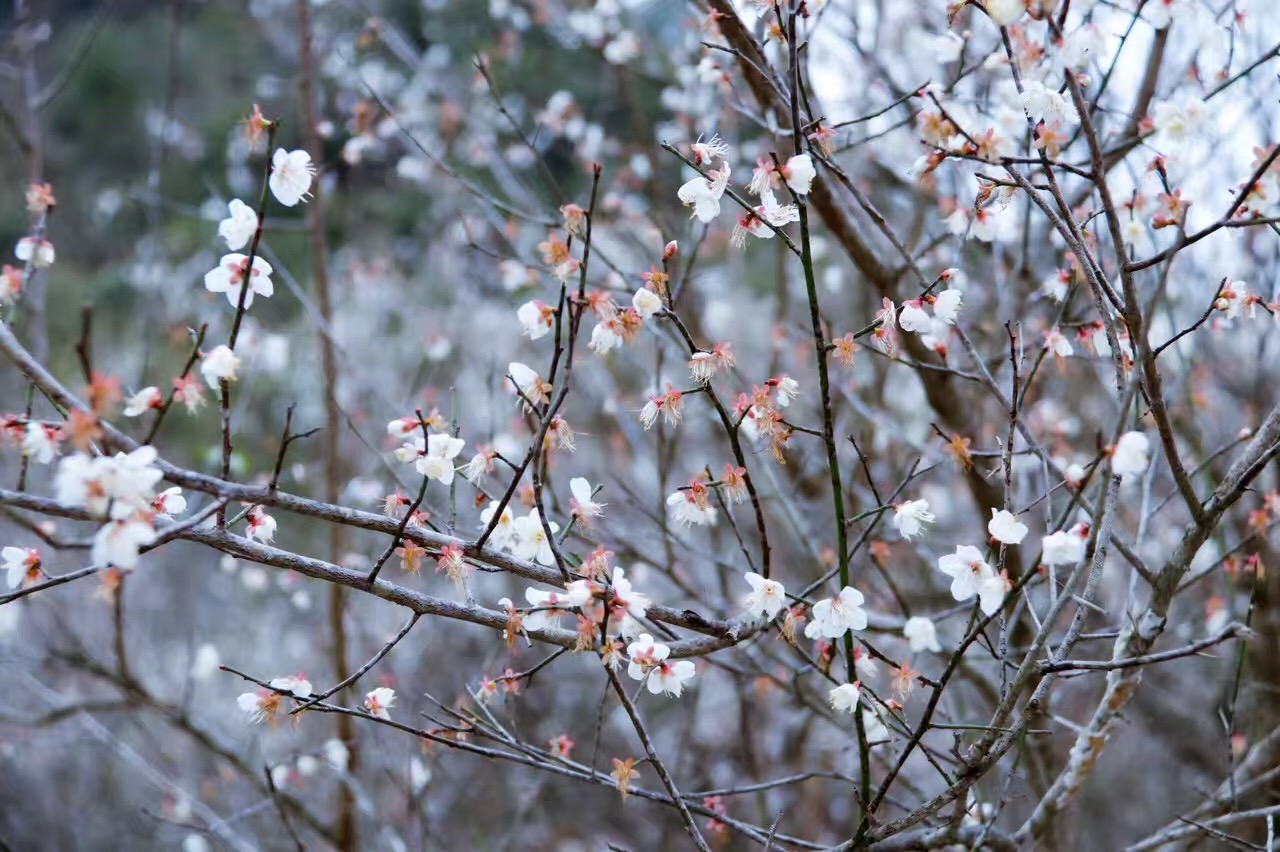
In January–February, 20,000 mu (about 1,330 ha) of wild plum groves burst into bloom across the Meiyuan Valley — the largest wild plum landscape in southwest China.
May to October offers the fullest rivers and waterfalls after the rains. The water turns its famous deep turquoise in autumn and winter — September to February is the bluest window — and winter adds the Meiyuan plum blossoms. More Libo Q&A →
Two to three days. One day covers Xiaoqikong, one day Daqikong plus the old town, and a third day goes deeper into Maolan Karst Forest or down the Shui Chun River rapids. A tight one-day visit to Xiaoqikong alone is also possible.
A two-to-three-day trip typically runs RMB 600–1,500 (about US$85–210) per person, excluding flights and hotels. Xiaoqikong is RMB 110 (summer) or 90 (winter) plus a RMB 40 shuttle; Daqikong is RMB 55 plus RMB 20 for the boat. Students get half-price on many tickets with a valid ID.
No — Libo has no railway station. Fly into Libo Maolan Airport (12 km from town), or take a high-speed train to Dushan or Mawai and continue by coach (about 2 hours). Direct coaches also run from Guiyang East Bus Station, about six services a day for around RMB 100.
Yes. The water owes its colour to the karst limestone — calcium minerals scatter light into blues and greens. It is most striking after rain-free stretches in autumn and winter, and on overcast days the pools turn a deeper, almost ink-blue.
Yes. Email [email protected] or message us on WhatsApp with your dates and interests. Our team arranges Libo hotels, tours, rafting tickets, flights and transport — free of charge and without obligation.
The full Xiaoqikong loop, east gate to west gate, at a relaxed pace. More Libo itineraries with tickets & transport →
The classic loop. Enter at the east gate, cross the Bronze Drum Bridge, walk to the Xiaoqikong Bridge, then follow the Xiangshui River through the 68-tier Cascade and under Laya Waterfall. Continue to the Water Forest (take your shoes off!), then ride the shuttle to Wolong Pool for the arc waterfall. Finish with a paddle across Yuanyang Lake if time allows, and exit at the west gate.
The classic sightseeing route: both arch-bridge parks, then the karst forest. Full itinerary page →
Xiaoqikong & Daqikong. Morning at Xiaoqikong (bridge, 68-tier Cascade, Laya, Water Forest, Wolong Pool). Afternoon at Daqikong for the Natural Bridge — "the Arc de Triomphe of the East" — and a boat ride under the cliff. Evening: Zhangjiang grilled fish at the night market.
Maolan Karst Forest. Drive into the reserve: the Chuandong (Wartime Tunnel) relics, Yaogu Buyi village, Stone Forest (stone wrapped in trees, trees wrapped in stone), Ban Zhai Red Seventh Army site, the Water Forest, Latan Falls, Huangyang Ravine of ten-thousand-year-old boxwood, Yaosuo Ancient Bridge (1832) and Qinglong Pool. Return to town in the evening.
For travellers who want rafting, scenery and a slower rhythm. Full itinerary page →
Shui Chun River rafting. Drift the 6 km canyon past Terror Gorge and under the Natural Bridge, ending near the Yaofeng Cave. Evening: the Water Rhyme Zhangjiang live riverside show.
Xiaoqikong. The full classic loop at leisure, with a long paddle on Yuanyang Lake's water maze (two big lakes, four small ones — said to be warm in winter and cool in summer).
Maolan or the old town. A half-day in the Maolan reserve or a morning wandering Libo Ancient Town's Buyi, Shui, Yao and Miao lanes, then shop for batik, horse-hair embroidery and green plum wine before heading out.
Libo's essential sights, each with practical details. Prices are reference rates — always confirm at the gate or with our booking team.
The soul of Libo: a 7 km chain of turquoise pools, the seven-arched Qing-Dynasty bridge, a 68-tier cascade in a narrow valley, Laya Waterfall, the wadeable Water Forest, arc-shaped Wolong Pool and the boating maze of Yuanyang Lake. One full day is barely enough.
| Admission | ¥110 summer / ¥90 winter; shuttle ¥40; insurance ¥5 |
| Hours | 8:00–17:30 (ticket desk closes earlier in winter) |
| Address | Xiaoqikong, Wengang Township, Libo County, Qiannan Prefecture, Guizhou |
| Getting there | Shuttle bus from Libo bus station 6:00–17:00 every 15 min (¥9); taxi or chartered car ≈30 min |
| Phone | +86 854 3561 176 |
| Best season | May – October for full water; Sep – Feb for deepest blue |
A dam wall turned into a perfect arc of waterfall, pouring into a pool of layered blues. On overcast days the water shifts from pale blue to bright blue to ink blue in a single glance — photographers wait all day for that cloud.
| Admission | Included in Xiaoqikong ticket |
| Hours | Same as Xiaoqikong, 8:00–17:30 |
| Address | Upper section, Xiaoqikong Scenic Area, Libo |
| Getting there | Electric shuttle from the west gate area |
| Phone | +86 854 3561 176 |
| Best season | September – February for deepest colour |
A world-class karst water forest: 600 metres of riverbed where dozens of rare tree species root directly in the water and the current rushes between the trunks. Boards and stepping stones let you walk right through it — or take off your sandals and wade, "Little Jiuzhai" style.
| Admission | Included in Xiaoqikong ticket |
| Hours | Same as Xiaoqikong, 8:00–17:30 |
| Address | Middle section, Xiaoqikong Scenic Area, Libo |
| Getting there | On foot between the 68-tier Cascade and Wolong Pool stops |
| Phone | +86 854 3561 176 |
| Best season | May – October (water is fullest and warmest) |
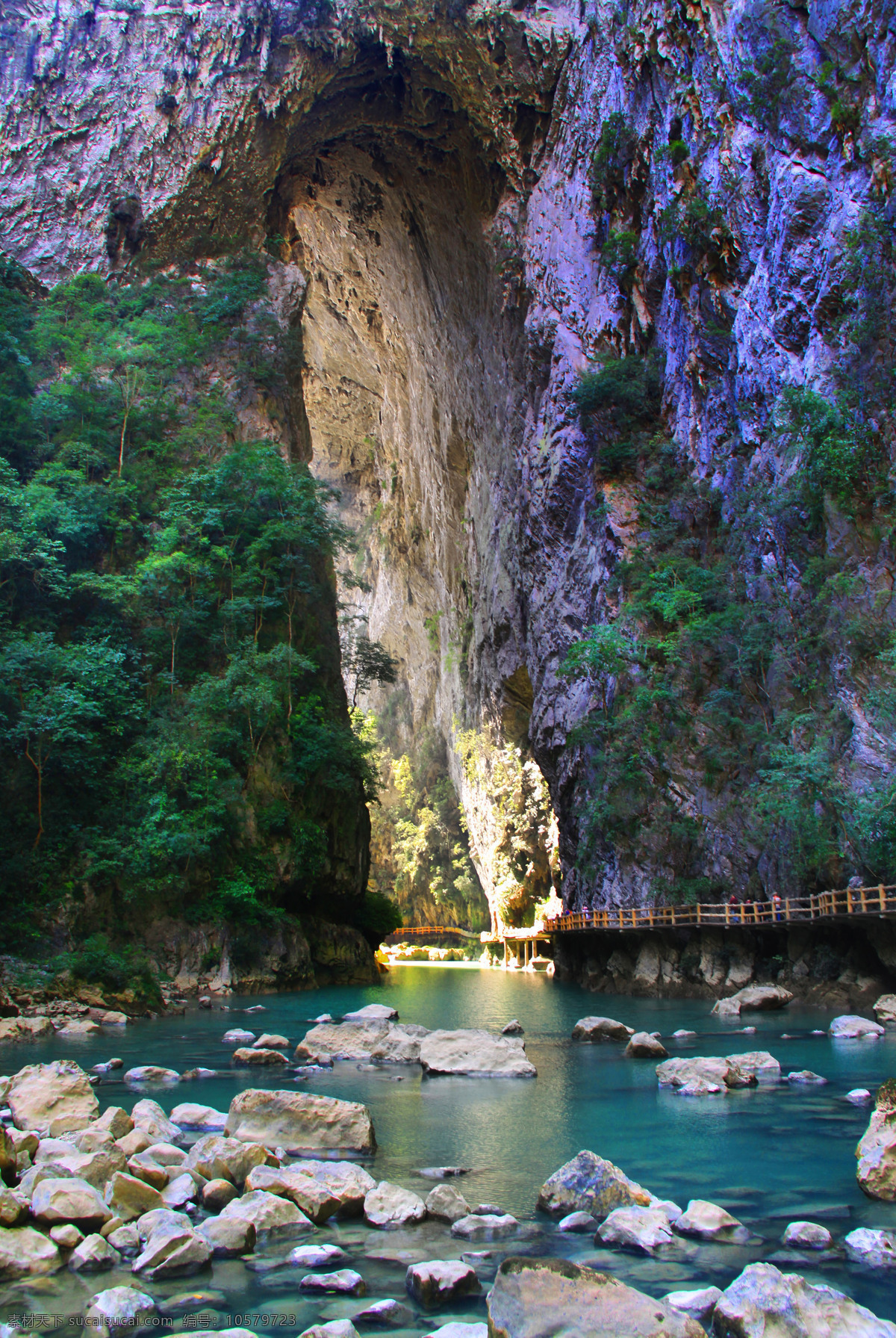
The grander, quieter sibling of Xiaoqikong. Its highlight is the Tiansheng Qiao (Natural Bridge) — a 90-metre-high, 50-metre-wide karst arch formed over millennia, spanning the river with a wooden walkway beneath. The Terror Gorge and the Yaofeng Cave trail were damaged by floods and can only be viewed from afar.
| Admission | ¥55; boat ¥20; insurance ¥5 |
| Hours | 8:00–17:00 |
| Address | Daqikong, Libo County, Qiannan Prefecture, Guizhou |
| Getting there | Shuttle bus from Libo bus station; 20 min past the Xiaoqikong turn-off |
| Phone | +86 854 3561 256 |
| Best season | May – November |
A UNESCO World Heritage karst ecosystem and international biosphere reserve: stone forests where rock wraps tree and tree wraps rock, ten-thousand-year-old boxwood in Huangyang Ravine, the 1832 Yaosuo Ancient Bridge, Buyi and Yao villages, wartime tunnel relics and the winter plum-sea of Meiyuan. Admission is a single through-ticket covering the whole reserve.
| Admission | Through-ticket ¥50 + insurance ¥5; students half-price |
| Hours | 8:00–18:00 (village sections open daily) |
| Address | Maolan Township, Libo County, Qiannan Prefecture, Guizhou |
| Getting there | Chartered car or local bus from Libo town; no fuel stations inside the reserve — fill up first |
| Phone | +86 854 3618 881 |
| Best season | All year; plum blossoms January – February |
The valley's most exciting hour: 6 km of river with nearly 100 m of drop, threading Terror Gorge and passing under the Natural Bridge. Independent raft ¥200, guided raft ¥220, children under 14 ¥30 off.
A live riverside performance staged on the Zhangjiang River — Buyi and Shui songs, dances and costumes against a backdrop of the old town lights. A lovely evening out after a day of waterfalls.
Every January–February, 20,000 mu of wild plum groves bloom across Meiyuan Valley in Maolan — the largest wild plum landscape in southwest China, with ancient trees over 200 years old. The town hosts a blossom festival with markets and performances.
Miao Jumping Festival (spring) with its famous "throwing people" courtship game; Yao Mountain Spinning-Top Festival; and the Buyi Little New Year in late autumn. Dates shift with the lunar calendar — ask our team for the year's schedule.
Libo's accommodation clusters around the county town (best for the night market) and the scenic-area gates. Budget inns and farmstays are plentiful; in July–August and for the plum festival, book ahead. Our team books any of these for you free of charge.
A popular boutique inn 50 m past the night-market snack street — quiet rooms in the heart of town, perfect for evening grilled fish.
A dependable 3-star hotel with standard services and breakfast — a solid mid-range choice near the town centre.
Clean modern rooms at a fair price, convenient for the bus station and scenic-area shuttles.
Budget hotel sitting between the Xiaoqikong and Daqikong entrances — wake up inside the scenery and beat the morning crowds.
Family-run farmstay with home cooking and simple rooms — a genuine taste of country life near the scenic area.
Lodging inside or at the edge of the Maolan reserve — run by Buyi and Yao families, with local meals and village walks at your doorstep. Booking advised for the plum-blossom season.
Libo's table mixes river fish with four minority kitchens — Buyi, Shui, Yao and Miao. The signature is Zhangjiang grilled fish: wild river fish roasted over charcoal and piled with soybeans and dried chillies. Tell the chef if you cannot take heat!
The dish that defines Libo — wild Zhangjiang fish roasted with a topping of fried soybeans and dried chillies. Order at the night-market stalls on Zhangjiang North Road and add your own sides.
A Shui-minority ceremonial dish: river fish stuffed with leek and herbs, then steamed for 5–10 hours until the bones soften. A taste of water-country tradition.
Guizhou's beloved hand-roll: a paper-thin pancake wrapped around shredded vegetables, dipped in sour broth. Great with friends — and famously vegetarian-friendly.
Not for the faint of heart: "stinky sour" is a fermented pot that gets better with age, and pickled sour meat is pork cured in the sour tradition. Adventurous eaters should ask for small portions first.
Sweet-tart bayberry (yangmei) juice served chilled — the perfect antidote to spicy fish, from a small shop that locals queue for.
A homely little restaurant under the banyan tree serving honest home-style Buyi dishes — ask what is fresh today and let the auntie decide.
Libo Maolan Airport (荔波机场) sits 12 km from the county town — the easiest way in for long-haul travellers, with flights from Guiyang and a few regional cities.
Libo has no railway station. Take the high-speed train to Dushan (独山) or Mawai (麻尾) and continue by coach — about 2 hours to Libo town.
Direct coaches connect Libo with Guiyang and the region — about six services a day from Guiyang East Bus Station for around ¥100.
Well-built expressways cut through karst peaks all the way to Libo. Once inside the scenic areas and Maolan, roads are narrow and mountain-slow — drive with care.
Libo taxis start at ¥4 — cheap for short hops. For the scenic areas and Maolan, a chartered 7-seat car at ¥120–300/day is the smart way to travel.
Inside the parks, electric shuttles and small boats carry you between stops — the shuttle is required for the upper section of Xiaoqikong.
Buyi hand-woven cloth (earth-toned, geometric patterns), Yao batik (indigo wax-resist textiles), Shui horse-hair embroidery — a living fossil of textile art — green plum wine brewed from Meiyuan plums, and feng zhu "wind-dried pig", a cured whole-suckling-pig tribute dish. The old town and the night market carry all of them.
Libo Ancient Town: reconstructed on the site of the old stone town, its lanes mix Buyi, Shui, Yao and Miao craft shops — best after sunset when the lights come on. Night market, Zhangjiang North Road: food stalls plus souvenir stalls for cloth, batik and plum wine. Prices are relaxed and bargaining is light.
Libo County People's Hospital — +86 854 3612 120 (main county hospital, emergency room staffed 24h). For anything serious, Guiyang is about 3.5 h by road. Pharmacies are common along the main streets of Libo town.
Libo Tourism Bureau: +86 854 3610 516. Maolan Reserve reception: +86 854 3618 881. Libo bus station: +86 854 3611 077. Airport ticket hotline: +86 854 3615 377. Emergency: 120 (ambulance), 110 (police) — dial without the area code.
Six kilometres of karst canyon with close to 100 m of drop — red rafts, splashy rapids and a view of the Natural Bridge from below. Independent raft ¥200, guided ¥220; children under 14 ¥30 off.
More Libo day tripsFrom January to February, 20,000 mu of wild plum trees bloom across the valley floor and karst hills of Meiyuan — the largest wild plum landscape in southwest China, with ancient trees over 200 years old.
More Libo day tripsThe famous turquoise water is bluest in autumn and winter, and on overcast days. If you can, plan the pools for a cloudy afternoon and the waterfalls for after rain.
The Water Forest is a wading walk — bring quick-dry clothes and sandals with grip. For the rafting day, a full change of clothes and a dry bag for your phone are essential.
Students get half-price entry at Maolan and discounts at the big parks — a valid ID unlocks real savings across Libo.
There are no fuel stations inside the Maolan reserve. Top up in Libo town, and carry cash for village sections where card terminals are scarce.
Enter Xiaoqikong at the east gate and exit west — you walk with the river instead of against it, and you beat the tour-group rush by two hours.
Libo sits in southern Guizhou's Qiannan (South Guizhou) Buyi and Miao Autonomous Prefecture, on the plateau edge above the Guangxi basin. Its layered karst — the limestone towers, gorges and subterranean rivers of the Libo Karst — is part of the South China Karst UNESCO World Heritage. The climate is subtropical and humid: warm through much of the year, with the heaviest rain in June–August.
Under the Qin and Han dynasties this was Wulian County, home of the Han-era scholar Yin Zhen. In the modern era it is remembered as the birthplace of Deng Enming, a founder of the Chinese Communist Party, whose former residence and memorial hall stand in Libo town. Around 93% of residents are minority peoples — mainly Buyi, Shui, Yao and Miao — whose languages, festivals and crafts define the region. The town's story has been told in the film Young Deng Enming and the travel classic Guizhou's Secret Land.
Buyi weavers make the earth-toned hand-woven cloth; Shui people keep the mysterious "Shui script" and the horse-hair embroidery known as a textile fossil; Yao — including the famed White-Trouser Yao — practise the "chiselling the wall to talk love" courtship; Miao of the Moon Mountains celebrate with the spring Jumping Festival. Each festival is a living chapter of Libo.
Everything on ToursChinaTravel is bookable through our team by email or WhatsApp. Here's where each part of your Libo trip lives on the site.
Star-rated sight details — hours, tickets, phones and travel tips for Xiaoqikong, Maolan and more.
Browse Guizhou sightsStar-rated hotels and farmstays across Guizhou, sorted by rating — all bookable by our team.
Book a Guizhou hotelRoutes, airlines and schedules for Guiyang, Libo Maolan Airport and the region.
See China flightsLicensed Guizhou travel agencies with addresses, phones and booking contacts.
Find a Guizhou agencyPlum wine, Buyi cloth, batik and regional foods — where each is made and where to buy it.
Browse Guizhou specialtiesDalian, Harbin, Changbaishan, Guiyang, Shenyang and more — city by city, in one place.
Browse all guides