>
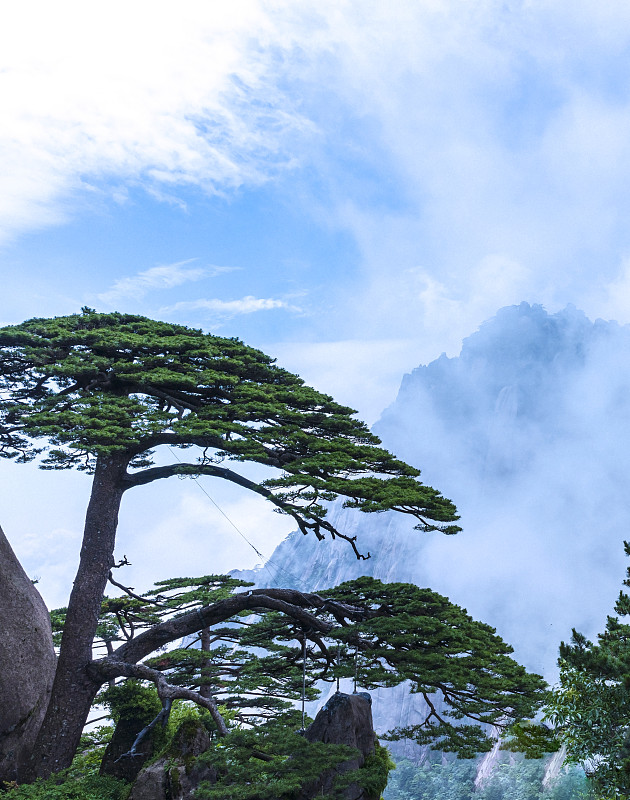
The Welcoming Pine of Huangshan reaching over the sea of clouds
Home › Travel Guides › Huangshan

Huangshan Travel Guide — the Wonder of the East

China's most celebrated mountain — granite peaks, pines growing from bare rock, seas of cloud and hot springs that earned it the title 'the most extraordinary mountain under heaven' (Xu Xiake's verdict on every China itinerary).

Welcoming PineSea of CloudsGranite PeaksSunriseHot Springs
2–4 DaysTwo for the classic circuit; three adds Xihai Grand Canyon and a second sunrise
RMB 500–1,000≈ US$70–140 per person, excl. long-haul transport
All SeasonsGreen pines all year; clouds spring–autumn, snow in winter
Free Booking HelpHotels, tickets & tours by our team
What's inside this guide Bucket List · Highlights · Q&A · Itineraries · Attractions · Activities · Where to Stay · Food · Getting Around · Shopping · Practical Info · Day Trips · Tips · Background · Plan Your Trip

Huangshan Bucket Listthe little things that make this mountain unforgettable

01

Hike the Xihai Grand Canyon

The mountain's wildest beauty — sheer granite walls, hanging stairways and the 'Wonder-Working Pine' growing upside-down from the rock.

02

Watch sunrise from Bright Summit

The classic Huangshan dawn: a plateau 1,860 m up where the whole East China sea of cloud rolls below your feet.

03

Meet the Welcoming Pine

Huangshan's living symbol — a 800-year-old pine reaching out over the precipice beside the Jade Screen pavilion.

04

Cross the Sea of Clouds

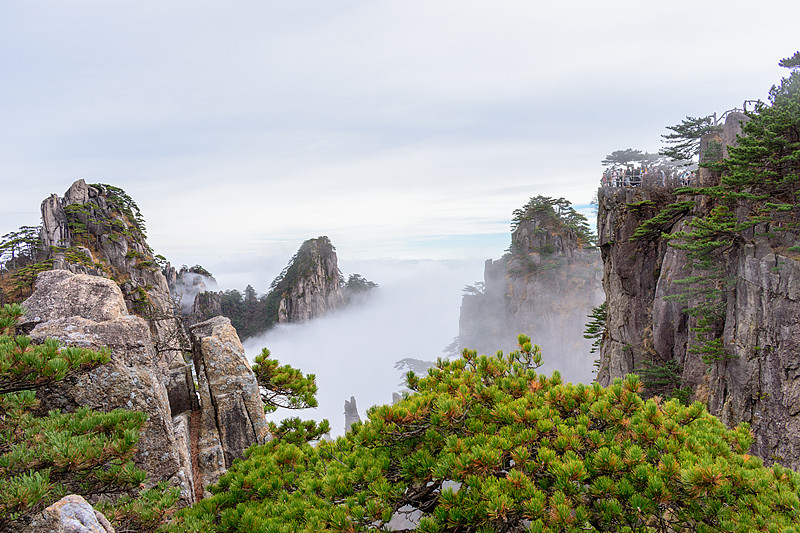
Four of the 'Five Wonders' — pines, rocks, clouds and springs — converge when the valleys fill with cloud after rain.

05

Soak in the hot springs

42°C mineral springs at the foot of the mountain, said to have healed the Yellow Emperor — drinkable, soakable, unforgettable.

06

Climb to the summit the hard way

Cable cars make it easy, but walking the steps from Cloud Valley to the peaks is the full pilgrim experience.

Top Highlightswhat Huangshan does best

No.1Pines from bare rock

Pines from bare rock

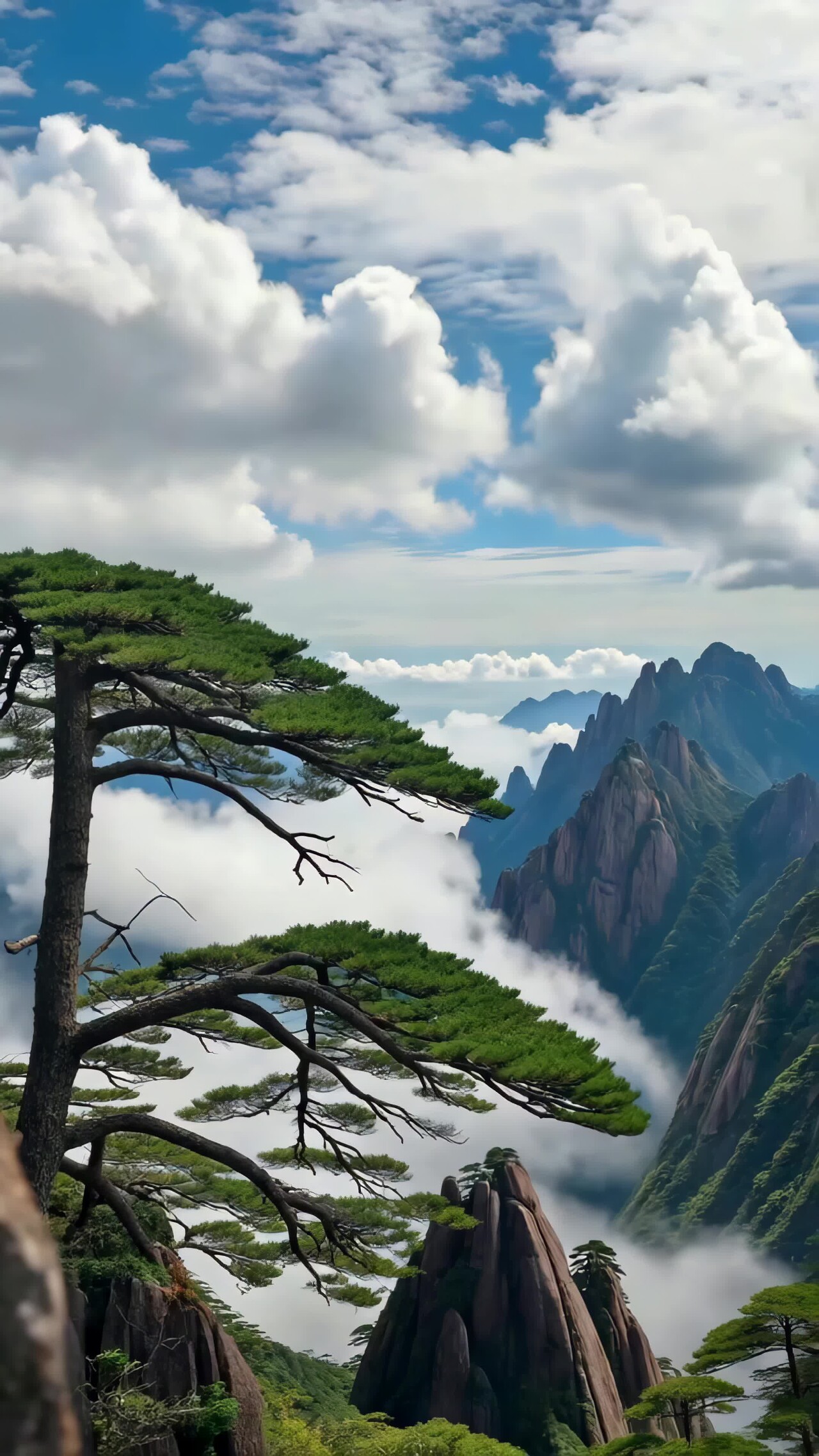
The Welcoming Pine, the Black Tiger Pine and a thousand more, seeded by birds into the cracks of granite cliffs and shaped by 1,500 m of wind.

No.2Seas of cloud

Seas of cloud

When the mist settles, the peaks become islands in a white ocean — the sight Xu Xiake crossed China to see.

No.3Granite peaks

Granite peaks

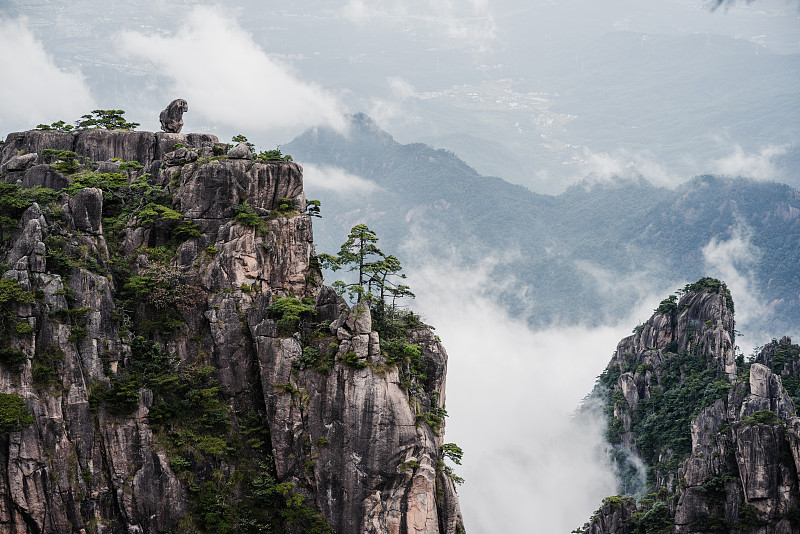
Lotus Peak (1,864.8 m), Celestial Capital and the strange rock forms — Monkey Gazing at the Sea, the Flying Stone, Immortal's Pen.

No.4Hot springs & Huangshan maofeng tea

Hot springs & Huangshan maofeng tea

Hot springs at the foot of the mountain and one of China's finest green teas, grown on the misty slopes around the peak.

Questions & Answerswhat travellers always ask about Huangshan

When is the best time to visit Huangshan?

All four seasons have their claim: April flowers and fresh green; July for the classic sunrise-and-clouds window; late autumn for red leaves and clear air; December–February for the snowscape and off-peak ticket prices. Rain is common year-round, so pack a light raincoat — the cloud sea you came for is born of that rain.

Is it cold on the mountain?

Most of the year it is pleasantly cool — spring to autumn a windproof jacket or light fleece is enough. Deep winter, especially after snow, the pre-dawn temperature can drop to −20°C; rent a padded coat at the summit hotels. Weather changes fast: fog, rain and sun can all arrive in one afternoon.

How many days do I need?

Two days is the classic circuit — one night on the mountain covers the main peaks. Three days allows the Xihai Grand Canyon loop, a second sunrise and side trips like the Jade Valley and Tunxi Old Street. Very fit travellers can squeeze the highlights into one very long day using both cable cars.

What's the difference between Huangshan and Tunxi?

Huangshan city is the prefecture-level city created in 1987; its downtown is Tunxi. The train station sign 'Tunxi' is Huangshan station, and buses from Hangzhou to 'Tunxi' arrive in the city — the mountain itself is 60 km further north.

Where are the best places to photograph sunrise?

Dawn-sunrise classics: Dawn Pavilion (Shuguangting), Qingliang Terrace, Lion Peak, Danxia Peak, Shixin Peak, the Beihai viewing platform, Bright Summit, Baimo Ridge, Jade Screen, Lotus Peak and Celestial Capital. The sun's position shifts with the season — in winter only the southern viewpoints see it.

Can I book my Huangshan trip through ToursChinaTravel?

Yes — email [email protected] or message us on WhatsApp. Our team arranges hotels on and off the mountain, cable-car tickets, guides and transport, free of charge and without obligation.

Sample Itinerariesone, two or three days on the mountain

Huangshan Classic 2-Day Tour

The essential circuit with a night on the mountain — both cable cars, the West Sea sunset and a Bright Summit dawn. View the plan →

Day 1

Cloud Valley cable car up to Shixin Peak and the famous pines, across to Lion Peak and Monkey Gazing at the Sea, then west past the Xihai Hotel to the Paiyun Pavilion for sunset over the West Sea Grand Canyon.

Day 2

Early dawn at Bright Summit, then south through the Aoyu Cave, the One-Line Sky and Lotus Peak to the Welcoming Pine at Jade Screen — cable car down to Ciguang Pavilion and the hot springs.

Huangshan Slow 3-Day Tour

The unhurried route that adds the Grand Canyon floor, a second sunrise and a night in Tunxi. View the plan →

Day 1

Cloud Valley up to Beihai, afternoon descent into the Xihai Grand Canyon (first ring, return by cable car) and sunset at Paiyun Pavilion.

Day 2

Bright Summit dawn, then the southern peaks — Aoyu, Lotus, Welcoming Pine and Celestial Capital — down to Ciguang, evening soak in the hot springs and night bus to Tunxi.

Day 3

Morning in Tunxi Old Street — Huizhou architecture, stinky tofu and maofeng tea — before the onward train.

All plans are bookable end-to-end by our team — see the full day-by-day Huangshan itineraries hub, or the day-trip pages for single-day options.

Top Attractionstickets, hours, transport & insider tips

Welcoming Pine (Yingkesong)

Welcoming Pine (Yingkesong)

Huangshan's living emblem, leaning from the Jade Screen cliff over the trail between the front and rear peaks — photographed by every visitor since the Qing dynasty.

Free · all day · Must-see · Walk-up trail
View details →
Bright Summit (Guangmingding)

Bright Summit (Guangmingding)

The flat, high plateau at 1,860 m where the whole mountain's circuits meet — the classic sunrise-and-sea-of-cloud viewpoint and the highest point on the standard route.

Free · all day · Sunrise · Summit
View details →
Xihai Grand Canyon

Xihai Grand Canyon

The wildest scenery on the mountain — sheer granite walls, the suspended stairway and views into a cloud-filled gorge; walk the first ring in 1.5–2 h and ride the new valley cable car back.

Free · cable car ¥100 · Grand Canyon · Hike
View details →
Lotus Peak (Lianhuafeng)

Lotus Peak (Lianhuafeng)

The true summit of Huangshan at 1,864.8 m — a narrow stone staircase up a granite blade, worth the squeeze for the 360° view of the whole massif.

Free · all day · Summit · Steep climb
View details →
Celestial Capital Peak (Tiandufeng)

Celestial Capital Peak (Tiandufeng)

The steepest of the great peaks, approached along the Jiyu Ridge — 'carp's back' — with chains and heart-stopping drops; many travellers walk it in one direction only.

Free · all day · Summit · Chains
View details →
Hot Springs (Wenquan)

Hot Springs (Wenquan)

The mineral springs at the mountain's south foot — a constant 42°C, drinkable and soakable, with the Spring Valley Hotel and spa beside them.

¥198 bath · 06:00–22:00 · Hot spring · Relax
View details →

More in the region on the Anhui attractions page.

Activities & Festivalsfestivals, walks and mountain culture

Huangshan International Mountaineering Festival

Held most autumns — guided group ascents, rock-climbing demos and photography walks timed to the clearest cloud-sea season.

Tea-picking on the misty slopes

Huangshan maofeng, China's great green tea, is picked around Qingming (early April) on the village slopes — join a picking morning and taste the fresh leaf in a local tea house.

Photographing the four wonders

The classic pursuit: pines, strange rocks, cloud seas and hot springs. Dawn at Bright Summit and dusk at Paiyun Pavilion are the two fixed points of every photographer's day.

Huizhou old-street wandering

At the mountain's foot, Tunxi Old Street (free) is a living museum of Hui-style architecture — shopfronts, paper umbrellas, stinky tofu and ink-stone workshops.

Where to Stayfrom summit hotels to Tunxi guesthouses

Every hotel below is bookable by our team; browse the full Anhui hotels directory.

Beihai Hotel (summit)

The classic summit stay at 1,630 m, steps from Bright Summit sunrise and the west-sea circuit — the easiest base for dawn without a 3 a.m. start. From ¥800. Book well ahead in high season.

Xihai Hotel (summit)

Beside the Paiyun Pavilion and the Xihai Grand Canyon entrance — the best positioned for canyon sunsets. From ¥700.

Yuping Tower Hotel (summit)

At Jade Screen by the Welcoming Pine — the front-peak alternative with the shortest sunrise walk of all. From ¥900.

Huangshan International Hotel (Tunxi)

The long-standing city hotel on Huashan Road near the old railway station, a comfortable base before or after the mountain. From ¥280.

Tunxi Old Street guesthouses

Hui-style courtyard inns inside the old street — ink-stone shops downstairs, tea rooms upstairs, the most atmospheric beds in the city. From ¥150.

Food & RestaurantsHuizhou cuisine and mountain food

Stinky tofu (chou doufu)

Tunxi's most famous smell and taste — fermented tofu fried crisp and served with chili sauce; sold at street stalls all over the old street.

Huizhou braised dishes

The classic Hui style: slow-braised pork with dried bamboo shoots, stone-ear fungus, and 'one-pot Huizhou' — ask any old-street restaurant for the house special.

Huangshan hairy tofu

A local specialty — tofu cultured until it grows white 'hair', then fried; an acquired taste locals swear by (try it at Laojie First Restaurant).

Huangshan maofeng tea

One of China's ten famous teas, grown on the misty slopes — the light, sweet green tea is the mountain's finest souvenir.

Bamboo rice & mountain vegetables

On the mountain, simple rice steamed in bamboo tubes with local mushrooms, fern tips and wild greens — the honest fuel of the summit trail.

Shopping & Souvenirswhat to bring home from Huangshan

Huangshan maofeng tea

The famous green tea — buy loose leaf from a reputable Tunxi shop, not a tourist stall, and smell the difference first.

Huizhou ink stones & brushes

Shexian ink stones and Huizhou brushes are among China's 'four treasures' of the scholar — Tunxi Old Street has the best workshops.

Bamboo & wood crafts

Woven bamboo baskets, carved wooden boxes and folding fans — light, practical and unmistakably Huizhou.

Mountain herbs & honey

Wild honeysuckle, ginseng and mountain honey from the villages below the summit — the traditional 'Huangshan health kit'.

Full local-product guides live on the Anhui specialties page.

Getting There & Aroundair, rail and road to the mountain

By airFly to Huangshan Tunxi Airport

Fly to Huangshan Tunxi Airport

Tunxi Airport (the 'Huangshan' airport) lies 5 km from the city with flights from Beijing, Shanghai, Guangzhou, Shenzhen, Chengdu and Xi'an. From the city take the 'New Guoban' scenic bus (¥20) or taxi (¥100+) to the mountain's South Gate at Tangkou.

By trainHigh-speed rail to Huangshan North

High-speed rail to Huangshan North

The HSR network reaches Huangshan North station (about 30 min by taxi/shuttle from Tunxi and 1 h from Tangkou) from Shanghai (about 3 h), Hangzhou (1.5 h) and Hefei (1.5 h). Classic trains still call at the old Tunxi station.

By coachCoaches from Hangzhou, Shanghai & more

Coaches from Hangzhou, Shanghai & more

Direct air-con coaches run to Tangkou (the mountain gate) from Hangzhou (about 3.5 h, ¥90) and Huangshan city; from Shanghai take the HSR and change at Huangshan North.

Inside the park

From the South Gate at Tangkou, shuttle buses climb to the cable-car stations at Cloud Valley (rear) and Ciguang (front) — ¥19 one way. The park opens about 06:30 (varies by season).

Three ropes up the mountain

Cloud Valley, Yuping and the new Taiping/Taihang lines lift you to the summit circuits in 10–15 min (¥80–100 one way; round trip ¥160–200). Peak-season queues can run 1–2 h — go early.

Mountain roads

Driving to Huangshan is scenic but the summit road is closed to private cars above the gates — park at Tangkou (¥30/day) and use the shuttles. In winter check ice conditions before driving.

Day Trips From HuangshanHongcun, Jade Valley and the old towns around the mountain

Hongcun Ancient Village (1 day)

Hongcun Ancient Village (1 day)

The UNESCO water-village of the Hui merchants — the Moon Pond, the South Lake Academy and the village that doubled for 'Crouching Tiger' village. Buses from Tunxi (¥25, 1 h) run all day.

Jade Valley (Feicui Valley) (half day)

Jade Valley (Feicui Valley) (half day)

A green pool-and-waterfall valley below the mountain's east side — 'Huangshan's most beautiful water', 10 km from Tangkou.

Tunxi Old Street & Shexian (half day)

Tunxi Old Street & Shexian (half day)

The old street of the tea and ink-stone merchants, plus the county town of Shexian with its ancient city wall and Huizhou houses — the culture below the peak.

Xidi & the Huizhou villages (1 day)

Xidi & the Huizhou villages (1 day)

Xidi, the other great UNESCO Hui village, pairs with Hongcun for the definitive Huizhou day — ancestral halls, carved gateways and ink-painting lanes.

Travel Tipsthings to remember

1 · Book the summit hotel early

Summit beds are few and golden-week prices double — book one to three months ahead in high season, or plan a very long day with both cable cars.

2 · Carry rain gear year-round

Huangshan's cloud sea is born of rain — a light packable raincoat and dry socks matter more than a perfect forecast. Fog can close the view in minutes.

3 · Go early for the cable cars

Peak-season queues at Cloud Valley can hit two hours. Start at first shuttle (about 06:00 from Tangkou) to be on the summit for the morning light.

4 · Reserve the winter road

After heavy snow the summit trails ice over — rent crampons at the gate, walk slowly, and check whether Bright Summit or Celestial Capital is temporarily closed.

5 · Verify tickets & scams

Buy the scenic-area ticket (¥190, two days valid) at official counters or the official app — ignore 'cheap ticket' touts at Tangkou who sell expired or fake passes.

Background & Historythe mountain the Yellow Emperor made famous

Geography & climate

Huangshan rises in southern Anhui, a granite massif born of a 100-million-year-old igneous intrusion, its summit at 1,864.8 m. A subtropical monsoon climate — wet, changeable and cool: the cloud seas that made it famous form when warm moist air meets the peaks.

A brief history

Named Yishan until the Tang, the mountain took the name 'Huangshan' (Yellow Mountain) from the legend that the Yellow Emperor cultivated immortality here. It entered the Chinese imagination through painters of the Ming–Qing era, and Xu Xiake's famous verdict — 'returning from the Five Sacred Mountains, one need not see other mountains; returning from Huangshan, one need not see the Five' — sealed its rank.

The four wonders

Odd pines, strange rocks, seas of cloud and hot springs — the classic quartet. Around them a fifth is sometimes added: winter snow. All five are free to the patient visitor, which is the mountain's real gift.

Plan Your Huangshan Tripattractions, hotels, flights and specialties — all in one place

Everything on ToursChinaTravel is bookable through our team by email or WhatsApp. Here's where each part of your Huangshan trip lives on the site.

Anhui Attractions

Anhui Attractions

Star-rated sight details — hours, tickets, phones and tips for every Anhui attraction.

Browse Anhui sights
Huangshan Hotels

Huangshan Hotels

Star-rated hotels across Anhui — sorted by rating, all bookable by our team.

Book a Anhui hotel
Flights & Trains

Flights & Trains

Routes, airlines and schedules for flights and rail to Huangshan.

See China flights
Anhui Specialties

Anhui Specialties

Local products, crafts and foods of Anhui — where to find each one.

Browse Anhui specialties
Anhui Travel Agencies

Anhui Travel Agencies

Licensed agencies with addresses, phones and booking contacts.

Find a Anhui agency
More China Travel Guides

More China Travel Guides

More city and region guides across China, including the Anhui guide.

Browse all guides