Huangshan Travel Guide: The Yellow Mountains, the Sea of Clouds and a Perfect 2-Day Plan
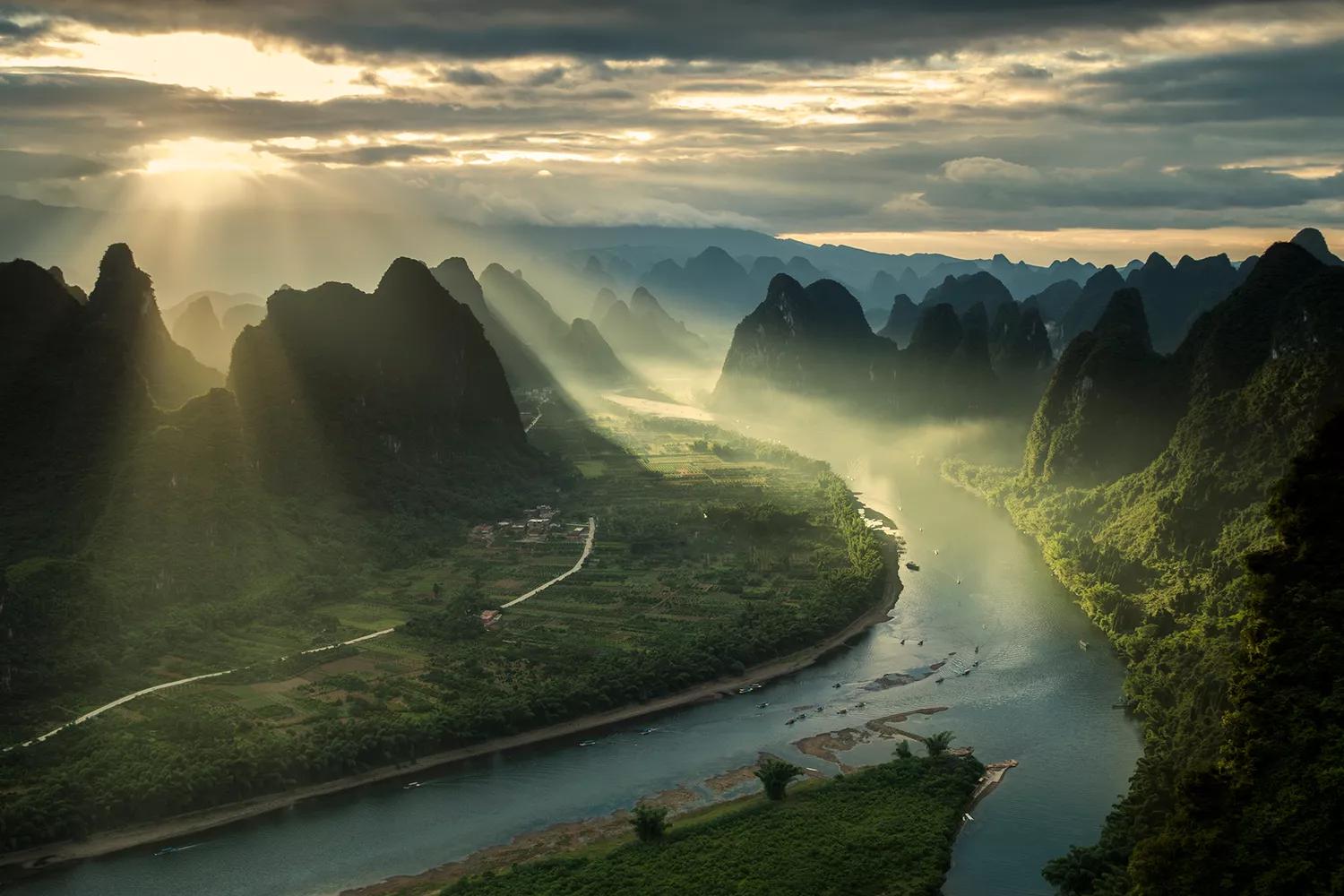
Huangshan — the Yellow Mountains — is China's most famous mountain, the granite masterpiece that the country's landscape painters have studied for a thousand years, and the place whose name ('the most extraordinary mountain under heaven') the poets have spent centuries justifying. The mountain delivers on every claim: the 72 peaks of sculpted granite, the 'sea of clouds' that fills the valleys below the summits, the strangely shaped pines clinging to the rock, the hot springs at the base, and the sunrises and sunsets that the entire mountain schedules its day around. The experience is equal parts pilgrimage and hike — the trails, the cable cars, the summit hotels and the dawn crowds are all part of the ritual — and the planning, this guide argues, is the difference between a postcard visit and the mountain's full magic.
The Mountain, Explained: Peaks, Pines and the Sea of Clouds
Huangshan's fame rests on three wonders that the Chinese tradition names explicitly: the strange pines (the twisted, wind-sculpted Huangshan pines that grow from the bare rock — the Welcome Pine, leaning over the trail, is the mountain's most famous tree, its image on the province's postcards and its emblem for a millennium), the grotesque rocks (the granite formations named by their shapes — the Flying Stone, the Monkey Gazing at the Sea, the Fairy Playing the Zither — the mountain's sculpture garden), and the sea of clouds (the cloud layers that fill the valleys below the summits, most often in the early morning and after the rain, turning the peaks into islands in a white ocean — the sight that the mountain's painters and photographers wait for). To these the tradition adds two more: the hot springs at the base (the mountain's traditional spa, the 'Spirit Spring') and the winter snow (the peaks' white season, the pines' frost). The mountain's granite was born 120 million years ago, sculpted by the glaciers and the weather into the pillars, the bridges and the towers the trails thread between — and the UNESCO listing (1990) recognized the whole: the peaks, the pines, the clouds and the cultural tradition they inspired.
The Trails and the Cable Cars: Planning the Ascent
Huangshan's access is a system of two cable cars, four main trails and the summit loop — and the planning is the key. The two ascents: the Yungu (east) cable car, from the Yungu Temple at the base to the White Goose Ridge, and the Yuping (south) cable car, from the Ciguang Pavilion to the Yuping Pavilion — each 10–15 minutes, 80–100 RMB one way, with the queues in the season the real wait (the 1–2 hour morning queues are the norm; the early start and the online tickets manage them). The two classic walking ascents: the eastern 'hundred steps ladder' (the steep historic trail from the east base) and the western 'Ladder to the Sky' (the 2,000+ steps from the south — the hard way, 3–4 hours up, for the fit and the patient). Once on the summit, the trails connect the peaks in the loops: the Western Sea Grand Canyon (the mountain's great walk — the new trails descend the cliffs, cross the bridges and climb the far ridge; 4–6 hours, the mountain's wildest and most rewarding section), the Bright Summit (the mountain's second peak, the sunrise and the views), the Lotus Peak (the highest at 1,864 m, the steepest climb — closed in rotation with the Heavenly Capital Peak for conservation), and the summit loop that links them. The route strategy: ascend by cable car, walk the summit loops, descend by the other cable car — the classic two-day circuit that sees the mountain without doubling back.
The Summit Sleep: The Sunrise Strategy
The Huangshan sunrise is the mountain's ritual — the entire summit rises before dawn, walks the ridgelines to the viewpoints (the Bright Summit, the Dawn Pavilion, the Monkey Gazing at the Sea rock) and waits for the light over the sea of clouds — and the strategy is the sleep: the summit hotels (the Beihai, the Xihai, the Guangmingding and the Yuping options, 500–1,500 RMB in the season, the dormitory beds 150–300) make the sunrise possible, and the summit sleep is the difference between the postcard visit and the full experience. The practicals: book the summit hotels 1–3 months ahead in the seasons (the rooms are the mountain's scarcest commodity), pack the warm layer (the summit nights run cool even in summer, near-freezing in winter), check the weather forecast (the sunrise needs the clear dawn — the cloudy days still reward with the sea of clouds, but the dawn is the gamble), and walk to the viewpoint in the dark with the headlamp (the trails are well-marked and the crowds are a lantern procession). The sunset is the same ritual in reverse — the Bright Summit and the western viewpoints at the last light — and the summit night, between the sunset and the dawn, with the mountain's silence and the stars above the clouds, is the experience the day-trippers miss.
The Two-Day Plan: The Complete Circuit
| Day | Plan | Notes |
|---|---|---|
| 1 | Cable car up (Yungu east); the summit loop west (the Grand Canyon's trails); sunset at the Bright Summit or the west viewpoints; sleep at the summit | The western circuit |
| 2 | Sunrise at the Bright Summit or the Dawn Pavilion; the eastern loop (the Lotus or the Heavenly Capital, the Welcome Pine); cable car down (Yuping south) or the hot springs at the base | The eastern circuit + the descent |
The two-day circuit covers the mountain's full arc — the western canyon's wild trails, the summit's sunset and sunrise, the eastern peaks and the Welcome Pine — with the summit sleep as the hinge. The single-day version (the cable car up, the Bright Summit and the eastern loop, the cable car down, 6–8 hours) is possible for the fit and the time-pressed, but the mountain's magic — the clouds' movements, the light's changes, the summit's calm — belongs to the overnight. The three-day version adds the West Sea Grand Canyon's full traverse and the hot springs' afternoon; and the base village (the Tangkou town at the mountain's foot) holds the hotels, the bus connections and the hot-spring resort for the night before and after.
Best Time to Visit: The Mountain's Seasons
Huangshan is a four-season mountain with a famous calendar. Spring (April–May): the azaleas, the fresh green and the frequent clouds — the classic season, with the May Day holiday the crowd peak. Summer (June–August): the green full season, the cool summit air (the mountain's summer is the region's refuge), the afternoon showers and the sea of clouds' best odds (the rain-then-clear cycles produce the clouds). Autumn (September–November): the clearest air, the reds and golds of the maples, the best sunrise odds — the photographers' and the painters' season. Winter (December–February): the snow season — the pines' frost, the peaks' white, the emptiest trails and the frozen wonder of the summit; the cold is real (the summit -10°C) and the cable cars run except in the storms. The seasons' rule: the sea of clouds is a weather lottery in every season (the odds improve after the rain and in the early mornings), the Chinese holidays are the mountain's worst weeks (the queues, the summit rooms' sellout), and the winter is the connoisseur's gift.
Getting There and the Practical Details
Huangshan's access is China's easiest for a famous mountain. The high-speed rail: the Huangshan North station (the new hub, 2–2.5 hours from Shanghai, 3.5 from Hangzhou, 1.5 from Nanjing) with the buses to the Tangkou base town (40–60 minutes, 20–30 RMB) and the shuttle to the cable-car stations; the flight: the Tunxi airport (the city's airport, 20 minutes from the base, with the domestic routes from the hubs); and the base-town logistics: the buses and the private cars (the standard shuttle system), the hotels of Tangkou (150–600 RMB), and the hot-spring resort at the mountain's foot. The practicals: the combined entry (190 RMB high season, 150 low) with the online booking; the cable cars 80–100 RMB one way; the summit hotels as the essential advance booking; the water and the snacks (the summit prices are 2–3× the base); the walking poles (the granite steps are relentless) and the light pack (the summit porters carry everything, priced by the kilo). And the rule: the mountain's weather is its own world (the forecasts change hourly) — pack the rain shell and the warm layer in every season, and let the clouds do their work.
Beyond the Mountain: The Region's Other Treasures
The Huangshan region is more than the mountain, and the extensions reward the extra days. The Hongcun and the Xidi villages (the UNESCO-listed Anhui villages of the Ming and the Qing — the white walls, the black tiles, the moon pools and the painted beams — the 'Chinese paintings come to life', 40–60 minutes from the mountain, the classic pair of the region); the Tunxi Old Street (the city's Song-Ming arcaded street, with the tea houses, the ink-stone and the brush shops — the region's crafts); the Shexian county's old city (the Hui merchants' mansions and the stone memorial arches); and the region's culture — the Huizhou merchants, the Anhui opera, the ink and the paper that the scholars used. The two-day mountain plan plus one village day is the classic three-day itinerary; the week adds the region's deeper country (the Qiyun Mountain's Taoist cliffs, the Xin'an River's gallery). The region's balance — the mountain's drama and the villages' calm — is the Anhui experience the travelers remember.
The Final Word: The Mountain the Painters Kept
Huangshan is the mountain that China's painters spent a thousand years trying to capture — and the traveler's discovery is that the mountain outdoes its art. Between the granite peaks and the twisted pines, the sea of clouds and the summit dawn, the canyon's cliffs and the old village's moon pools below, the mountain delivers the full Chinese landscape aesthetic in a single visit — the peaks, the mist, the light and the calm. The planning is simple: the summit sleep, the early start, the weather's patience and the two days' unhurried pace. Come for the postcard and stay for the dawn; the Yellow Mountains are the reason the paintings exist, and the reason the paintings never quite managed. Our Huangshan guides and the Hongcun day-tour pages carry the full depth of the region.
Huangshan's Painters and Poets: The Mountain's Cultural Depth
Huangshan's fame is cultural as much as natural — the mountain that China's landscape tradition made its standard. The Huangshan School of painting (the 17th-century masters — Jian Jiang, Mei Qing and the 'Four Monks' above all) made the mountain's granite, pines and clouds the subject of a new style: the 'wrinkled' rock textures, the dry brushwork and the empty mist that the Western art histories now call the mountain's signature; the poets of a thousand years — the Tang's Li Bai, the Song's and the Ming's visitors — left the inscriptions on the summit rocks (the 'Guanyin Sitting on the Lotus', the 'Fairy Playing the Zither' — the named stones carry their couplets); and the travel tradition — the scholars' pilgrimage, the mountain's 'guesthouses' and the summit's poems — established the pattern that the modern hikers follow. The mountain's cultural layers are on the trail: the carved inscriptions, the named rocks, the pavilions' couplets and the museum's paintings. Walk with the painters' eyes — the rock's texture, the pine's twist, the mist's emptiness — and Huangshan reveals the aesthetic it taught the world.
The Hot Springs and the Base: The Mountain's Third Act
The base of the mountain holds the traditional third act of the Huangshan experience: the hot springs. The Tangkou base town's hot-spring resorts (the 'Spirit Spring' of the tradition — the springs were the mountain's spa for centuries, the water's minerals and warmth the hikers' reward) offer the post-hike soak (100–300 RMB for the day entry, the private rooms more, with the pool complexes and the mountain views); the town's other layer is the mountain's gateway life — the hotels, the tea houses, the massage and the local restaurants (the mountain vegetables, the Anhui dishes, the famous Huangshan tea — the Maofeng green tea of the region, worth buying at source). The base strategy: the night before and the night after the mountain (the summit sleep between them), with the hot-spring afternoon as the descent's reward and the town's restaurants as the region's table. The springs are the mountain's gentlest face — the warmth after the granite's work — and the traditional close to the pilgrims' journey.
Huangshan Q&A: The Everyday Mountain Questions
The mountain's recurring questions, answered plainly. Can I see the sea of clouds on a day trip? It is a lottery in every season — the odds improve after the rain and at dawn, and the summit sleep doubles the chances (the morning's clouds are the day's best). Is the mountain suitable for older travelers and families? Yes — the cable cars handle the ascent, the summit loops offer the gentler options (the Bright Summit's level walks, the hotel terraces), and the porters and the resting pavilions dot the trails; the steep sections (the Lotus Peak, the canyon's cliffs) are the choices, not the requirements. What about the weather? The summit's own world — the forecasts change hourly, the rain shells and the warm layers are the constants, and the cable cars close in the high winds (the weather apps' 'cable car status' is the essential check). And the single best tip: the first cable car up and the last one down (with the online tickets) give the mountain its emptiest and most beautiful hours — the crowds arrive at 09:00 and the light turns golden at 16:00, and both belong to the traveler who plans around them.
Huangshan's Sights at a Glance: The Quick Reference
For the planning at a glance: the essential names — the Welcome Pine (the Yingke Pine, leaning over the eastern trail, the mountain's emblem), the Bright Summit (Guangmingding, 1,860 m, the sunrise and the views, the summit's hub), the Lotus Peak (Lianhua Feng, 1,864 m, the highest, the steepest, in rotation with the Heavenly Capital Peak), the Heavenly Capital Peak (Tiandu Feng, 1,810 m, the 'capital of heaven', the famous 'Ladder to Heaven' steps), the Western Sea Grand Canyon (the mountain's great traverse, the cliffs and the bridges, 4–6 hours), the Flying Rock (the balanced boulder of the western views), the Monkey Gazing at the Sea (the eastern rock at the sunrise), and the two cable cars (the Yungu east and the Yuping south) with the base's hot springs. The distances: the summit loop's full circuit runs 8–10 km with 2,000+ metres of ascent and descent — the two-day plan breaks it naturally; the canyon's traverse alone is a half-day. The altitudes: the base 600 m, the summit hotels 1,600–1,800 m — mild, no altitude concerns, the stair-climbing the only challenge. And the one reference the planning needs: the weather apps' summit forecasts and the cable-car status — the mountain's two daily decisions.
The Mountain's Neighbors: Hongcun, Xidi and the Huizhou Country
The villages below the mountain are the region's second masterpiece, and the pairing is the classic Anhui itinerary. Hongcun (40 minutes from the Tangkou base, 104 RMB) is the 'village in the painting' — the water system running through the lanes, the Moon Pool's reflection, the Chengzhi Hall's carved beams, and the film fame (the village stood in for the 'Crouching Tiger, Hidden Dragon' scenes); Xidi (30 minutes, the other UNESCO village, quieter and more scholarly, with the Huizhou merchants' halls and the memorial arches); and the nearer Tunxi Old Street (the city's arcaded lanes, the ink-stones and the brushes, the tea houses) on the way. The practical pairing: the mountain's two days plus one village day (the Hongcun morning, the Xidi afternoon or the Tunxi evening) is the classic three-day plan; the villages' photography — the moon pools, the white walls under the evening light — is the region's second richest vein after the summit's dawn. The villages complete the Anhui argument: the mountain's drama needs the calm below it, and the scholars who built the gardens and painted the peaks built the villages too.
Frequently Asked Questions
How many days do you need for Huangshan?
Two days is the ideal first visit (the summit overnight, the sunset and the sunrise, the two cable cars' circuit); one long day covers the highlights for the fit and the time-pressed; three days adds the West Sea Grand Canyon's full traverse and the villages below.
When is the best time to visit Huangshan?
Spring (April–May) for the azaleas and the clouds, autumn (September–November) for the clearest air and the sunrise odds, and winter (December–February) for the snow and the emptiness. The sea of clouds is a lottery in every season — the odds improve after the rain and at dawn.
Should I stay overnight on the mountain?
Yes — the summit sleep is the difference between a postcard visit and the full experience. The sunrise and the sunset over the sea of clouds are the mountain's ritual, and the summit hotels (book 1–3 months ahead in the seasons) make them possible.
How do I get to Huangshan from Shanghai?
High-speed rail: 2–2.5 hours from Shanghai Hongqiao to Huangshan North, then the bus to the Tangkou base town (40–60 minutes) and the shuttle to the cable cars. Flights connect the Tunxi airport to the country's hubs.
What is Huangshan famous for?
The 'four wonders' — the strange pines (the Welcome Pine above all), the grotesque granite rocks, the sea of clouds, and the hot springs — plus the winter snow. A UNESCO World Heritage Site (1990) and the subject of Chinese landscape painting for a millennium.
Plan this trip with our China team
Tickets, hotels, trains and local arrangements — free booking help, reply within hours.