>
The city of "fireworks in March" — Slender West Lake, the bamboo gardens of Ge and He, morning tea on the old streets and the cuisine that fed the emperors' southern tours.
The "Thirty-Six West Lakes" of China are all shadowed by this one — 4 km of willows, bridges and garden terraces, best seen from the water.
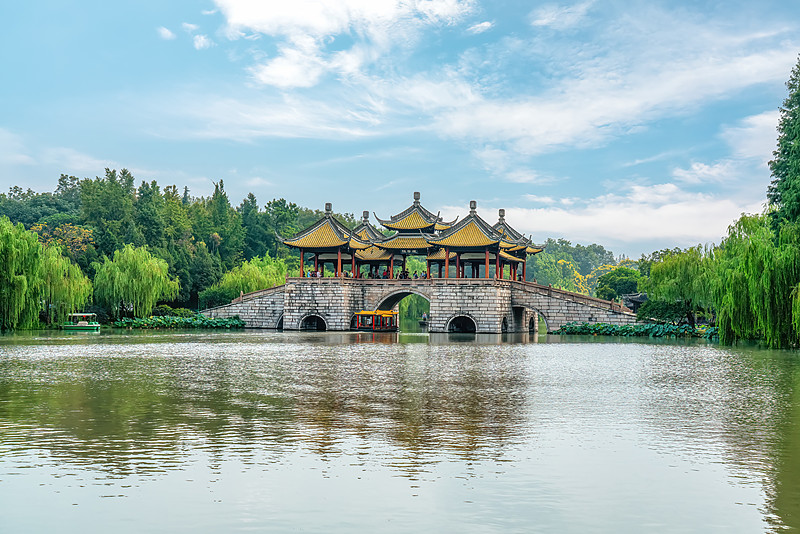
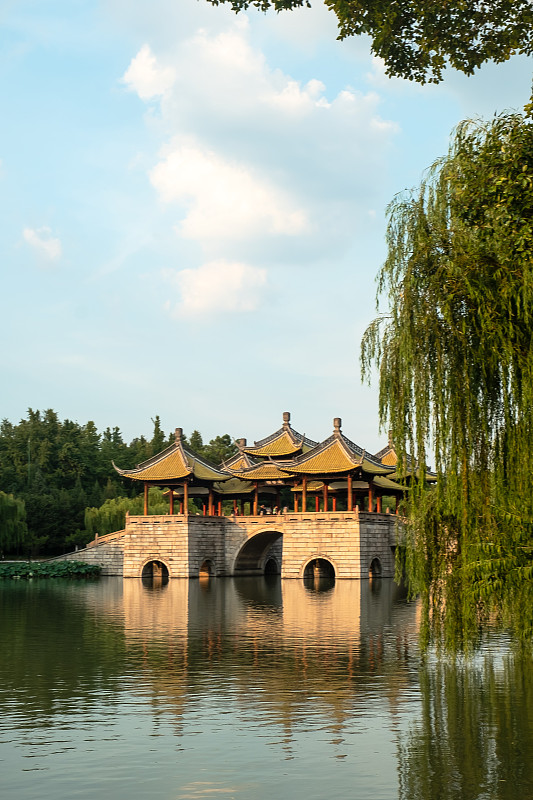
The city's emblem — five pavilions on one bridge, its fifteen arches reflected in the lake like a string of moons.
The Yangzhou breakfast — tea, steamed buns, dried bean threads and savoury soup dumplings at the old teahouses of the Fuchun and Yechun.
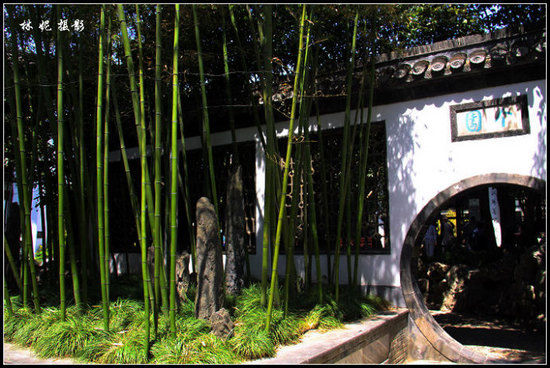
The salt merchants' garden of bamboo and rock — a walk that passes spring, summer, autumn and winter in one circuit.
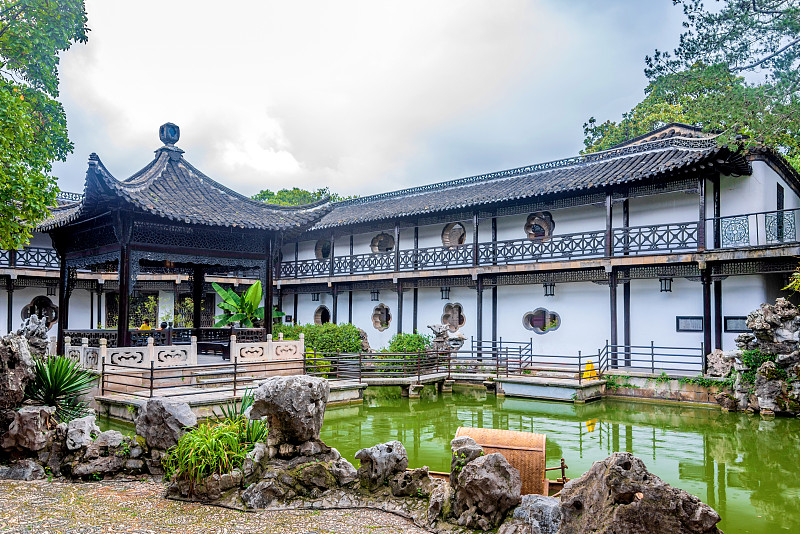
The "garden of a thousand rooms" — the longest double corridors in old China and the scholar's study of the last Qing garden masterpiece.
The world's best-known Chinese rice dish was born here — egg, shrimp, ham and peas in a wok at the city's Huaiyang kitchens.
The willow-fringed lake of the poets — one long water garden of bridges, terraces and islets, crowned by the Five-Pavilion Bridge.
The salt merchants' "garden of bamboo" — the Four-Season Rockeries of yellow, grey and white Taihu stone, a walk through a year in half an hour.
The "First Garden of the Late Qing" — its double corridors thread a thousand rooms around the water pavilion, one of China's most complete scholar-gardens.
Boats beneath the Five-Pavilion Bridge and the lantern-lit lanes of Dongguan Street — the classic Yangzhou afternoon and evening.
Slender West Lake is ¥150 peak (Mar–Nov) / ¥120 low; Ge Garden and He Garden ¥45 peak / ¥30 low; Daming Temple ¥45 peak / ¥30 low. Many sights including the Dongguan Street and the old lanes are free.
The classic visit is March–April — "fireworks in March" when the willows and blooms are out. Autumn (Oct–Nov) is also lovely; summer is hot and humid, winter quiet and grey.
Two days cover the essentials — Slender West Lake plus the two gardens on day one, Daming Temple and the old streets on day two. A third day reaches Zhenjiang's Three Mountains by ferry or train.
The famous old teahouses are Fuchun (deshi building, Dongguan Street) and Yechun (Yecheng Lane) — go before 08:00 for the full spread; weekends queue early.
Yangzhou East is on the Shanghai–Nanjing high-speed line (about 1 h 20 from Nanjing, 2 h from Shanghai); Yangzhou Taizhou Airport serves domestic routes. The ferry across to Zhenjiang is a classic river crossing.
Yes — the old city is compact and flat: the lake, gardens and Dongguan Street all sit within a 3 km circuit, best done on foot or by shared bikes.
Slender West Lake and the gardens on day one, Daming Temple, Dongguan Street and morning tea on day two. View the plan →
Slender West Lake – Five-Pavilion Bridge – Ge Garden – Dongguan Street night
Morning tea at Fuchun – Daming Temple – He Garden – Grand Canal
The full Yangzhou day — lake cruise, both gardens and the old streets, tuned for a quick stopover. View the plan →
Morning tea – Slender West Lake – Ge Garden – He Garden – Dongguan Street evening
All plans are bookable end-to-end by our team — see the full day-by-day Yangzhou itineraries hub, or the day-trip pages for single-day options.
The 4 km lake garden of the poets — willows, bridges, terraces and the Five-Pavilion Bridge, laid out along one elegant water line. The boat cruise from the south gate is the classic way to read the lake.
View details →The salt merchant Huang Zhiyun's garden of bamboo and rock — the Four-Season Rockeries in spring-green, summer-grey, autumn-yellow and winter-white stone, one of the finest garden walks in China.
View details →The "First Garden of the Late Qing" — the longest double corridors in old China thread a thousand rooms, halls and the water pavilion where the drama troupe once performed.
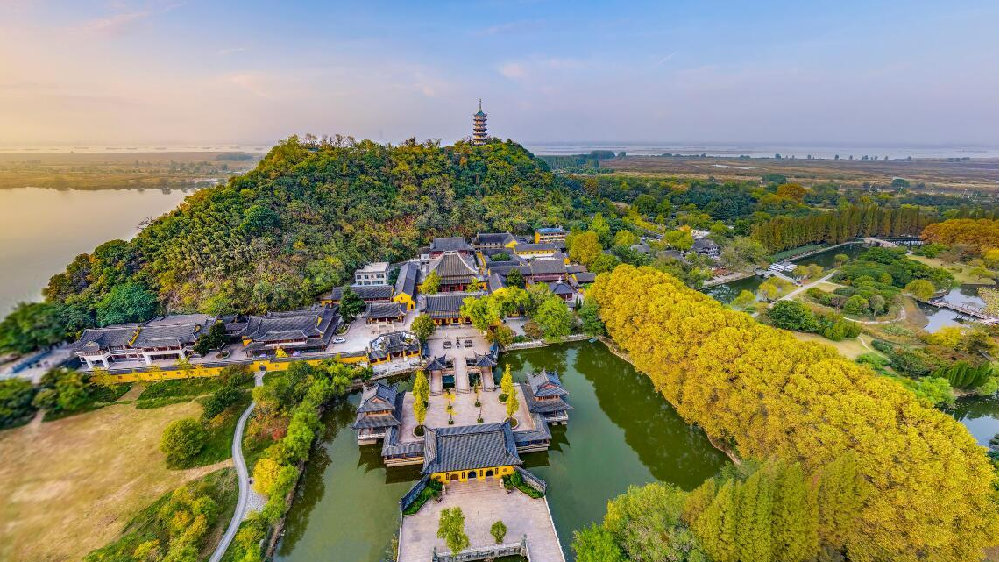
View details →The temple of the monk Jianzhen, who sailed to Japan in the 8th century — with the Qiling Pagoda above the lake and the Memorial Hall in his honour.
View details →The thousand-year salt merchants' street — stone lanes, old shops and the canal dock where the emperors' boats turned. Free to wander, with tea houses and craft shops all along.
View details →More in the region on the Jiangsu attractions page.
The Yangzhou breakfast ritual — green tea, steamed buns, "dried silk" bean threads and seafood soup dumplings at Fuchun or Yechun, from about ¥50 per person.
The painted boats glide beneath the Five-Pavilion Bridge — about 40 minutes, ¥50–80, with the willows and terraces unfolding in order.
Learn fried rice, lion's head meatballs and knife-shaved "dried silk" at the city's cooking schools — a hands-on taste of the imperial kitchen.
The old street glows after dark — snacks, teahouse storytelling and the canal bridges at their most photogenic.
Every hotel below is bookable by our team; browse the full Jiangsu hotels directory.
Restored merchant houses and garden hotels in the lanes around Ge Garden and the lake — the atmospheric Yangzhou stay, from about ¥400.
Hotels facing the lake's south and west gates — morning strolls to the bridges, from about ¥450.
Small inns inside the old street — lanterns at the window and teahouses at the door, from about ¥250.
Convenient mid-range options near Yangzhou East station for high-speed travellers, from about ¥250.
The world's most famous rice dish — wok-fried with egg, shrimp, ham, peas and spring onion, at its best in the old-city restaurants.
Slow-braised pork meatballs the size of a fist — "the lion's head" of Huaiyang cuisine, meltingly tender.
A block of pressed tofu sliced into thousands of threads and served in broth — the knife-work showpiece of the Yangzhou table.
The five-ingredient steamed bun — chicken, pork, shrimp, bamboo shoot and sea cucumber — a teahouse signature.
The famous "Wensi" soup of thread-thin tofu in clear broth — a Jiangnan delicacy served in the old kitchens.
The delicate papercut tradition of the city — flowers, opera scenes and the Five-Pavilion Bridge, from the old-street studios.
The salt-city crafts — carved lacquer, jade ornaments and the "hundred-baby" fans, sold at the craft houses of Dongguan Street.
The city flower's scented oils and preserves — a fragrant souvenir unique to Yangzhou.
Local soy sauces, duck eggs and Biluo Chun-style teas from the old market lanes.
Full local-product guides live on the Jiangsu specialties page.
https://media.doubao.com/space/api/box/stream/download/all_by_mount_point/Z23dbYGZEoI2TNxY5i0c7ILvnWh
https://media.doubao.com/space/api/box/stream/download/all_by_mount_point/GK46bT82doid74xwzu3cLiQtnFf
https://media.doubao.com/space/api/box/stream/download/all_by_mount_point/G3lnbKl2fogBuUx4wAEcjM8bnab
The old city is flat and compact — shared bikes and e-bikes are the best way between the lake, gardens and streets.
Taxis start at ¥9; most sights sit within a ¥15–25 ride of the centre.
Drive the G2 or G40 to the Yangzhou exits; the lake south gate has pay lots, but the old street is pedestrian-only.
Jinshan, Jiaoshan and Beigu Mountain across the Yangtze — temples, pagodas and the legends of the White Snake.
Sun Yat-sen's Mausoleum, the Qinhuai River and the purple-plane avenues — an hour by high-speed rail.
The lake town of the poet Wang Zengqi — duck, lotus and the quiet reed marshes north of Yangzhou.
A half-day loop — the lake at first light, then the Qiling Pagoda and Jianzhen's temple on the hill.
The famous teahouses fill by 08:00 — arrive at 07:30 on weekdays or book a private room for weekends.
Take the cruise within the first hour of opening; the painted boats queue badly after 10:00 in spring.
Ge Garden's rockeries read best clockwise (spring–summer–autumn–winter); He Garden's corridors reward a slow loop.
"Fireworks in March" is literal — April crowds peak around the Qingming holiday; late March is the sweet spot.
Students and seniors get half price at the paid sights with Chinese ID or passport — ask at the ticket window.
Yangzhou lies where the Grand Canal meets the Yangtze — the pivot of the salt and rice trade for a thousand years. Mild with wet springs, the classic visit in March and the golden weeks of autumn.
The salt merchants of the Qing made Yangzhou one of China's richest cities, funding gardens, opera and the examination elite. Emperor Qianlong's southern tours anchored here — "the emperor came south, and Yangzhou was the flower of Jiangnan".
"Down to Yangzhou in the misty month of March" wrote Li Bai; the city's poets, from Du Mu to Wang Zengqi, gave the lake and streets their lasting imagery of willow, moon and the boats under the Five-Pavilion Bridge.
Everything on ToursChinaTravel is bookable through our team by email or WhatsApp. Here's where each part of your Yangzhou trip lives on the site.
Star-rated sight details — hours, tickets, phones and tips for every Jiangsu attraction.
Browse Jiangsu sightsStar-rated hotels across Jiangsu — sorted by rating, all bookable by our team.
Book a Jiangsu hotelLocal products, crafts and foods of Jiangsu — where to find each one.
Browse Jiangsu specialtiesLicensed agencies with addresses, phones and booking contacts.
Find a Jiangsu agencyMore city and region guides across China, including the Jiangsu guide.
Browse all guides