>
The Hui merchants' villages at the meeting point of Jiangxi and Anhui — white walls, black tiles, stone bridges and, every spring, a county drowned in rapeseed yellow. The photographer's China, and the most enduringly beautiful corner of Jiangxi.
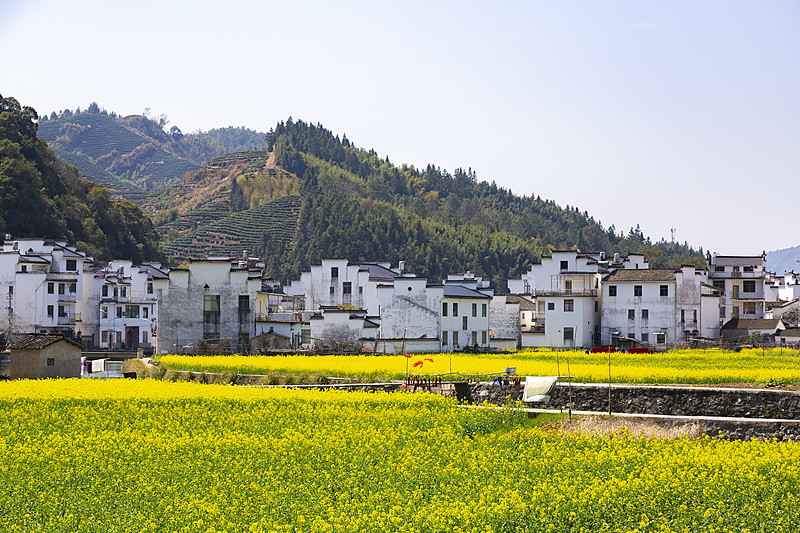
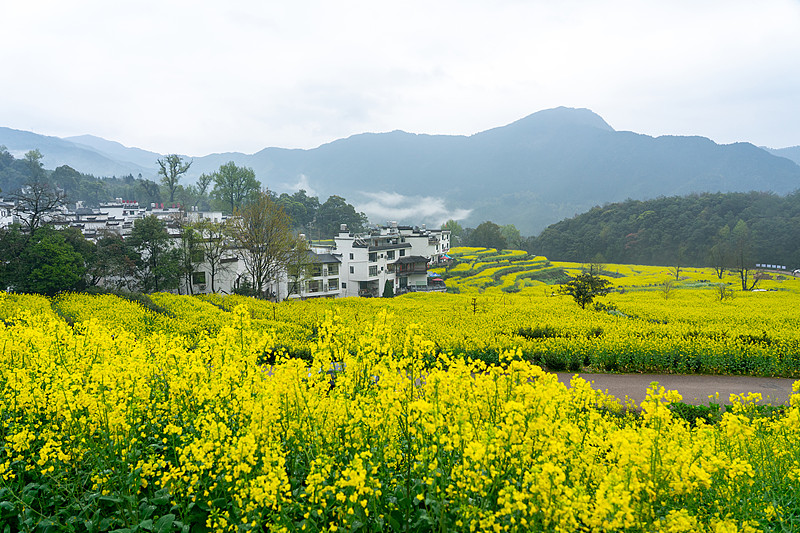
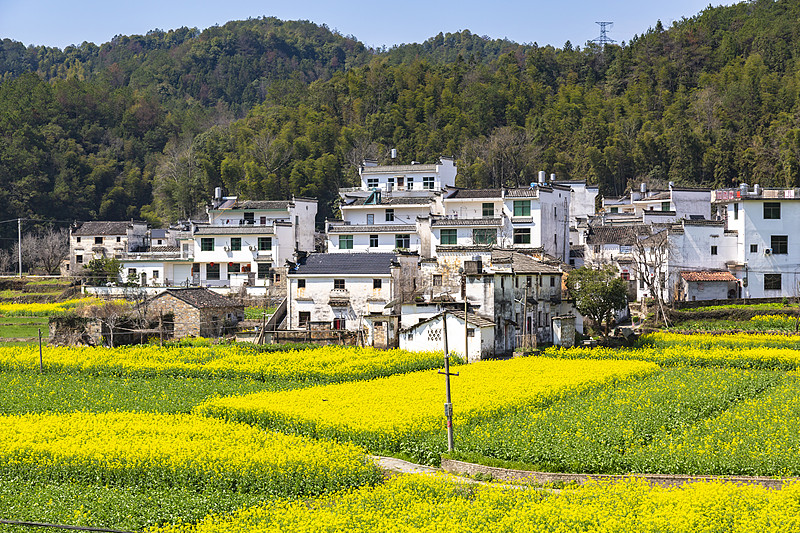
The signature Wuyuan view — rapeseed terraces curling down the hillside to a white-wall village, best in the first hour of light in April.
Hongqiao, the 800-year covered wooden bridge of Qinghua — 140 m of beams, planks and cool shadow over the river.
The classic 'little bridge, flowing water, households' village — streams running through the houses, lanes of carved shopfronts.
The autumn show — bamboo trays of red chili and golden corn drying on every roof, the most photographed village ritual in Jiangxi.
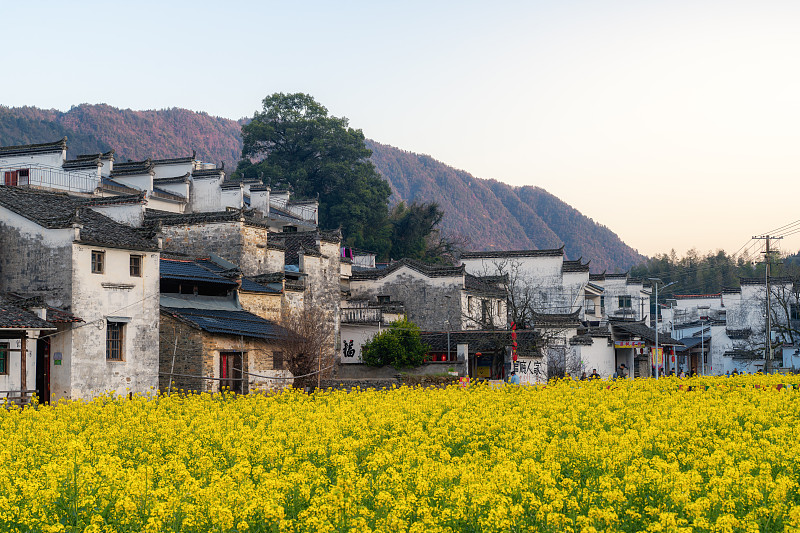
The great Hui merchant villages — carved doorways, ancestral halls and the countryside that built the Jiangxi tea trade.
The 40 km east route from Zhan Shan to Qingyuan — one painting-per-kilometre of paddies, streams and old bridges.
March–April floods the terraces yellow — the reason Wuyuan is called the most beautiful countryside in China.
White walls, black tiles and carved gables — the merchant houses of the Huizhou style, preserved in 28 classic villages.
Washing at the stream, ducks in the paddies, old men playing cards in ancestral halls — the living countryside.
October's red-and-gold drying trays on Huiling's roofs — a second, entirely different season of colour.
Late March to mid-April for the rapeseed bloom (Jiangling and the east line peak around early April); mid-October to November for the autumn shaiqiu drying and red leaves. Summer is green and steamy; winter quiet and cold with occasional snow on the hills.
Two days covers the classics — one day each on the east and north village lines. Three days adds Jiangling at dawn, Huiling's terraces and a night in a village guesthouse. The east line alone can be done as a long day from Shangrao.
The through-ticket (¥180 for 12 villages, 5 days) covers Likeng, Wangkou, Jiangwan, Xiaoqi, Sixi Yancun, Hongqiao and others; Likeng can be bought singly (¥60). Jiangling and Huiling charge separately. If you only have a day, pick Likeng plus one more.
Some villages are — Likeng's lane is dense with shops. The fix is simple: go early (before 9:00), stay overnight in a smaller village, and follow the dirt paths behind the main lane. The genuine countryside is 200 m off the souvenir strip.
By minibus along the two fixed lines (east: Zhan Shan–Jiangling; north: Zhan Shan–Lingyan caves), by taxi or hired driver (¥200–300/day), or by cycling the flat east line. The HSR station at Wuyuan links to Shangrao and Huangshan.
Yes — email [email protected] or message us on WhatsApp. We arrange village guesthouses, the through-ticket, guides and drivers, free of charge.
The two classic lines — water villages and merchant villages, with a night in between. View the plan →
East line from Zhan Shan: Moon Bay, Likeng, Wangkou, Jiangwan, Xiaoqi and the long road to Jiangling — dusk over the terraces, night in a Jiangling guesthouse.
Jiangling at dawn, then the north line: Sixi Yancun, Changtan, Zhangcun, Hongqiao Rainbow Bridge and Likeng's quieter sister villages before the HSR back.
Adds Huiling terraces, the Lingyan caves and a village night under the stars. View the plan →
East line to Jiangling, sunset on the terraces, overnight with a village family.
Dawn photography, morning at Xiaoqi and Wangkou, afternoon Huiling — the terraced hill village of the shaiqiu show.
North line: Sixi Yancun, Hongqiao and, for the energetic, the Lingyan karst caves before the train.
All plans are bookable end-to-end by our team — see the full day-by-day Wuyuan itineraries hub, or the day-trip pages for single-day options.
The classic water village — a stream running through the houses, 260 Ming-and-Qing buildings and the 'little bridge, flowing water' lanes of every photograph. The most complete single Wuyuan experience.
View details →The rapeseed-terrace icon — hillside paddies curling down to a white-wall village, the single most photographed view in Wuyuan. Dawn is the hour.
View details →The 800-year covered wooden bridge at Qinghua — 140 m of beams over the river, a temple at one end and the classic silhouette of Wuyuan's north line.
View details →The great Hui merchant villages — carved doorways, ancestral halls and 700 years of the Jiangxi tea trade written in stone.
View details →The terraced hill village of the autumn shaiqiu — bamboo trays of chili and corn drying on the roofs, and a cable car up the flowered slopes.
View details →The S-bend of the river at the east-line start — a crescent of water reflecting the paddies, the free warm-up view before Likeng.
View details →More in the region on the Jiangxi attractions page.
Late March–April: the terraces bloom in sequence and the villages hold photo walks and local market days — the county's great season.
October's roof-drying ritual at Huiling — red chili, golden corn and the village's living harvest exhibition.
Wuyuan was built on tea — join a picking morning on the hillside terraces in April and drink the fresh leaf at a village house.
The photographers' China: dawn at Jiangling, dusk at the Rainbow Bridge, and the lantern-lit lanes of Likeng after the day-trippers leave.
Every hotel below is bookable by our team; browse the full Jiangxi hotels directory.
Family rooms in the terrace village — dawn is on your doorstep and the dinner is home-cooked. From ¥150; book ahead for April.
Old houses converted by the stream — the atmospheric stay for the east line. From ¥180.
The quietest beds on the north line — ancestral-hall neighbours and empty lanes after dusk. From ¥150.
The HSR-adjacent base — comfortable, central and the easiest logistics for the through-ticket. From ¥200.
Hotels at the terrace village's cable-car base — the modern choice for the autumn show. From ¥300.
The village classic — clear lotus-root broth, the taste of Wuyuan's ponds.
Fresh river fish steamed whole, and tofu stuffed with pork — the two constant dishes of the guesthouse table.
In season, the young rapeseed stems are stir-fried in their own oil — the taste of the yellow spring.
Local green tea, and the seasonal glutinous-rice cakes of the spring festival.
The famous 'green gold' of the Hui merchants — buy loose leaf at a village teahouse, not the tourist stall.
The she ink-stone tradition lives 30 km away — carved stones from the region's quarries.
Hand-painted bamboo umbrellas, still made in the north-line villages.
Shiitake, bamboo shoots and mountain honey from the hills behind the villages.
Full local-product guides live on the Jiangxi specialties page.
The HSR station (10 km from the county town) links Shangrao (40 min), Nanchang (2 h), Hangzhou (2.5 h) and Huangshan (1.5 h) — the east and north lines leave from the county bus station.
Minibuses run the two fixed lines from the county town: east to Jiangling (¥20, hourly) and north to the Lingyan caves. A hired driver for the day runs ¥200–300.
Shangrao Sanqingshan Airport (1 h by road) and Jingdezhen Airport (1.5 h) serve the main cities; both connect by taxi or shuttle to the county.
Local buses link the county town with every ticket village — the through-ticket includes the shuttle between the main stops.
The Zhan Shan–Jiangling road is gentle and quiet — bicycles (¥30–50/day from the county) make the classic riders' day.
Wuyuan's lanes are narrow — park at the village gates (most charge ¥5–10) and walk in; April traffic at Jiangling needs patience.
Moon Bay, Likeng, Wangkou, Jiangwan, Xiaoqi and Jiangling — the complete classic line in one long day.
Sixi Yancun, Changtan, Zhangcun and the Rainbow Bridge — the quieter merchant villages and the covered bridge.
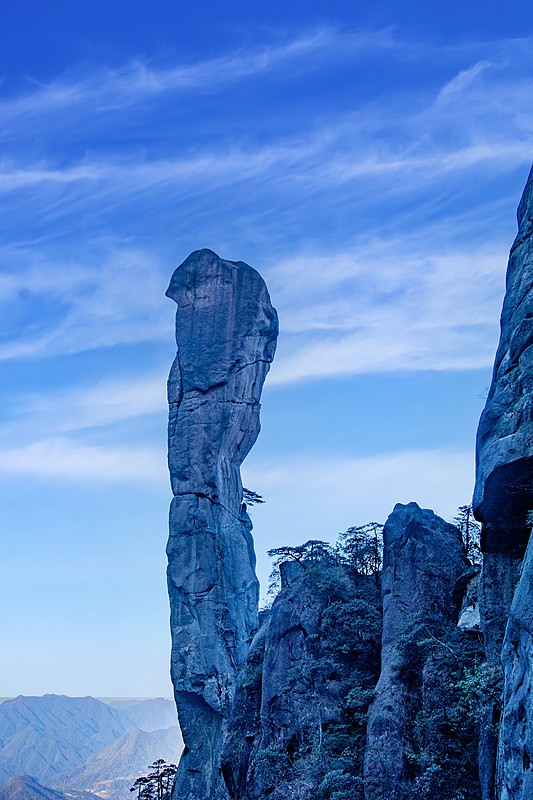
The Taoist granite mountain, 40 min by HSR — spires, skywalk and cloud sea in a day.
An hour away: the thousand-year porcelain city — ancient kilns, the porcelain museum and the workshop streets.
Likeng's main lane is a souvenir strip by 10:00 — arrive by 8:00, or stay overnight and have the village to yourself at dawn.
At ¥180 for five days and twelve villages, the through-ticket pays off from two villages onward — buy it at the county tourist centre or the first gate.
The terraces peak for about two weeks in early April — arrive before 7:00 or accept the shoulder-to-shoulder viewpoint.
Wuyuan's magic is 200 m off the souvenir strip — follow the washing lines, the duck ponds and the ancestral halls.
Sanqingshan is 40 minutes by HSR — the classic two-day loop of 'mountain plus countryside' that makes northeast Jiangxi famous.
Wuyuan county lies in the northeast of Jiangxi, at the edge of the Huizhou region — hills, rivers and 28 classic Hui villages in a landscape of terraces and ponds. A subtropical monsoon climate gives the famous wet spring and the crisp autumn.
Founded in the Tang dynasty, Wuyuan grew rich on tea and ink stones — the Hui merchant houses of the Qing still line its lanes. The county claims more than 1,300 surviving ancient buildings, and its villages became the model for the 'most beautiful countryside in China' reputation that began with a 1990s National Geographic-style feature.
Each village is built around its ancestral hall — the clan system of the Hui merchants shaped courtyards, bridges and the feng shui of every lane. Likeng's stream-through-the-street plan, Sixi's carved doorways and Hongqiao's covered bridge are the three signatures of the style.
Everything on ToursChinaTravel is bookable through our team by email or WhatsApp. Here's where each part of your Wuyuan trip lives on the site.
Star-rated sight details — hours, tickets, phones and tips for every Jiangxi attraction.
Browse Jiangxi sightsStar-rated hotels across Jiangxi — sorted by rating, all bookable by our team.
Book a Jiangxi hotelLocal products, crafts and foods of Jiangxi — where to find each one.
Browse Jiangxi specialtiesLicensed agencies with addresses, phones and booking contacts.
Find a Jiangxi agencyMore city and region guides across China, including the Jiangxi guide.
Browse all guides