>
Where Lake Tai meets the Grand Canal — cherry-blossom shores at Yuantouzhu, the bronze Grand Buddha at Lingshan, the gardens of Li and the plum, and the film studios of the Three Kingdoms.
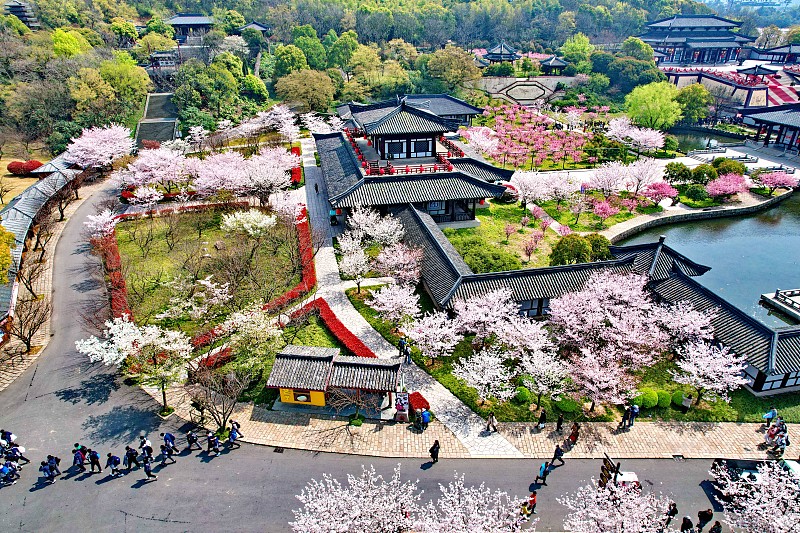
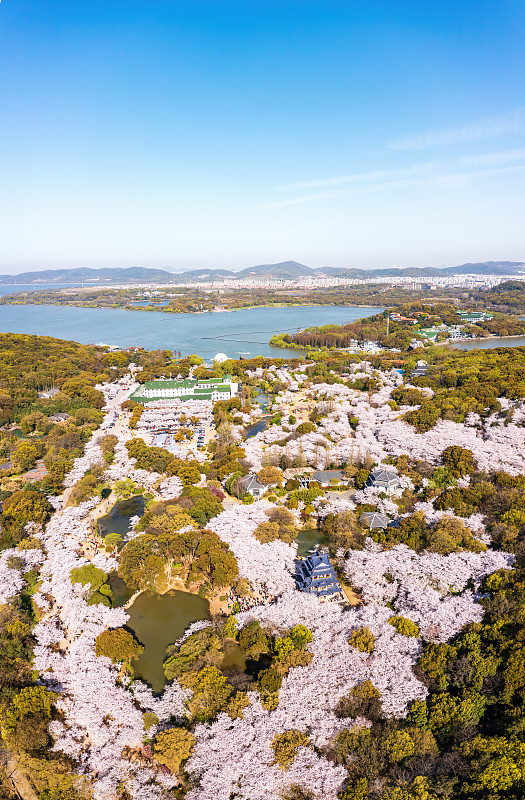
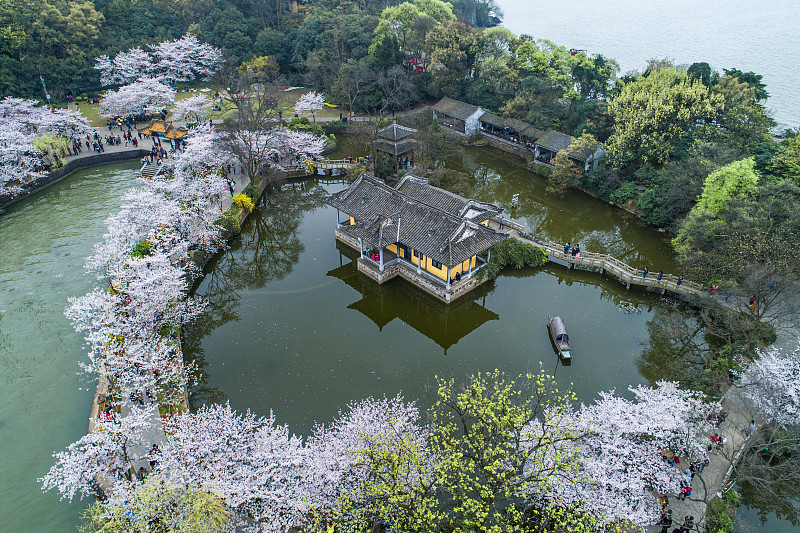
The "first place of Lake Tai" — 30,000 cherry trees on a peninsula that becomes a sea of blossom in late March and April.
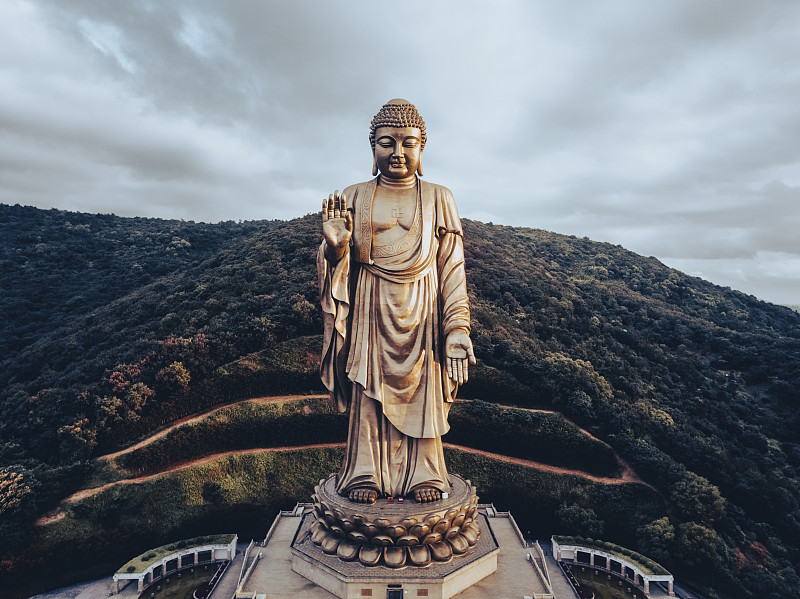
A 88 m bronze Sakyamuni on Lingshan Hill — China's tallest Buddha statue, with the gilded Brahma Palace and the Nine-Dragon Fountain behind it.
The lake's famous sails — wooden boats crossing the water at sunset from the Yuantouzhu piers.
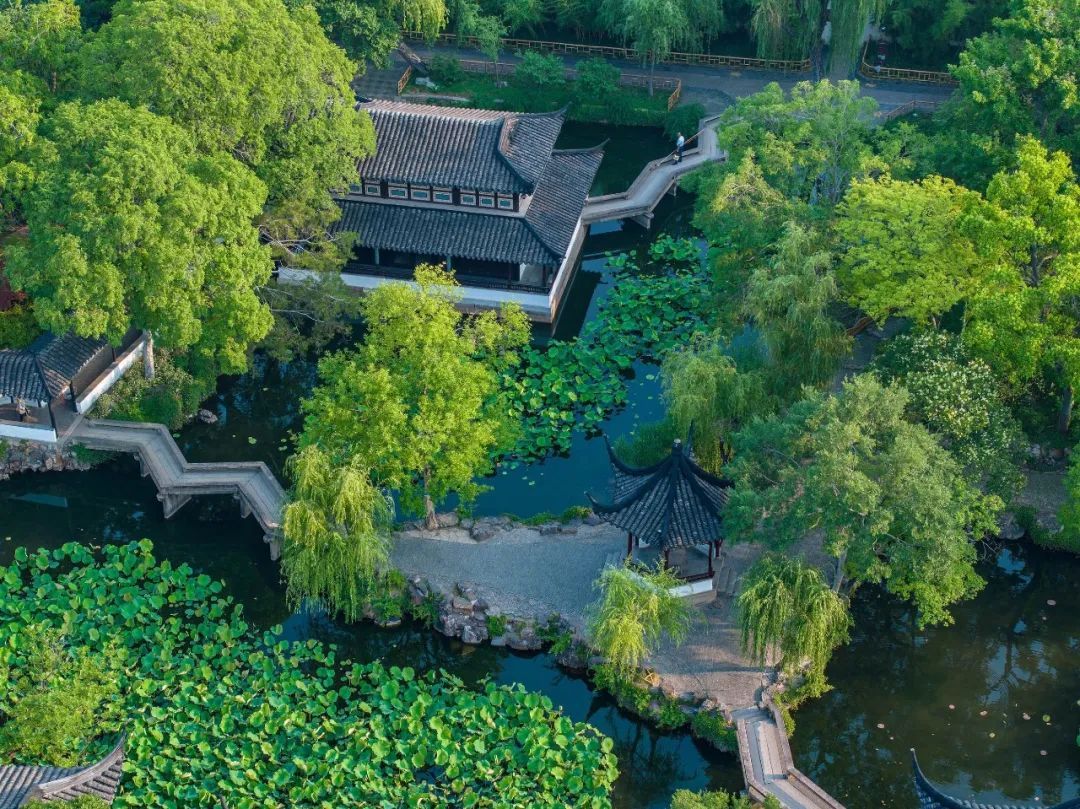
The lakeside garden of the statesman Fan Li, who retired to the waters with the beauty Xi Shi — pavilions, plum groves and willow causeways.
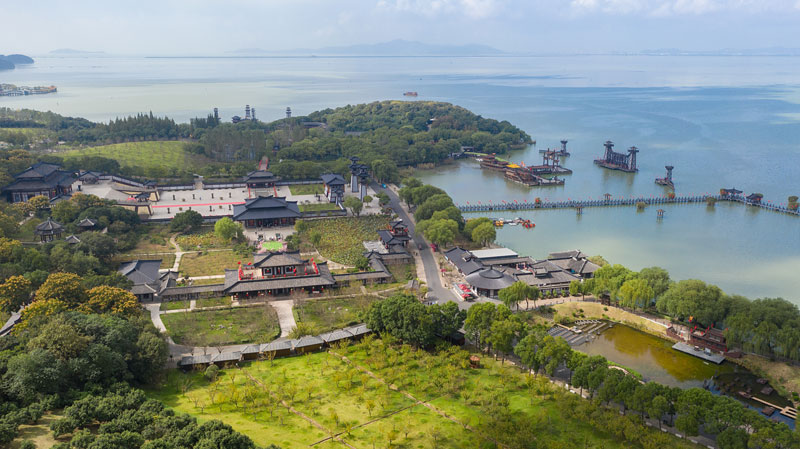
The CCTV studios where Romance of the Three Kingdoms was filmed — Wuxi's best family outing, with shows and lake sets.
The famously sweet braised ribs, plus the soup-filled buns that Wuxi does better than almost anywhere.
The rocky headland where Lake Tai is at its widest — cherry terraces, the Chongshan Temple and the best boat views of the lake's famous sails.
The 88 m bronze Buddha on Lingshan Hill — with the Brahma Palace, the Nine-Dragon Fountain and the Xiangfu Temple behind it, a full day of "Buddha realm" spectacle.
The lakeside film city of the CCTV epic — ramparts, war-boat shows and the water sets of the Yangtze battles, a firm family favourite.
The classic image of the lake — tall sails, jade water and the hazy hills, best seen from the western shore at golden hour.
It is Wuxi's most expensive ticket, but the scale is huge — the 88 m Buddha, the gilded Brahma Palace and the Nine-Dragon Fountain fill a full day. If you are not keen on Buddhist spectacle, Yuantouzhu and the gardens give better value.
The main bloom runs late March to mid-April (about three weeks), peaking in early April. Weekends are very crowded — go on a weekday at opening, and book tickets ahead.
Two days cover Yuantouzhu plus one of Li Garden or the studios; three days add Lingshan and the Hui Mountain old town. A Lake Tai cruise makes a good half-day extra.
Wuxi spare ribs (sweet, dark, sticky), xiaolongbao, the "three whites" of Lake Tai (silver fish, white shrimp, whitebait), and the vegetarian feast at Lingshan's Xiangfu Temple.
High-speed trains link Wuxi with Shanghai (about 45 min), Nanjing (1 h) and Beijing (4.5 h); Sunan Shuofang Airport is 20 km away. The metro covers the old town, and buses reach every lake sight.
The old town around Nanchang Street is walkable and atmospheric; the Lake Tai hotels near Yuantouzhu suit lake lovers; Lingshan's own resort village is the convenient base for the Buddha.
Yuantouzhu and the gardens on day one, the Three Kingdoms City and Nanchang Street on day two. View the plan →
Yuantouzhu – Li Garden – Lake Tai sail boat
Three Kingdoms City – Nanchang Street – Grand Canal night walk
The complete Wuxi — cherry isle, gardens, the Grand Buddha and the Hui Mountain old town. View the plan →
Yuantouzhu – Li Garden
Lingshan Grand Buddha & Brahma Palace
Hui Mountain old town – Nanchang Street – departure
All plans are bookable end-to-end by our team — see the full day-by-day Wuxi itineraries hub, or the day-trip pages for single-day options.
The rocky headland that gives the "first view of Lake Tai" — 3 km of lake shore, cherry terraces, the Chongshan Temple and piers for the sail-boat cruises. The single ticket includes the boat to Fairy Isle (Taihu Xianshan).
View details →The 88 m bronze Sakyamuni on Lingshan Hill — with the gilded Brahma Palace, the Nine-Dragon Fountain, the Xiangfu Temple and the Five Mudra Square, one of China's grandest Buddhist sites. Allow a full day; the site shuttle is ¥25.
View details →The CCTV film city of Romance of the Three Kingdoms — ramparts, thatched villages and the lake's "Yangtze battle" water shows, plus the adjacent Water Margin City (combined ticket ¥150).
View details →The companion film set of Outlaws of the Marsh — Song-dynasty streets, the famous water village and live stunt shows, sharing the combined ticket with Three Kingdoms City.
View details →The hill garden of Xi Shan and Hui Shan, the Huishan Temple and the springs of the "second-best water under heaven" — with the thousand-year old town and its clay figurine workshops at the foot.
View details →More in the region on the Jiangsu attractions page.
Late March to mid-April at Yuantouzhu — night blossom viewing, lakeside picnics and the Cherry Valley concerts; the biggest bloom week is usually the first of April.
Traditional junks sail from the Yuantouzhu piers — 20–40 minute loops past the isles, around ¥60–90, loveliest at sunset.
Daily war-boat and stunt performances on the lake sets — check the schedule at the gate; the "Yangtze Battle" is the flagship.
Nanchang Street's canal quarter lights up after dark — lanterns, old bridges and the Wuxi snack stalls along the water.
Every hotel below is bookable by our team; browse the full Jiangsu hotels directory.
Boutique hotels inside the canal quarter — lantern-lit lanes, snack streets and metro access, from about ¥350.
Resort and spa hotels facing Yuantouzhu — the sunrise and sail views are the draw, from about ¥500.
The Buddha-area hotels and the Lingshan "Wonderland" resort — a convenient base for the site and the lake, from about ¥450.
Solid mid-range options near the railway station and metro — best for train travellers, from about ¥250.
The signature dish — pork ribs braised dark and glossy with soy, rock sugar and wine; the old restaurants of Nanchang Street all claim the original recipe.
The soup-filled steamed buns, sweeter than Shanghai's — served with vinegar and shredded ginger, about ¥18–25 for eight.
Silver fish, white shrimp and whitebait from the lake — steamed, stir-fried and in soups, the essential Wuxi table.
The canal town's fried and braised eel — crisp outside, tender within, a classic Wuxi cold dish.
The Lingshan temple's celebrated vegetarian banquet — dozens of "meat" dishes made entirely from tofu and vegetables.
The famous painted clay dolls of the Hui Mountain workshops — the "Da A Fu" lucky figure is the classic Wuxi souvenir, from ¥10.
Green teas from the Lake Tai hills, sold at the old-town teashops and the tea markets of Mashan.
The lake district's long silk tradition — scarves, quilts and fabrics from the silk shops of the old town.
The sweet hill yam and candied fruit of the region make easy edible gifts from the Nanchang Street stalls.
Full local-product guides live on the Jiangsu specialties page.
https://media.doubao.com/space/api/box/stream/download/all_by_mount_point/Z23dbYGZEoI2TNxY5i0c7ILvnWh
https://media.doubao.com/space/api/box/stream/download/all_by_mount_point/GK46bT82doid74xwzu3cLiQtnFf
https://media.doubao.com/space/api/box/stream/download/all_by_mount_point/G3lnbKl2fogBuUx4wAEcjM8bnab
Wuxi Metro lines 1–3 cover the old town, the railway stations and the Nanchang Street quarter — single rides ¥2–6.
Taxis start at ¥10; to Yuantouzhu about ¥40–50 from the centre, to Lingshan about ¥80–100.
The G2 and G42 expressways reach the lake exits; Yuantouzhu and Lingshan have large pay lots (¥10–20), crowded in blossom season.
The Grand Buddha, Brahma Palace and the lakeside resort — the full "Buddha realm" day west of Wuxi.
A high-speed day trip to the garden city — Humble Administrator's Garden and Tiger Hill are 45 minutes from Wuxi.
Yixing's ceramic villages, bamboo groves and the lake's western inlets — a quiet counterpoint to the Wuxi shore.
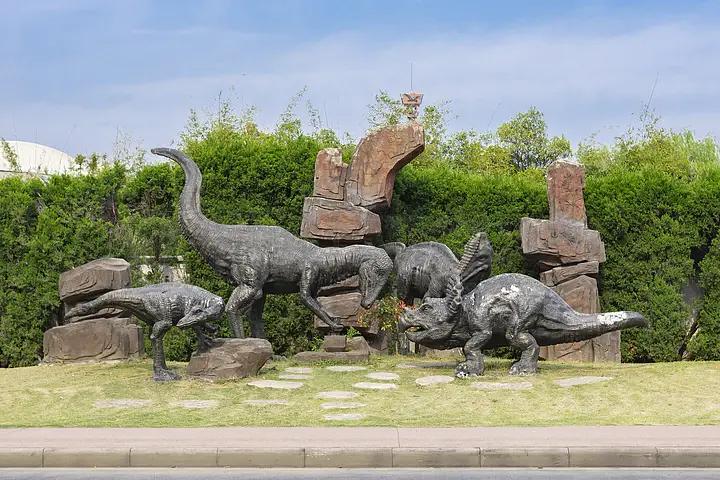
The China Dinosaur Park and the Spring-Autumn Yan City, 40 minutes from Wuxi by train — a family favourite.
Yuantouzhu's cherry lanes fill by mid-morning — enter at 08:00 and walk to the Cherry Valley first.
The ¥210 ticket sells out on golden weeks; online bookings and the site shuttle (¥25) save queue time.
The famous junks sail most reliably in the hour before dusk — check the pier timetable and claim a front spot.
The metro covers the city, but Yuantouzhu and Lingshan need the lakeside buses (K87, K88) or a taxi — allow transfer time.
Wuxi food runs sweet — visitors unused to it may want the savoury noodles and lake dishes instead of the ribs.
Wuxi sits between the Yangtze and Lake Tai, with the Grand Canal running through the old town. Subtropical and humid — cherry season in late March, lake breezes in summer, crisp golden days in autumn.
A silk town for centuries, Wuxi grew rich on the Grand Canal and Lake Tai trade. In the 1980s CCTV built its Three Kingdoms and Water Margin film cities here, making the lake shore a national film and tourism landmark.
The blind musician Abing (Hua Yanjun) composed "Moon Reflected on Second Spring" in Wuxi — the piece, played on erhu, remains the city's best-loved cultural signature.
Everything on ToursChinaTravel is bookable through our team by email or WhatsApp. Here's where each part of your Wuxi trip lives on the site.
Star-rated sight details — hours, tickets, phones and tips for every Jiangsu attraction.
Browse Jiangsu sightsStar-rated hotels across Jiangsu — sorted by rating, all bookable by our team.
Book a Jiangsu hotelLocal products, crafts and foods of Jiangsu — where to find each one.
Browse Jiangsu specialtiesLicensed agencies with addresses, phones and booking contacts.
Find a Jiangsu agencyMore city and region guides across China, including the Jiangsu guide.
Browse all guides