>
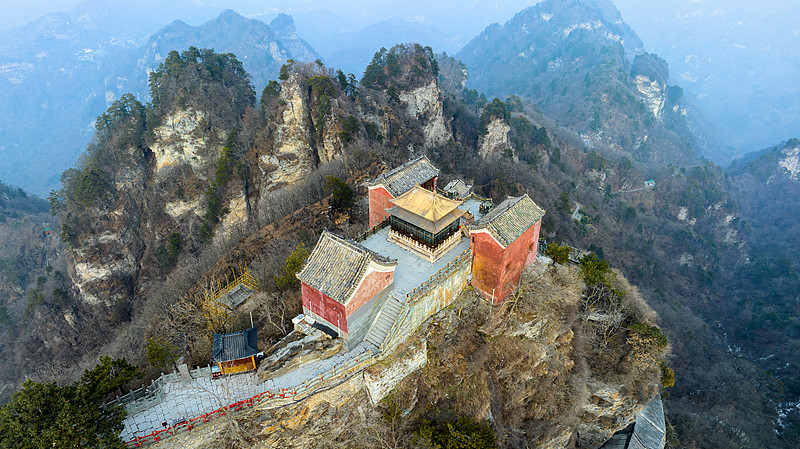
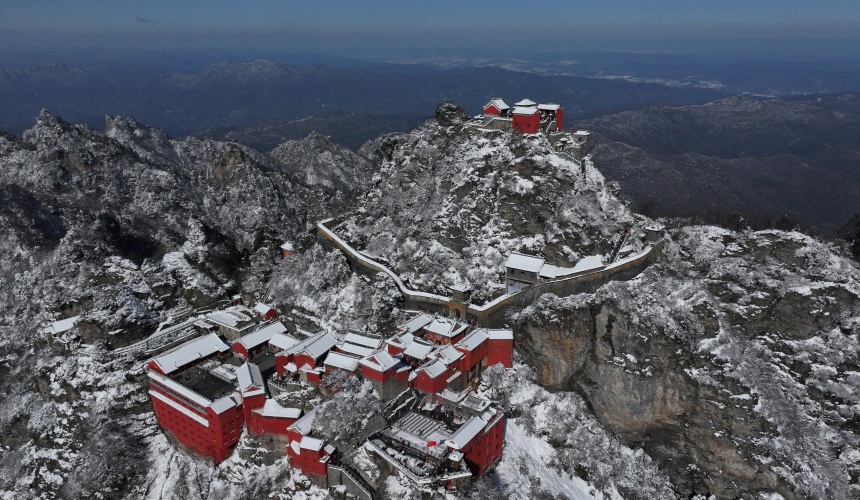
The Golden Summit of Wudang Mountain in winter snow
Home › Travel Guides › Wudangshan

Wudangshan Travel Guide — the Taoist mountain of kung fu

The 'First Taoist Mountain under Heaven' — the Great Supreme's temple-city on a 1,612 m peak, where martial-arts legend meets imperial architecture. Golden Hall, the Purple Cloud Palace and the Sword Testing Terrace: a UNESCO site and the spiritual home of taiji and wudang kung fu.

Golden HallTaoist MountainTai ChiWudang Kung FuPurple Cloud Palace
1–3 DaysOne for the main circuit; two–three for the temples and a sunrise
RMB 400–800≈ US$55–115 per person incl. shuttle and cable car
Apr–Oct BestGreen and clear; winter snow on the Golden Summit
Free Booking HelpHotels, tickets & tours by our team
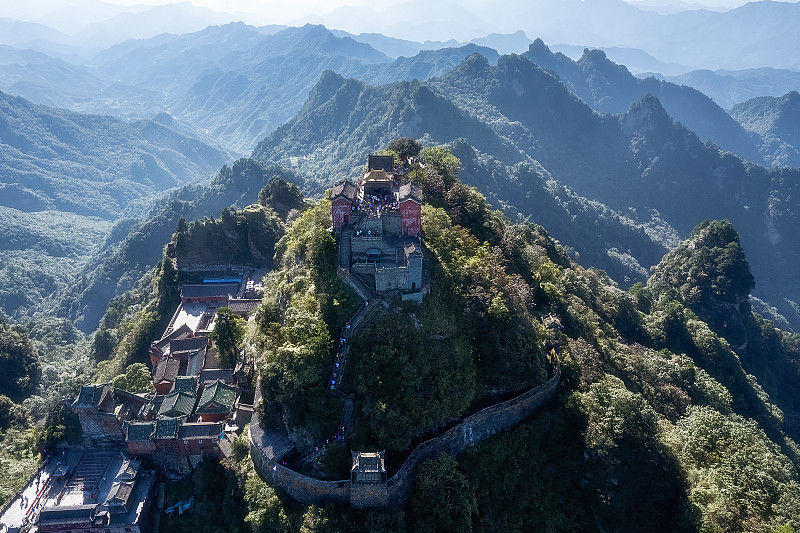
What's inside this guide Bucket List · Highlights · Q&A · Itineraries · Attractions · Activities · Where to Stay · Food · Getting Around · Shopping · Practical Info · Day Trips · Tips · Background · Plan Your Trip

Wudangshan Bucket Listthe little things that make this Taoist mountain unforgettable

01

Climb to the Golden Hall

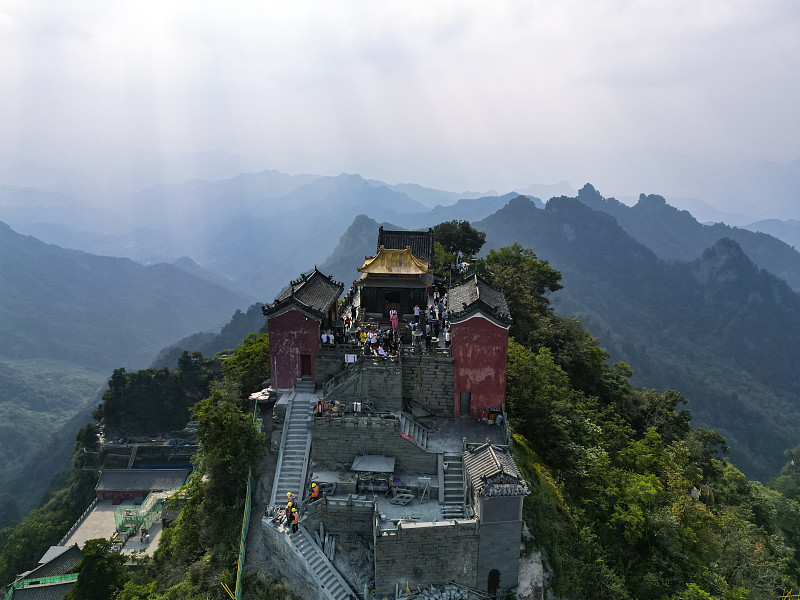
The bronze temple on the 1,612 m summit — the largest gold-plated copper hall in China, and the goal of every pilgrimage.

02

Watch the monks at the Purple Cloud Palace

The palace of the empress's incense — and the daily tai chi and kung fu practice of the mountain's schools.

03

Learn a tai chi move

The mountain of Zhang Sanfeng — even a half-hour class with the monastery masters is the Wudang experience.

04

Walk the South Cliff precipice

The most dramatic architecture in China — halls and a dragon-head carving jutting over the sheer cliff.

05

See the Sword Testing Terrace

Where the legends say Zhenwu tested his sword — a rocky ledge over the cloud-filled valley.

06

Stay for a mountain sunrise

The Taoist dawn over the cloud sea — the quiet hour the mountain was built for.

Top Highlightswhat Wudangshan does best

No.1Imperial Taoist architecture

Imperial Taoist architecture

The Ming emperor Zhu Di built a palace-city on the mountain — 33 complexes of the grandest religious building project in Chinese history.

No.2The Golden Summit

The Golden Summit

The gold-plated copper hall at 1,612 m — the summit temple that crowns the whole Taoist world.

No.3Kung fu & tai chi

Kung fu & tai chi

Zhang Sanfeng's mountain — martial-arts schools, morning practice and the world's tai chi pilgrimage.

No.4Cloud-sea temples

Cloud-sea temples

Halls, courtyards and precipices in the mist — the mountain's architecture is built for the cloud sea.

Questions & Answerswhat travellers always ask about Wudangshan

When is the best time to visit?

April–June and September–October are green and clear; winter (December–February) brings snow on the Golden Summit and the famous mist-and-ice photographs. July–August is hot and crowded; the incense flows all year.

How many days do I need?

One day covers the main circuit by shuttle and cable car — the summit, the South Cliff and the Purple Cloud Palace. Two days adds a sunrise and the slower temples; three allows the kung fu schools and the full pilgrim paths.

Is it easy to climb?

The shuttle bus and cable car do the heavy lifting — the summit is a 15-minute walk from the cable car, and the South Cliff is shuttle-served. Pilgrims can walk the whole 1,612 m road; the famous 'one hundred thousand steps' are the legend, not the requirement.

Where can I learn tai chi?

The mountain's martial-arts schools run classes from half-hour sessions to multi-day retreats — the best-known cluster by the Purple Cloud Palace and the Wudang kung fu academies near the foot of the mountain. Book ahead through the schools or our team.

How do I get there?

The HSR stops at Wudangshan West station, 25 min from the mountain gates; the classic Wudangshan station is closer for slower trains. Wuhan is 4 h by HSR, Shiyan 30 min.

Can I book my Wudangshan trip through ToursChinaTravel?

Yes — email [email protected] or message us on WhatsApp. We arrange hotels, shuttle and cable-car tickets, kung fu classes and guides, free of charge.

Sample Itinerariesthe summit day and the slow pilgrimage

Wudangshan Classic 1-Day Tour

The summit, the South Cliff and the Purple Cloud Palace — the essential mountain. View the plan →

Day 1

Shuttle to the cable car, summit and the Golden Hall in the morning, the South Cliff precipice and the Sword Testing Terrace at midday, the Purple Cloud Palace and the palace schools in the afternoon.

Wudangshan 2-Day Sunrise Tour

Adds the Taoist dawn and the slower temples of the valley. View the plan →

Day 1

The Purple Cloud Palace, the South Cliff and the summit by cable car — dusk from the Golden Hall.

Day 2

Pre-dawn to the summit for sunrise over the cloud sea, then the lower valley — the Prince's Slope, the Sword Testing Terrace and the lakes before the train.

All plans are bookable end-to-end by our team — see the full day-by-day Wudangshan itineraries hub, or the day-trip pages for single-day options.

Top Attractionstickets, hours, transport & insider tips

Golden Hall (Jinding)

Golden Hall (Jinding)

The gold-plated copper temple of 1416 on the 1,612 m summit — the largest of its kind in China, and the ritual heart of the Taoist world.

Included · 08:00–17:30 · Summit · 2 h
View details →
Purple Cloud Palace (Zixiaogong)

Purple Cloud Palace (Zixiaogong)

The grandest surviving palace — the halls of the emperor's and empress's incense, rebuilt in the Ming, and the daily practice ground of the mountain's kung fu schools.

Included · 08:00–17:30 · Palace · 2 h
View details →
South Cliff (Nanyan)

South Cliff (Nanyan)

The precipice temple complex — halls and pavilions bolted to a sheer cliff, with the dragon-head carving over the void and the Sword Testing Terrace nearby.

Included · 08:00–17:30 · Cliff temple · 2 h
View details →
Prince's Slope (Taizipo)

Prince's Slope (Taizipo)

The most beautiful of the mountain's complexes — a maze of corridors and courtyards on the slopes below the summit, the classic architecture photograph of Wudang.

Included · 08:00–17:30 · Temple · 1.5 h
View details →
Tai Chi Lake (Taijihu)

Tai Chi Lake (Taijihu)

The artificial lake at the mountain's foot — the lake crossing to the entrance, with the temples reflected in the water.

Free · All day · Lake · 1 h
View details →
Sword Testing Terrace & the precipices

Sword Testing Terrace & the precipices

The legend terrace where Zhenwu tested his sword — a rocky ledge over the cloud-filled valley, the mountain's dramatic middle act.

Included · All day · Viewpoint · 1 h
View details →

More in the region on the Hubei attractions page.

Activities & Festivalstai chi, festivals and the Taoist calendar

Tai chi & kung fu classes

The mountain's schools — from a half-hour form to week-long retreats — are the living heart of Wudang; morning practice at the palaces is free to watch.

The Taoist festivals

The third day of the third lunar month (Zhenwu's birthday) fills the mountain with pilgrims, incense and processions — the year's loudest day.

Mountain sunrise

The Taoist dawn from the Golden Summit or the South Cliff — the mist, the bells and the first light over the cloud sea.

Wudang music & temple bells

The Taoist orchestras of the mountain — the gongs, drums and chants of the daily liturgy at the Purple Cloud Palace.

Where to Staythe foot, the slopes and the summit

Every hotel below is bookable by our team; browse the full Hubei hotels directory.

Wudang mountain-foot hotels

The gate village base — lakeside hotels and the shuttle station. From ¥200.

Slope hotels by the palaces

Temple-side inns for the early start — simple, atmospheric, steps from the South Cliff. From ¥250.

Summit guesthouses

The few rooms near the Golden Hall for the true sunrise stay — book weeks ahead. From ¥350.

Wudangshan West HSR hotels

The modern base 25 min from the gates. From ¥150.

Shiyan city hotels

The HSR city below — the cheapest beds and the easy onward connection. From ¥180.

Food & Restaurantsmountain fare and the Hubei table

Taoist vegetarian meals

The temple kitchens — tofu, mountain greens and mushroom broths, the monk's table of the palace courtyards.

Wudang cured meats

Hanging-smoked pork and the mountain's cured sausages — the Hubei pantry style.

Shiyan sanhe tang

The 'three-meat soup' of the region — pork, chicken and duck in one rich broth.

Mountain tea & wild honey

Green tea and the hill honey of the Wudang slopes.

Shopping & Souvenirstai chi, tea and the Taoist crafts

Tai chi swords & fans

Practice swords, folding fans and the taiji uniform of the mountain's shops.

Wudang tea & herbs

The mountain's green tea and the Taoist herbal blends of the pharmacy tradition.

Taoist talismans & incense

Printed charms, incense and the small brass gods of the temple stalls.

Stone & wood carvings

The dragon-head motif in stone and wood — the South Cliff's souvenir.

Full local-product guides live on the Hubei specialties page.

Getting There & Aroundrail, road and the mountain shuttles

By railHSR to Wudangshan West

HSR to Wudangshan West

The HSR station, 25 min from the gates, links Wuhan (4 h), Xi'an (2.5 h) and Shiyan (30 min); the classic Wudangshan station is closer to the mountain for slower trains.

By coachBuses from Shiyan & Wuhan

Buses from Shiyan & Wuhan

Regular coaches run from Shiyan (1 h), Wuhan and Xiangyang to the mountain gate — the standard approach.

By airFly to Shiyan Wudangshan Airport

Fly to Shiyan Wudangshan Airport

The small airport (40 min from the mountain) serves Beijing, Shanghai, Guangzhou, Shenzhen and Xi'an; Wuhan Tianhe is the big hub, 4 h by HSR.

The green buses

Shuttle buses loop the gates and the main complexes (¥70 all-day pass) — the mountain's 140 km of roads are served by the green fleet.

To the summit

The Wudang cable car climbs to within 15 minutes' walk of the Golden Hall (one way ¥70, round ¥140) — the modern shortcut for the summit.

Mountain roads

Private cars may reach the gate car parks; the inner roads are shuttle-only. Winter ice closes the summit road some days.

Day Trips From Wudangshanthe valley temples and the river beyond

The Wudang valley circuit (1 day)

The Wudang valley circuit (1 day)

The lower complexes — the Prince's Slope, the lakes and the smaller temples of the valley floor.

Shiyan city (half day)

Shiyan city (half day)

The HSR city — the museum, the riverside and the departure point of the mountain buses.

Xiangyang — the ancient city (1 day)

Xiangyang — the ancient city (1 day)

The old capital of the Three Kingdoms-era frontier — city walls, the Longzhong and the Han River, 1.5 h by road.

Wuhan (2 days)

Wuhan (2 days)

The Yangtze metropolis — Yellow Crane Tower, East Lake and the breakfast streets, 4 h by HSR.

Travel Tipsthings to remember

1 · Shuttle first, climb after

The green shuttle pass (¥70) covers the whole mountain — ride to the cable car early, walk down the pilgrim steps, and save the long climbs for the willing.

2 · Book the summit rooms early

The Golden Hall guesthouses are a handful of rooms — reserve weeks ahead for a sunrise stay, or take the first cable car up.

3 · The palaces close by 17:30

The complexes shut with the ticket office — plan the Purple Cloud and the South Cliff before 15:00 to avoid the rush of closures.

4 · Kung fu classes need booking

The schools fill their classes — arrange a session through our team or the academies a day ahead; morning practice at the palaces is always free to watch.

5 · Pair with Wuhan

Wudang and Wuhan make the classic Hubei loop — the Yangtze city plus the Taoist mountain, 4 h apart by HSR.

Background & Historythe First Taoist Mountain under Heaven

Geography & climate

Wudangshan rises to 1,612 m in northwestern Hubei, at the edge of the Qinling range — a massif of forest, precipices and cloud seas, with a humid subtropical climate of green summers and snowy winters.

A brief history

Worshipped as the mountain of Zhenwu, the Dark Warrior, since the Tang, Wudang became the empire's greatest religious building project in 1412 when the Ming emperor Zhu Di ordered the construction of 33 temple complexes — a palace-city in the mountains, completed by 300,000 workers. The Golden Hall of 1416 crowns the project; the UNESCO listing of 1994 protects the whole ensemble.

The kung fu tradition

Legend makes Zhang Sanfeng, the Taoist sage of the Yuan–Ming, the founder of tai chi on this mountain — and the legend became the world's: Wudang's martial-arts schools now teach students from every continent, keeping the mountain's second fame alive.

Plan Your Wudangshan Tripattractions, hotels, flights and specialties — all in one place

Everything on ToursChinaTravel is bookable through our team by email or WhatsApp. Here's where each part of your Wudangshan trip lives on the site.

Hubei Attractions

Hubei Attractions

Star-rated sight details — hours, tickets, phones and tips for every Hubei attraction.

Browse Hubei sights
Wudangshan Hotels

Wudangshan Hotels

Star-rated hotels across Hubei — sorted by rating, all bookable by our team.

Book a Hubei hotel
Flights & Trains

Flights & Trains

Routes, airlines and schedules for flights and rail to Wudangshan.

See China flights
Hubei Specialties

Hubei Specialties

Local products, crafts and foods of Hubei — where to find each one.

Browse Hubei specialties
Hubei Travel Agencies

Hubei Travel Agencies

Licensed agencies with addresses, phones and booking contacts.

Find a Hubei agency
More China Travel Guides

More China Travel Guides

More city and region guides across China, including the Hubei guide.

Browse all guides