>
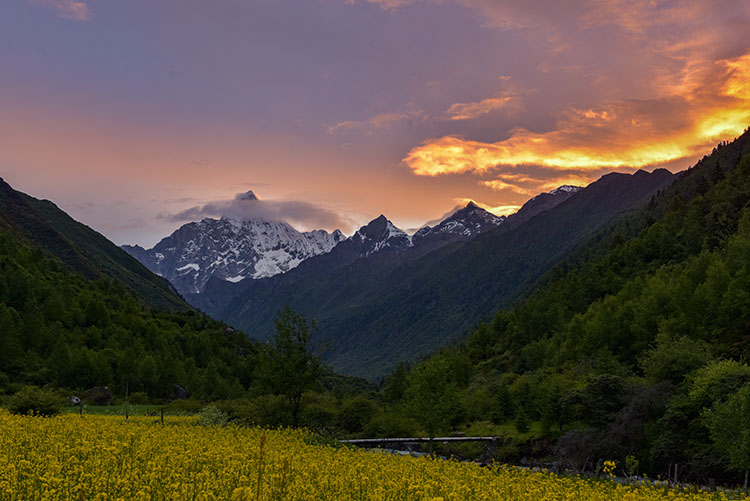
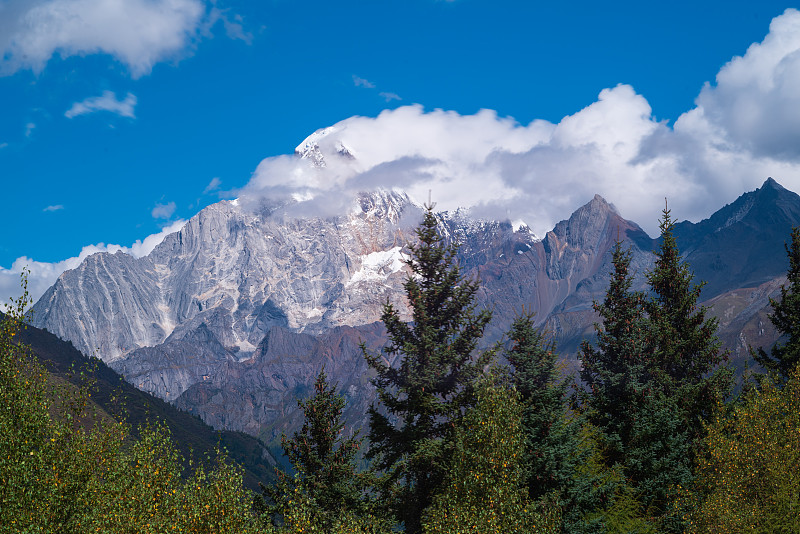
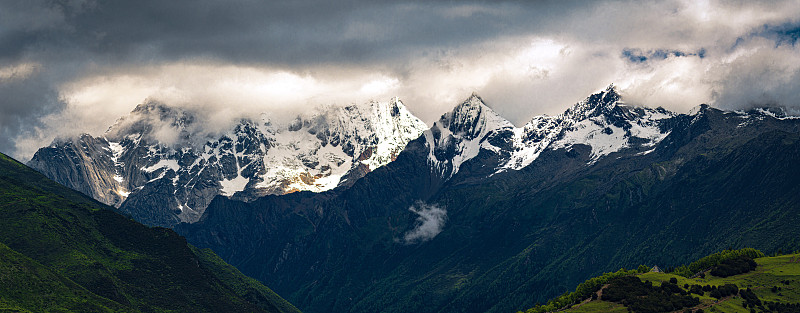
The Four Sisters Mountain is the crown of the eastern Himalayas — four peaks rising to 6,250 metres above the green valleys of Xiaojin county, with three trekking valleys below. Shuangqiao Valley rides by shuttle through meadows and snow views, Changping Valley takes horses to the foot of the peaks, and Haizi Valley climbs past alpine lakes to the base of the summits. Climb the 5,025-metre Da Feng for the summit dawn, or simply breathe the mountain air of the 'Alps of the East'.
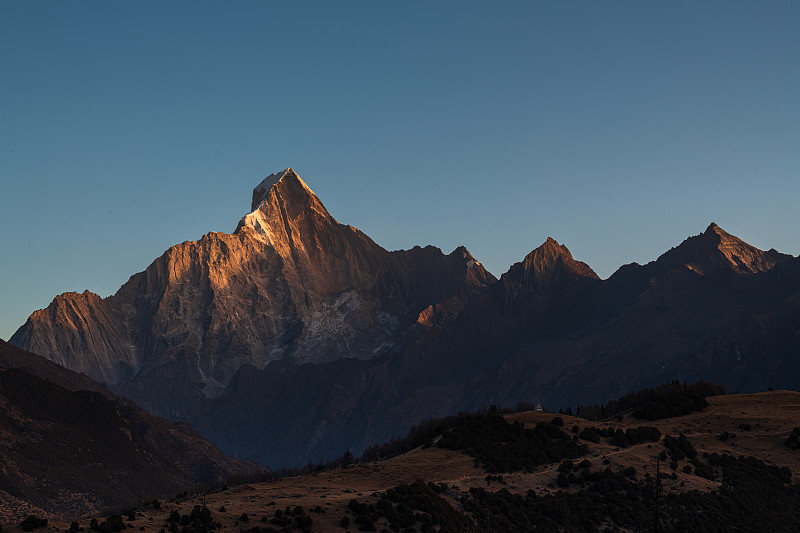
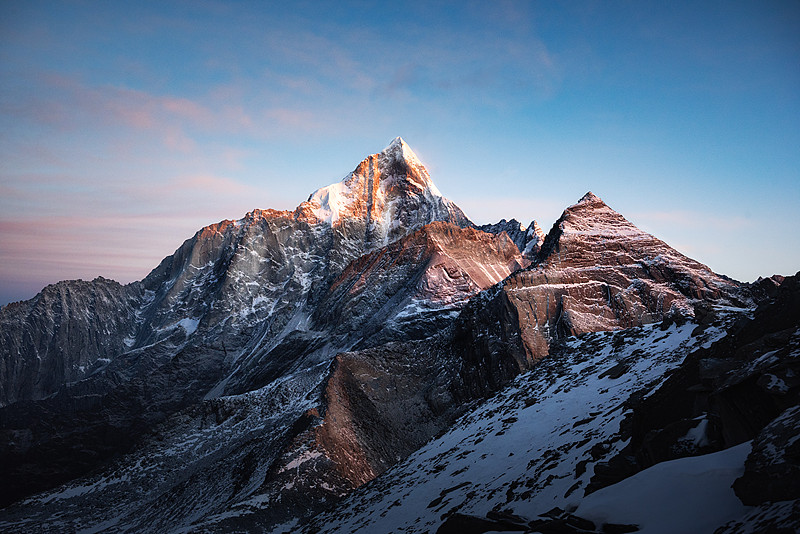
The 6,250-m sister peaks catch fire at dawn from the Maoniubridge pass — the postcard of the Four Sisters.
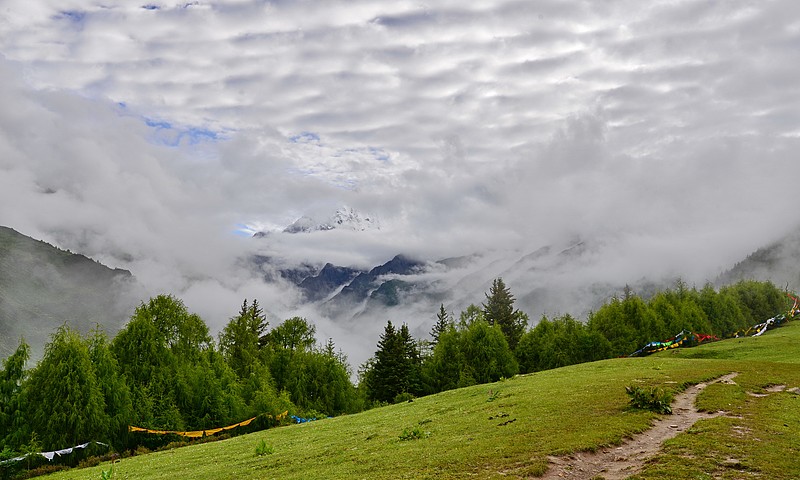
The bus-fed valley of meadows, snow peaks and the Five-Colour Mountain — the easiest great view.
The 29-km horse trail to the foot of the peaks — past the lamasery ruins and the Dead Tree Beach.
The 'big peak' — a long but non-technical summit for fit first-timers, with guides and camps at 4,200 m.
The ten-plus high lakes of the third valley — the trekkers' favourite, full of wildflowers in summer.
The 4,523-m pass above the town — cloud seas, peaks and the barbecue stalls at the top.
The four peaks alight at dawn — the classic sight from the town and the passes.
Meadows, snow views and the shuttle road — the alpine postcard without the climb.
Changping Valley's 29 km to the mountain foot — the classic horse trek.
Ten alpine lakes below the summits — the trekkers' valley of the range.
May–October is the season — wildflowers in June–July, clear golds in September–October, and the climbs are most stable in autumn. Winter brings snow and cold to the town; the passes close in heavy snow. The town holds flower-viewing festivals in July–August and the Mountain-Worship Festival in the lunar fifth month.
Peak (Apr 1–Nov 30): Shuangqiao RMB 70, Changping RMB 60, Haizi RMB 60. Off-peak (Nov 1–Mar 30): RMB 50, 40 and 40. Shuangqiao runs the shuttle; Changping and Haizi are horse or foot. Women enter free March 7–9; some festivals free the valleys.
Da Feng (5,025 m) is the classic first 5,000-m climb — a long walk, no technical rock, but real altitude. Fit first-timers succeed with a guide, a night at the 4,200-m camp and an early summit start; the full programme takes 2–3 days.
The Chadianzi station runs the daily 06:20 coach to Xiaojin (028-87506610) — about 4–5 hours to Rilong town. By car the route climbs Balang Mountain; the pass road is the scenic approach. There is no direct rail.
Rilong town at about 3,200 m holds the hotels and guesthouses — from the Tianqing Inn and the Sunshine International Youth Hostel to the new boutique lodges. Sleep in Rilong, not higher, on the first night.
Yes — email [email protected] or message us on WhatsApp. Our team arranges the coaches, hotels, valley passes, horse treks and the Da Feng climb logistics, free of charge and without obligation.
All three valleys — shuttle, horse and foot — with the golden sunrise. View the plan →
Morning coach from Chengdu over Balang Mountain; afternoon the Maoniubridge pass for the golden light, then Rilong town at 3,200 m.
Full day in Shuangqiao Valley by shuttle — the Five-Colour Mountain, the meadows and the snow views.
Morning the horse trail in Changping Valley to the foot of the peaks; afternoon the return coach to Chengdu — or add Haizi Valley.
Haizi Valley's alpine lakes and the Changping horse trail — the walkers' circuit. View the plan →
Morning in Haizi Valley — the Guozhuangping meadow, the Flower Sea and the high lakes under the peaks; night in Rilong.
The Changping horse trail to the mountain foot — the lamasery ruins and the Dead Tree Beach, then the coach home.
All plans are bookable end-to-end by our team — see the full day-by-day Siguniangshan itineraries hub, or the day-trip pages for single-day options.
The four peaks of the range — Yaomei at 6,250 m, the tallest and most beautiful — seen whole from the town and the passes, gold at dawn.
View details →The shuttle-fed valley of the west — the Five-Colour Mountain, the Sun-Moon Mirror and the meadows of the Shaji forest boardwalk.
View details →The 29-km horse trail east to the foot of the peaks — the lamasery ruins, the Dead Tree Beach and the classic trek.
View details →The trekkers' valley of the north — the Guozhuangping meadow, ten-plus alpine lakes and the base of the climbing routes.
View details →The 'big peak' — the classic first 5,000-m climb, a long walk with no technical rock, guided from the 4,200-m camp.
View details →The pass road from Chengdu — cloud seas, the snow peaks and the barbecue stalls at the top, the scenic gateway to the range.
View details →More in the region on the Sichuan attractions page.
The meadows bloom and the town feasts — the summer festival of the valleys.
The fifth day of the fifth lunar month — the annual pilgrimage of the mountain, with village games and feasts.
The two walkable summits of the range — Da Feng 5,025 m and Er Feng 5,276 m, guided climbs from the high camp.
August–September the forest mushrooms season the village kitchens — the gourmet moment of the alpine table.
Every hotel below is bookable by our team; browse the full Sichuan hotels directory.
The base town at 3,200 m — from the Tianqing Inn and the Sunshine International Youth Hostel to simple family rooms.
The new boutique hotels of Rilong — warm rooms and mountain views, the comfortable middle.
The camps of the climbing base — Da Feng camp at 4,200 m and the Haizi Valley tent grounds for the trek.
The county town below — the practical overflow and the warmest prices.
The local barley wine of the Qiang and Tibetan villages — the toast of the mountain evenings.
The forest mushrooms of the season and the hardy greens of the high fields.
The plateau staples of the Tibetan villages — roasted barley and the lamb of the pastures.
The festival table of the valleys — a whole lamb over the coals for the big nights.
The mushrooms, fritillaria and the medicinal plants of the forest stalls.
The embroidered belts, silver and woven goods of the two peoples of the valleys.
The barley wine of the plateau, bottled in the villages — the liquid souvenir.
The red jingtian of the plateau and the climbing gear of the Rilong outfitters.
Full local-product guides live on the Sichuan specialties page.
The Chadianzi station runs the daily 06:20 coach to Xiaojin (028-87506610) — 4–5 hours to Rilong, the only direct public route.
The route climbs Balang Mountain from Chengdu — the 4,523-m pass road is the scenic approach, about 5 hours; check snow closures in winter.
The nearest rail is at Chengdu; the coach and the road are the two ways into the range.
The 4,523-m pass and the classic golden-light viewpoint — the gateway spectacle.
The red-leaved valley of autumn across the pass — the sister scenic area of the range.
The 4,114-m mountain of the Long March — the historic pass and the forest park.
Rilong town, not higher, on the first night — the valleys climb quickly and altitude needs a day to settle.
The valley horses sell out by mid-morning in season — arrive at the gates by 08:00 or book through our team.
Da Feng is not a day-trip — the camp at 4,200 m and the dawn summit start need a proper programme.
The altitude herb is taken ten days before the climb — start it before you leave Chengdu.
Balang Mountain's winter closures are real — check the road and the forecast before travelling November–March.
The Four Sisters rise from the Xiaojin county of the Aba prefecture, 220 km from Chengdu — four granite peaks of 5,600–6,250 m above the three trekking valleys, on the eastern edge of the Qinghai-Tibet Plateau.
The peaks were long sacred to the local Qiang and Tibetan villagers — the 'sisters' of the name. The valleys opened to trekkers in the 1980s and the first summit routes followed; the range is now the classic training ground for China's high-altitude climbers.
The Qiang and Tibetan villages hold their festivals — the Mountain-Worship Festival, the flower-viewing weeks and the zha-wine toasts — and the horse culture of the plateau still moves through the valley trails.
Everything on ToursChinaTravel is bookable through our team by email or WhatsApp. Here's where each part of your Siguniangshan trip lives on the site.
Star-rated sight details — hours, tickets, phones and tips for every Sichuan attraction.
Browse Sichuan sightsStar-rated hotels across Sichuan — sorted by rating, all bookable by our team.
Book a Sichuan hotelRoutes, airlines and schedules for flights and rail to Siguniangshan.
See China flightsLocal products, crafts and foods of Sichuan — where to find each one.
Browse Sichuan specialtiesLicensed agencies with addresses, phones and booking contacts.
Find a Sichuan agencyMore city and region guides across China, including the Sichuan guide.
Browse all guides