>
The birthplace of Confucius and the heart of the Confucian world — the greatest temple to the sage, the mansion of his descendants and the forest of his graves, three UNESCO World Heritage sites in one small walled town. Two and a half millennia of imperial incense burn here: the pilgrimage town of Chinese learning, an easy day from Jinan or Tai'an.
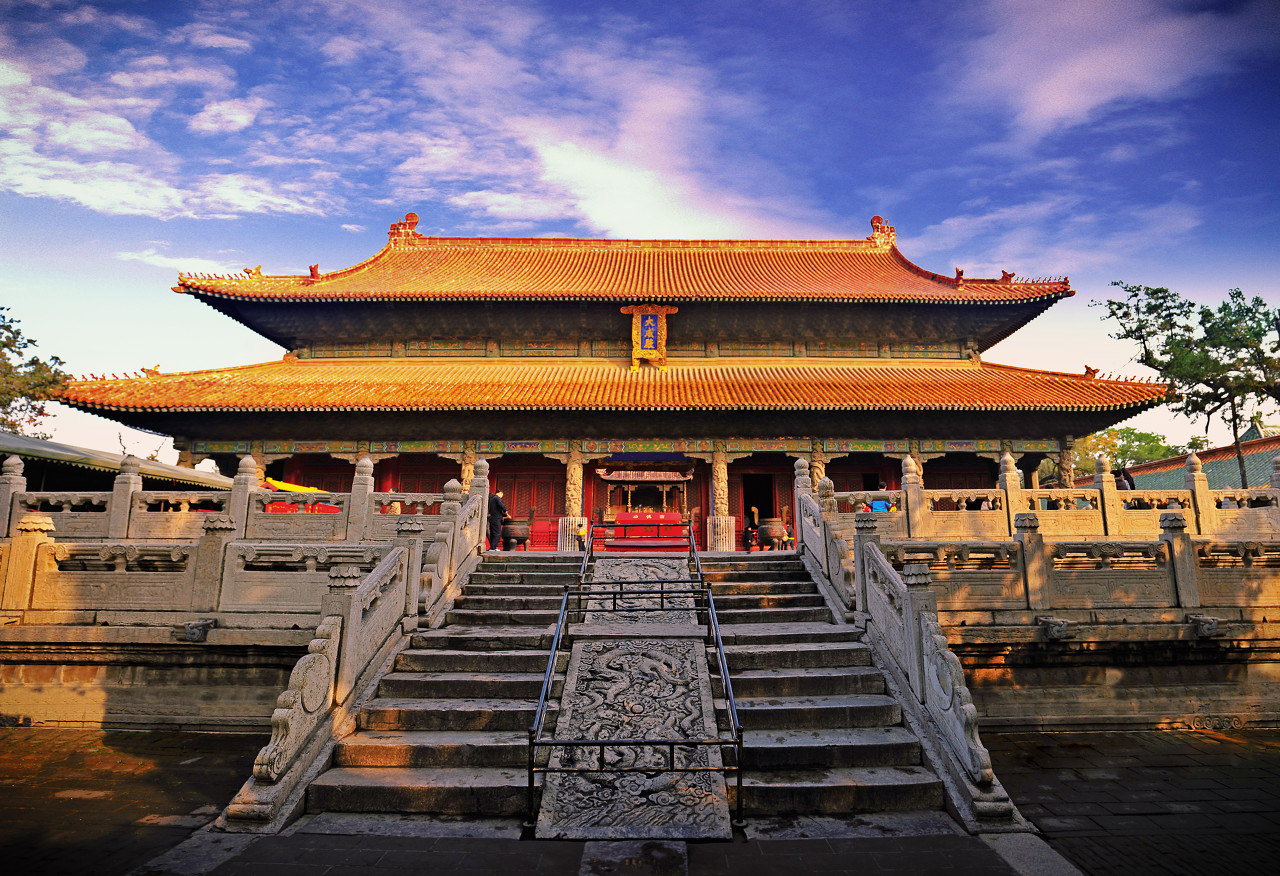
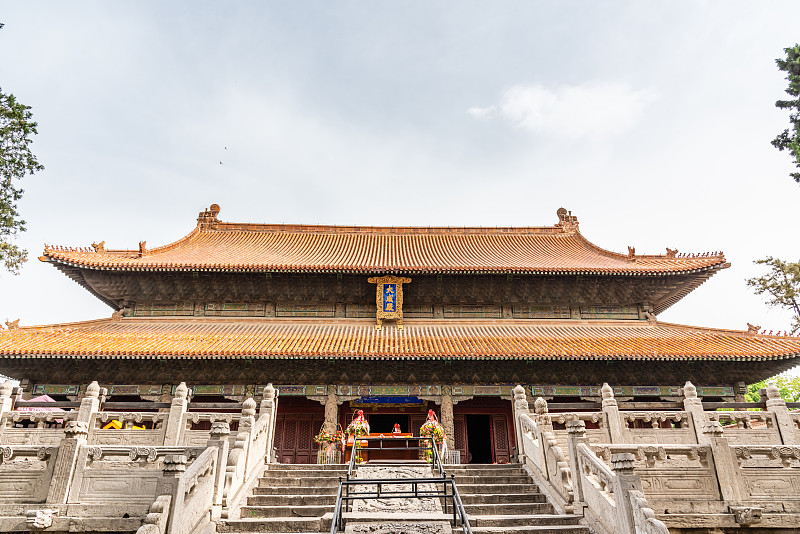
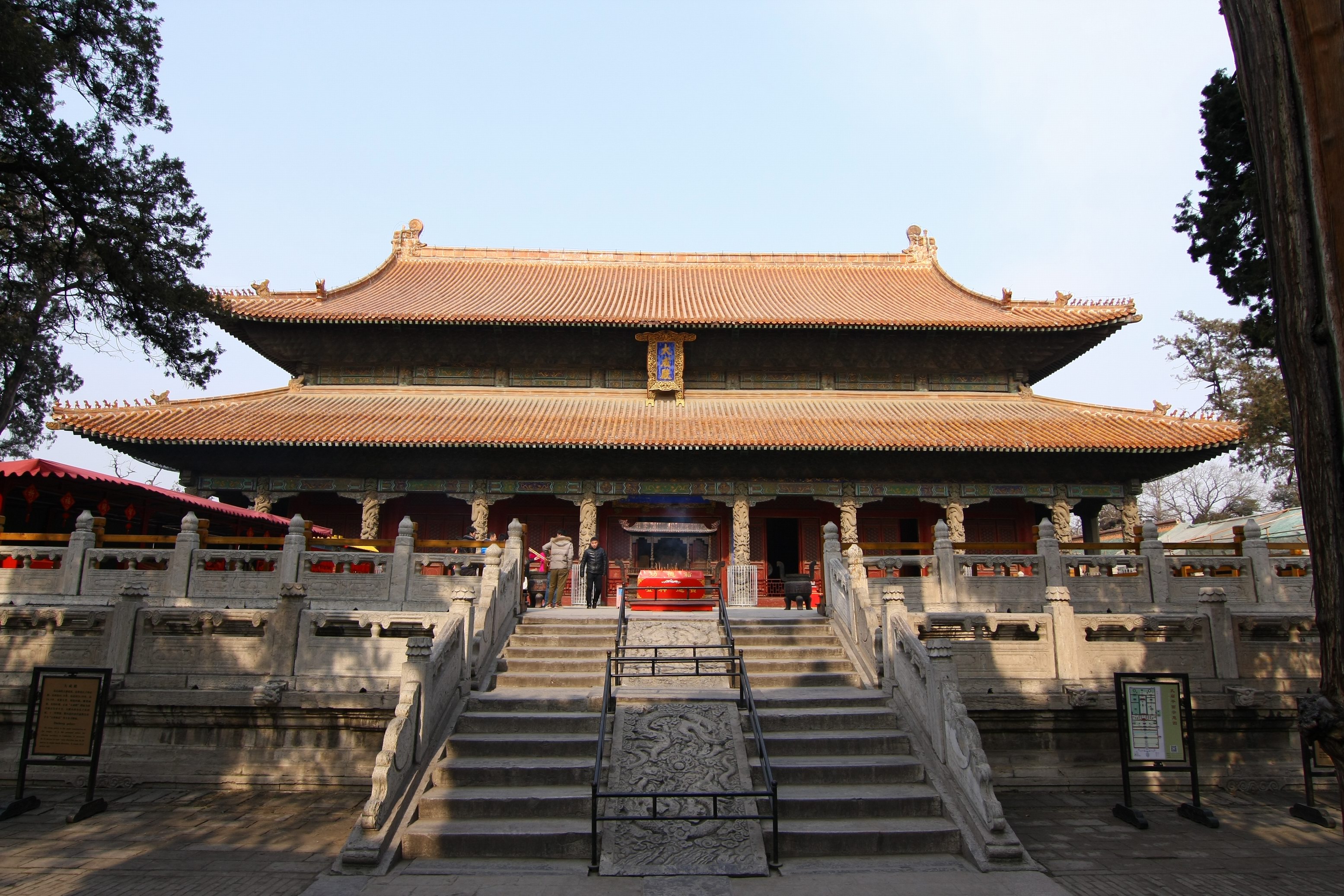
The great hall of the sage, its twenty-eight dragon columns carved in stone — the spiritual centre of 2,500 years of Confucian worship.
Thirteen pavilions of imperial steles, from Tang to Qing — the emperors' love letters to Confucius, written in stone.
The feast invented for the sage's descendants — 196 dishes of ceremony and symbolism, still served in the old mansion quarter.
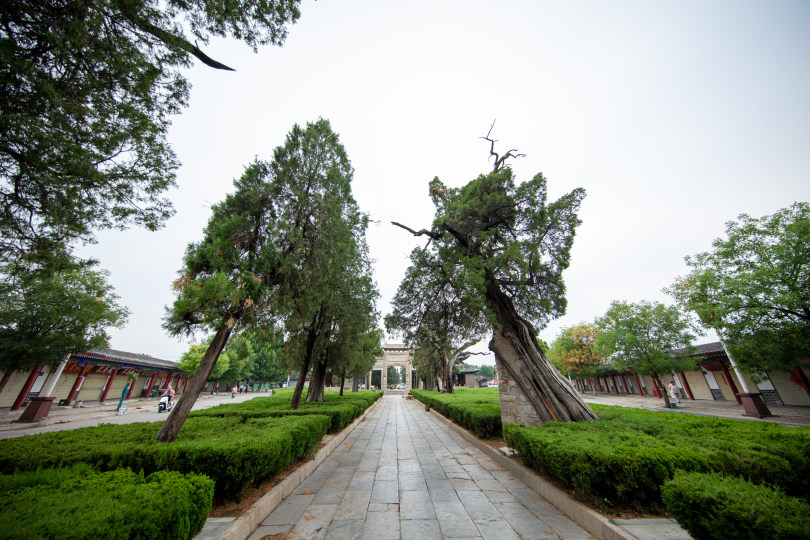
The cypress-lined avenue from the town wall to the Confucius Forest, past the Ten Thousand Spring Arch — the pilgrim's approach to the sage's tomb.
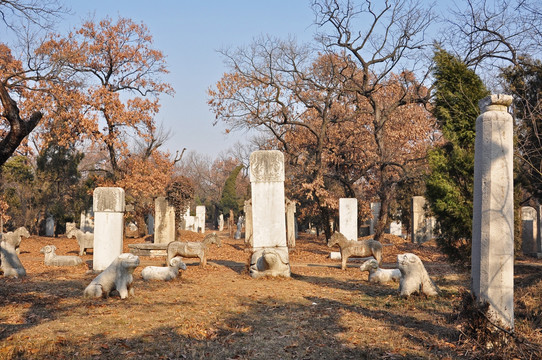
The great mound where Confucius was buried in 479 BC, guarded by stone animals and two millennia of descendants' graves.
The Apricot Altar where Confucius taught — the very spot of the classroom that became the model for Chinese education.
Nine courtyards, 466 halls and 54 arches on a 630-metre axis — the largest and best-preserved temple to Confucius anywhere, a UNESCO site since 1994.
The residence of the Dukes Yansheng, Confucius' direct line, for 77 generations — a working palace of the Confucian household, part museum, part living courtyard.
The Confucius Forest holds more than 100,000 tombs in 200 hectares of cypress — the cemetery of the Confucius family across two millennia, the largest family graveyard in China.
Every street name and arch of Qufu honours learning — the atmosphere of the hometown of the teacher of 10,000 generations.
The combined 'Three Confucian Sites' ticket (Temple + Mansion + Forest) is RMB 150 on weekdays and RMB 185 on festival days. Single tickets: Confucius Temple RMB 90, Confucius Mansion RMB 60, Confucius Forest RMB 50. Holders of the combined ticket get a discount on the Forest; students and seniors have half-price policies — bring ID.
September to November and April to May are mild and clear. The grand occasion is 28 September, the birthday of Confucius, when the Confucius Festival and the great sacrificial rite are held at the Dacheng Hall — book hotels months ahead.
One full day covers the Three Confucian Sites comfortably. A second day adds the Yan Temple, the Duke of Zhou Temple, the Shao Hao tomb and the Six Arts City, or a side trip to Mount Ni (the birthplace of Confucius).
Qufu East high-speed station puts the town 2.5 h from Beijing and 1.5 h from Jinan; buses from Jining (30 km) run all day. From Tai'an, the Confucius Temple is an easy 1 h by rail — Mount Tai and Qufu make a natural pair.
The Kongfu banquet is the great ceremony of the town; more casually, try Qufu smoked tofu, the vegetable pancake (caijianbing), the braised fish in a clay pot and the Confucius-family pastries from the old street shops.
Yes — email [email protected] or message us on WhatsApp. Our team arranges the Three-Site tickets, a guide for the Temple, hotels and the train to Tai'an, free of charge and without obligation.
The Temple, the Mansion and the Forest — the complete pilgrimage, plus the lesser temples of the sage. View the plan →
Morning at the Confucius Temple — the Lingxing Gate, the Thirteen Stele Pavilions, the Apricot Altar and the Dacheng Hall — then the Confucius Mansion and its gardens. Evening Kongfu banquet in the old town.
Morning walk of the sacred way to the Confucius Forest and the tomb of the sage, then the Yan Temple and the Duke of Zhou Temple before the afternoon train.
The sage and the sacred mountain — the Confucian pilgrimage joined to China's great sunrise climb. View the plan →
Morning at the Confucius Temple and Mansion; afternoon high-speed rail to Tai'an (about 1 h).
The Red Gate climb — Doumu Palace, Mid-Heaven Gate, the Eighteen Bends and South Heaven Gate — dawn on the summit, then cable car down.
All plans are bookable end-to-end by our team — see the full day-by-day Qufu itineraries hub, or the day-trip pages for single-day options.
The great temple of the sage — nine courtyards on a 630 m axis with the Steles Pavilion, the Apricot Altar and the Dacheng Hall of the twenty-eight dragon columns. Liang Sicheng called it a 'unique case in the history of world architecture'.
View details →The mansion of the Dukes Yansheng, Confucius' direct descendants — 77 generations of courtyards, halls and gardens, listed as a UNESCO World Heritage site in 1994.
View details →The cemetery of the Confucius family — more than 100,000 tombs under 200 hectares of ancient cypress, with the tomb of Confucius himself at the centre and an electric cart for the long avenue.
View details →The cypress-lined avenue from the town gate to the Forest, past the carved Ten Thousand Spring Arch with its twelve stone lions — the pilgrim's road to the sage's tomb.
View details →The temple to Yan Hui, Confucius' favourite disciple — a quieter, smaller echo of the great temple, included free with the combined ticket.
View details →A theme park of the six arts Confucius taught — rites, music, archery, charioteering, calligraphy and mathematics — with performances and hands-on halls, popular with families.
View details →More in the region on the Shandong attractions page.
On 28 September, the birthday of Confucius, officials in Ming robes perform the ancient rite at the Dacheng Hall — the 'eight-row dance' of the ritual, the grandest ceremony in Qufu's year.
The week around the sage's birthday fills the town with lanterns, parades, calligraphy fairs and academic gatherings — the liveliest time of the Qufu year.
At the Six Arts City, visitors can try their hand at archery, bell-and-drum music and brush calligraphy — the classroom of the sage, revived for the afternoon.
After the sites close, the old street of the town lights up — the Confucius pastry shops, the lantern arches and the courtyards of the mansion quarter.
Every hotel below is bookable by our team; browse the full Shandong hotels directory.
Converted courtyards near the Temple and Mansion, with pond gardens and antique furniture — from about ¥300–500, the atmospheric base for the pilgrimage.
Chain and family hotels between the Temple and the coach station — from about ¥150–250, handy for the early-morning opening.
If you fly in, the hotels of Jining (30 km, buses every 20 min) cost less and cover the airport side of the trip.
The feast of the sage's household — dishes like the 'Peach of Immortality' of the Kong cuisine, served in ceremony at the old mansion restaurants; a formal experience from about ¥200 per person.
The local speciality — tofu smoked over straw and served cold, braised or in soup, sold from the carts of the old street.
A thin pancake folded around egg and greens, cooked fresh on the griddle — the scholar's quick lunch, a few yuan.
Fish braised in a clay pot with chillies and spices at the local restaurants — the homely taste of the town, eaten with the region's breads.
Stone rubbings from the Temple steles and brush scrolls of the sage's sayings — the classic Qufu souvenir, from the shops of the old street.
The sweet pastries of the mansion's kitchen, boxed for the pilgrimage — the edible memento of the town.
The scholar's tools of the region — visit the workshops that still grind the ink of the Confucian academies.
Full local-product guides live on the Shandong specialties page.
https://media.doubao.com/space/api/box/stream/download/all_by_mount_point/GK46bT82doid74xwzu3cLiQtnFf
https://media.doubao.com/space/api/box/stream/download/all_by_mount_point/G3lnbKl2fogBuUx4wAEcjM8bnab
https://media.doubao.com/space/api/box/stream/download/all_by_mount_point/Z23dbYGZEoI2TNxY5i0c7ILvnWh
https://media.doubao.com/space/api/box/stream/download/all_by_mount_point/Rw10bEPvOoICXRxIdJSc1PpAn5b
https://media.doubao.com/space/api/box/stream/download/all_by_mount_point/GoWNbhC4ro5gBAxZQWvcROtNnxg
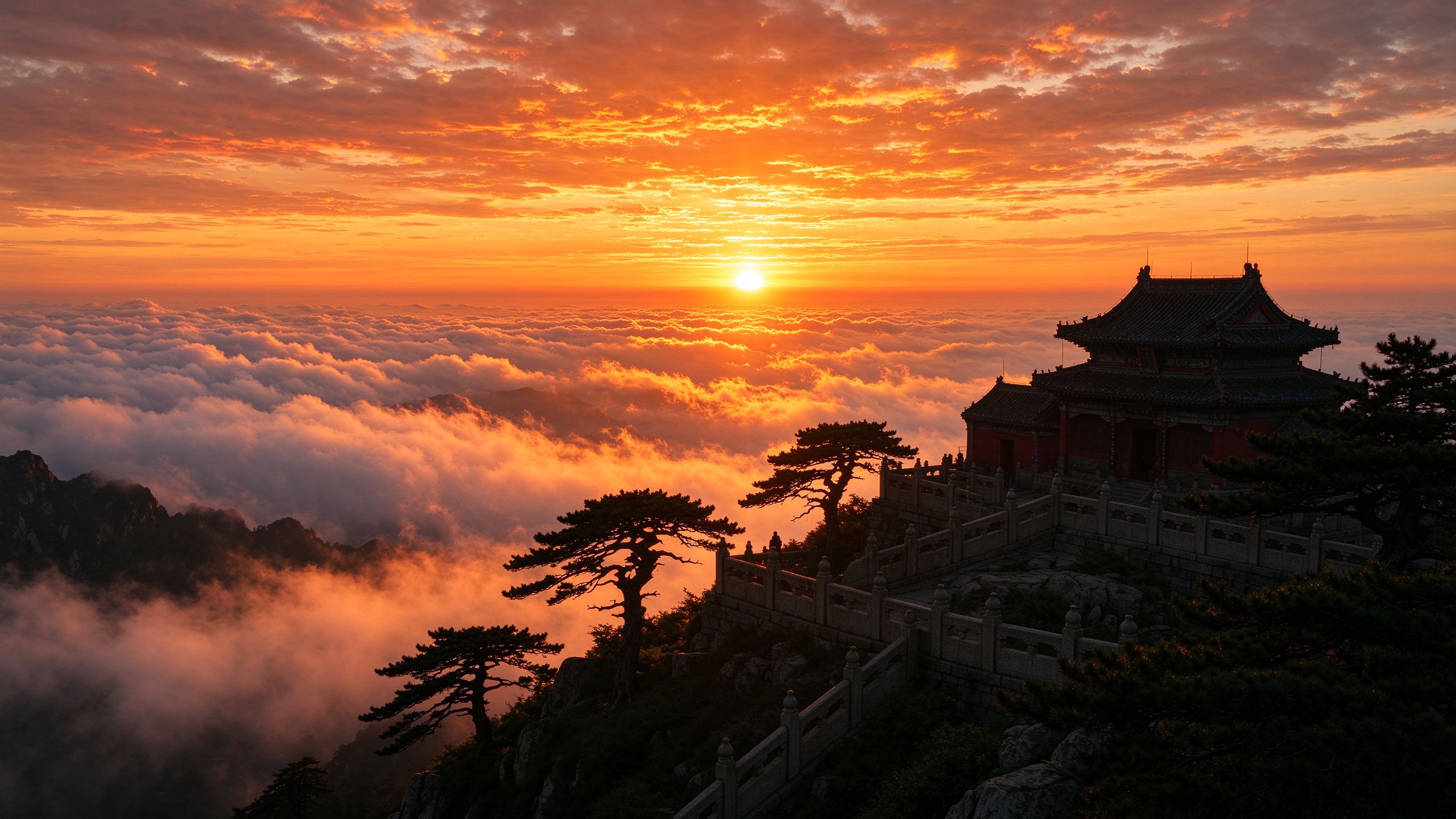
The great sacred mountain of the east — an hour by train from Qufu, the Red Gate climb and the summit sunrise make the perfect pairing with the sage town. Full guide on the Mount Tai page.
The hill where Confucius was born in 551 BC — the Ni Mountain Temple, the book loft and the cave of his mother's shrine, 30 km southeast of Qufu.
The neighbouring town of Mencius, Confucius' great successor — his temple and forest are the quiet mirror of Qufu's grand sites.
The three-site combo saves about 20% and lets you walk the whole pilgrimage in order — Temple, Mansion, Forest — without queuing at each gate.
The Temple's story is in its steles and courtyards — a licensed guide (about ¥100–150) turns an hour into a lesson in 2,500 years of Chinese history.
The Forest is at its best in the first morning light — the electric cart saves the long avenue for the cypress walk at the tomb.
Touts on the old street push expensive 'authentic' banquet rooms — choose the established mansion restaurants and agree the menu and price before you sit.
The high-speed link makes Qufu + Tai'an an easy two-day loop — book the train and the Tai'an hotel together in season.
Qufu lies on the south slope of the Mount Tai massif, on the plain between Jinan and Jining. Four mild seasons, with the clearest air in spring and autumn and a hot, damp summer.
Confucius was born here in 551 BC; the temple grew from his home into the imperial shrine, rebuilt and enlarged by every dynasty. His descendants were ennobled as Dukes Yansheng and lived in the mansion until 1935 — 77 generations in one house. The three sites were listed together as a UNESCO World Heritage site in 1994.
Qufu is not scenery but source — the town where the Confucian order of education, ritual and family was born, and still the destination of scholars, students and the imperial pilgrimage of every exam season.
Everything on ToursChinaTravel is bookable through our team by email or WhatsApp. Here's where each part of your Qufu trip lives on the site.
Star-rated sight details — hours, tickets, phones and tips for every Shandong attraction.
Browse Shandong sightsStar-rated hotels across Shandong — sorted by rating, all bookable by our team.
Book a Shandong hotelLocal products, crafts and foods of Shandong — where to find each one.
Browse Shandong specialtiesLicensed agencies with addresses, phones and booking contacts.
Find a Shandong agencyMore city and region guides across China, including the Shandong guide.
Browse all guides