>
Southeast Guizhou is China's richest living minority heartland: a thousand Miao villages, the Grand Song of the Dong, drum towers and wind-rain bridges, silver and embroidery, and the ancient river town of Zhenyuan. This guide shows you how to plan it.
Four moments every first-time visitor should not miss — the essence of southeast Guizhou in one loop.
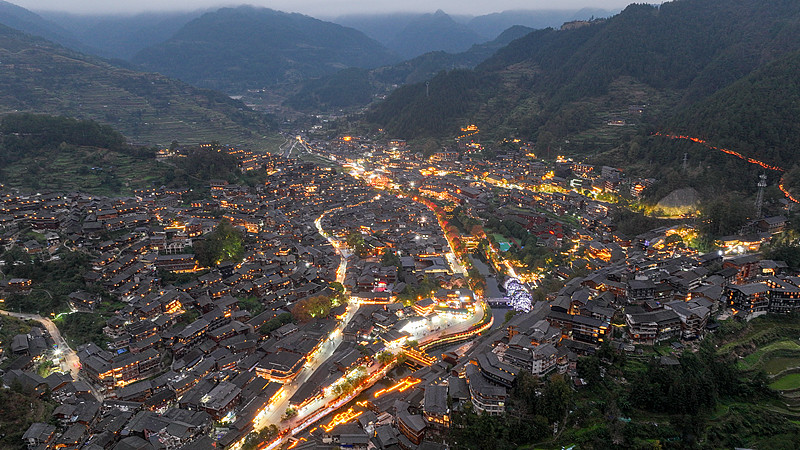
Ten thousand stilted houses climb the hill; at dusk every window glows, turning the whole Miao village into a galaxy. The viewing terrace opposite the village is the classic spot — reachable by ¥5 electric cart or a ten-minute stone path.
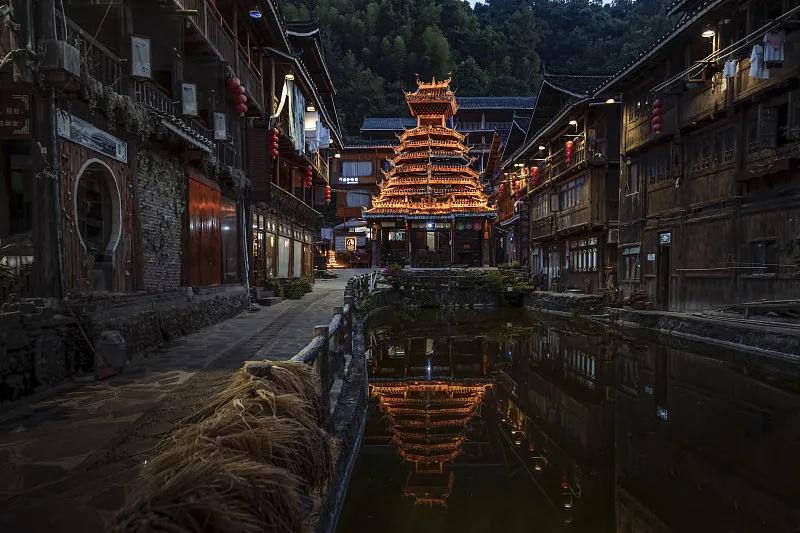
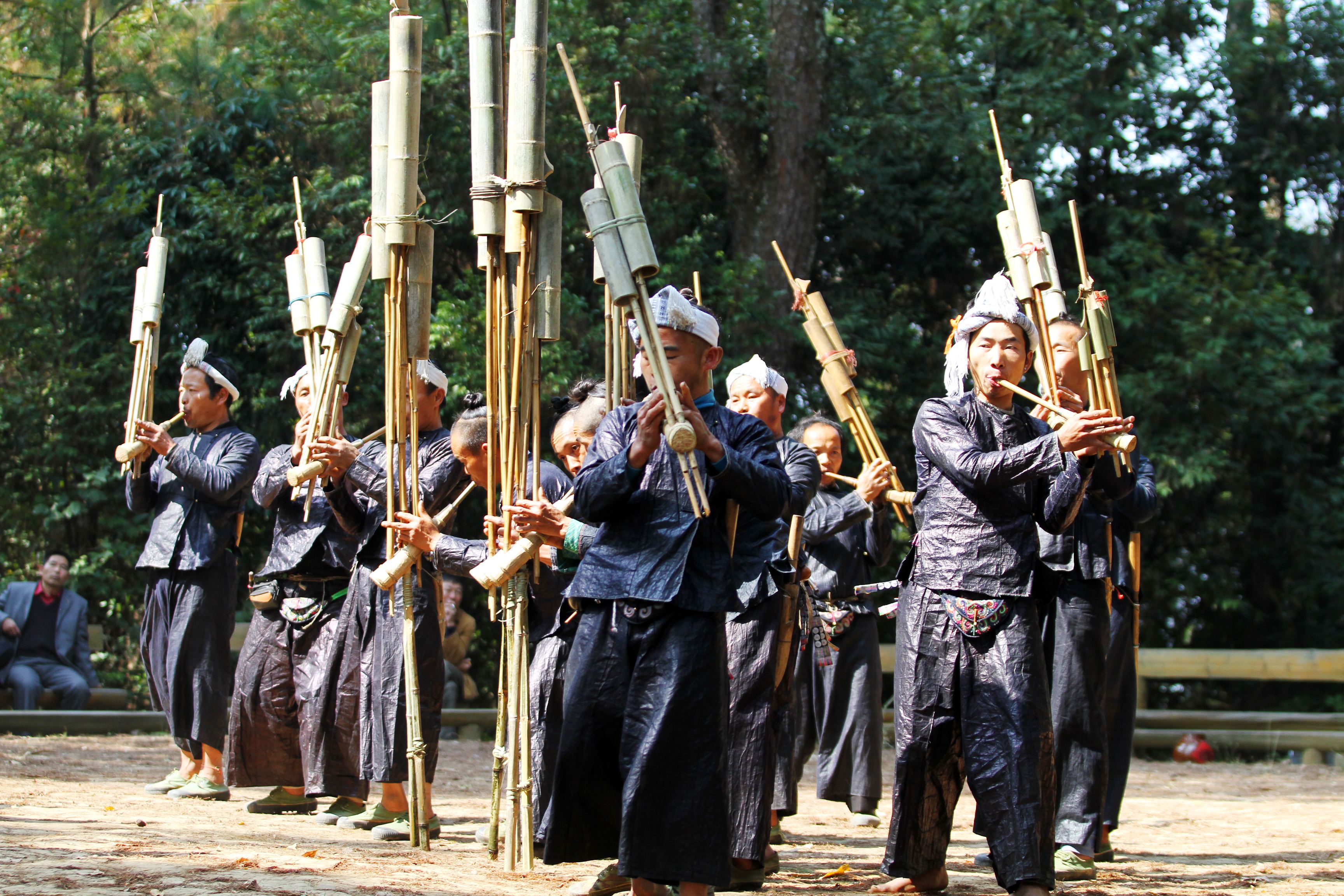
In Zaidang and Zhaoxing, polyphonic choirs sing without instruments or scores — a mountain orchestra UNESCO calls "a musical landscape." Sit in a drum-tower square and let it wash over you.
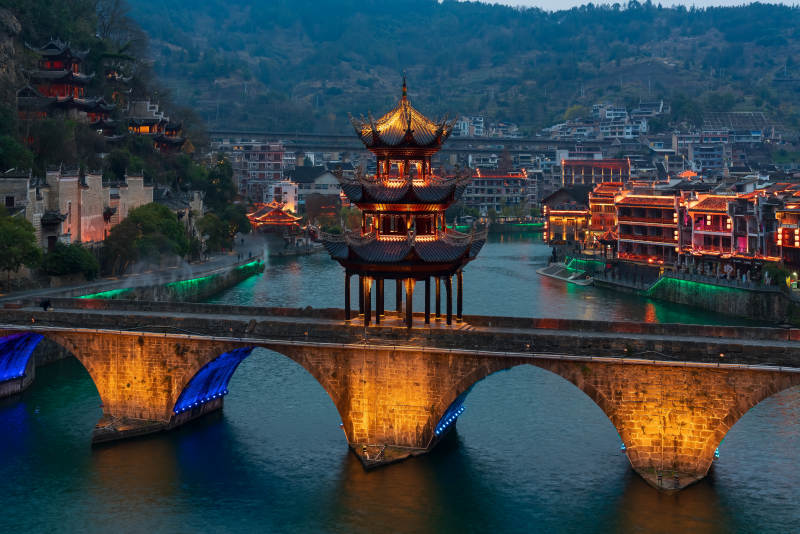
Green Wuyang water slides past Ming-era lanes, the Qinglong Cave complex clings to the cliff, and night trains trace light across the gorge. "Emei's grace, Qingcheng's quiet, the Yangtze's gorges, the Li River's beauty."
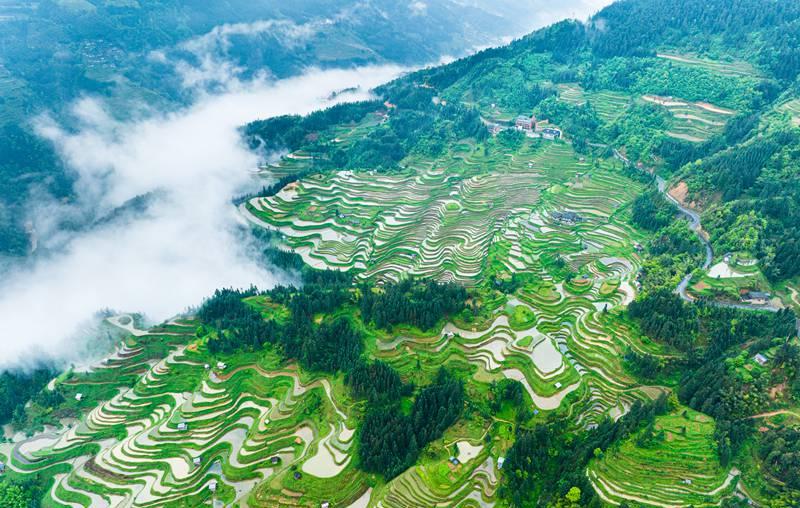
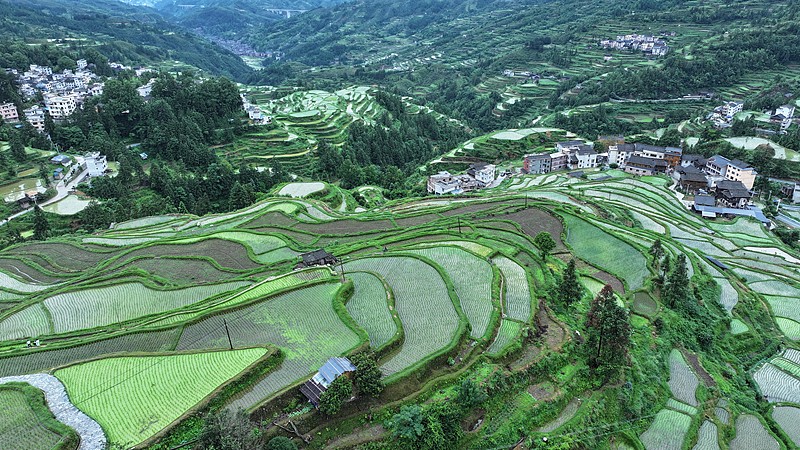
Jiabang and Tang'an carve the mountains into mirrors in spring and gold in autumn — stilted farmhouses float above the clouds when the valley fog rolls in at dawn.
The signature experiences of southeast Guizhou — six reasons travellers return again and again.
"Nine parts mountain, half part water, half part field" — nowhere better than Jiabang's mirror terraces. In spring the flooded paddies mirror the sky; in autumn they turn to gold around stilted Miao farmhouses.
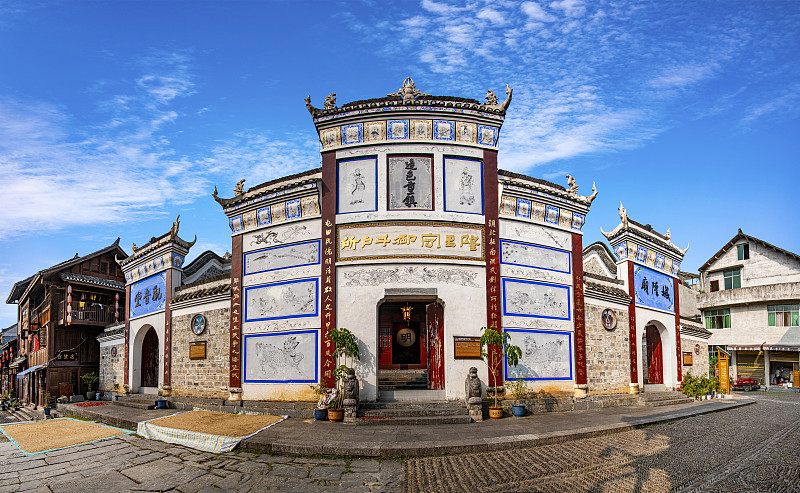
A 2,000-year-old river town on the Wuyang: Confucian, Buddhist and Taoist halls side by side in the cliff-hung Qinglong Cave complex, old lanes and wharves, and one of the loveliest night walks in Guizhou.
Ten linked hamlets, 1,000+ households, a living museum of Miao culture: morning song, long-table feasts, silver workshops and a night view like scattered stars.
Five drum towers, five wind-rain bridges and a river running through — the Dong village par excellence, where the Grand Song and the long-table feast still belong to daily life.
Basha is China's only Miao village where men legally carry firearms — rifles for ceremony, topknots for identity, and a tree-planting ritual for every birth. The feel is ancient, proud, quiet.
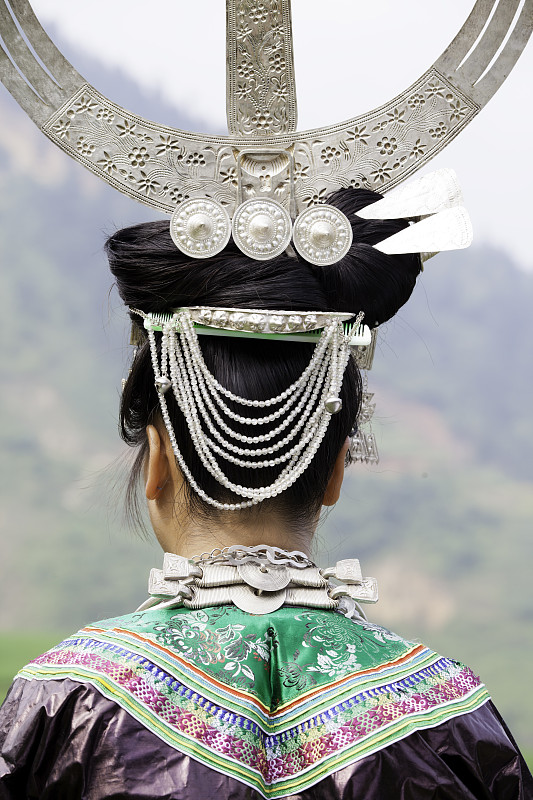
Every silver plate and every embroidered panel is a chapter of intangible heritage. In Xijiang, silversmiths from the famous silver villages work to order — pure silver about ¥12/gram.
Rain gear and pack covers, a torch, grippy hiking shoes, a warm layer (mountain villages run cooler), motion-sickness and stomach remedies, sunscreen and mosquito repellent in summer. A sleeping bag helps if you go deep into the small villages. More Qiandongnan Q&A →
March to November suits spring, summer and autumn — from the first warm days to the Leishan Miao New Year. 80% of rain falls May–October, so bring rain gear; winter is cold in the villages, though off-season brings genuine local encounters and Spring Festival celebrations.
Roads are the backbone. The Xiarong Expressway runs Guiyang–Rongjiang in about two hours, and trains link Guiyang–Kaili (25 daily, ~3 h), Guiyang–Zhenyuan (~4 h) and Kaili–Zhenyuan (~1 h). Liping has its own small airport with flights from Guiyang and Guilin.
Qiandongnan is home to the Miao, Dong, Shui, Buyi, Gelao and Yao peoples — 80% of its four million residents are minorities. Be polite, ask before photographing people, and follow local customs in villages; most communities welcome curious visitors warmly.
Kaili has the best choice at every standard; Congjiang and Rongjiang have decent guesthouses. In the small villages accommodation is basic — book the popular Miao and Dong stays well ahead at Golden Week. Prices below are weekday rates; holidays multiply them.
Yes. Email [email protected] or message us on WhatsApp. Our team arranges village stays, guides, long-table feasts and inter-village transport — free of charge and without obligation.
The essential first visit. More Qiandongnan itineraries with tickets & transport →
Guiyang – Zhenyuan. Train to Zhenyuan (~4 h), walk the old lanes and the cliff-hung Qinglong Cave complex, and drift or stroll the Wuyang River. Night view of the town from the riverbank.
Zhenyuan – Xijiang. Morning train or bus via Kaili to the world's largest Miao village; wander the lanes, watch silver being made, and take the dusk view from the terrace before the long-table feast.
Xijiang – Zaidang – Zhaoxing. Via Kaili and Rongjiang to the singing village of Zaidang for the purest Dong Grand Song, then on to Zhaoxing for the drum-tower night.
Zhaoxing – Basha – back. Morning visit to Basha's gun men, then buses to Congjiang/Rongjiang and return to Guiyang, or fly out from Liping (via Zhaoxing–Liping buses, ~1 h).
Add Longli ancient city and Liping for the complete picture. Full itinerary page →
Guiyang – Zhenyuan — old town, Qinglong Cave, night lights.
Zhenyuan – Xijiang — the thousand-household Miao village.
Zaidang — the Dong singing village and its Grand Song.
Zaidang – Basha – Zhaoxing — gun tribe in the morning, drum towers at night.
Longli Ancient City — a 600-year-old Ming garrison town with white-walled Hui-style halls.
Longli – Liping – home. Natural bridge and old town at leisure, then fly or bus out from Liping.
The villages and towns of southeast Guizhou, with practical details. Prices are reference rates — always confirm at the gate or with our booking team.
More than a thousand households across ten linked hamlets — a living encyclopedia of Miao architecture, silver craft, song and hospitality. The dusk view from the opposite terrace is the single most photographed scene in southeast Guizhou.
| Admission | ¥100 (reference); students ¥50 |
| Getting there | Kaili–Xijiang buses ¥13.5 (~1 h); taxi from Kaili ≈ ¥120 |
| Viewing terrace | ¥5 electric cart or 10-min stone path from the main street |
| Stay | Guesthouses from ~¥138 to ¥508 (river-view) |
| Best season | All year; festivals at their best in the lunar seasons |
Built along the Wuyang River like a living tai-chi diagram, Zhenyuan blends Confucian, Buddhist and Taoist halls in the cliff-hung Qinglong Cave complex, with Ming lanes, old wharves and the covered Zhusheng Bridge crossing the green water.
| Qinglong Cave | ¥60 (reference) · 08:00–16:00 |
| Wuyang River | ¥20 + boat ¥100 (~2 h cruise) |
| Tiexi Gorge | ¥50 — "the little Jiuzhai of the Yunnan-Guizhou plateau" |
| Yuping Mountain | ¥30; free before 7:00 — town panorama & Miao Great Wall |
| Getting there | Train from Guiyang (~4 h) or Kaili (~1 h) |
The most complete Dong village in the region: five clan drum towers and five wind-rain bridges over a single stream, with the Grand Song, bullfights and long-table feasts woven into ordinary days. The classic Zhaoxing–Tang'an hike climbs straight into the terraces above.
| Admission | ≈ ¥80 (reference; verify at the gate) |
| Getting there | Congjiang–Zhaoxing 2 daily buses; Sanjiang–Zhaoxing ¥35; Liping buses ~hourly |
| Stay | Guesthouse beds from ¥30; hotel doubles from ~¥288 |
| Walk | Zhaoxing–Tang'an–Zhaoxing ~3 h via stone path and terraces |
| Best moment | Dusk — drum towers and bridges light up along the stream |
The only place in China where Miao men legally carry firearms: rifles fired for ceremony, topknots shaved in a style that fascinates scholars, and a tree planted at every birth so each person owns their tree for life. Ancestral, quiet, deeply moving.
| Admission | ≈ ¥40–60 (reference; verify at the gate) |
| Getting there | Short bus hop from Congjiang (Rongjiang–Congjiang road) |
| Best time | Morning and festival days, when rituals and gun salutes are held |
| Note | Photograph people only after asking — the village tradition is proud and private |
Zaidang (25 km from Rongjiang) keeps the most original Dong Grand Song — UNESCO-inscribed polyphonic choirs that need no instruments. Tang'an, above Zhaoxing, is a "museum village" of Dong culture set in stair-step terraces.
| Getting there | Rongjiang–Zaidang by simple road, ~25 km; Tang'an on the Zhaoxing hike |
| Experience | Evening Grand Song sessions at the village square |
| Best season | Spring and autumn (terrace water and harvest) |
| Note | Basic guesthouses; bring your own toiletries |
Six centuries old, Longli was built by Ming soldiers on the frontier — streets in a ram's-horn plan, white-walled Hui-style halls with painted eaves, and a culture still half-army, half-town. Listed as a Sino-Norwegian eco-museum and one of Guizhou's twenty protected cultural villages.
| Admission | ≈ ¥30–60 (reference; verify at the gate) |
| Getting there | Buses via Liping (Longli is ~25 km south-east of Liping) |
| Time | Half a day — slow lanes, ancestral halls, walls |
| Note | Best combined with Liping in the deep tour |
Polyphonic choirs that need no score and no instruments — UNESCO-listed as a "grand song." The purest renditions are sung after dinner in Zaidang and Zhaoxing, when the whole village gathers in the drum-tower square.
Every 5th month, days 25–27, Miao villages along the Qingshui River launch slender dugout dragon boats — crews standing in rows, ancient rituals, rules and legends intact.
On the 7th day of the 7th lunar month, villages taste the new harvest: flying songs, lusheng flutes, wood-drum dances, horse races and bird fights, with thousands of visitors joining.
The Miao and Dong way to welcome guests: tables running the length of the lane, sour-soup fish, glutinous rice and mountain wine, with songs passed like toasts. Best arranged through your guesthouse or our team.
Kaili has the widest range; the villages trade comfort for atmosphere. Weekday prices below — holidays multiply them, so phone ahead and book early; most guesthouses won't hold rooms without a deposit. Our team books any of these free of charge.
River-facing and landscape rooms at Xijiang with the full village view from the windows — lights on at dusk, stilted houses reflected at dawn.
Wooden-built rooms right by the new lusheng square — the classic choice for experiencing Miao village life without leaving the centre.
A backpacker-run youth hostel on the hillside: common room and bar downstairs, dorm-style beds above, and free Wi-Fi, TV, games and books. Phone +86 855 3348 871.
The oldest guesthouse in Xijiang (WalkGuizhou's house): 16 twins and 12 doubles, private bathrooms, 24-h hot water, Wi-Fi and a bar. Phone +86 855 3348 896.
Beside the Zhusheng Bridge with Qinglong Cave across the water: four river-side rooms with balconies are the town's best photography perches. Phone +86 855 5725 808.
Zhenyuan's only 3-star resort, at the entrance to the Tiexi scenic area — 1 km from the old town, 6 km from the station. Phone +86 855 5726 116.
Qiandongnan eats sour and hot: pickled everything, sour-soup fish, and village feasts built on glutinous rice. In Xijiang, breakfast runs ~¥7 and a proper meal ~¥30 — and the signature chicken-porridge (a whole bird steamed into fresh rice gruel) is about ¥100.
The Miao classic: a whole chicken steamed into fresh rice gruel until the porridge carries the bird's sweetness and the bird carries the rice's aroma — then served apart, salted to taste.
A host family that has received writers and officials from all over China — walls of photographs, honest Miao cooking, and song if you ask. Phone +86 855 3348 288.
Zhenyuan's famous sour-soup house: fresh ingredients, a deeply flavoured red tomato broth, and plenty for vegetarians. On Heping Street near the trade city.
Zhaoxing's sour-pickled river fish (aged, aromatic, a Miao-Dong classic) and beef sinew flash-fried with chilli — the village taste with a kick.
A Zhenyuan century-old pickle born in the Qinglong Cave Taoist temple: mustard greens cured and aged, then steamed with pork belly until glossy and savoury.
Zhenyuan's signature snack — "pinch your nose at the smell, melt at the taste" — ¥4 a box, sole shop on the old street.
Guiyang Longdongbao is the main gateway (11 km from town, flights nationwide); Liping Airport (HZH) serves the deep south with flights from Guiyang and Guilin.
The busy Xiang-Qian railway threads the region: Guiyang–Kaili 25 trains daily (~3 h), Guiyang–Zhenyuan ~4 h, Kaili–Zhenyuan ~1 h, and Hunan-bound trains stop at both.
Roads are the region's backbone — the Xiarong Expressway now runs Guiyang–Rongjiang in ~2 h, and regular coaches thread every county and most villages.
Between the famous villages, shared minibuses and market-day vans cover the gaps — ask at any guesthouse, and smile: the rides are half the conversation.
Kaili, Zhenyuan and the county towns have cheap taxis; four people sharing a Kaili–Xijiang run costs about ¥120.
Rewarding but demanding: steep, narrow, switchback mountain roads in rain country. The expressway spine is fine; the village loops need confidence.
Every second shop in Xijiang sells silver — much of it made by silversmiths from the neighbouring silver villages of Kongbai and Maliao. Ask plainly whether it is "pure silver" or "Miao silver" (usually white copper); marked 925 is usually imported stock. Pure silver runs about ¥12/gram; wire-work pieces are priced by the piece.
Embroidered panels — new and antique — run from tens of yuan to tens of thousands; Zhaoxing is a touch cheaper than Xijiang. Butterfly Mama, a small Xijiang shop-cum-brand by three women hosts, merges Miao motifs with modern tees, hats and embroidered shoes, ¥10–100+. Drum-tower models, batik and indigo cloth fill the Zhaoxing lanes.
County hospitals exist in Kaili, Zhenyuan, Congjiang and Rongjiang; in the villages, first-aid is basic — carry a personal kit. Emergencies: dial 120; police 110.
Rural Credit Cooperatives and Postal Savings are easy to find, and every county town has an Agricultural Bank (Zhenyuan and Liping also have ICBC). Xijiang is the only village with ATMs (Postal, Rural Credit and, inside the Qian Zhi Yi guesthouse, an ABC machine). Cash of a few hundred to a thousand yuan is enough for a day's loop; UnionPay cards work at larger hotels and restaurants.
The most famous walk in the region: a stone path climbing past Xiage village through stair-step terraces to the museum village of Tang'an. Return by ¥3 road bus — or brave the stream-side route only with a local guide.
More Qiandongnan day tripsFrom Liping, an hour to a Ming garrison town untouched by theme-park gloss: ram's-horn streets, ancestral halls with painted eaves, and six centuries of frontier memory.
Longli guide80% of rain falls May–October. A pack cover, a small torch and grippy shoes matter more than a waterproof jacket; mountain roads can close briefly after storms.
Ask before photographing anyone — especially in Basha, where tradition is proud and private. In villages, follow local customs; warmth is repaid twice over.
Weekday hotel prices multiply at Golden Week and festivals — phone ahead and book early; guesthouses rarely hold rooms without a deposit.
Sour soup, pickled fish, chicken-porridge, glutinous rice and mountain wine. In farmhouses, accept what is offered — the long table is how friendship starts.
Village buses are few and fill fast: the morning runs are the reliable ones, and they put you at the sights before the crowds.
Qiandongnan covers 30,337 km² — "nine parts mountain, half part water, half part field" — with peaks to 2,178 m and floors at 137 m. The Leigong Mountain reserve and three great rivers, the Qingshui, Wuyang and Duliu, cut parallel through the north, centre and south. Climate is humid and mild: 14–19°C year-round, 1,000–1,600 mm of rain, and frost-free days of 260 (north) to 310 (south).
Before the Spring and Autumn period this was "Nanman" land under the Zangke state, later the Qianzhong commandery of Qin, and in Han times the Wuling commandery — Wuyang county was the ancestor of today's Zhenyuan. Sui and Tang folded it into Qianzhong; under the Yuan dynasty, tribal chieftaincies ruled. The frontier garrisons of the Ming (Longli, Tunbao, Tianlong) wrote the other half of the story — soldiers who stayed.
Over a dozen minorities make up more than 80% of the prefecture's four million people — Miao and Dong in the majority, with Shui, Buyi, Gelao, Yao and the yet-unclassified Gejia. Every festival, every song, every silver plate is a living chapter of this remarkable inheritance.
Everything on ToursChinaTravel is bookable through our team by email or WhatsApp. Here's where each part of your Qiandongnan trip lives on the site.
Star-rated sight details — hours, tickets, phones and travel tips for every Guizhou attraction.
Browse Guizhou sights381 star-rated hotels across the prefecture — sorted by rating, all bookable by our team.
Book a Qiandongnan hotelRoutes, airlines and schedules for Guiyang Longdongbao and Liping airports.
See China flightsLicensed agencies with addresses, phones and booking contacts for village tours.
Find a Guizhou agencySilver, batik, tea and plateau herbs — where each is made and where to buy it.
Browse Guizhou specialtiesGuiyang, Huangguoshu, Libo, Zhenyuan, Dalian and more — city by city, in one place.
Browse all guides