>
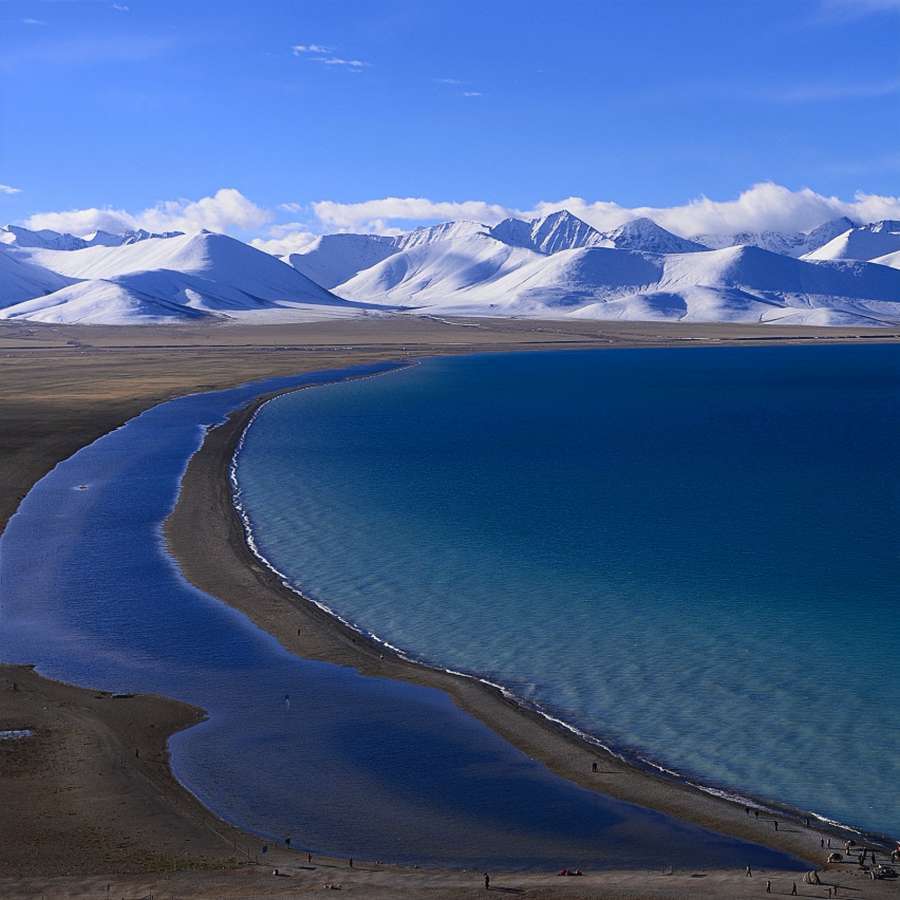
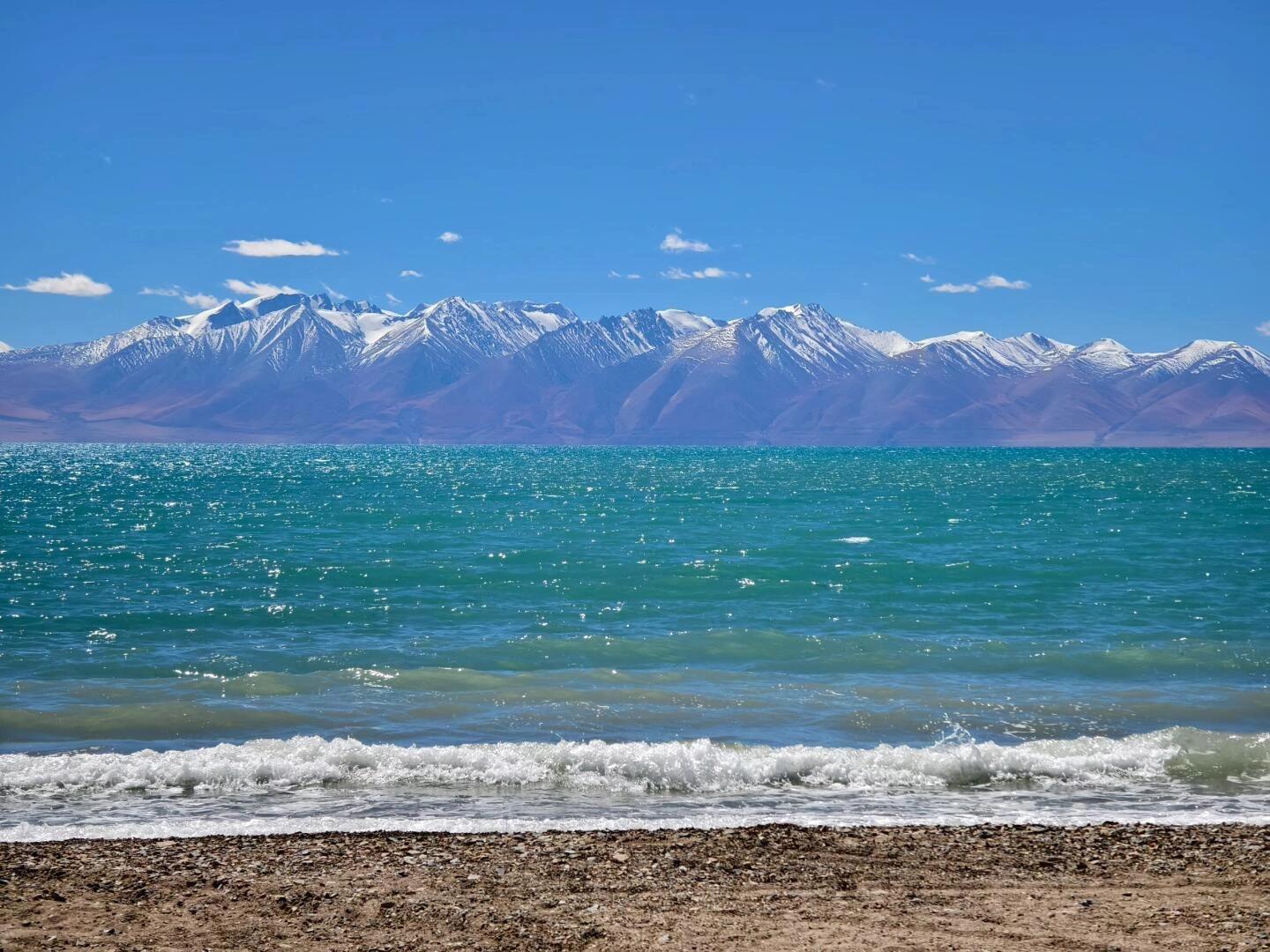
Namtso - 'the Heavenly Lake' in Tibetan, 'Tengri Nor' in Mongolian - is the world's highest saltwater lake and China's second largest, spread across 1,920 square kilometres at 4,718 m between Damxung County (Lhasa) and Baingoin County (Nagqu), with the 7,162-m Nyenchen Tanglha snow range on its southern shore. Pilgrims have circled the lake clockwise for centuries - the kora in the Tibetan Year of the Sheep is said to equal 100,000 ordinary circuits - and travellers come for the turquoise water, the tent camps of the Tashi Peninsula, the 5,200-m Lagen Pass and one of the finest sunrises on the plateau. The lake freezes overnight on the fifteenth day of the twelfth Tibetan month and melts back on the fifteenth day of the fourth; between those dates the ice plain is a different world. This guide carries the ticket prices, shared-van fares, tent prices and phones from the field guide, so you can plan the 1-2 day trip yourself or have our team arrange it end to end.
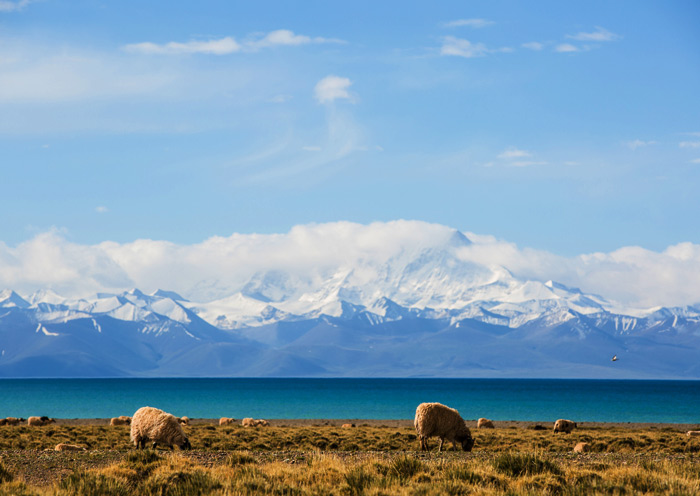
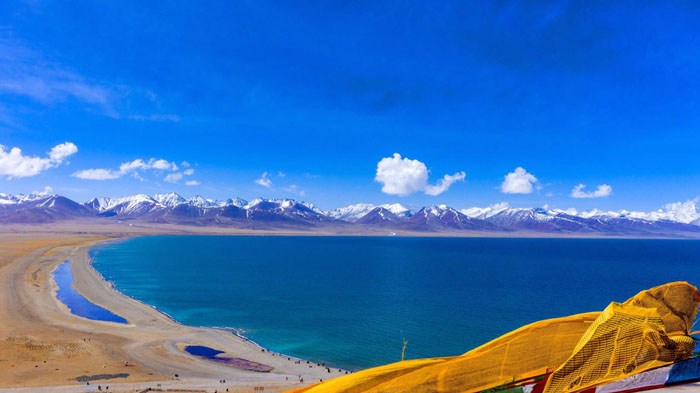
At 4,718 m the water runs from deep blue to green - China's second-largest lake and the highest saltwater lake on earth, 70 km long and up to 33 m deep.
The rocky promontory with the 迎宾石 welcome boulders, the 合掌石 prayer rocks and the cave of good and evil - the heart of the lakeside visit.
The 5,200-m pass on the Lhasa road - prayer flags, the first full view of the lake and the thin-air moment every traveller remembers.
The 7,162-m snow range that feeds the lake - the clear dawn view from the peninsula is the postcard of Namtso.
The tent camp sleeps 20-300 yuan a night; the dawn light on the ice-blue water is worth the cold.
The Tibetan kora - the Year of the Sheep circuit, culminating on the fifteenth day of the fourth month, equals 100,000 ordinary circuits by tradition.
The shallow north shore turns green where the meltwater fans in.
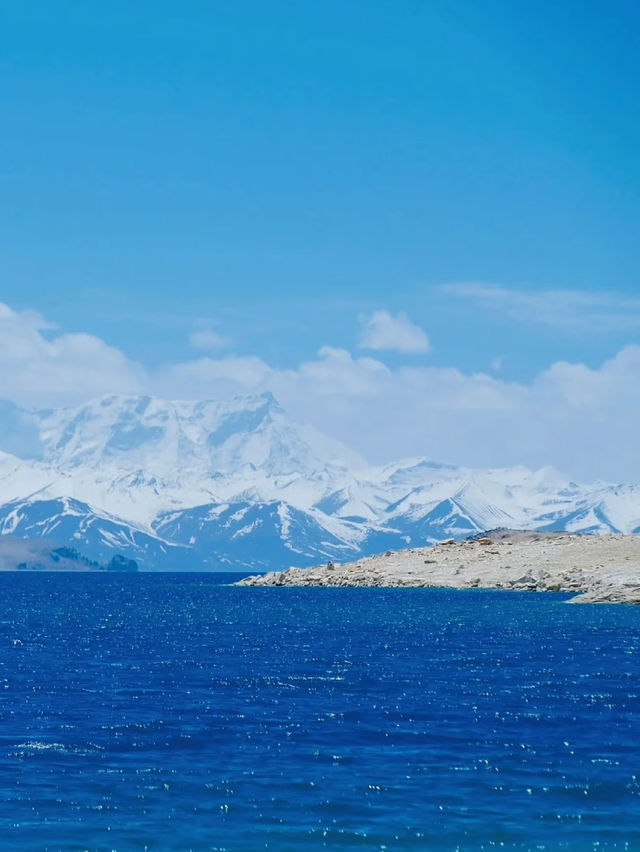
Nyenchen Tanglha behind the deep blue of the open lake.
The pebble beaches and prayer flags of the peninsula.
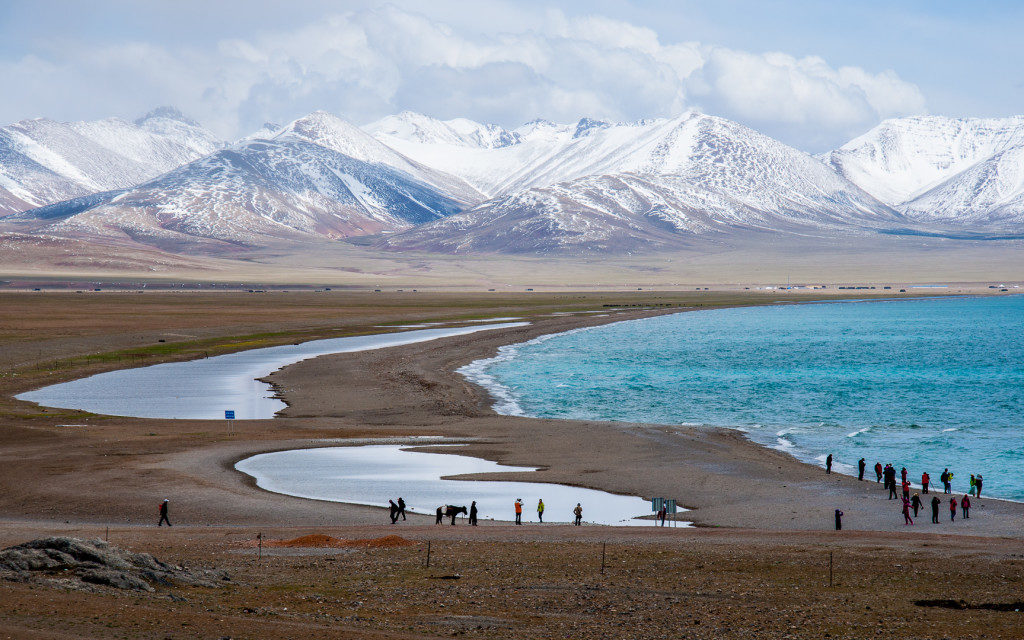
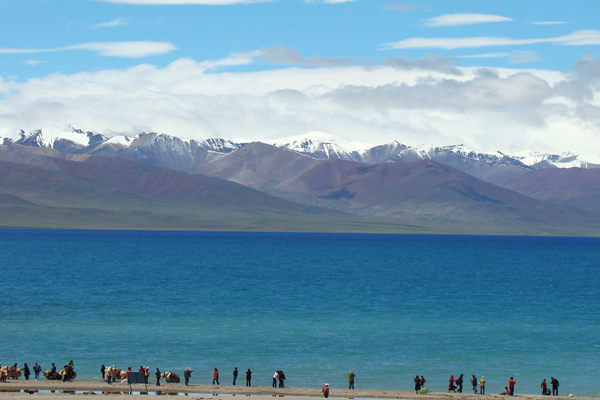
Walkers on the shore below the snow line.
One long day from Lhasa is the standard - about 240 km each way - but the field guide recommends an overnight at the Tashi Peninsula camp to catch the sunset, the stars and the dawn, which is what photographers do. Budget 1-2 days and RMB 150-500 per person including transport.
There is no scheduled bus. Shared vans run about RMB 150 per person in the low season for a same-day return and RMB 240-260 per person in the peak season for a next-day return (entry included); a private 4WD costs RMB 1,200-1,800 per car, and the travel agencies quote about RMB 1,700 for a Land Cruiser. Day groups charge RMB 200-300 per person. Self-drivers must watch the speed-check stations, buy the ticket at the archway after Damxung and carry the safety acknowledgement form - the checkpoint after the Lagen Pass fines RMB 200 if it is missing.
RMB 120 in the peak season (1 May - 31 Oct) and RMB 60 in the low season (1 Nov - 30 Apr), plus a RMB 5 management fee for the Tashi Peninsula. The ticket covers the scenic area gate and the lakeside.
The lake sits at 4,718 m - more than 1,000 m above Lhasa - so altitude sickness hits harder here. Rest a few days in Lhasa first, walk slowly on the peninsula, keep the night short if you sleep over, and carry oxygen (small bottle RMB 40, large RMB 80). If you develop a serious headache or breathing trouble, descend - do not push on.
There are no formal hotels by the lake; the nearest town is Damxung. The Tashi Peninsula has tent and tin-sheet rooms from RMB 20 to 300 - the Shenghu Namtso guesthouse (RMB 30-200, +86 891 6964 312) and the Fangniuwa guesthouse (RMB 40 per bed) are the usual picks, and local homes run about RMB 10 per person. The peninsula restaurants are Tibetan and Sichuan, all pricey; tsampa is RMB 2 a bowl. Camping is not allowed.
May to October is the practical season; the lake freezes in winter and the ice plain needs serious cold gear. Nights are cold even in summer - bring your warmest layers (rental down jackets and army coats RMB 30-80 a day), a torch for the dark, sunglasses and sunscreen, and watch for the children who ask for money and the yak owners who may charge for photos.
Yes - email [email protected] or message us on WhatsApp. Our team books the shared van or private 4WD, the entry tickets, the tent bed and the oxygen, free of charge and without obligation.
The pass, the lake, the tent night and the dawn - the full heavenly-lake experience. View the plan →
Morning from Lhasa - the 4-hour drive past Damxung, the ticket archway and the safety form, up over the 5,200-m Lagen Pass with its first full view of the lake, and down to the Tashi Peninsula camp for the sunset light on the water.
Dawn at the lake - the first sun on Nyenchen Tanglha and the ice-blue water, a slow walk of the peninsula rocks and prayer flags, then the long road back to Lhasa with the grasslands of Damxung on the way.
The efficient day trip - pass, peninsula and lake in a long day without the tent night. View the plan →
Depart Lhasa before 07:00 - the shared van or 4WD north through Damxung, the Lagen Pass viewpoint, and three hours at the Tashi Peninsula for the boulders, the prayer rocks and the shore walk.
The afternoon road back - the grassland views, the return through the pass, and the evening arrival in Lhasa in time for a proper dinner.
All plans are bookable end-to-end by our team — see the full day-by-day Namtso itineraries hub, or the day-trip pages for single-day options.
The rocky promontory at the south of the lake - the welcome boulders, the prayer rocks, the cave of good and evil and the tent camp; the classic base for the sunset and dawn. Included in the entry; peninsula fee RMB 5.
View details →The 5,200-m pass on the Damxung road - prayer flags, the first panorama of the lake and the thinnest air of the trip; the checkpoint here checks the safety form from the ticket archway.
View details →The 7,162-m snow range that feeds the lake from its meltwater - the 'warrior' guarding Namtso, clearest in the dawn light from the peninsula.
View details →The high pastures of Damxung on the Lhasa road - yaks, tents and the wide sky of the northern plateau, free to drive through.
View details →By tradition the lake freezes overnight on the fifteenth day of the twelfth Tibetan month and thaws on the fifteenth day of the fourth - the winter ice field is a photographer's world for the hardy.
View details →The clockwise pilgrim circuit of the lake shore - prayer flags, mani stones and the shepherd's life of the shore; the full kora is a multi-day undertaking for the devout.
View details →More in the region on the Tibet attractions page.
Ride the shore on horseback or a decorated yak - agree the price before you mount, as the lake-side riders quote on the spot.
The clockwise circumambulation - by tradition a circuit in the Tibetan Year of the Sheep equals 100,000 ordinary ones; the festival peaks on the fifteenth day of the fourth month.
Held during the Shoton season (end of the sixth / start of the seventh Tibetan month) - past themes include 'Near the Heavenly Lake', 'Happiness on the Road' and 'Sacred Mountain, Holy Lake, Happy Walking'.
Sunrise and sunset light are the classic hours - pilgrims, yaks and their reflections make layered foregrounds for the wide lake shots.
Every hotel below is bookable by our team; browse the full Tibet hotels directory.
The best of the peninsula - Tibetan and Chinese style rooms, meals and a bonfire night with Tibetan dance in the peak season. RMB 30-200; +86 891 6964 312.
The small guesthouse by the lake - clean tents with warm quilts at RMB 40 per bed and simple meals. Phone not published.
The Tibetan tents and mud houses of the shore - about RMB 10 per person with felt mats; the night is cold and the yak-dung heating is sold in bags.
The nearest formal accommodation is in Damxung town, about halfway back to Lhasa - the sensible choice for those who want a proper bed.
The home-made yoghurt of the lake kitchens - sweet, sour and easily digested, with butter tea alongside; available in most Tibetan restaurants of the peninsula.
The roasted-barley porridge, a little like sesame paste - RMB 2 a bowl at the camp restaurants; the standard Tibetan breakfast.
The Tibetan dish of sheep lung stuffed with butter and flour, boiled then fried - crisp outside and soft inside; recommended at the Tashi Island Baima restaurant.
A number of Sichuan cooks run restaurants on the peninsula - pricey everywhere (the transport of ingredients is expensive), so consider carrying your own dry rations; every restaurant and guesthouse has boiling water.
The famous traditional craft of Tibet - practical, ceremonial and decorative; buy the authentic ones in the Barkhor market of Lhasa.
The famous plateau tonic - buy from licensed shops in Lhasa's Barkhor quarter and keep the receipts.
Prayer flags, mani beads and yak-wool goods at the lakeside stalls - the Barkhor in Lhasa has the wider and better selection.
Full local-product guides live on the Tibet specialties page.
No scheduled bus runs to the lake; shared vans from Lhasa quote about RMB 150 per person (low season, same-day return) and RMB 240-260 (peak season, next-day return, entry included).
A private car or Land Cruiser runs RMB 1,200-1,800 per vehicle; the travel agencies quote about RMB 1,700 for the round trip with a driver.
Open groups from Lhasa charge RMB 200-300 per person for the same-day return, entry included - the easiest option for solo travellers.
The 4,718-m lake, the Lagen Pass and the Tashi Peninsula - the long, unforgettable day from Lhasa.
The peninsula boulders and the sunset light on the water - the photographer’s overnight.
The first light on the 7,162-m snow range - the postcard of Namtso.
Namtso is 1,000 m higher than Lhasa - acclimatise for a few days in the city before the trip, and descend if the headache or breathlessness worsens.
The ticket (RMB 120 peak / RMB 60 low) is bought at the archway after Damxung, and the safety acknowledgement form is checked at the Lagen Pass - the fine without it is RMB 200.
The lake can snow and hail even in July, and the nights are freezing - carry your warmest layers, or rent down jackets and army coats for RMB 30-80 a day.
Horses and yaks have a standard rate - agree first; photographing the herders' animals at the Lagen Pass may cost about RMB 10.
Camping is not allowed at the lake; a torch helps with the night walks and the stray dogs, and sunglasses and sunscreen are essential in the strong ultraviolet light.
Every restaurant is expensive (food transport costs) - carry dry rations and reduce kitchen waste for the lake's ecology.
The county tourism office of the Lhasa side of the lake - permits and the current lake conditions. Phone not published.
The prefecture office of the Baingoin side - the northern shore and the grassland routes. Phone not published.
For altitude symptoms rest, fluids and warmth - and descend promptly if they worsen; the nearest hospitals are in Lhasa and Damxung town.
'Namtso' in Tibetan and 'Tengri Nor' in Mongolian both mean 'Heavenly Lake' - the water is fed by the meltwater of Nyenchen Tanglha and dozens of streams around the shore.
Since the 12th century the Kagyu master Darma Tangpa and others practised here, and the sheep-year circumambulation began - pilgrims from Tibet, Qinghai, Sichuan, Gansu and Yunnan still make the long journey.
The China National Geography 'Most Beautiful China' survey ranked Namtso third among the five most beautiful lakes of China.
The 2006 film 'Qi Yue' (aka 'Namtso'), with Gao Feng, Wang Luodan and Lu Yulai, was shot partly at the lake; the songs 'Namtso' by Yundan Jiumei and 'Light' by Suolang Wangmu sing of the heavenly lake.
Everything on ToursChinaTravel is bookable through our team by email or WhatsApp. Here's where each part of your Namtso trip lives on the site.
Star-rated sight details — hours, tickets, phones and tips for every Tibet attraction.
Browse Tibet sightsStar-rated hotels across Tibet — sorted by rating, all bookable by our team.
Book a Tibet hotelLocal products, crafts and foods of Tibet — where to find each one.
Browse Tibet specialtiesLicensed agencies with addresses, phones and booking contacts.
Find a Tibet agencyMore city and region guides across China, including the Tibet guide.
Browse all guides