>
One of China's five sacred mountains and the 'Southern Great Mountain of Longevity' — Zhurong Peak at 1,300 m, the great temple of Nanyue at its foot, winter rime ice and summer cloud seas. A mountain of incense, hiking and the oldest pilgrimage route in Hunan.
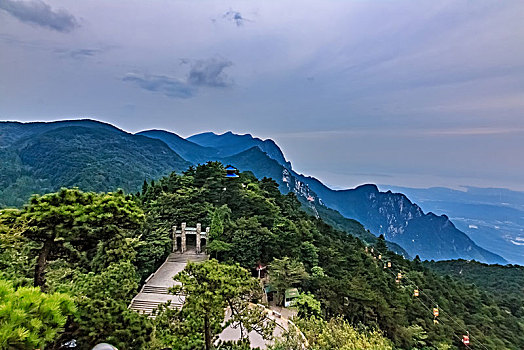
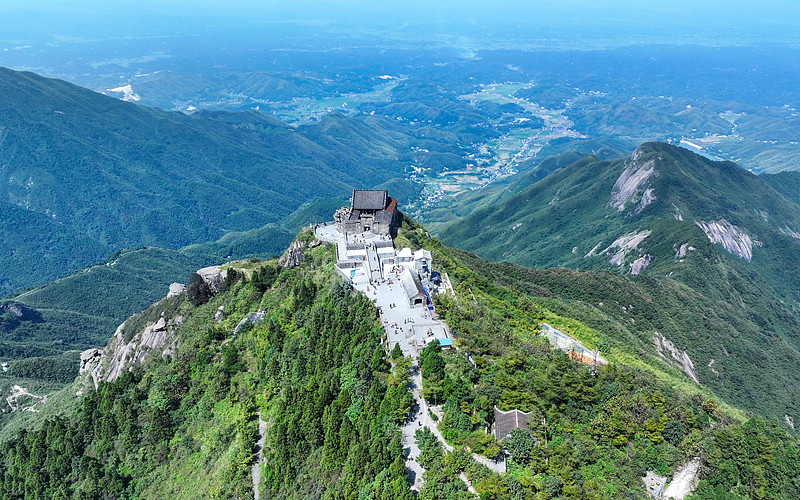
The summit at 1,300 m — the Fire God's peak, with the incense smoke of the mountain's highest temple and a view over the whole of Hunan.
The largest temple complex of the five sacred mountains — 400 m of courtyards, the imperial plaques and the oldest pilgrimage gate in Hunan.
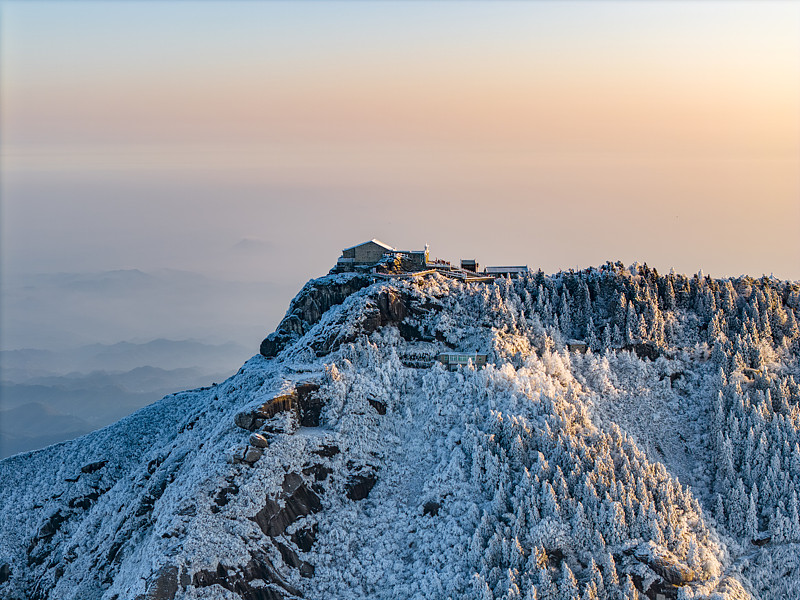
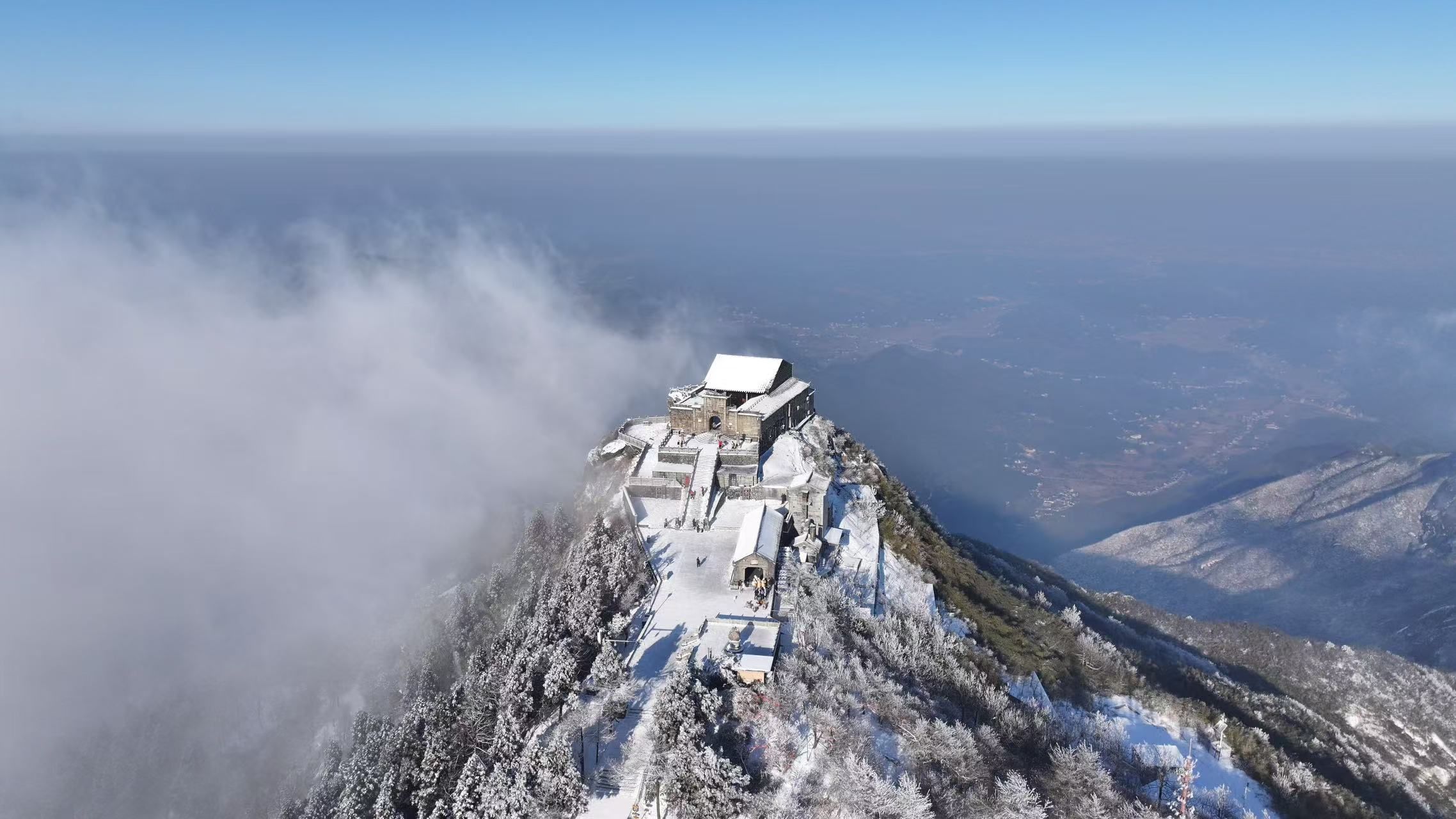
When the mist freezes, every tree on the summit turns to white crystal — the Southern sacred mountain's answer to a fairy tale.
The classic mountain dawn — the cloud sea below Zhurong Peak, best in autumn's clear air.
The great war memorial of the anti-Japanese war — stone steps and cypresses on the mountain's middle slopes.
The 'water-curtain cave' — a waterfall cave from the Taoist canon, the mountain's legend in stone and water.
Zhurong, the Fire God's mountain — the incense, the plaques and the summit temple of China's Southern Sacred Mountain.
Nanyue Temple is the biggest of the five sacred mountains' temples — an imperial complex of 400 m of courtyards.
December–February freezes the summit white — the South's answer to a snow forest, two hours from the plains.
The summit dawn over the cloud sea is the mountain's oldest pilgrimage moment.
July–October is green and clear — the classic pilgrimage and sunrise season. Winter (December–February) brings the famous rime ice on the summit, the South's rarest sight. Spring and early summer are wet; the incense flows all year.
Two days is right: the Grand Temple and the mid-mountain shrines one day, the summit and the cave the next. Fit pilgrims walk the whole 1,300 m climb; the shuttle bus and cable car make it easy for everyone.
From the Nanyue town gate to Zhurong Peak is about 12 km and 1,300 m of climb — 3–4 hours for fit walkers, 5–6 for the steady. Most visitors take the shuttle bus up and walk the summit loop; the classic pilgrimage walk follows the old stone road through the shrines.
The great temple at the mountain's foot — 400 m of halls, the largest complex of the five sacred mountains, dedicated to Zhu Rong the Fire God and open to all faiths. It is the ceremonial gate of every pilgrimage.
The HSR stops at Hengshan West station, 20 min by taxi from Nanyue town; classic trains stop at Hengshan station on the Beijing–Guangzhou line. Changsha is 1.5 h by HSR, Hengyang 40 min.
Yes — email [email protected] or message us on WhatsApp. We arrange hotels, the summit shuttle, guides and the pilgrimage route, free of charge.
The Grand Temple and the summit — the sacred mountain in two days. View the plan →
Nanyue Grand Temple in the morning, the Loyal Martyrs Shrine and the mid-mountain temples on the old road, night at the Half-Mountain Pavilion hotels.
Dawn on Zhurong Peak (shuttle or early walk), the summit temple and the cloud-sea view, then the Shui Lian Cave before the afternoon train.
The full pilgrim road — every shrine, the summit and the cave. View the plan →
Nanyue Grand Temple and the town's old lanes, evening at the incense market.
The old pilgrim road up — Zhusheng Temple, the shrine and the half-mountain pavilion, night in the mountain hotels.
Summit dawn, the Zhurong temple, then down past the Cangjing Hall and the Mirror-Polishing Terrace to the Shui Lian Cave.
All plans are bookable end-to-end by our team — see the full day-by-day Hengshan itineraries hub, or the day-trip pages for single-day options.
The summit at 1,300 m — the Fire God's temple, the 'highest place in the south' plaque, and a view that takes in the whole Hunan plain on clear days.
View details →The largest temple of the five sacred mountains — 400 m of halls, the Southern Gate, the imperial plaques and incense burned since the Tang.
View details →The great memorial of the anti-Japanese war — 272 stone steps, cypress avenues and the names of the fallen, on the mountain's middle slopes.
View details →The 'water-curtain cave' of the Taoist canon — a waterfall over a cave mouth, the mountain's legend in stone and water.
View details →The 'Great Longevity Tripod' of the mountain's south — a 5,999-kg bronze tripod on the peak of the Longevity tradition.
View details →The traditional halfway stop of the pilgrim road — tea houses, mountain hotels and the turning point of every ascent.
View details →More in the region on the Hunan attractions page.
The first and fifteenth of each lunar month bring pilgrims from across Hunan — the Grand Temple's great smoke days; the eighth day of the fourth month (Buddha's birthday) is the loudest.
September's festival of the Longevity Mountain — tai chi, calligraphy and the 'ten-thousand-year' tradition of the South.
December–February's crystal forest on Zhurong Peak — the most photographed winter in Hunan.
The mountain holds both traditions — the Buddhist temples of the middle slopes and the Taoist halls of the summit share the pilgrim road.
Every hotel below is bookable by our team; browse the full Hunan hotels directory.
The base at the temple gate — incense shops, breakfast streets and the shuttle station. From ¥180.
The traditional pilgrim stop — forest rooms and the shortest morning road to the summit. From ¥250.
A few rooms by Zhurong Peak for the true sunrise stay — book weeks ahead in season. From ¥350.
The cheaper base 30 min from the mountain. From ¥120.
The HSR city below — comfortable and connected. From ¥200.
The mountain's vegetarian tradition — a full tofu banquet served at the temple-town restaurants, the pilgrimage classic.
Free-range mountain chicken, braised with chili and ginger — the standard celebratory dish.
The forest harvest — stir-fried shoots, fern tips and wild greens of the slopes.
The temple-town lanes sell the pilgrims' street food — rice cakes, sugar-roasted chestnuts and the famous Nanyue tea.
The bundles of incense and the 'pilgrim's set' sold at the temple gate — the mountain's eternal souvenir.
The 'Shou' (longevity) character scrolls and plaques of the Southern Sacred Mountain.
The mountain's green tea — light and grassy, sold at the town's teahouses.
Small carvings of Zhurong and the mountain's talismans.
Full local-product guides live on the Hunan specialties page.
The HSR station, 20 min by taxi from Nanyue town, links Changsha (1.5 h), Guangzhou (2 h) and Hengyang (40 min); classic trains stop at Hengshan station below the mountain.
Regular coaches run from Hengyang, Changsha and Zhuzhou to Nanyue town — the traditional approach of the pilgrim buses.
The small airport (30 min from the mountain) serves Beijing, Shanghai, Shenzhen and Chengdu; Changsha Huanghua is the big alternative, 2 h by road.
Green shuttle buses climb from Nanyue town to the Half-Mountain Pavilion and on toward the summit (¥25–45) — the standard modern ascent.
The Nanyue cable car links the Half-Mountain area to the summit zone in 10 minutes (¥70 one way) — the shortcut for the sunrise.
Private cars may drive to the Half-Mountain Pavilion area with a permit; the summit road is shuttle-only. Winter ice closes some sections.
The HSR city below the mountain — the Xiang River, the old town and the provincial museum.
The karst cave of the Hengyang plain — 1,200 m of halls and underground rivers, an hour from the mountain.
The river towns below — Cai Lun's hometown paper mills and the green plain of southern Hunan.
The provincial capital — Orange Isle, Yuelu and the Mawangdui treasures, 1.5 h by HSR.
The summit shuttle queues badly in peak season — start before 7:30, or take the old pilgrim road for the first hour and join the bus higher up.
Zhurong Peak runs 5–8°C colder than the plain — a fleece plus rain shell works in summer; winter rime-ice mornings need serious cold-weather gear.
The crystal forest needs sub-zero mist — check the summit webcam or the local forecast, and go early; the ice melts by noon.
At the Grand Temple, light incense at the designated burners and bow three times — the shrine keepers will show you the way if you ask.
Hengshan and Changsha are 1.5 h apart by HSR — the classic two-stop Hunan route of sacred mountain plus city.
Hengshan rises to 1,300 m in the middle of Hunan, the southernmost of China's five sacred mountains — a granite massif of forest, waterfalls and the famous rime-ice winters. Its humid subtropical climate makes it the South's classic summer and winter escape.
Worshipped since the Han as the Southern Sacred Mountain, Hengshan was consecrated to Zhu Rong, the Fire God — the mountain's incense has burned since the Tang, when the Grand Temple was founded. The Ming added the great pilgrimage road, and the anti-Japanese war added the Loyal Martyrs Shrine. Its 'longevity' reputation, fixed by the Taoist canon, still draws pilgrims for the Shou tradition.
Hengshan is unusual among the sacred mountains — Buddhist temples and Taoist halls share the pilgrim road, from the Buddhist mid-slope shrines to the Taoist summit of Zhurong. The incense, the plaques and the mountain's open-hearted reverence are one tradition.
Everything on ToursChinaTravel is bookable through our team by email or WhatsApp. Here's where each part of your Hengshan trip lives on the site.
Star-rated sight details — hours, tickets, phones and tips for every Hunan attraction.
Browse Hunan sightsStar-rated hotels across Hunan — sorted by rating, all bookable by our team.
Book a Hunan hotelLocal products, crafts and foods of Hunan — where to find each one.
Browse Hunan specialtiesLicensed agencies with addresses, phones and booking contacts.
Find a Hunan agencyMore city and region guides across China, including the Hunan guide.
Browse all guides