>
Hailuogou is the glacier valley of Mount Gongga — the 7,556-metre King of Sichuan — where a 3.5-km cable car floats over the ice, the hot springs steam under the pines, and the golden sunrise paints the peaks every clear dawn. Camp 3 at 2,940 m holds the classic sunrise view, Camp 4 the glacier itself; Moxi town below keeps the 1,000-year tea-horse history and the 1918 Catholic church. Two days from Chengdu: one for the ice, one for the springs and the town.
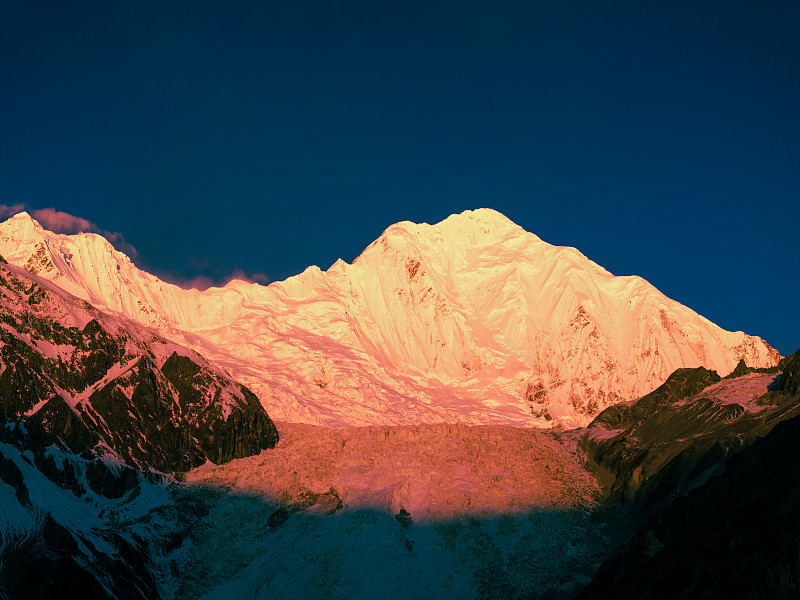
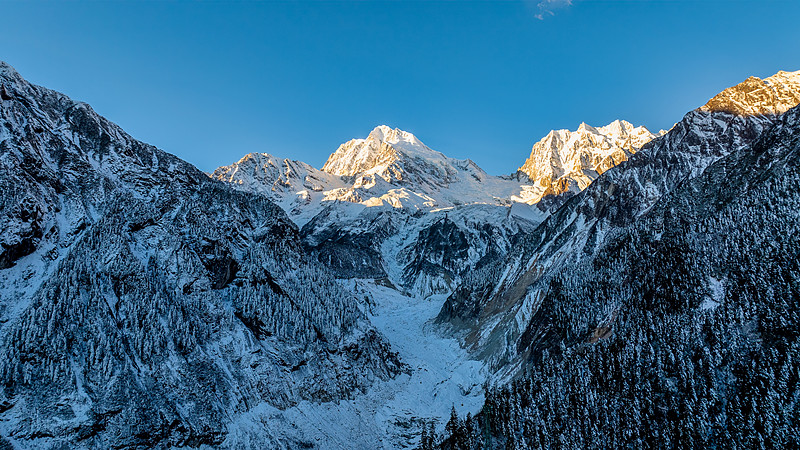
The 06:40 dawn (07:20 in winter) at Camp 3 — the King of Sichuan mountains catching fire above the clouds.
The 3.5 km cable car floats over the ice to Camp 4 — the glacier's surface, crevasses and all, from the glass cabin.
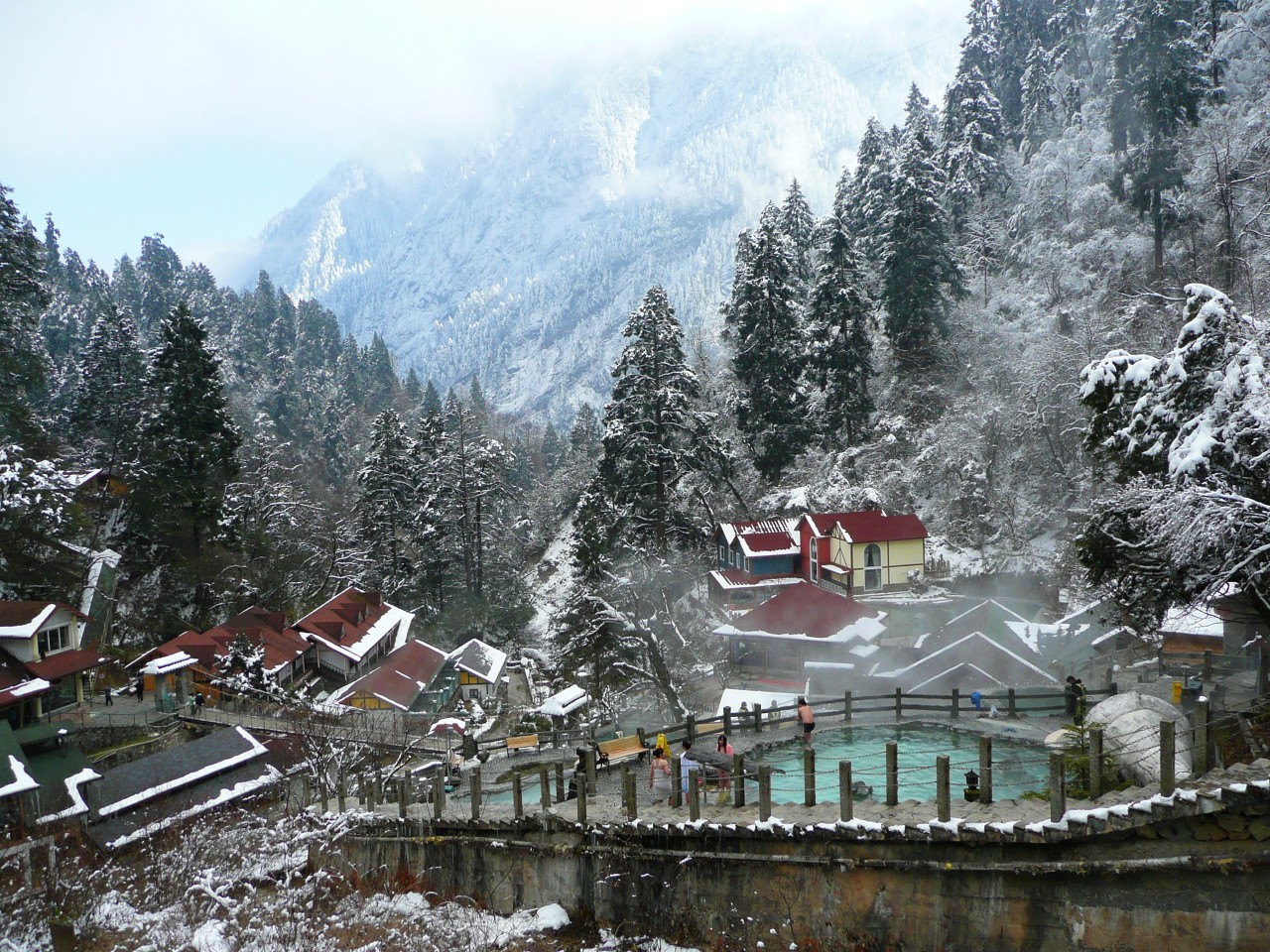
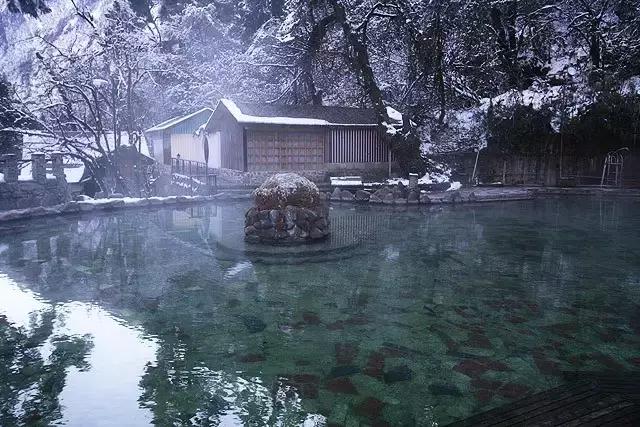
The 80°C mineral springs of Camp 2 in the snow-pine forest — the warmest moment of the valley.
The mossy hemlock and rhododendron boardwalks from Camp 1 — monkeys, ferns and the quiet green.
The 1,000-year tea-horse town — the 1918 Catholic church, the Red Army house and the stone lanes.
The red-algae rocks of the Yajiageng pass — a hillside stained crimson against the snow.
The three-peak dawn at Camp 3 — the image that names the valley.
The cable car over the ice — crevasses and seracs in the morning light.
The 80°C pools of Camp 2 under the forest snow — the warm heart of the valley.
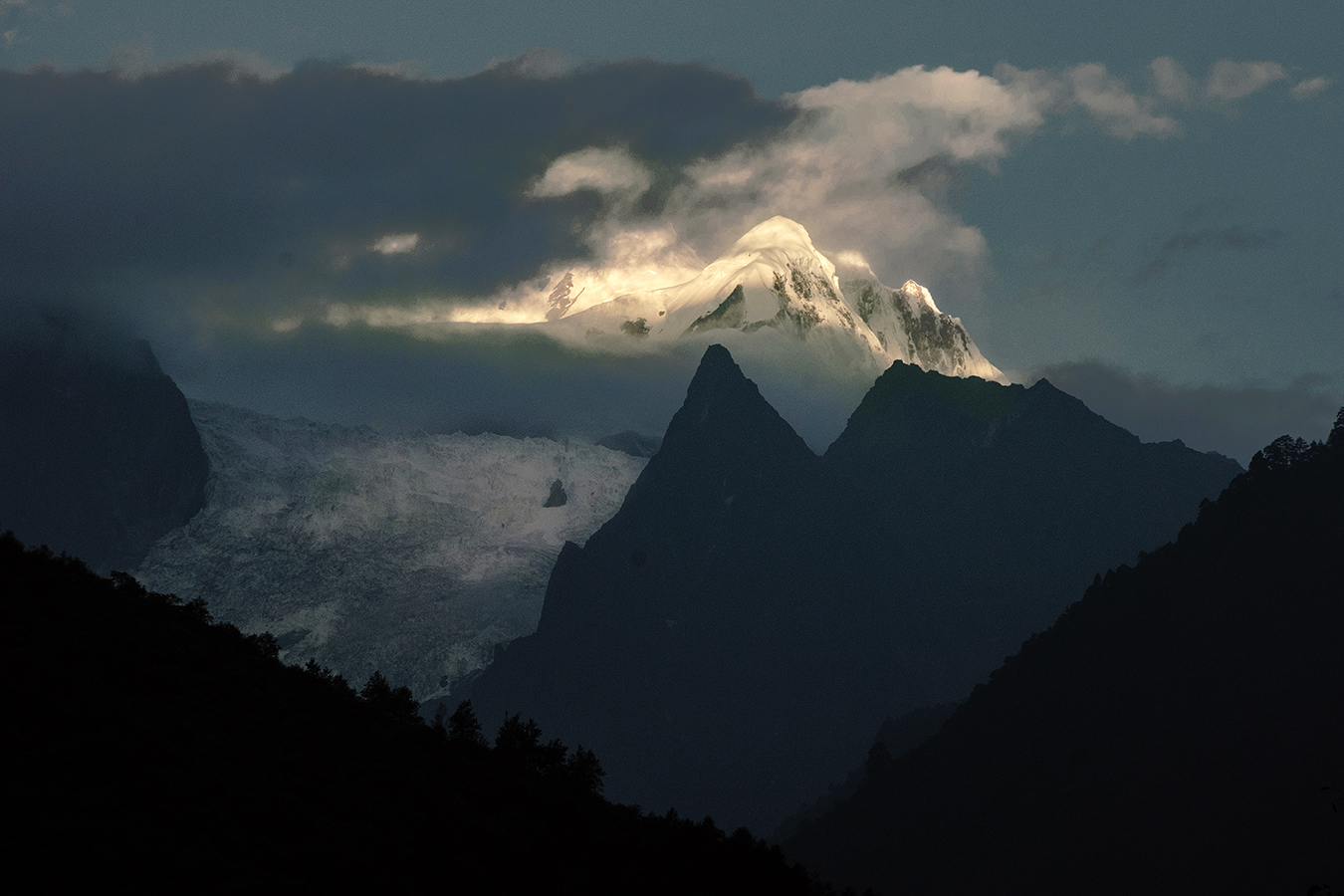
Mount Gongga's 7,556 m above the glacier — the range's whole mass from the air.
October–May offers the clearest dawns — winter (December–March) brings the snow-pine springs and the most reliable golden sunrise. Summer is green, wet and soft; the valley works year-round, and the 06:40 (07:20 winter) sunrise is the fixed appointment.
The ticket is RMB 75 year-round (with student and senior concessions); the shuttle to the camps is RMB 80 return; the glacier cable car RMB 150 return. Camp 2's springs cost about RMB 80. The park opens before dawn for the sunrise shuttle.
Chengdu's New South Gate runs direct coaches (about 5 h, RMB 110; package rides RMB 200–300); the route runs via Ya'an, Erlang Mountain and Luding. The nearest rail is at Ya'an or Chengdu — the coach and the car are the ways in.
Two days is the classic plan — day one the glacier (cable car, Camp 3 sunrise, the forest walks), day two the springs and Moxi town. One long day covers the glacier alone from a 05:00 start.
Yes — the 3.5-km ride over the ice to Camp 4 is the valley's great sight; the walkers' alternative is the 1–2-hour forest trail to the glacier foot.
Yes — email [email protected] or message us on WhatsApp. Our team arranges the coaches, the tickets, the springs, the hotels and the sunrise logistics, free of charge and without obligation.
The golden sunrise, the glacier cable car and the hot springs. View the plan →
Coach from Chengdu to Moxi (about 5 h); afternoon the Camp 1 forest walks and the Camp 2 springs; night at the valley hotels.
Dawn shuttle to Camp 3 for the 06:40 golden sunrise; the cable car over the glacier to Camp 4; the return coach or the town lanes of Moxi.
The glacier on foot and the springs — the walkers’ valley. View the plan →
The primeval forest boardwalks from Camp 1, then the Camp 2 spring pools in the snow-pine dusk.
Dawn at Camp 3, the 1–2-hour forest trail to the glacier foot instead of the cable car, then the coach home.
All plans are bookable end-to-end by our team — see the full day-by-day Hailuogou itineraries hub, or the day-trip pages for single-day options.
At 2,940 m the classic sunrise point — 06:40 (07:20 in winter) paints the three peaks gold above the cloud sea, the valley's great moment.
View details →The 3.5 km cable car ends above the ice — crevasses, seracs and the glacier's surface from the glass cabin, RMB 150 return.
View details →The mineral springs of the lower valley, 80°C water in pools under the pines — the warm heart of the valley (about RMB 80).
View details →The mossy hemlock and rhododendron trails from Camp 1 — monkeys, ferns and the quiet green of the valley.
View details →The 1,000-year town of the tea-horse road — the 1918 Catholic church, the 1935 Red Army meeting house and the stone lanes.
View details →The red-algae rocks of the Yajiageng pass — a hillside stained crimson against the snow, the strange-colour drive above the valley.
View details →More in the region on the Sichuan attractions page.
The 06:40 (07:20 winter) dawn at Camp 3 — the King of Sichuan in fire, the reason the valley hotels exist.
The 3.5-km ride over the ice to Camp 4 — the closest most visitors come to a glacier's surface.
Late June by the lunar calendar — the torchlight processions, bonfires and dances of the Yi villages of the region.
July 19–31 the valley's sunflower fields bloom — the summer festival of the slopes.
Every hotel below is bookable by our team; browse the full Sichuan hotels directory.
The traveller hostel of the valley — beds from RMB 35 to doubles at RMB 360 (0836-3266518).
The four-star classic of Moxi — RMB 200–400 (0836-3266166), the dependable mid-range.
The spring hotel of the valley — RMB 380–580 (400-7558888), the warmest address.
The Hailuogou Glacier Hot Spring Resort (RMB 690–860, arrive before 17:00, 0836-3266170), the Mulinsen Village Hotel (RMB 100–410, 0836-3261888) and the Jinshan Hotel at Camp 3 (0836-3266433).
The tea-horse town's bowl of noodles and the simple farm cooking of the valley.
The braised yak and the hardy greens of the high kitchens.
The tea of the old town and the street snacks of the Moxi lanes.
The forest mushrooms of the summer months on the village tables.
The county's famous crisp pears — the edible souvenir, best in late summer.
The medicinal plants and the dried mushrooms of the valley stalls.
The plateau's altitude tonic, packed for the traveller.
The woven and wooden goods of the old-town lanes.
Full local-product guides live on the Sichuan specialties page.
The New South Gate runs direct coaches — about 5 hours at RMB 110, or RMB 200–300 with a package; the route via Ya'an, Erlang Mountain and Luding.
The route runs via Ya'an, Erlang Mountain and Luding, about 5 hours — the mountain bends reward a careful driver.
No direct rail reaches the valley — the nearest stations are at Ya'an or Chengdu, then coach or taxi.
The 'Swallow Valley' of snow peaks and red stones above Hailuogou — the quieter alpine circuit.
The crimson algae hillside against the snow — the strange-colour drive above the valley.
The 1,000-year tea-horse town — the 1918 Catholic church, the Red Army house and the lanes.
The sunrise shuttle leaves before 06:00 — book the seat the night before and be at the gate early.
The Camp 3 platform sits near freezing at sunrise — down jacket, hat and gloves even in summer.
The Camp 2 pools fill after the glacier day — go late afternoon or stay at the spring hotels.
The 1–2-hour walk to the glacier foot is the cable car's quiet alternative — start early for both.
Mist is common below the camps — the sunrise is above the cloud sea, the springs are warm whatever the sky.
Hailuogou lies in the Luding county of western Sichuan, 290 km from Chengdu — a glacier valley on the eastern flank of Mount Gongga (7,556 m), with the camps stepping from 1,940 m to the ice above 3,000 m.
The valley's ice has been known to the tea-horse traders for centuries, but the modern park opened in 1987; the glacier is one of the world's lowest and most accessible, sliding to 2,850 m where the forest meets the ice.
Moxi town holds the 1918 Catholic church and the 1935 Red Army meeting house of the Long March — the two histories of the tea-horse road — while the Yi villages of the slopes keep their torch festivals.
Everything on ToursChinaTravel is bookable through our team by email or WhatsApp. Here's where each part of your Hailuogou trip lives on the site.
Star-rated sight details — hours, tickets, phones and tips for every Sichuan attraction.
Browse Sichuan sightsStar-rated hotels across Sichuan — sorted by rating, all bookable by our team.
Book a Sichuan hotelLocal products, crafts and foods of Sichuan — where to find each one.
Browse Sichuan specialtiesLicensed agencies with addresses, phones and booking contacts.
Find a Sichuan agencyMore city and region guides across China, including the Sichuan guide.
Browse all guides