Beijing · World Heritage
The Forbidden City Guide
Eight thousand seven hundred rooms of imperial China — the world's largest wooden palace complex, and the heart of every Beijing trip.
Beijing · World Heritage
Eight thousand seven hundred rooms of imperial China — the world's largest wooden palace complex, and the heart of every Beijing trip.
72 hectares, 8,707 rooms, home to 24 Ming and Qing emperors — the largest and best-preserved wooden palace complex on earth.
The Palace Museum holds over a million artefacts — about one sixth of China's state collection — from bronze ritual vessels to the Treasures Gallery's imperial gold.
Walk the ceremonial Central Route, the Western Palaces of the empress dowager, or the Eastern Palaces of jade and gold — each takes about an hour.
Climb Jingshan Park (¥2) behind the north gate for the postcard panorama over the golden rooftops.
The Ming palace used only Chinese plaques. The Qing added Manchu, and in 1915 Yuan Shikai — who planned to crown himself emperor in the Hall of Supreme Harmony — stripped the Manchu from the outer-court plaques. His empire lasted 83 days, but his plaques survived.
With no sewers and thousands of residents, the palace used portable receptacles instead — "official rooms" for the emperor and empress, "clean rooms" for eunuchs and maids, cleared daily by servants.
Three ways: natural insulation of thick walls and north-south siting; charcoal braziers of fine red-radish charcoal in the great halls; and floor-heated kang channels beneath the warm chambers of the imperial apartments.
The whole 72-hectare complex slopes from north to south and centre to edge: rainwater runs through "money-eye" gratings into underground drains, joins the inner Golden Water River and flows out to the moat — a Ming-dynasty system that still works today.
Legend says the palace has 9,999.5 rooms because only Heaven may have 10,000 — but the real count is 8,707 rooms. The fabled "half room" is the narrow west bay of Wenyuan Pavilion, the Qing imperial library.
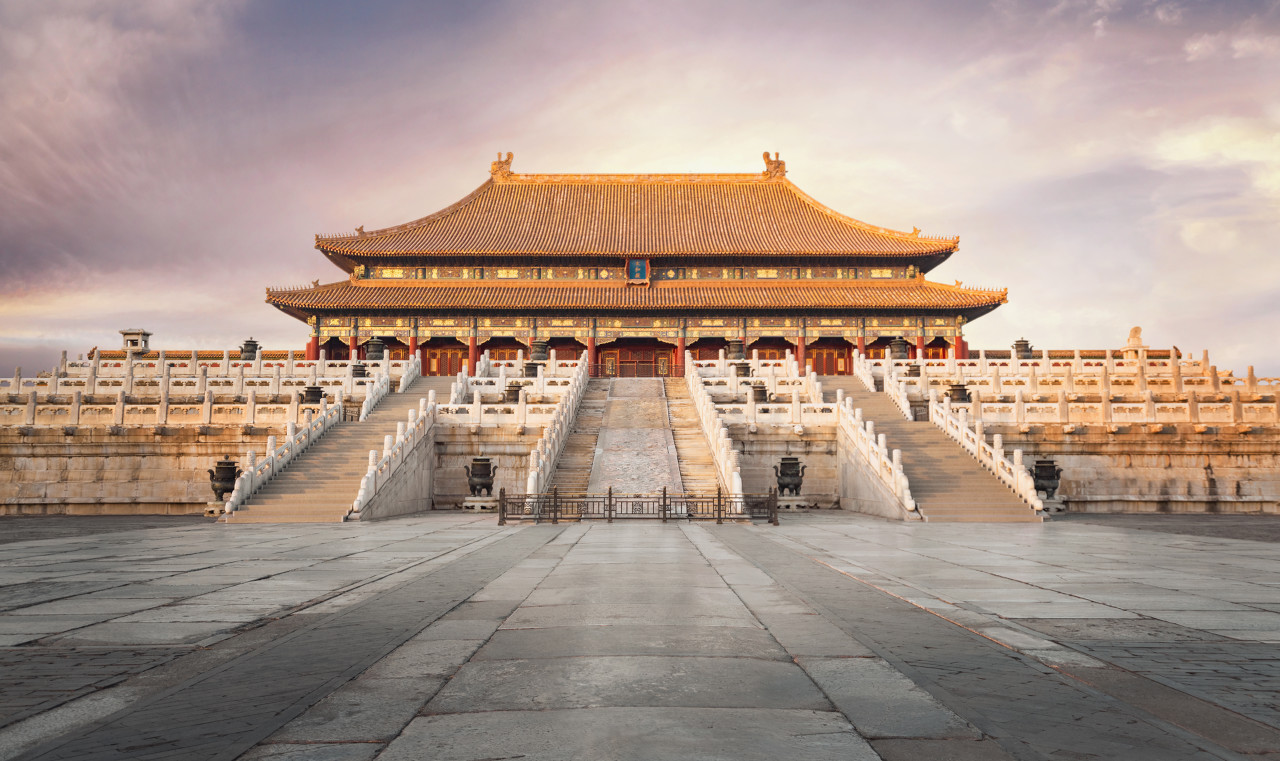
Meridian Gate → Inner Golden Water Bridge → Gate of Supreme Harmony → Halls of Supreme Harmony, Central Harmony & Preserving Harmony → Gate of Heavenly Purity → Palace of Heavenly Purity → Hall of Union → Palace of Earthly Tranquility → Imperial Garden → Shenwu Gate. The classic ceremonial spine.
Chuxiu Palace → Tihe Hall → Yikun Palace → Changchun Palace → Taiji Hall → Yongshou Palace → Tishun Hall → Hall of Mental Cultivation → Grand Council. Empress Dowager Cixi's chambers and the Court of the Two Dowagers.
Zhongcui Palace (jade) → Jingyang Palace (gold) → Yonghe Palace → Yanxi Palace (the iron "Crystal Palace") → Hall of Abstinence → Fengxian Hall — plus the Treasures and Clocks Galleries at the north-east.
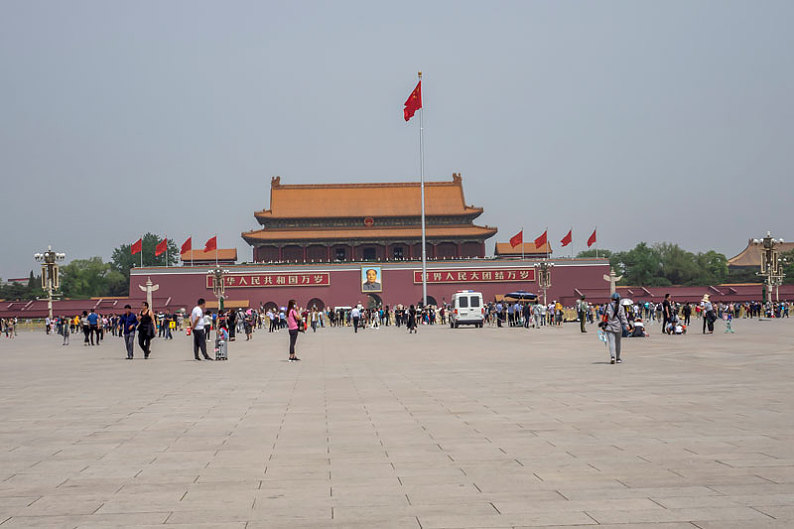
The U-shaped main gate — five hidden doorways ("three visible, five real") and the place of victory parades, imperial edicts and the 1915 throne debacle.
The grandest hall — 11 bays, 11 rooftop beasts, the throne where emperors held coronation, weddings and New Year audiences.
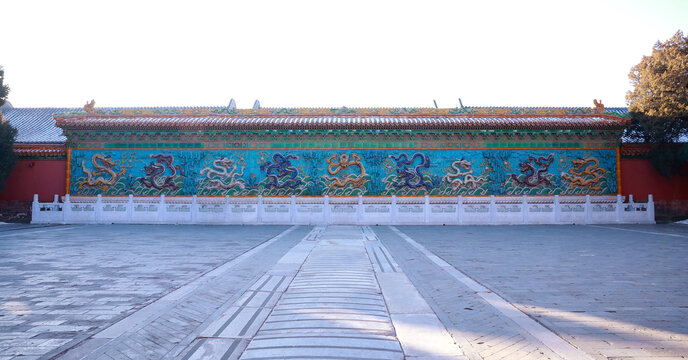
Before the Treasures Gallery stands the famous glazed wall; inside, imperial gold, jade and clocks — the palace's greatest showpieces (¥10 extra).
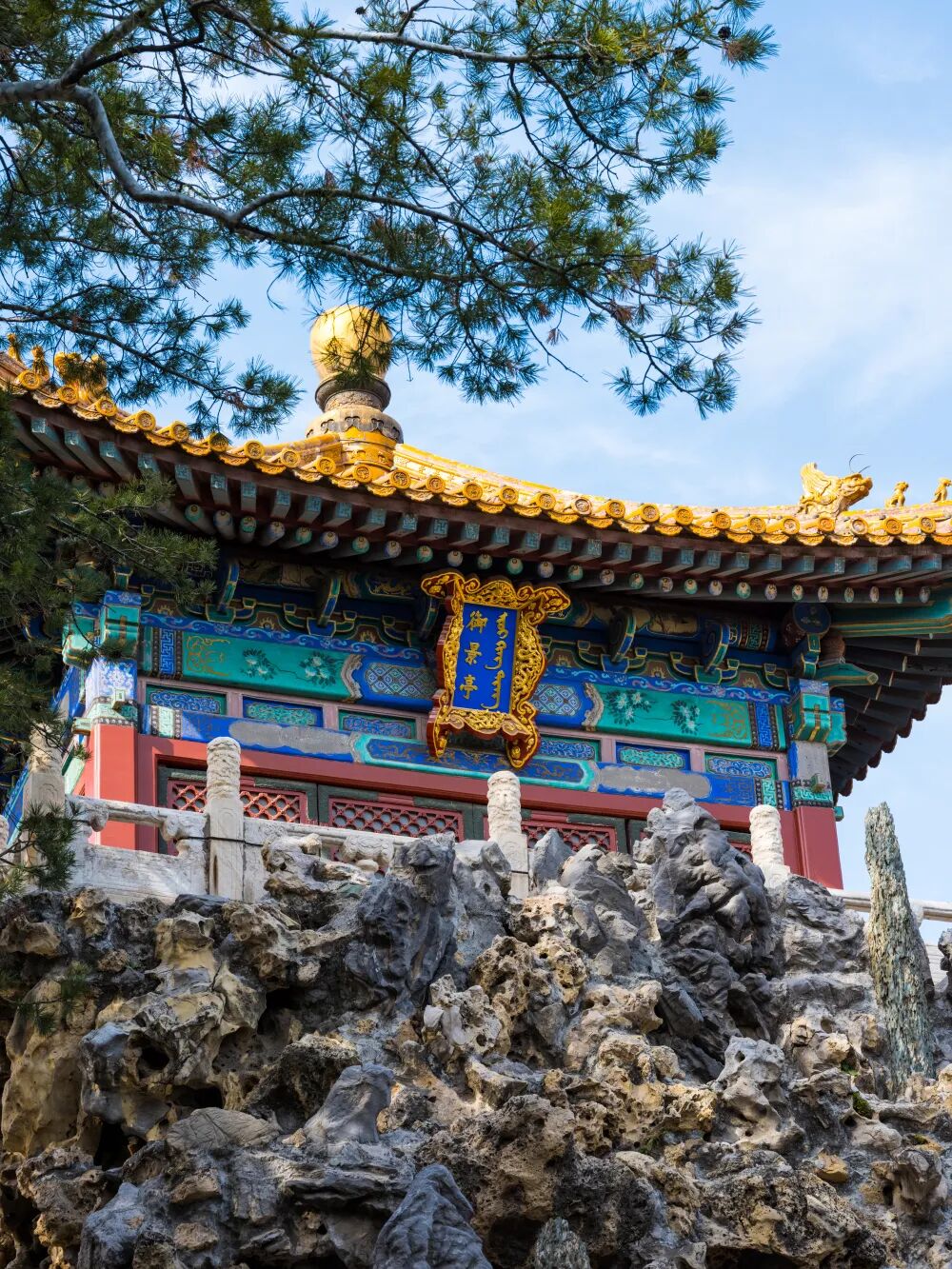
Pines, rockeries, the Taoist Qinan Hall and the Duixiu Mountain with its pavilion — the emperor's private retreat at the north end.
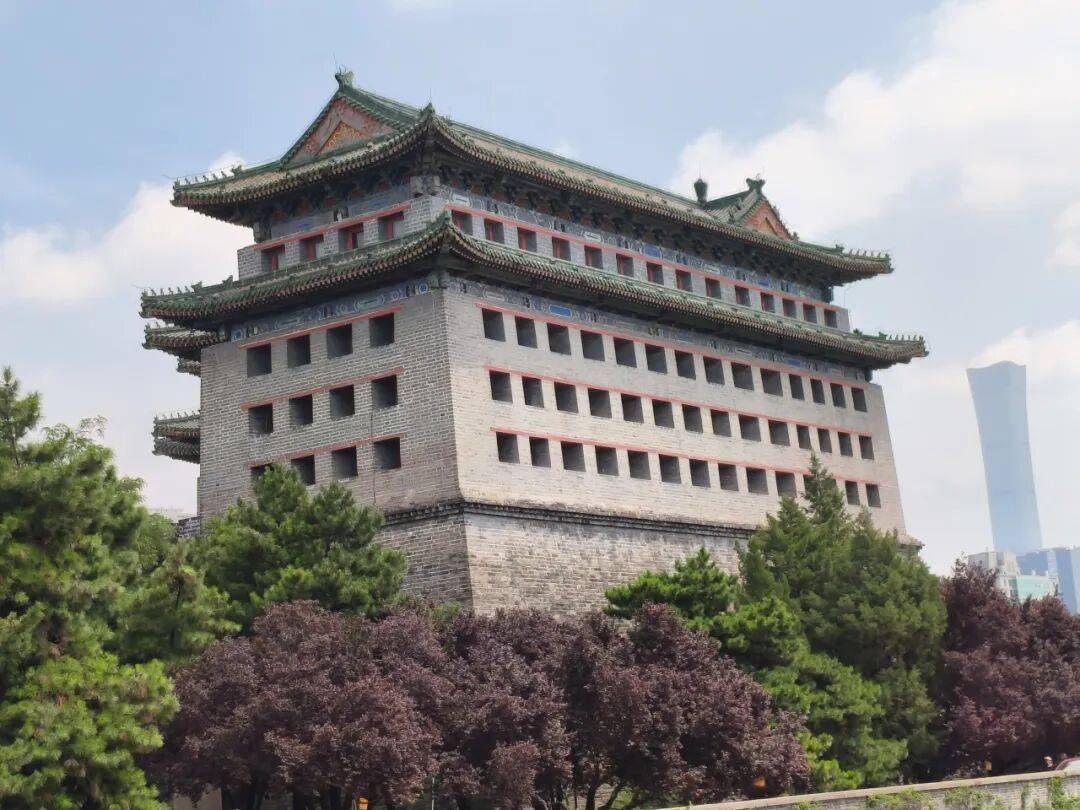
Nine beams, eighteen pillars and seventy-two ridges — the watchtowers that architects still study; best at dusk from the moat.
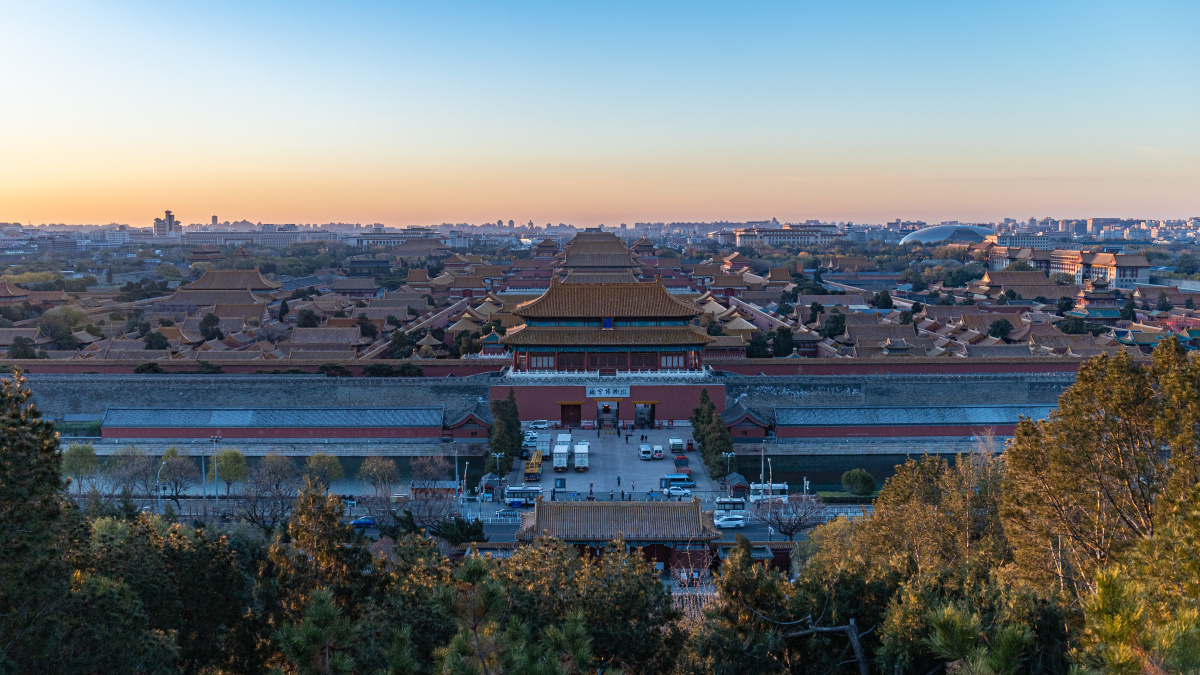
Not part of the palace but inseparable from it — ¥2 to climb the artificial hill King Shunzhi had built from palace excavation earth.
Peak season (Apr–Oct) ¥60, off-peak (Nov–Mar) ¥40; students ¥20. Treasures Gallery and Clocks Gallery ¥10 each. Children under 1.2 m free with a guardian.
Peak 08:30–16:10 (tickets stop 16:00); off-peak 08:30–15:40 (stop 15:30). Closed Mondays (except national holidays) — check the official calendar.
Free storage at the Meridian Gate and Shenwu Gate (08:30–18:00) with free transfer between gates. Audio guides ¥10 (Chinese) / ¥40 (other languages), deposit ¥100; licensed docents from ¥100.
Information desks at Taihe Gate & Jian Ting: +86 10 8500 7422 / +86 10 8500 7421. Audio-guide stations: +86 10 8500 7427 (Wumen) / +86 10 8500 7428 (Shenwu).
Enter via the Meridian Gate only — from Tiananmen through Duanmen, or walk along the moat from Donghua/Westhua gates. Exit via Shenwu Gate or Donghua Gate; the nearest metros are Tiananmen East/West (Line 1).
No flash photography on artefacts, no touching exhibits, and book the official guide at the gate — never the "wild guides" who tout inside.
Tickets, guided tours, hotels and the rest of Beijing — arranged by our team, free of charge.
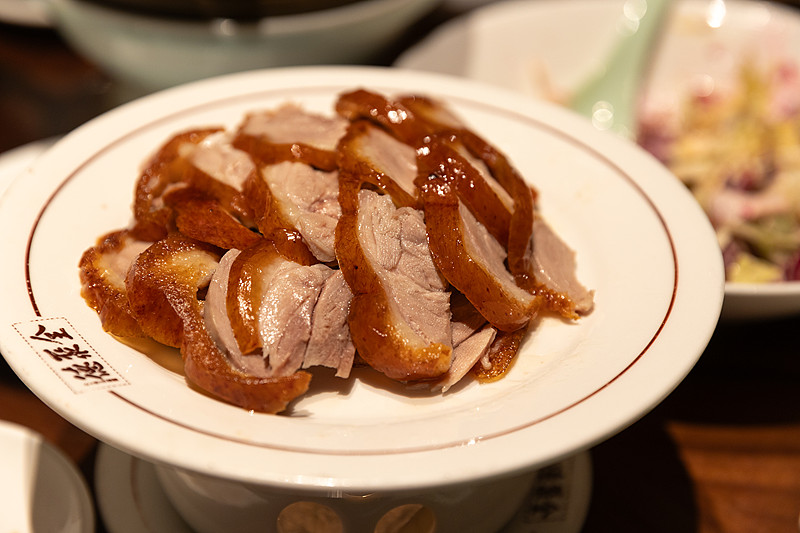
Ten minutes east: the Wangfujing snack street and night market serve every Beijing classic from jianbing to candied hawthorn — plus roast duck restaurants up the avenue.
Only fast-food counters exist within the walls and prices are high — bring your own picnic (the courtyards make fine lunch spots) or eat outside before entering.
Official museum shops sell porcelain, silk and the famous palace-themed notebooks and stationery — quality is good but not cheap; browse first, buy what you love.
Walk south-east to Nanluoguxiang for courtyard cafes and bars, or climb Jingshan Park for the sunset panorama before dinner in the hutongs.

Buses 1, 2, 10, 20, 37, 52, 82, 120, 126, 203, 205, 210, 728 plus Line 1 metro drop at Tiananmen East; Line 1 and more at Tiananmen West. Walk north through Duanmen to the Meridian Gate.
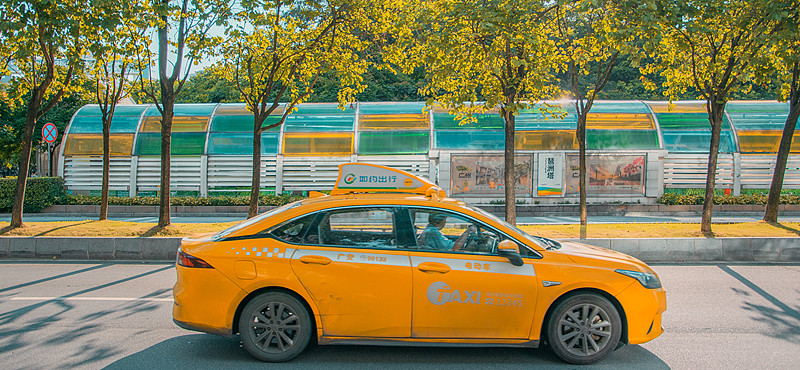
Exit north straight across from Jingshan Park. Trolleybuses 101, 103, 109, 124 and buses 202, 211, 685, 609, 619, 614 stop at "Gugong"; bus 111 at Jingshan East Gate.

Tell drivers "Wumen" (Meridian Gate) for the entrance or "Shenwumen" for the exit. From the airport allow 60–80 minutes; from most hotels 20–40.

The Forbidden City sits at the centre of every Beijing plan — pair it with Tiananmen in the morning, Jingshan at golden hour, and the hutongs after dark. Full Beijing guide →
Built 1406–1420 by the Yongle Emperor, the Forbidden City survived fire, war and revolution. In 1925, a year after Puyi was expelled, it opened as the Palace Museum. Today it is a UNESCO World Heritage Site and one of the world's most-visited museums.
The outer court held state ceremonies; the inner court held the emperor's life — the Palace of Heavenly Purity where he worked, the Hall of Union where the 25 imperial seals were kept, and the "Half Room" of Wenyuan Pavilion.
Chuxiu Palace was Cixi's home for decades — renovated for her 50th birthday with bronze dragons and deers, it is the most lavishly restored courtyard in the Western Palaces.