>
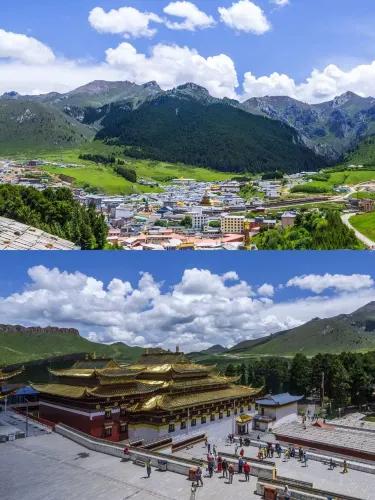
Gannan (the Gannan Tibetan Autonomous Prefecture) is the eastern edge of the Tibetan plateau - a world of golden monasteries, high grasslands and the prayer-wheel arcades of the border. Xiahe holds Labrang, one of the six great monasteries of the Gelug school; Langmusi sits on the Sichuan-Gansu border above the Bailong River; and between them stretch the Sangke grasslands, the Gahai lake and the nine-storey Milarepa Tower of Hezuo. The altitude runs from 2,850 m at Xiahe to 3,400 m at Langmusi - the classic 6-day loop links Lanzhou, Xiahe, Langmusi and Hezuo with Xining beyond.
The 3.5-km arcade of over 2,000 prayer wheels around the monastery walls - the great clockwise circuit of Xiahe.
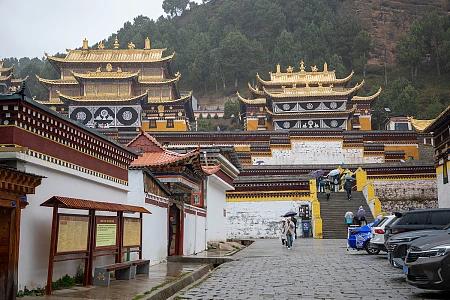
One of the six great monasteries of the Gelug school - golden roofs, debating courtyards and a thousand monks.
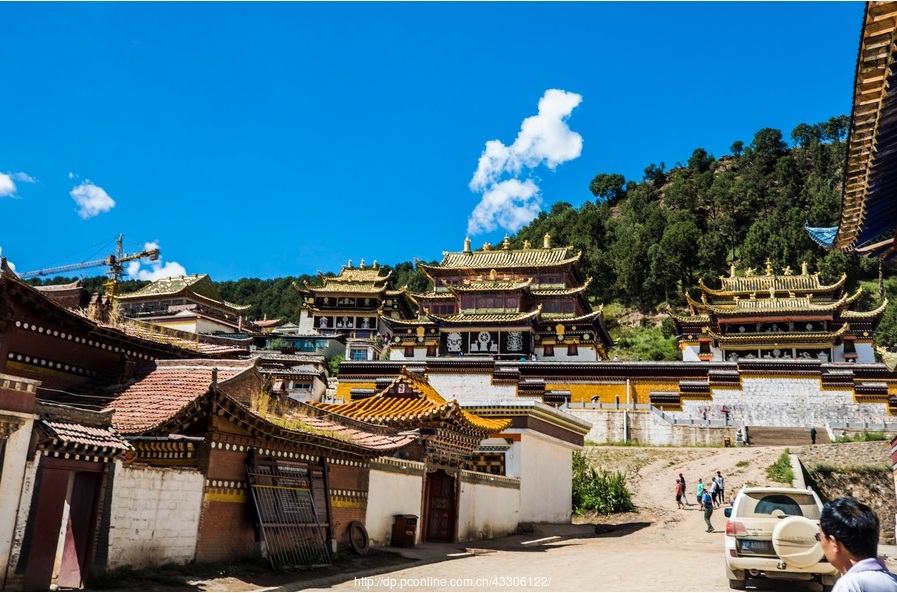
The two monasteries of the Bailong River - one in Gansu, one in Sichuan, with the sky-burial platform above the town.
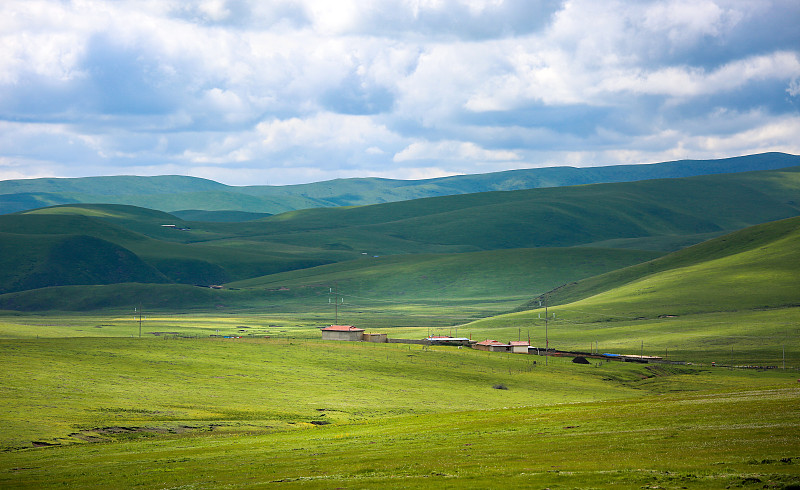
The green plateau west of Xiahe - horses, yurts and the wide light of the grasslands, RMB 10 an hour.
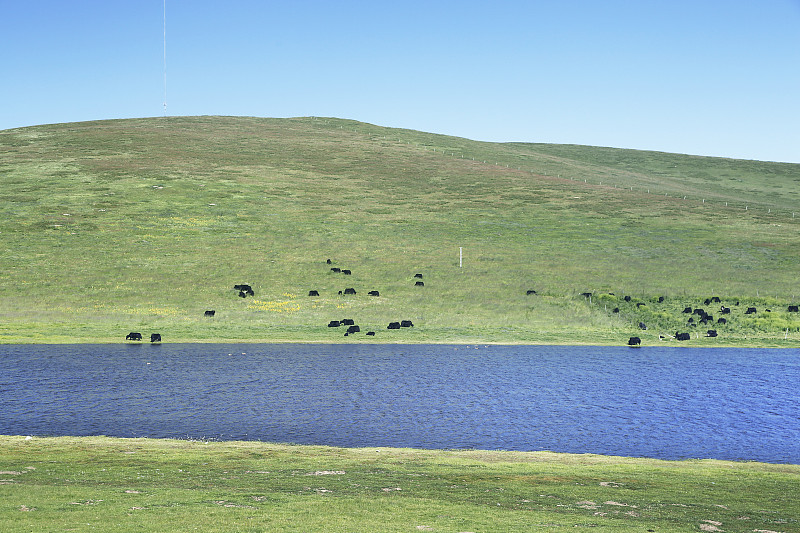
The high wetland at 3,400 m - a stopover for migrating birds, best from May.
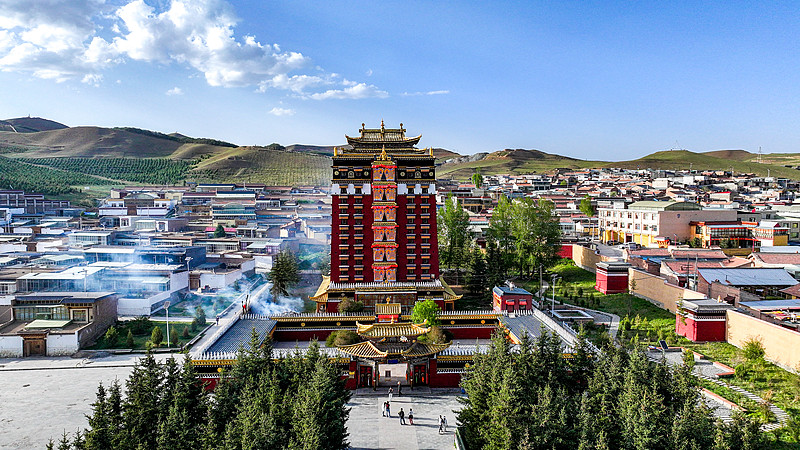
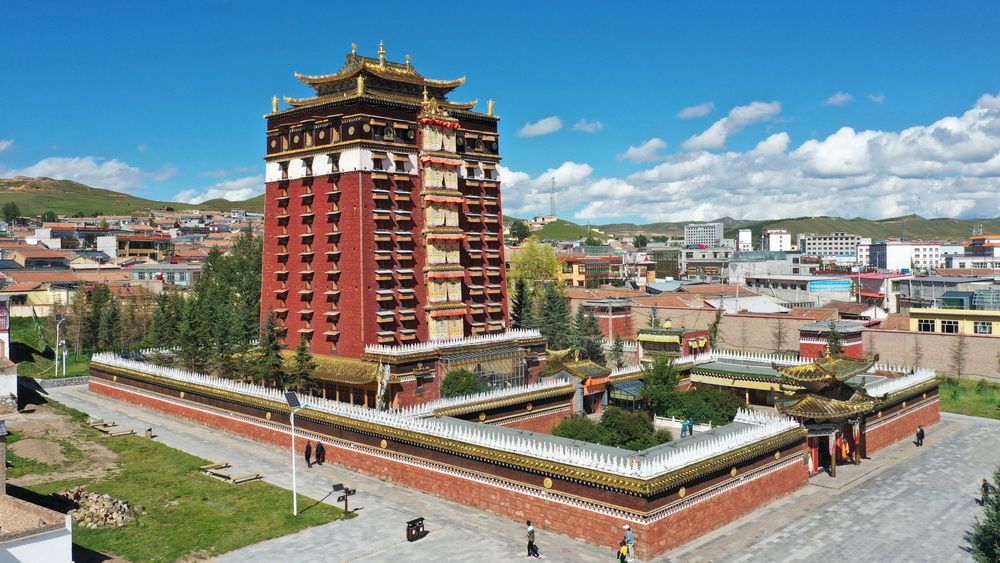
The nine-storey tower of Hezuo - 108 chapels of the masters of Tibetan Buddhism, RMB 20.
The golden roofs of the great Gelug monastery - one of the six, and the largest outside Tibet.
The mountain town of two monasteries - Gansu on one bank, Sichuan on the other.
The green plateau west of Xiahe - horses, yurts and the wide grassland light.
The nine-storey tower of Hezuo - the chapels of the masters, floor by floor.
The classic circuit takes six days - Lanzhou to Xiahe (day 1), Labrang and the grasslands (day 2), on to Langmusi (day 3), the Gahai lake and Hezuo (day 4), the Milarepa Tower and back to Lanzhou or on to Xining (days 5-6). With two or three days spare you can extend to the Ruoergai wetlands and the Yellow River's first bend.
Labrang costs RMB 40; the two Langmusi monasteries are RMB 30 each; the Ganjia octagonal town RMB 20; the Milarepa Tower RMB 20; the Gahai lake RMB 30. Most grasslands are free.
Xiahe sits at 2,850 m, Hezuo at 2,960 m and Langmusi at about 3,400 m - the classic first-plateau-trip scale. Go slowly, drink water and avoid alcohol for the first two days.
There is no railway in Gannan - coaches and hired cars are the way. Xiahe to Langmusi is about 4 hours by coach (RMB 70), Langmusi to Hezuo about 3 hours (RMB 50), and a hired car is the flexible option for the grasslands.
June to August - green grasslands, warm days and the clearest air. Winter brings the great prayer festivals and the butter-lamp ceremonies, when the monasteries are at their most atmospheric.
Yes - email [email protected] or message us on WhatsApp. Our team arranges the monasteries, a plateau driver, hotels and the loop route, free of charge and without obligation.
Lanzhou to Xiahe, Langmusi, Hezuo and beyond - the classic monastery circuit. View the plan →
Lanzhou to Xiahe - the 258-km, 4-hour coach; evening at the foot of Labrang as the prayer wheels turn.
Morning in Labrang - the great halls, the debating courtyard and the 3.5-km prayer-wheel arcade; afternoon on the Sangke grassland.
Xiahe to Langmusi by coach (4 hours) - the two monasteries of the Bailong River and the sky-burial platform.
The Gahai lake at dawn, then on to Hezuo (3 hours) and the nine-storey Milarepa Tower.
Hezuo to Lanzhou or west to Xining - the Ganjia octagonal town and the grasslands on the way.
Optional extension - the Ruoergai wetlands and the first bend of the Yellow River, or the Ta'er and Qinghai Lake loop from Xining.
The essence - the great monastery, the grasslands and the border town. View the plan →
Lanzhou to Xiahe; evening at Labrang as the monks close the halls.
Full day in Labrang - the golden halls, the debating courtyard, the prayer-wheel arcade, and a sunset walk to the monastery viewpoint.
Morning on the Sangke grassland - horses and yurts - then the coach back to Lanzhou.
All plans are bookable end-to-end by our team — see the full day-by-day Gannan itineraries hub, or the day-trip pages for single-day options.
One of the six great monasteries of the Gelug school - golden halls, a 3.5-km prayer-wheel arcade of over 2,000 wheels, and a thousand monks in the debating courtyards.
View details →The mountain town on the Sichuan-Gansu border - the Gansu monastery of Sertsi and the Sichuan monastery of the Gelug, divided by the Bailong River.
View details →The green plateau 1 km southwest of Xiahe - horses for hire (RMB 10 an hour), yurts for the night and the wide grassland light.
View details →The high wetland lake at 3,400 m near Luqu - a stopover for thousands of migrating birds, best in May, with the boardwalk over the marsh.
View details →The nine-storey tower of Hezuo - 108 chapels holding the statues of the great masters of Tibetan Buddhism, climbed floor by floor.
View details →The ruined fortress town 35 km north of Xiahe - the octagonal rammed-earth walls of a Tang dynasty border stronghold, with the grasslands beyond.
View details →More in the region on the Gansu attractions page.
In the first lunar month the monasteries hold the great prayer assemblies - the butter-lamp ceremonies, the dance of the masked lamas and the thangka unveilings.
The horses of Sangke and the Ganjia grasslands - RMB 10 an hour with a local guide, the classic plateau afternoon.
Walk the 3.5-km prayer-wheel arcade of Labrang clockwise, turning every wheel - the pilgrim's hour that anchors the visit.
The platform above Langmusi - visible from a respectful distance, the funerary ritual of the plateau, held before dawn.
Every hotel below is bookable by our team; browse the full Gansu hotels directory.
The comfortable hotel of Xiahe town - +86 941 712 8009.
The traveller classic of Xiahe - beds from RMB 20, doubles RMB 160-200, +86 941 712 1274.
The clean budget hostel near Labrang - beds from RMB 40, +86 941 712 3698.
The comfortable border-town hotel - doubles from RMB 120, +86 931 667 1399.
The plateau classic - boiled lamb eaten with the hands, served with garlic and salt; the Lanzhou and Xiahe restaurants are the places.
The roasted barley flour of the plateau, mixed with butter tea - the fuel of the pilgrim's day.
The thick, tangy yogurt of the Tibetan towns - sold by the bowl in the morning markets.
The beef noodles of Lanzhou (RMB 25 at the famous Mazilu shop, +86 931 845 0505) - the gateway meal before the plateau.
The painted scrolls of the monastery studios - the art of the plateau, from small prints to full altar pieces.
The wooden and bone rosaries of the pilgrims - sold beside the prayer-wheel arcade.
The hand-woven rugs of the plateau - the bright patterns of the Gannan looms.
The warm felt and wool of the yaks - hats, slippers and the winter layers of the plateau.
Full local-product guides live on the Gansu specialties page.
The 258-km, 4-hour coach from the Lanzhou South coach station (RMB 40-50) is the standard gateway - the station line is +86 931 291 4066.
There is no railway in Gannan - a hired car with driver is the flexible way for the grasslands and the border loop, from about RMB 600 a day.
The 4-hour coach between the two towns costs about RMB 70; the road climbs over the grasslands and the border.
Horses on the Sangke grassland, the octagonal town and the Ganjia grasslands beyond.
The high lake and its migrating birds, with the Luqu grasslands on the road.
The great marsh of the border - the first bend of the Yellow River and the Huahu lake, 2-3 days by hired car.
The prayer-wheel circuit of Labrang must be walked clockwise - turning the wheels as you go, the pilgrim's etiquette of the plateau.
Even in summer the evenings drop below 10 degrees - layers, a warm jacket and sunscreen are the essentials at 3,000 m.
No photography inside the halls, no loud talk in the prayer halls, and no pointing at statues - the monks are patient but the rules are firm.
The classic mistake is rushing - walk slowly, drink water and give yourself the first day to settle before the long treks.
The grassland horse hire is RMB 10 an hour and the yurts about RMB 20 a night - agree the price before you ride.
The ticket windows and the donation boxes are cash-first - small notes are useful for the temples and the beggar-monks.
Gannan is the eastern edge of the Tibetan cultural world - the prefecture where the monasteries, the grasslands and the pilgrim routes of the Amdo region begin.
Labrang was founded in 1709 and grew into one of the six great Gelug monasteries; Langmusi and the Hezuo tower complete the religious map of the plateau.
The Sangke and Ganjia grasslands, the Gahai wetlands and the Ruoergai marsh beyond - the pastoral world of the yak herders, unchanged for centuries.
Everything on ToursChinaTravel is bookable through our team by email or WhatsApp. Here's where each part of your Gannan trip lives on the site.
Star-rated sight details — hours, tickets, phones and tips for every Gansu attraction.
Browse Gansu sightsStar-rated hotels across Gansu — sorted by rating, all bookable by our team.
Book a Gansu hotelLocal products, crafts and foods of Gansu — where to find each one.
Browse Gansu specialtiesLicensed agencies with addresses, phones and booking contacts.
Find a Gansu agencyMore city and region guides across China, including the Gansu guide.
Browse all guides