>
Dunhuang is the great oasis of the Silk Road - a desert town of 1,139 m altitude where the Mogao Caves hold a thousand years of Buddhist art and the Crescent Moon Spring still glows inside the dunes of Mingsha Mountain. Ancient Suzhou of the west, it guards the gates to the Yumen Pass, the Han Great Wall and the wind-carved Yadan landforms. Two days for the caves and the dunes, a third for the desert circuit; the town itself - the night market on Yangguan East Road, the donkey-meat yellow noodles and the Lop Nor light - is the Silk Road at its most alive.
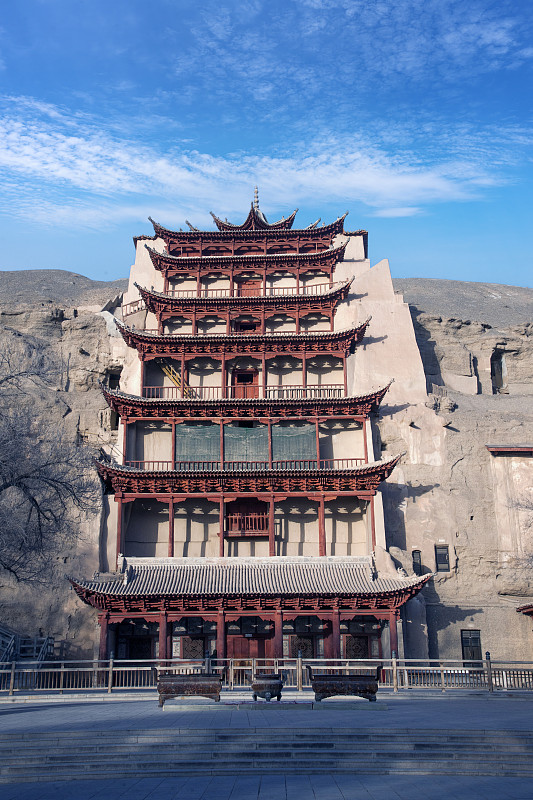
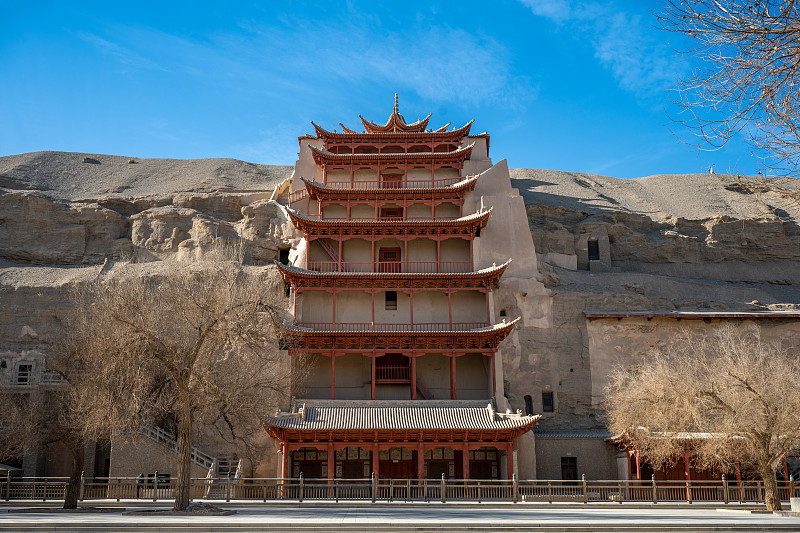
A thousand years of murals and statues in 735 painted caves - the greatest Buddhist gallery on earth, and the reason Dunhuang exists.
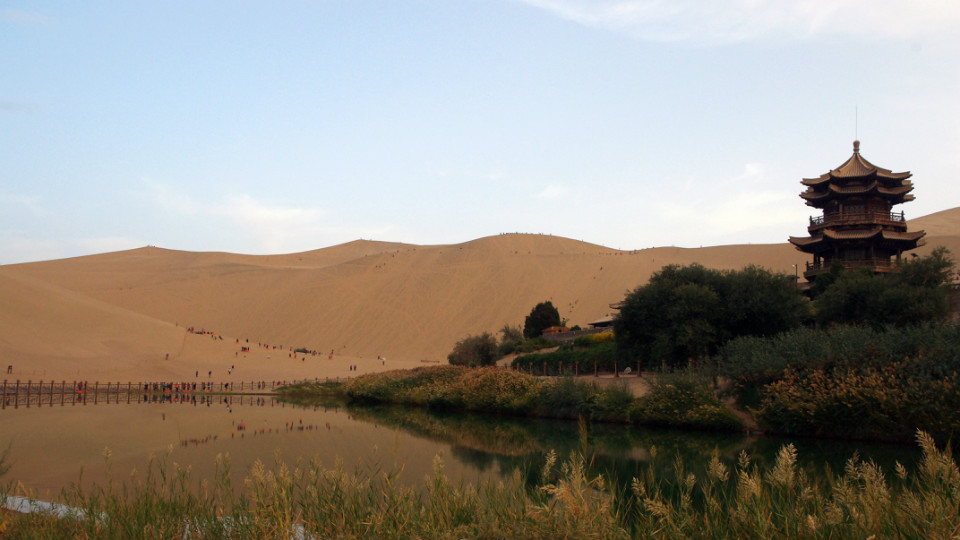
The camel train over the singing dunes at dusk - the classic Silk Road photograph.
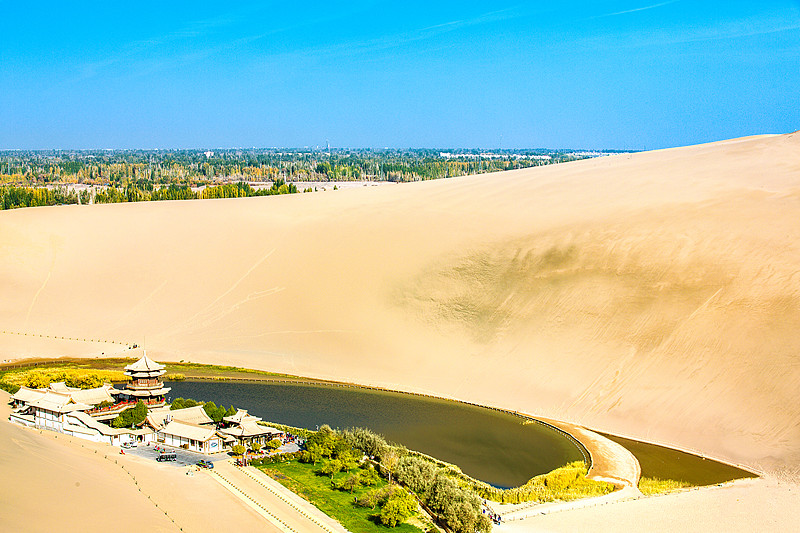
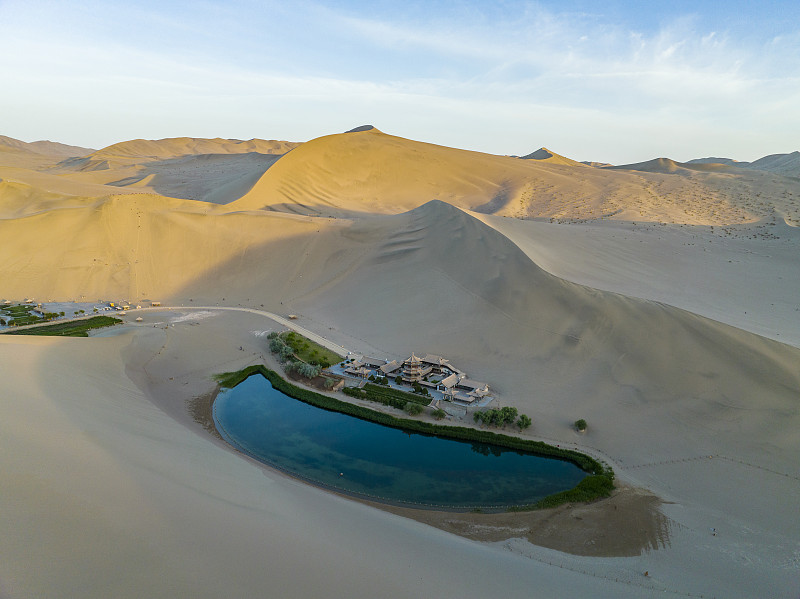
The spring that has survived inside the dunes for over a thousand years - water and sand in one frame.
The Jade Gate of the western frontier - the Han dynasty gateway of the Silk Road, now a lonely ruin in the desert.
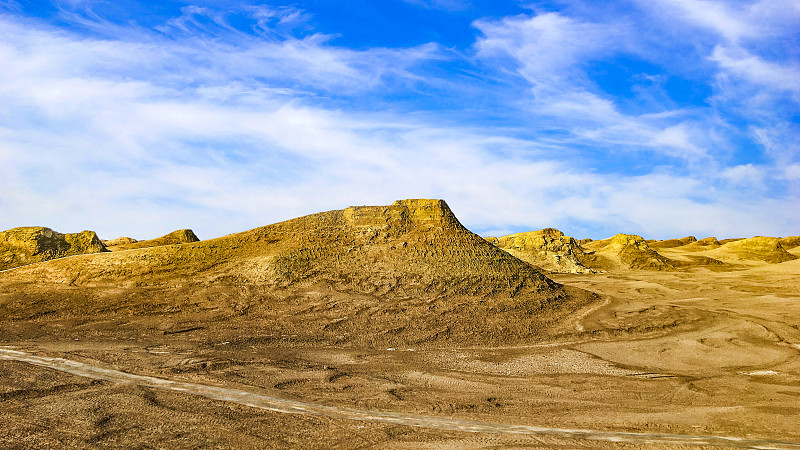
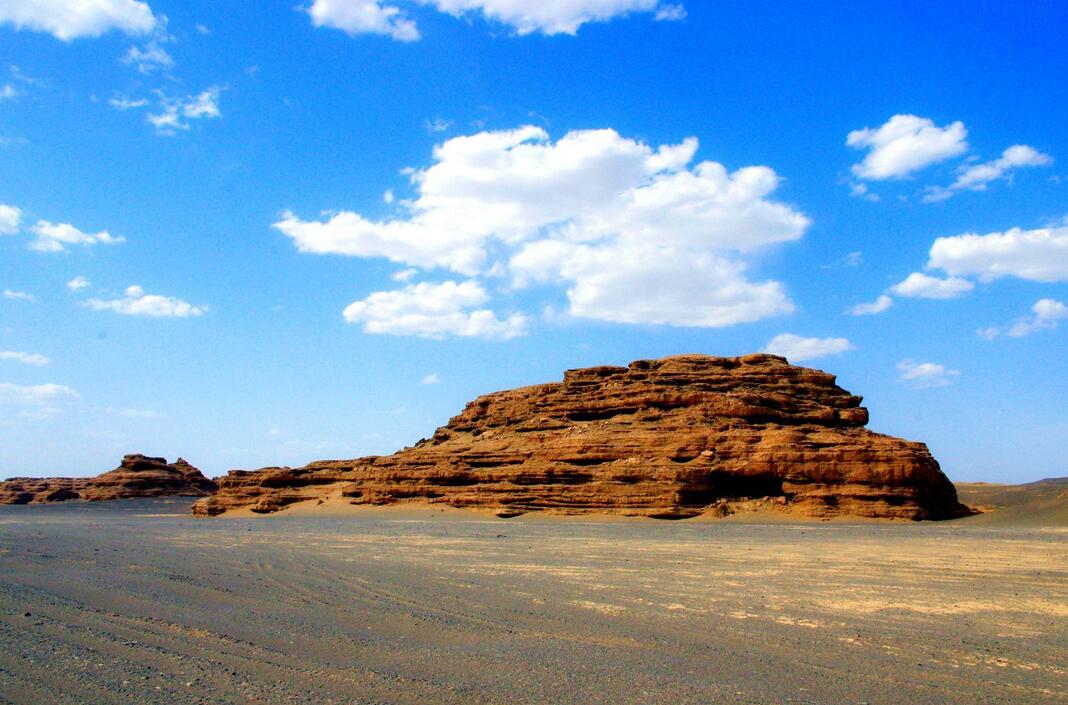
The wind-carved 'devil city' of the Gobi - towers, battleships and castles of rock in the evening light.
The lantern-lit stalls of Yangguan East Road - donkey-meat yellow noodles, candied fruit and the night life of the oasis.
The nine-storey tower of the caves - a thousand years of Buddhist art at the edge of the desert.
The pavilion beside the spring - water inside the dunes, the oldest sight of Dunhuang.
The singing dunes that ring the oasis - camel rides and the wide desert light.
The wind-carved 'devil city' of the Gobi - the strangest landscape of the west.
Two days are the minimum - one for the Mogao Caves and the museum, one for Mingsha Mountain, the Crescent Moon Spring and the night market. A third day takes you to the Yumen Pass and the Yadan landforms; the PDF guide suggests an art two-day tour or a quality three-day tour.
RMB 160 in peak season (May 1 - October 31) and RMB 80 off-peak (November 1 - April 30); foreign visitors pay RMB 180 and students half price. Opening is 08:00-17:30 in peak season and 09:00-17:00 off-peak. Photography inside the caves is prohibited.
The caves are 25 km southeast of town - bus route 8 runs there (RMB 8, about 30 minutes). Book cave tickets online in advance; the number of daily visitors is capped.
Yes - walk the sand ladders or ride a camel (about RMB 120 for the standard loop). The Crescent Moon Spring ticket is RMB 120 and covers the whole day, and the sunset view from the dune crest is the moment.
May to October - the annual mean temperature is 9.3 degrees and the altitude of 1,139 m means no altitude sickness. June 1 opens the sand-sliding festival and mid-September the Silk Road festival.
Yes - email [email protected] or message us on WhatsApp. Our team arranges cave tickets, the desert circuit with a driver, hotels and guides, free of charge and without obligation.
Caves and dunes - the two icons of the oasis, plus the night market. View the plan →
Morning at the Mogao Caves (book the early slot), then the Dunhuang Museum; evening at the Shazhou night market on Yangguan East Road.
Morning at Mingsha Mountain and the Crescent Moon Spring - camel ride, the dune crest and the spring; afternoon free or the West Thousand Buddha Caves; sunset from the dunes.
The full oasis - caves, dunes, the Yumen Pass, the Han Great Wall and the Yadan landforms. View the plan →
The Mogao Caves and the museum, then the night market.
Mingsha Mountain and the Crescent Moon Spring, camel ride and dune sunset.
Full-day desert circuit by hired car or the tourist bus - the Yumen Pass, the Han Great Wall and the Yadan 'devil city' at golden hour.
All plans are bookable end-to-end by our team — see the full day-by-day Dunhuang itineraries hub, or the day-trip pages for single-day options.
The greatest treasure of the Silk Road - 735 painted caves holding murals and statues from the 4th to the 14th centuries, entered by timed tour groups; photography prohibited.
View details →The singing dunes ringed around the ancient spring - camel rides, sand ladders and the famous water-in-the-desert view, 5 km south of town.
View details →The Jade Gate of the western frontier - the Han dynasty customs post and the crumbling beacon-wall of the Silk Road, 90 km northwest of town.
View details →The wind-carved 'devil city' of the Gobi - towers, ships and castles of rock, 160 km from town and best seen at sunset.
View details →The smaller sister of Mogao - early cave murals at the edge of the desert, often far quieter than the great caves.
View details →The town museum of the oasis - the relics of the Silk Road, from the Han garrison to the cave discoveries; free with ID.
View details →More in the region on the Gansu attractions page.
From June 1 the dunes of Mingsha host the annual sand-sliding festival - boards, camels and the singing-sand shows.
From mid-September the town celebrates the road that made it - music, food and the light shows on the dunes.
The camel train from the foot of the dunes to the crest - about 40 minutes, best at dusk.
Yurt camps at the edge of the dunes - barbecue, stargazing and the sunrise ride the next morning.
Every hotel below is bookable by our team; browse the full Gansu hotels directory.
The traveller base of the old town - beds from RMB 40, +86 937 883 3121.
The comfortable mid-range stay near the town centre - doubles from RMB 106, +86 937 885 1777.
The desert-side resort - rooms from RMB 480, +86 937 888 2088, the pools and the dune view.
The central three-star - doubles from RMB 249, +86 937 885 3888, a short walk to the night market.
The signature of Dunhuang - hand-pulled yellow noodles under tender donkey meat; the Shunzhang shop on Yangguan East Road is the classic, +86 937 882 4910.
The cool buckwheat or wheat noodles with chilli and vinegar - the desert-town refreshment.
The sour, thin noodles in fermented broth - the old local comfort food.
The warm lamb and starch soup of the Gansu evening - best from the stalls of the Shazhou market.
The famous jade cups of the west that glow in the dark - the traditional Dunhuang souvenir.
The big sweet dates of the oasis - dried, candied or fresh in season.
The felt and wood camel caravans of the night market - the Silk Road in miniature.
The clay bodhisattvas and flying apsaras copied from the caves by local studios.
Full local-product guides live on the Gansu specialties page.
Dunhuang Airport lies 15 km east of town - the airport bus costs RMB 15 and a taxi RMB 50-60; flights connect Beijing, Xi'an, Lanzhou and Urumqi.
Dunhuang Station is 13 km east of town; the older Liuyuan station (130 km away) connects to the main line with onward buses. Trains from Lanzhou and Xi'an arrive overnight.
The long-distance bus station (RMB line +86 937 882 2174) runs coaches to Jiayuguan, Lanzhou and the desert towns; the tourist routes to the Yadan landforms leave from the hotel district.
Yumen Pass, the Han Great Wall and the wind-carved Devil City at golden hour.
The western gate of the Silk Road, 70 km away, with the West Thousand Buddha Caves on the road.
The western end of the Great Wall - the fortress of the last pass, 370 km east on the rail line.
The cave visits are capped by daily quota and timed - reserve online before you arrive, especially in July and August.
The desert heat peaks at midday - climb Mingsha in the late afternoon and stay for the sunset and the night market after.
The desert air is dry - a litre per person on any excursion, and more on the Yadan circuit.
Cameras stay outside the Mogao caves - the murals are protected, and guards enforce it strictly.
The night-market prices start high - a friendly bargain is expected, and the crafts are worth it.
Sunglasses, a scarf and sunscreen are essentials - the UV at 1,139 m is stronger than it feels.
Ancient Suzhou (Shazhou), Dunhuang has been the gateway of the Silk Road since the Han dynasty - the last green city before the Taklamakan, and the guardian of the Yumen and Yangguan passes.
From 366 AD the cliffs of Mogao were carved for a thousand years - 735 caves, 45,000 square metres of murals and 2,000 painted statues, hidden and rediscovered in the 20th century.
To the west lie the Han Great Wall, the beacon towers and the Yadan landforms - the lonely geography that made Dunhuang's history.
Everything on ToursChinaTravel is bookable through our team by email or WhatsApp. Here's where each part of your Dunhuang trip lives on the site.
Star-rated sight details — hours, tickets, phones and tips for every Gansu attraction.
Browse Gansu sightsStar-rated hotels across Gansu — sorted by rating, all bookable by our team.
Book a Gansu hotelLocal products, crafts and foods of Gansu — where to find each one.
Browse Gansu specialtiesLicensed agencies with addresses, phones and booking contacts.
Find a Gansu agencyMore city and region guides across China, including the Gansu guide.
Browse all guides