>
Dujiangyan is the oldest working irrigation system on Earth — built in 256 BC, still watering the Chengdu Plain, and now a UNESCO World Heritage Site. The Fish Mouth splits the Min River, the Flying Sand Weir and Bottle-Neck Gorge control the flow, and the Anlan Suspension Bridge swings over the water. Add the Erwang Temple, the mountain-top Yulei Pavilion and the night beer garden of the Nan Bridge, and you have the most civilised day in Sichuan.
The stone fish-shaped dam that splits the Min River — the 2,300-year-old beginning of the whole system.
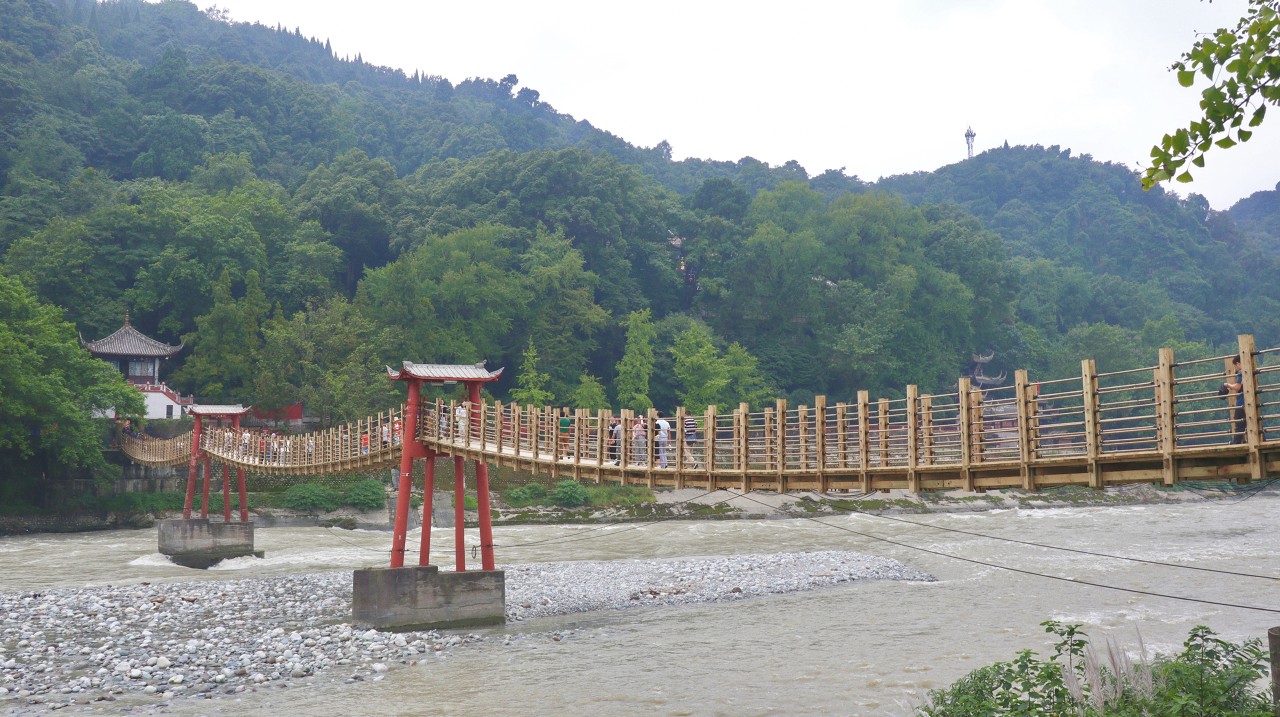
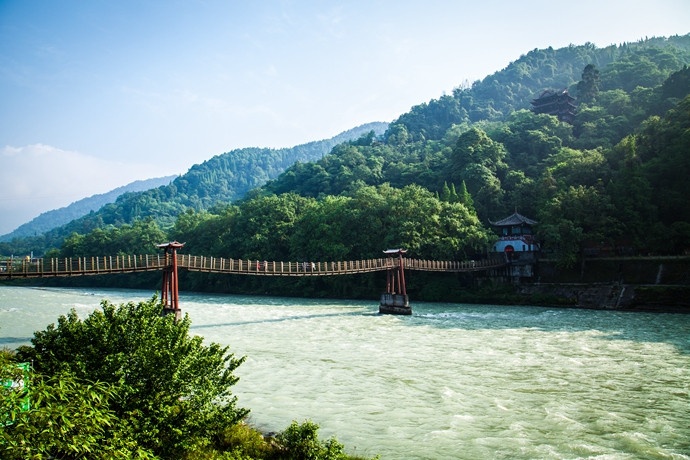
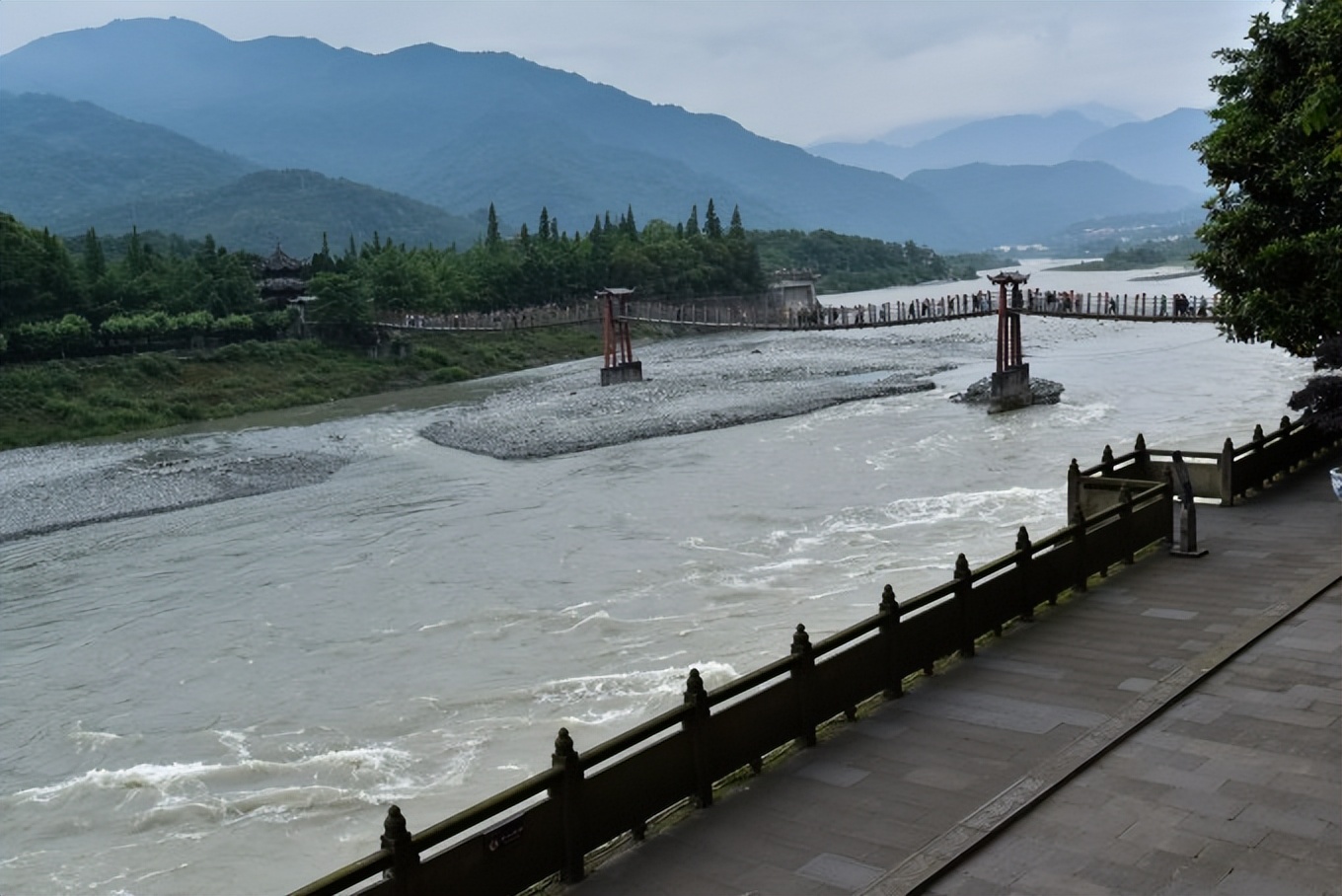
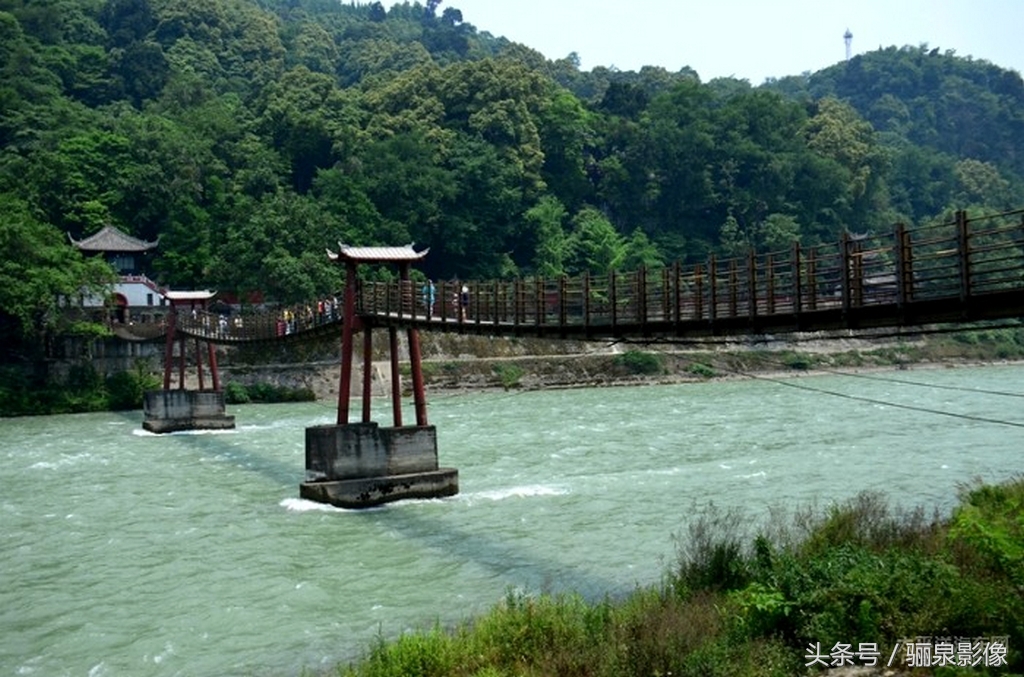
The swinging rope bridge over the Min — one of the five great ancient bridges of China, rebuilt in five spans.
The narrow channel that controls the flood — the 'Bottle Neck' that turns the river into an irrigation tap.
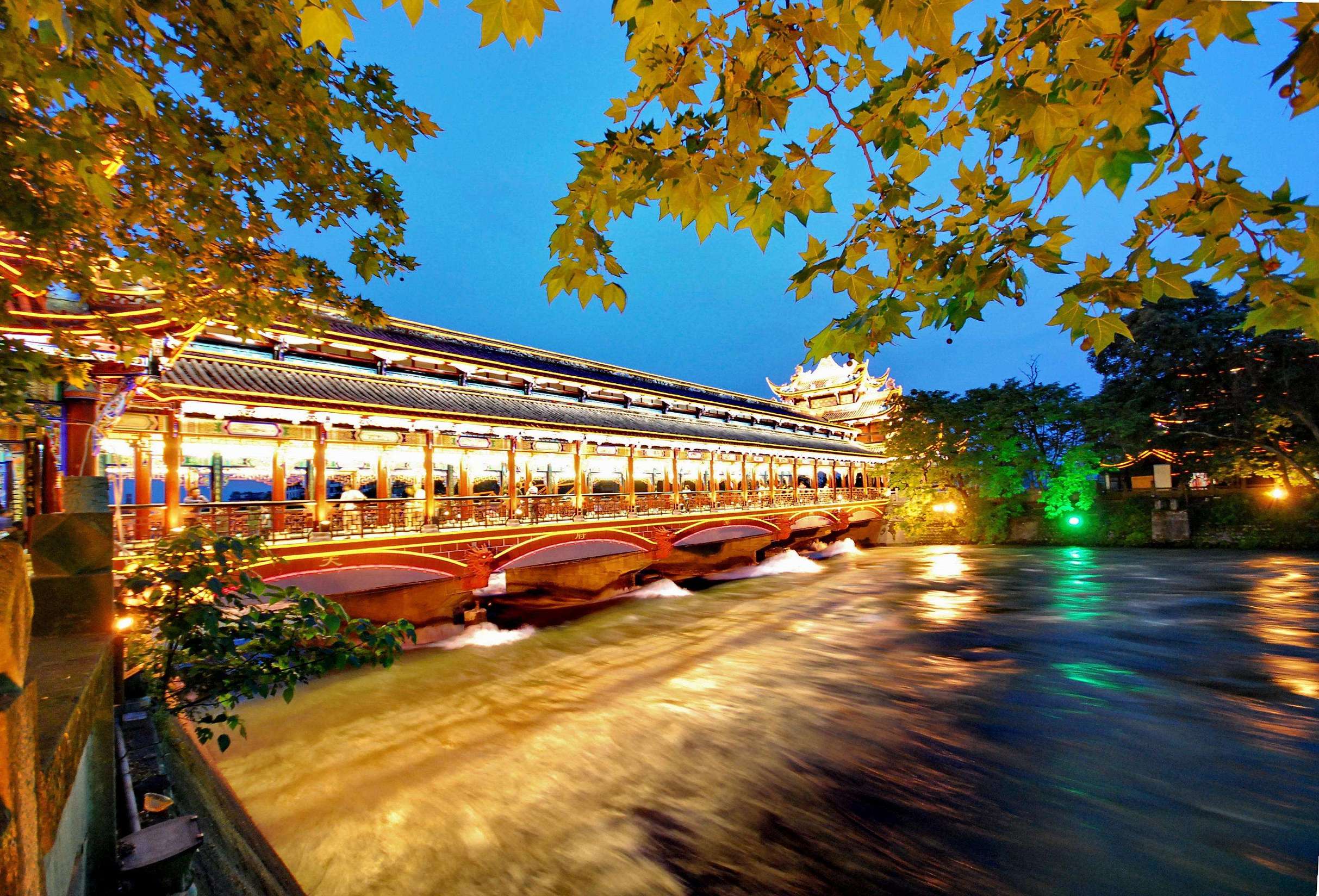
From May to October the Nan Bridge banks fill with tables — river fish, beer and the floodlit bridge.
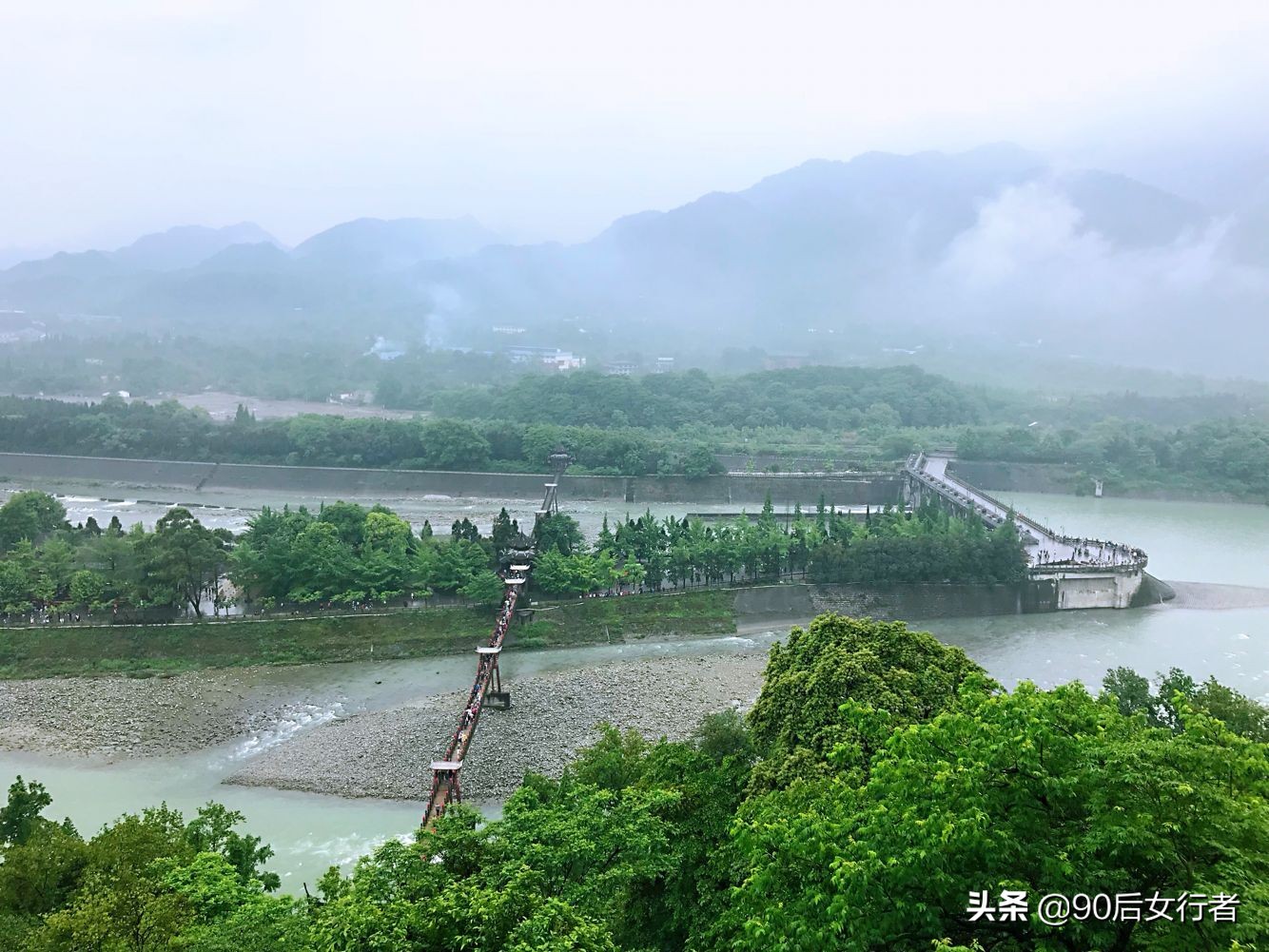
The temple-crowned hill above the city — the best view over the whole irrigation complex.
The open-air water show on the river stage, 10:30–11:30 daily — tickets RMB 168–288.
The stone splitter of the Min River — the engineering that has run unbroken for 2,300 years.
The five-span rope bridge over the white water — the swaying heart of the site.
The floodlit bridge and the beer tables of the old town — the evening face of Dujiangyan.
The red bridge and the green river from the Yulei hill — the postcard view.
April–June and September–November are ideal — mild weather and clear rivers. Summer (May–October) brings the night beer festival and the liveliest evenings; winter is quiet and cold, with the daily show suspended.
The main site costs RMB 90 plus RMB 10 for the audio guide; the Buyunlang escalator is RMB 20 one way / RMB 30 return. The combined Dujiangyan–Qingcheng pass costs RMB 180. Winter hours run 08:00–17:30, other seasons 08:00–18:00.
The Chengdu–Dujiangyan high-speed line takes 30 minutes from Chengdu's Xipu or North stations; bus 4 runs from the Dujiangyan station to the scenic area. By road the city sits 55 km north-west of Chengdu.
For the irrigation works and the old town, yes — a full day from Chengdu covers everything at a civilised pace. Add a second day for Qingcheng Mountain, 20 minutes away, with the combined pass.
The open-air water performance on the Min River stage runs 10:30–11:30 daily (A seats RMB 168, B RMB 188, VIP RMB 288) — a spectacular retelling of the irrigation's history, worth the morning slot.
Yes — email [email protected] or message us on WhatsApp. Our team arranges the rail tickets, site passes, the show, hotels and a guide, free of charge and without obligation.
The Fish Mouth to the Nan Bridge — the whole ancient river in one day. View the plan →
Morning rail from Chengdu; the Fish Mouth and the Flying Sand Weir, the Anlan Bridge crossing, the Erwang Temple and the Yulei Pavilion; afternoon the old town lanes and the Dao Jie show; evening beer fish at the Nan Bridge before the train back.
The river and the Taoist mountain — the two world-heritage sights of the west. View the plan →
The irrigation works — Fish Mouth, the Anlan Bridge, Erwang Temple and the Nan Bridge night.
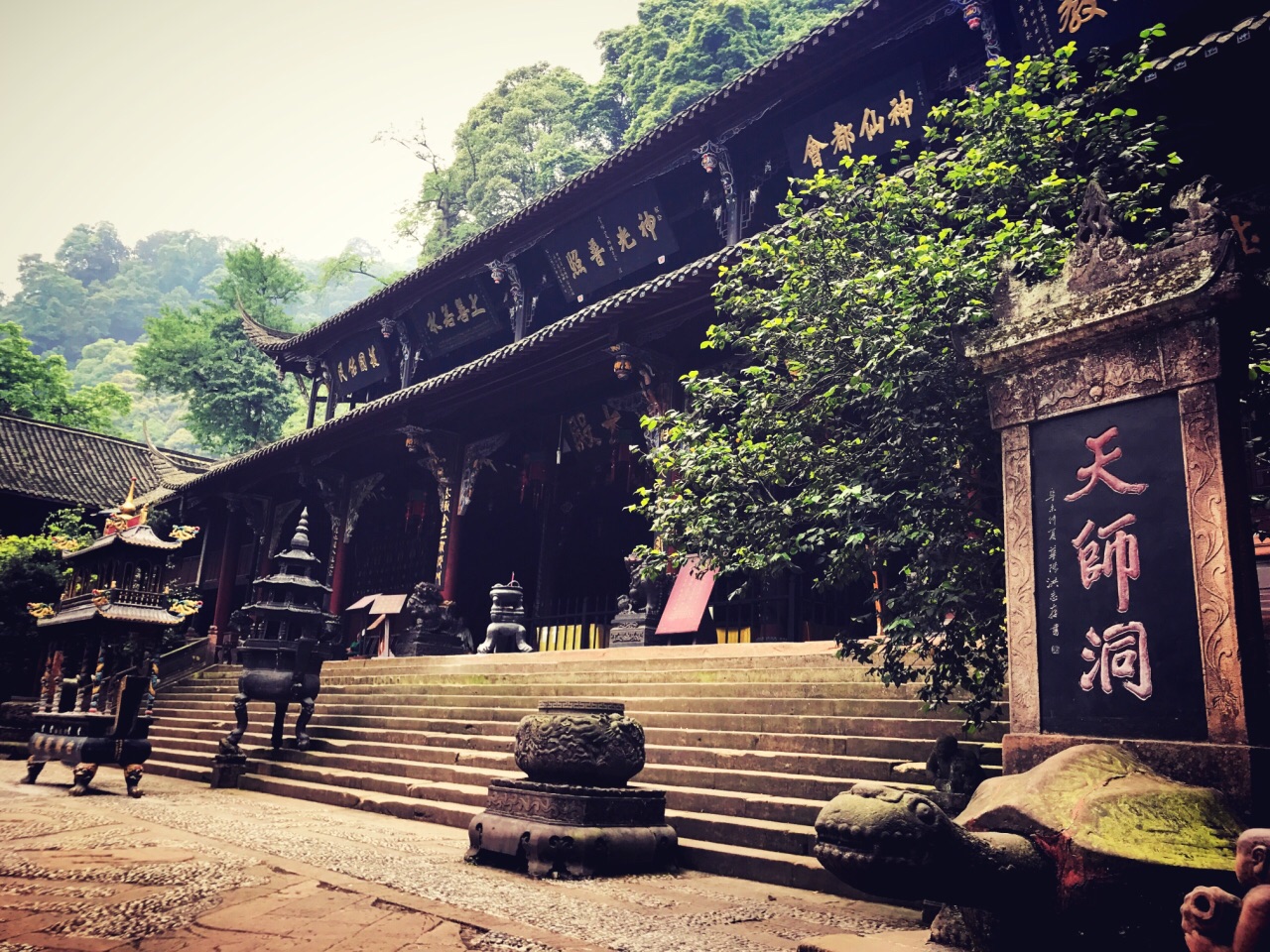
Morning up Qingcheng Mountain — the Tianshi Cave, Shangqing Palace and the cable cars — then the rail back to Chengdu.
All plans are bookable end-to-end by our team — see the full day-by-day Dujiangyan itineraries hub, or the day-trip pages for single-day options.
The 2,300-year-old stone fish dam that splits the Min River — 10% of the water to the irrigation canal, 90% to the river, by the natural curve of the current.
View details →The five-span rope bridge rebuilt in 1974 over the white water of the Min — the swaying crossing that every visitor walks twice.
View details →The overflow weir that dumps flood water and silt, and the narrow gorge channel that follows — the self-cleaning heart of the system.
View details →The temple to the builders Li Bing and his son, and the pavilion on the hill above — the best views over the whole complex.
View details →The Song-dynasty bridge rebuilt in 1958, floodlit at night — and the beer tables, river fish and music of the old-town banks from May to October.
View details →The old county town beside the river — the Chongyi Arch, the old walls and the lanes that hold the night beer festival.
View details →More in the region on the Sichuan attractions page.
The open-air performance on the Min River stage, 10:30–11:30 daily — A seats RMB 168, B RMB 188, VIP RMB 288.
The April ceremony that re-enacts the annual dredging rite — the traditional opening of the irrigation season.
The old-town banks fill with tables, music and river fish — Dujiangyan's great summer ritual.
The white-water rafts of the Hongkou valley — small boats and big boats both RMB 170, the adventure day-trip of the region.
Every hotel below is bookable by our team; browse the full Sichuan hotels directory.
Courtyard rooms in the lanes behind the Nan Bridge — the night beer at the door, doubles from RMB 80 at Xinxin Inn (18982015626).
Jin'an Hostel from RMB 98 (028-67639744) and the Jianyue Zhijia boutique hotel — modern comfort with river views.
Many visitors sleep in Chengdu and ride the 30-minute rail each way — the hotels near Xipu station suit the early train.
The hotels on the Qingcheng road for the two-day plan — from spa resorts to family guesthouses.
The night ritual — freshly caught Min River fish grilled with chilli, washed down by the local beer under the floodlit bridge.
The slow-braised trotters of the old town, melting and mild — the famous dish of the night streets.
The morning bowls of the town — the chewy local noodles in red oil, the breakfast of the market lanes.
The mountain specialities of the nearby Taoist table — the preserved dishes that end the two-day plan.
The Ligusticum and magnolia bark of the region — the traditional medicines grown on the Dujiangyan slopes.
The driftwood and root sculptures of the old town — the craft souvenir of the river.
The preserved mountain foods — the edible gifts of the Taoist table.
The local green teas of the Dujiangyan hills — the taste of the old town.
Full local-product guides live on the Sichuan specialties page.
The Chengdu–Dujiangyan line from Xipu or North stations — 30 minutes, then bus 4 to the scenic area.
Long-distance buses run from Chengdu's Chadianzi and New South Gate stations, about 1.5 hours, RMB 16–25.
55 km north-west of Chengdu on the G4202 ring and the S9 road — about 1 hour; parking at the visitor centre.
The misty Taoist mountain — the Tianshi Cave, Shangqing Palace and the cable cars, 20 minutes away.
The white-water rafts and the green gorge of the Hongkou valley — the adventure day of the region.
The Nan Bridge, the beer tables and the river fish — the evening face of Dujiangyan.
The Anlan Bridge swings wonderfully at 08:00 with no crowd; by 10:00 the tour groups own it.
The Buyunlang escalator (RMB 20 one way / 30 return) saves the hill climb and gives the best overview.
The Dao Jie show runs 10:30–11:30 — plan the Fish Mouth for before it and the temple for after.
The Dujiangyan–Chengdu trains fill by late afternoon — buy the return the moment you arrive.
The Dujiangyan–Qingcheng pass at RMB 180 beats two single tickets if the mountain is on the plan.
Dujiangyan sits where the Min River leaves the mountains for the Chengdu Plain, 55 km north-west of Chengdu — a humid subtropical city at 700 m, ringed by the Longmen hills.
In 256 BC the Qin governor Li Bing built the Fish Mouth, Flying Sand Weir and Bottle-Neck Gorge — a gravity system with no dam, no locks and no moving parts that still waters the plain today. UNESCO listed it in 2000, and the Erwang Temple has honoured the builder for two millennia.
The Qingming water festival re-enacts the ancient dredging rite each April; the night beer garden and the river fish of the Nan Bridge are the modern ritual — the river remains the spine of the town.
Everything on ToursChinaTravel is bookable through our team by email or WhatsApp. Here's where each part of your Dujiangyan trip lives on the site.
Star-rated sight details — hours, tickets, phones and tips for every Sichuan attraction.
Browse Sichuan sightsStar-rated hotels across Sichuan — sorted by rating, all bookable by our team.
Book a Sichuan hotelLocal products, crafts and foods of Sichuan — where to find each one.
Browse Sichuan specialtiesLicensed agencies with addresses, phones and booking contacts.
Find a Sichuan agencyMore city and region guides across China, including the Sichuan guide.
Browse all guides