>
Three hundred square kilometres of reed marsh and lotus lake two hours from Beijing: wooden boats threading green channels, water villages, river-fish feasts, red-yolked duck eggs and the wartime legends of the Yanling Detachment.
Five moments every visitor should not miss — the essence of Baiyangdian in a single day.
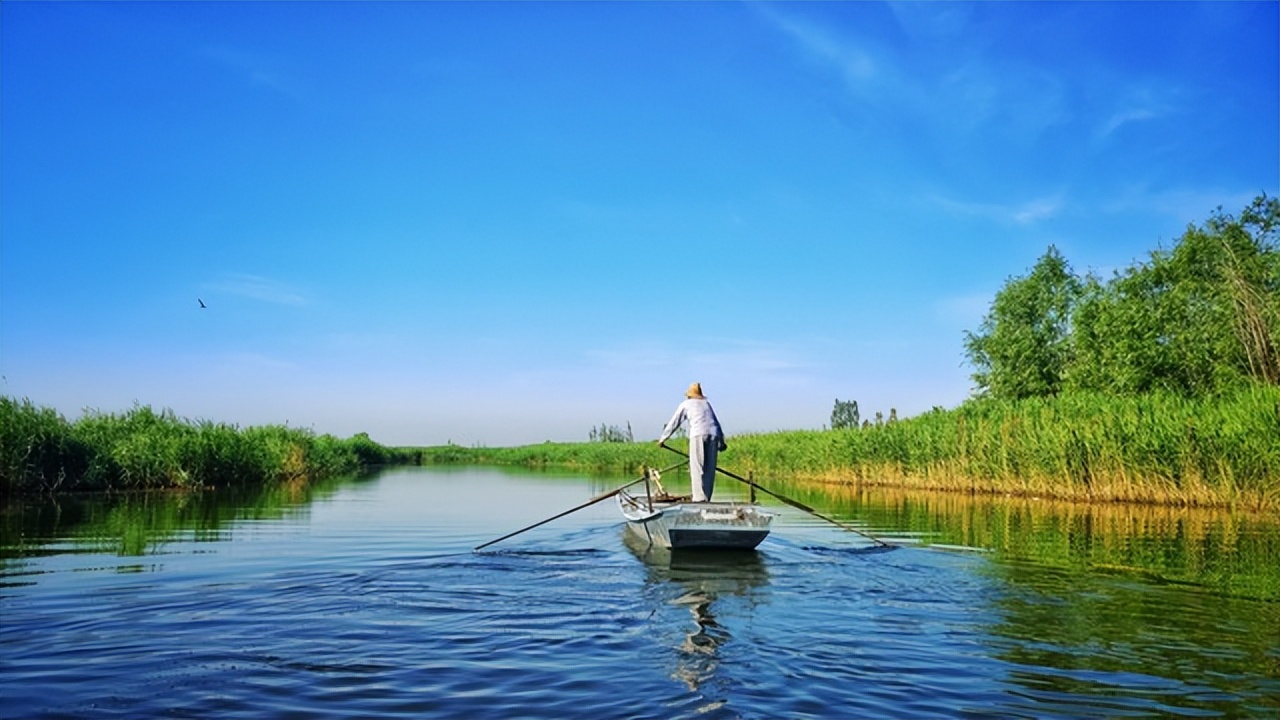
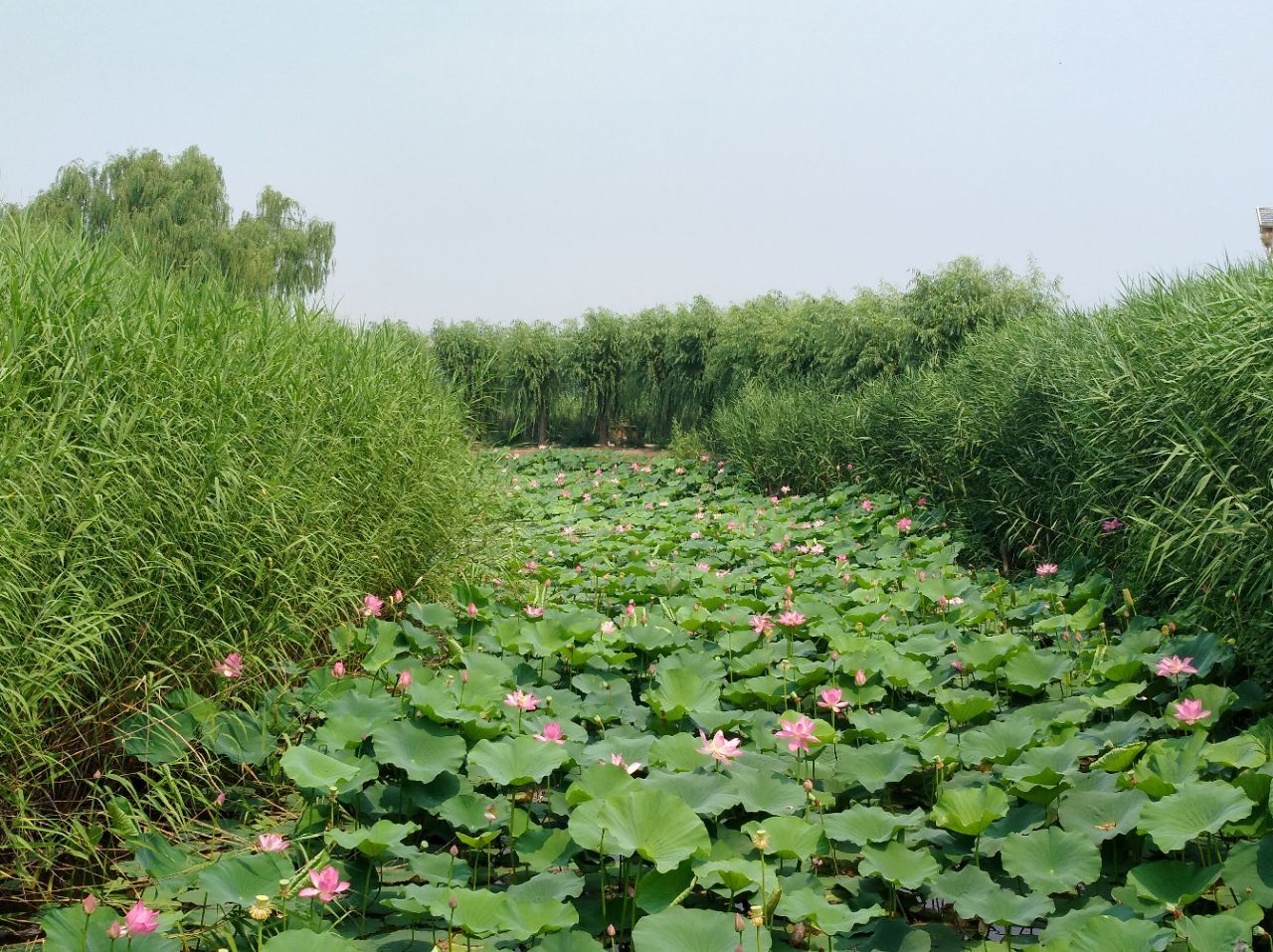
Hire a punt-style wooden boat at Anxin or Zaolinzhuang pier and glide through channels walled by six-metre reeds. The boatman poles, the water birds scatter — this is the wetland's oldest, loveliest ride.
In July and August, venders sell fresh lotus pods straight from the boats — crack the green shell and the white kernel is sweet and slightly grassy. Locals boil them for tea and stir-fry the stems as a crunchy summer dish.
Stay out until the light goes amber: reeds turned to gold, water villages lit one by one, and the whole marsh falling quiet. It is the hour the locals themselves wait for.
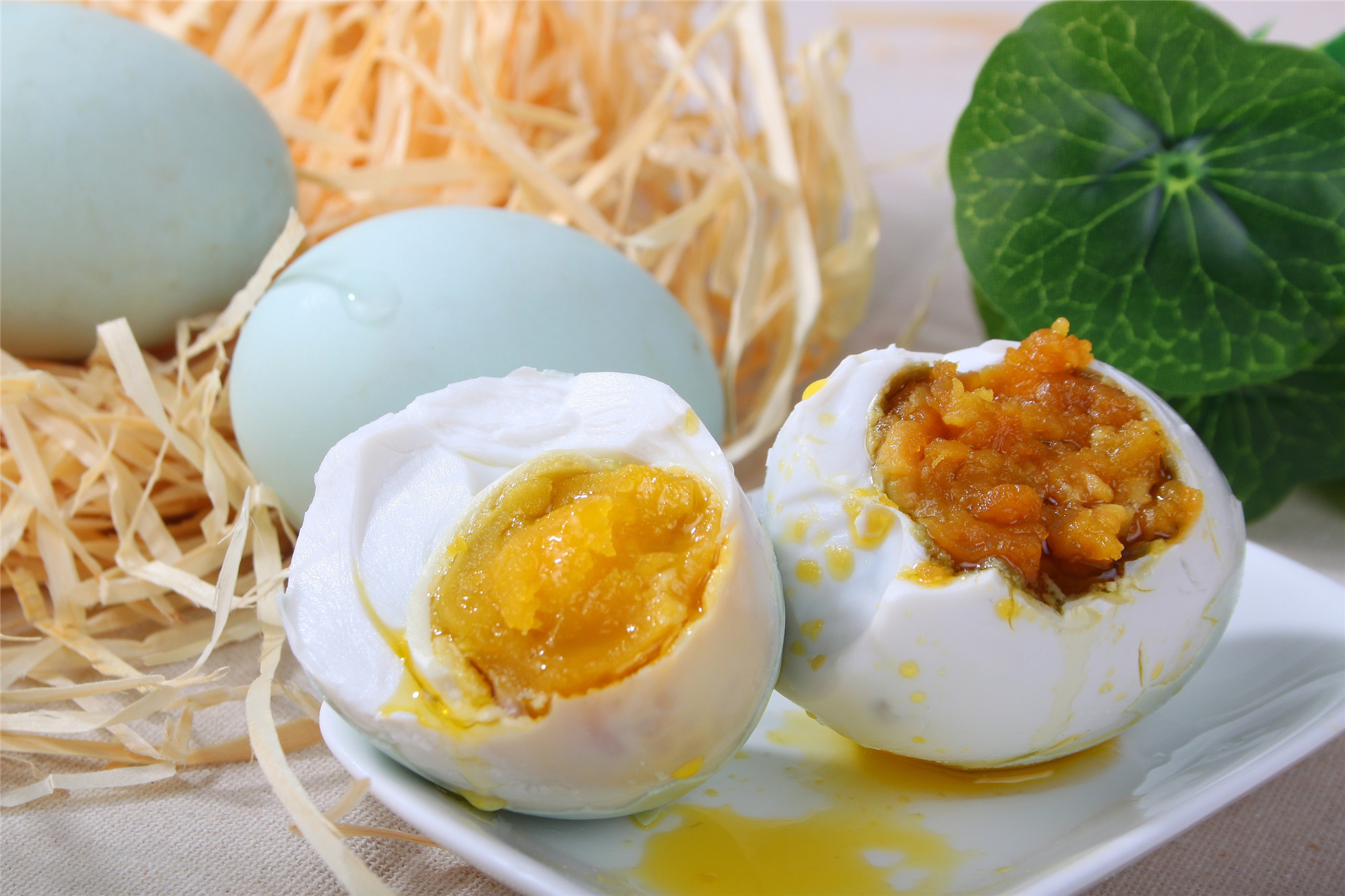
Free-range ducks of the marsh lay eggs whose yolks turn deep red-orange and ooze oil when salted — the souvenir of Baiyangdian, about ¥2 each in the villages.
The signature experiences of North China's best-known wetland.
Two thousand mu of managed lotus with more than 300 varieties — the strongest lotus photography in the wetland. Boardwalks carry you over the blooms, and the reed maze at the far end hides the water-village stage shows.
The classic Baiyangdian hour: a wooden punt, a boatman's pole, water lapping the hull and reed walls closing over you. Small boats sleep 6–8; speedboats do the same channels in a quarter of the time.
The marsh is at its best in low light — pink and orange skies over still water, wooden walkways stretching into the reeds. Photographers should plan for either dawn or dusk, never midday.
Whole-fish feasts, pot-side fish and corn cakes, lotus root salads, steamed river crab in season and the famous red-yolked salted duck eggs — honest village kitchens do them best, from about ¥30–50 per person.
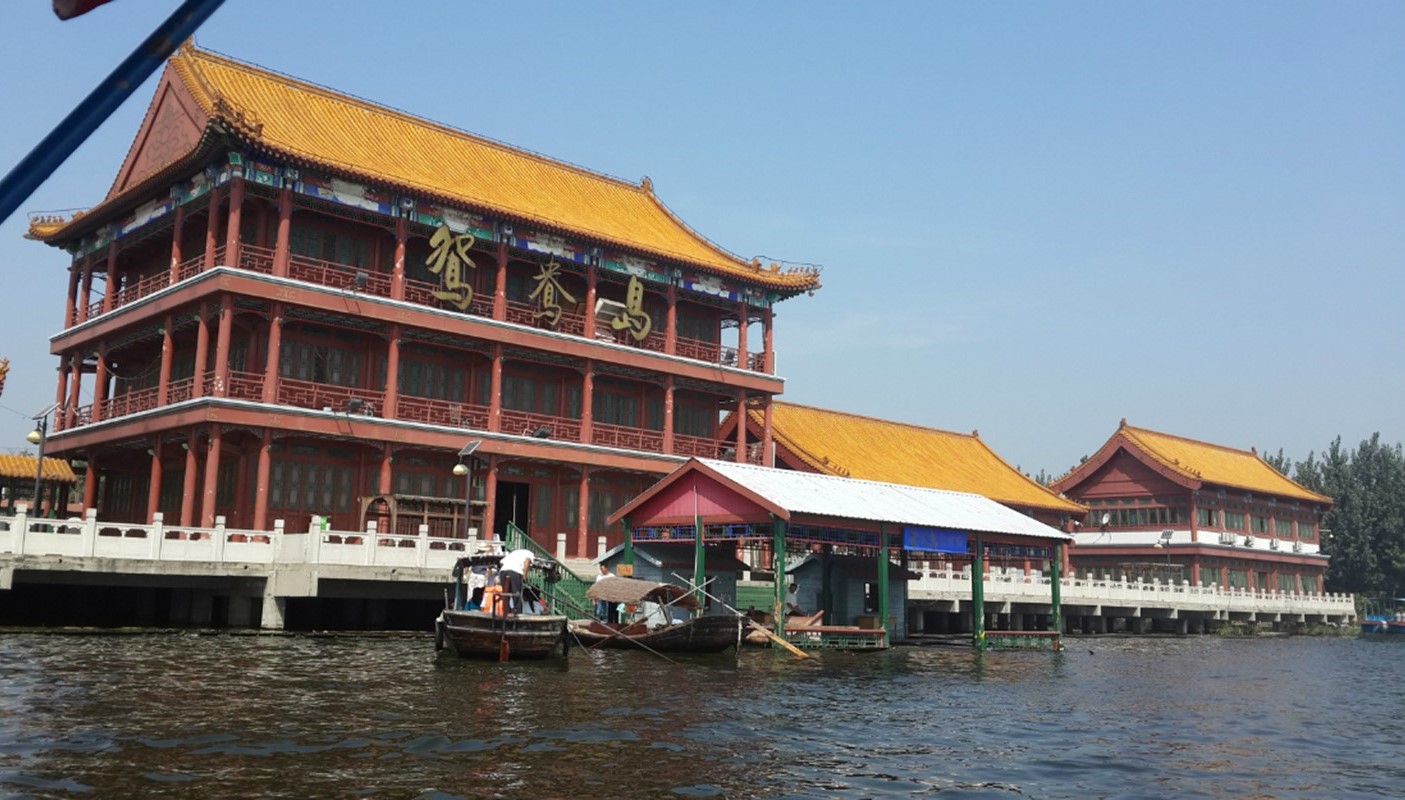
"China's island of love": a water village of halls, teahouses and performance stages ringed by reeds and lotus. Mandatory-duxie ducks bob beside the pier while shows run through the day.
The Yanling Detachment Memorial inside Baiyangdian Cultural Park tells the true story behind Little Soldier Zhang Ga — a guerrilla force that hid in these very reeds during the war and gave the marsh its heroic legend.
June to October suits the wetlands best. July and August are the lotus season, and late autumn turns the reeds golden. Summer is the classic escape from the Beijing heat; spring and winter are quiet and cheap. More Baiyangdian Q&A →
Almost everywhere, yes — the sights sit on islands among the reeds, and except for Yuanfei Lotus Garden you reach them by boat. Use the three main piers (Xiongxian Wenquancheng, Anxin and Zaolinzhuang); private boat touts at the docks are the area's best-known scam, so insist on official boats.
The entry fee is ¥30 (children ¥15). Wooden boats: ¥140 one person, ¥190 two, ¥270 three (6/8/14 passengers max); small speedboats ¥220 (7 people), large speedboats ¥320 (11 people), plus ¥2 each water insurance. Motorboats are limited to 6 hours, wooden boats 8.
River fish and crabs, lotus roots and seeds, smoked fish, braised duck and the red-yolked salted duck eggs. The whole-fish feast runs ¥30–50 per person; pot-side fish with corn cakes ¥20–40; cold wild lotus root ¥25. Steamed river crab is priced by season from August.
Yes — the Baiyangdian Lotus Festival runs through summer: "lotus emerging from water" in July, "a hundred li of lotus fragrance" in August, and "lotus moonlight" in September, when night cruises and lantern-lit reed villages take over.
Yes. Email [email protected] or message us on WhatsApp. Our team arranges hotels, boat tickets, island routes and guides — free of charge and without obligation.
The wetland's essentials in a single day. More Baiyangdian itineraries with tickets & transport →
Morning: leave Beijing around 7:00 (about 2 hours by coach or car), take an official wooden boat from Anxin pier through the reed channels to the Lotus Grand Garden. Lunch: a whole-fish feast at a village courtyard. Afternoon: the Baiyangdian Cultural Park and Yanling Detachment Memorial, then the boat back. Return: buses leave for Beijing until late afternoon — or stay for the sunset.
Islands, night markets and the fishing villages. Full itinerary page →
Water villages. Start at the Lotus Grand Garden, cross to Yuanyang Island for the shows, and finish with sunset from the reeds. Night: a stay in a fishing-village courtyard (book 3–4 days ahead, bring your passport).
Islands & markets. The remaining islands — Bao Island's water amusement park or the Fisherman's Paradise — then the village market for salted duck eggs, dried lotus seeds and reed-woven crafts before the return trip.
Wetland plus the Heroes of the Five Strong men. Full itinerary page →
Baiyangdian. The one-day route above; sleep at the wetland.
Langya Mountain (易县, about 50 km): climb the peak of the "Five Strong Men of Langya Mountain" and the wartime memorial, then the 2-hour coach back to Baoding or Beijing.
The main sights of the wetland, each with practical details. Prices are reference rates — always confirm at the gate or with our booking team.
The great marsh of the North China Plain: channels, islands and water villages woven through reeds and lotus. Every sight beyond the Yuanfei Lotus Garden is reached by boat, so the boat is the experience as much as the islands themselves.
| Admission | ¥30 (reference); children ¥15 |
| Hours | 08:00–18:00 |
| Address | Anxin County, Baoding, Hebei |
| Boats | Wooden ¥140/190/270 · Speedboats ¥220/320 · insurance ¥2 |
The wetland's flagship garden: five zones, four gardens, three harbours, two beaches and one artificial hill, with more than 300 lotus cultivars and the reed maze that leads to the water-village stage shows. The best lotus photography in Baiyangdian.
| Admission | ¥50 (reference) |
| Hours | 07:00–19:00 |
| Time | 2–3 hours |
| Phone | +86 312 5116 997 |
An 800,000 m² island park combining history and wetland scenery: the Yanling Detachment Memorial (the real story behind Little Soldier Zhang Ga), the Kangxi water palace, the bestowed Puen Temple and the reed-and-water fortress of the Luhua village.
| Admission | ¥50 (reference) |
| Hours | 08:00–18:00 |
| Time | 2–3 hours |
| Getting there | Boat from any main pier |
The wetland's entertainment island: halls, teahouses and performance stages ringed by reeds and lotus, with shows through the day and the Baiyangdian Windows pavilions — six halls and one garden of wetland culture.
| Admission | ¥20 (reference) |
| Hours | 08:00–18:00 (approx.) |
| Phone | +86 312 5116 352 |
A family-oriented island with Russian dance shows, tiger shows, cormorant fishing demonstrations and stunt rides — loud, cheerful and very popular with children.
| Admission | ¥40 (reference) |
| Hours | 08:00–18:00 (approx.) |
| Phone | +86 312 5115 729 |
| Best for | Families, rainy-day cover |
July to September: "lotus emerging from water" in July, "a hundred li of lotus fragrance" in August, and "lotus moonlight" in September — night cruises, lantern-lit reed villages and lotus-flavoured snacks across the marsh.
Wooden punts (¥140/190/270) for slow hours among the reeds, speedboats (¥220/320) for the long island loops. Hire by the boat, not by the head, and always from the official piers.
Inside the Cultural Park: the guerrilla force that hid in these reeds during the war, told through photographs, weapons and dioramas — the real story behind Little Soldier Zhang Ga.
Whole-fish feasts, steamed crab in season, lotus root salads and corn cakes served in village courtyards — the honest, home-cooked version of the wetland table, about ¥30–50 per person.
Most visitors sleep in the fishing-village courtyards or one of the lakeside resorts. Book 3–4 days ahead in summer — and carry your passport for check-in. Our team books any of these free of charge.
The authentic stay: family-run courtyards on the village islands with home cooking, boat pick-up and reed-shaded yards. From ¥50 budget rooms to ¥400 family suites. Book 3–4 days ahead in summer; passport required.
A comfortable lakeside resort with its own dining and easy boat access. Phone +86 312 5110 999.
A 3-star hotel with hot-spring baths — the comfortable, city-standard option. Phone +86 312 5117 337.
A water-village resort on the marsh with boat moorings and lakeside rooms. Phone +86 312 6386 001.
The wetland table is simple and honest: whatever swims or grows in the marsh, cooked in village kitchens. Prices are reference rates.
The signature spread: river fish cooked a dozen ways — braised, steamed, in soup, fried whole — served with lotus-root salads and corn cakes. ¥30–50 per person at village restaurants.
"One-pot freshness": small river fish stewed with the big iron pot's heat, with corn cakes baked on the pot wall. ¥20–40 a serving — the comfort food of the marsh.
A well-known courtyard kitchen at Guolikou village serving mixed-fish dishes and the full wetland menu. Phone +86 312 5129 777.
By the pier parking lot, handy before or after the boat trip — clean, busy and strong on crab in season. Phone +86 312 5116 288.
Baoding is 1.5 hours from Beijing, Tianjin and Shijiazhuang by high-speed rail; from Baoding station, bus 1 to the coach centre connects to Anxin.
Direct coaches run to Anxin from Beijing, Tianjin and Shijiazhuang; Baoding–Xiongxian coaches cost about ¥24 per person.
All three cities drive to the marsh in 2–3 hours. Beijing routes run 162/190/170 km via three expressway lines; Tianjin 160/170 km; Shijiazhuang 197/187 km.
Short hops between the town, coach stops and piers are easy by taxi or three-wheeled tricycle — agree the fare before boarding.
Almost every sight sits on an island — wooden boats, speedboats and water taxis carry visitors between piers, gardens and villages all day.
On the islands, everything is walkable: boardwalks over the lotus, village lanes, fish markets and courtyard restaurants sit within a short stroll of each pier.
Red-yolked salted duck eggs (about ¥2 each) — the marsh's most famous export, best bought in the villages. Red and white lotus seeds (about ¥2 a pack) for tea and cooking. And reed-woven art — pictures, baskets and mats plaited from marsh reeds, sold at the islands and village markets.
Village markets at Anxin and Zaolinzhuang sell eggs, seeds, dried fish and reed crafts; the island sight shops add the tourist-standard souvenirs. Buy eggs by weight and check for cracks — the redder the yolk, the better the bird.
There are no ATMs inside the scenic area — bring enough cash for tickets, boats and meals before you leave the town. Cards work at the big resorts but not on the islands.
Anxin County Hospital — +86 312 5322 604. Anxin Maternity & Child Health Hospital — +86 312 5203 120. Emergencies: 120 (ambulance), 110 (police). For bookings, email [email protected] or WhatsApp our team any time.
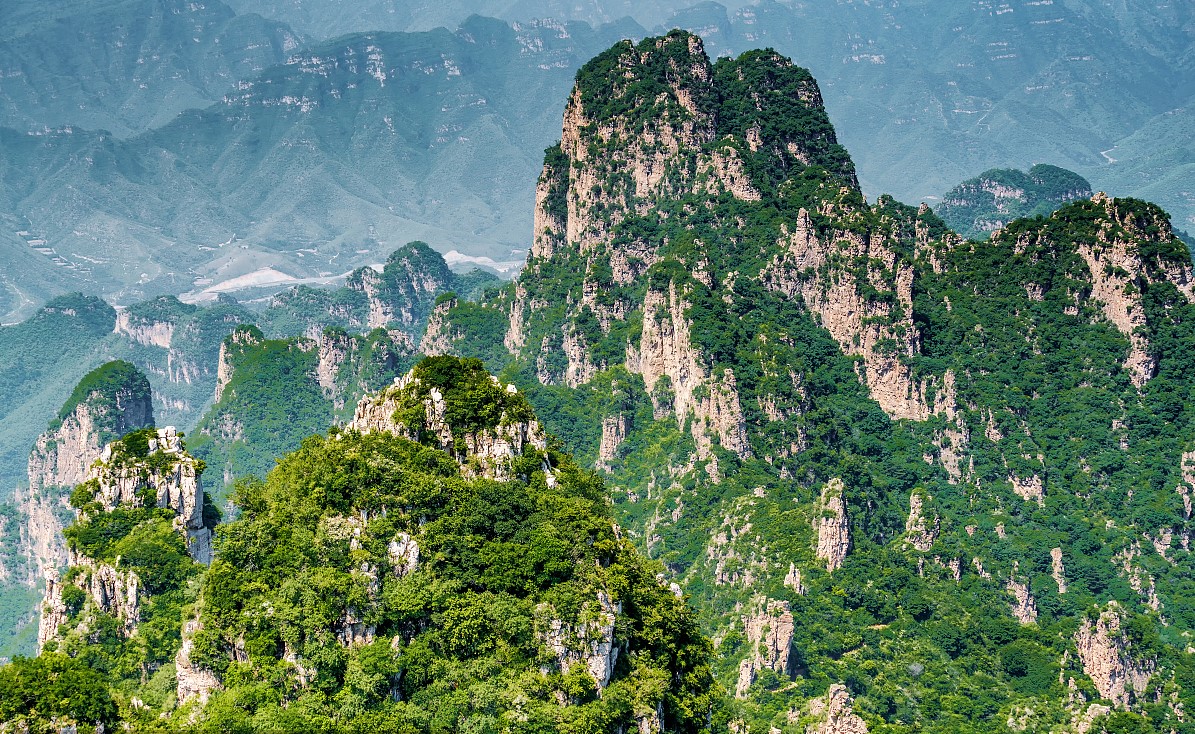
About 50 km from Baiyangdian in Yixian: the jagged peak made famous by the Five Strong Men of Langya Mountain, who leapt from its cliff in 1941 rather than surrender. The climb and the wartime memorial make a moving second day.
Langya Mountain guideFrom Baiyangdian, the rest of Hebei opens up: the imperial tombs of Qingxi near Yixian, the lakes of Baoding, and the Great Wall coast of Qinhuangdao further east — each a day or two by road or rail.
Browse Hebei sightsSummer weekends fill fast — reserve 3–4 days ahead, carry your passport, and ask the host to meet you at the pier. October 1st week is packed; plan well ahead.
Private touts at the docks overcharge and underdeliver. Take the official boats from the three main piers, agree the route, and keep the ticket.
Boatmen get commissions from some island restaurants. If the boatman recommends one strongly, ask the price first — village kitchens outside the commission loop are often better and cheaper.
No ATMs on the islands. Bring cash for tickets, boats, meals and souvenirs — cards are accepted at the big resorts only.
Summer sun on open water is fierce — sunscreen, a hat and repellent are essential. Autumn evenings on the boats turn cool; add a light layer.
Baiyangdian sits in a shallow basin on the North China Plain, its 366 km² of reed marsh and lotus water fed by nine rivers. The climate is temperate and semi-arid — about 12°C annual average, with May to September the green season and the reeds turning gold by late October.
Local lore says an emperor once fished the marsh and the nets came up empty, yet the water was full of fish — hence the name "Baiyangdian" (the lake that yields). Its deeper fame is wartime: the Yanling Detachment guerrilla force hid in the reeds, and the writer Sun Li's Records of Baiyangdian founded the "Lotus Lake School" of Chinese literature.
The children's classic Little Soldier Zhang Ga was set in these villages — the marsh's reed mazes and water villages have carried its heroic tales into Chinese popular culture for generations.
Everything on ToursChinaTravel is bookable through our team by email or WhatsApp. Here's where each part of your Baiyangdian trip lives on the site.
Star-rated sight details — hours, tickets, phones and tips for every Hebei attraction.
Browse Hebei sightsStar-rated hotels across Hebei — sorted by rating, all bookable by our team.
Book a Hebei hotelRoutes, airlines and schedules for Beijing, Baoding and the Beijing–Shijiazhuang corridor.
See China flightsLicensed agencies with addresses, phones and booking contacts for wetland and mountain tours.
Find a Hebei agencySalted duck eggs, lotus seeds, reed crafts and the region's other local produce.
Browse Hebei specialtiesBeidaihe, Qinhuangdao, Shanhaiguan, Yesanpo and more — city by city, in one place.
Browse all guides