Xi'an and the Terracotta Army: Complete Visitor's Guide
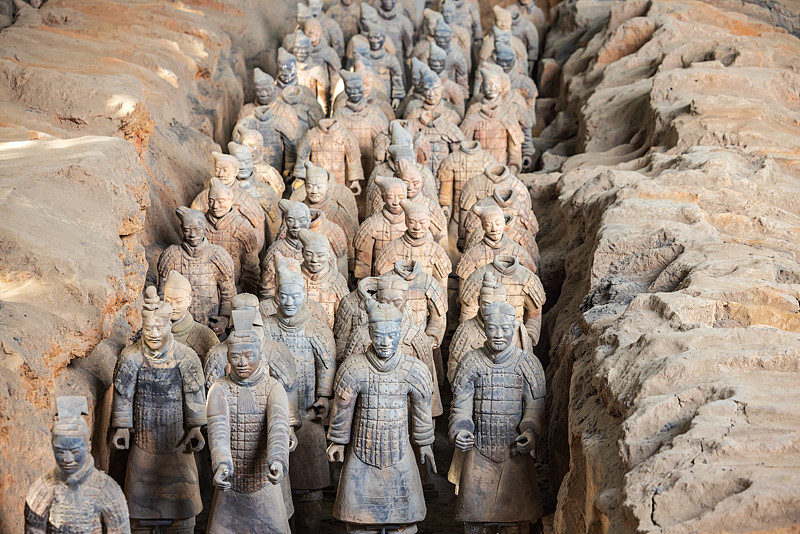
The Terracotta Army — 8,000 life-size clay soldiers standing in underground pits for 2,200 years, each face unique, each destined to guard the tomb of China's first emperor, Qin Shi Huang — is the archaeological discovery of the twentieth century and the single most astonishing sight in China. It is also, once you know how to visit it well, a wonderfully manageable day trip from the ancient capital of Xi'an. This guide covers everything: booking tickets, getting there, what to see pit by pit, the surrounding sights, and how to spend two perfect days in Xi'an.
Planning Your Visit: Tickets and Timing
The Terracotta Army site (officially the Emperor Qinshihuang's Mausoleum Site Museum) opens at 08:30 and closes at 17:00 (18:00 in summer). Tickets cost 120 RMB (peak season, March–November) and 120 RMB also in the low season since a 2023 price change — book online in advance through the official WeChat mini-programme or tour platforms, because same-day tickets sell out on weekends and holidays. Bring your passport; it is checked at the gate.
Timing strategy: arrive at opening (08:30) or in the late afternoon (15:00+), when tour groups are at their thinnest. The museum's worst hours are 10:00–14:00, when dozens of coaches disgorge synchronized crowds at the pits. A guide (official museum guides start around 150 RMB for a small group, or join an audio-guide rental at 30 RMB) genuinely adds context — the story of the discovery by farmers in 1974, the emperor's megalomaniac vision, the 40-year excavation still ongoing — but see the pits yourself first, quietly, before joining any tour.
Getting There: Three Routes from Xi'an
The Terracotta Army site lies 35 km east of Xi'an, roughly 45–60 minutes by road. Three ways to get there: the direct tour bus (游5/306 bus) from Xi'an Railway Station's east square — 7 RMB, leaves when full, the budget classic; a private car or Didi — 150–200 RMB each way, the comfortable option, bookable round-trip with your driver waiting; or an organized tour — the simplest, with guide, tickets and transport bundled (from 300 RMB), and the best option if you want the history explained without logistics.
Getting there early matters twice: once for the crowds, and once for the light — the pits' skylights pour daylight onto the clay warriors in the morning, and the sight of rank after rank of soldiers in natural light is the difference between a photo and a memory.
The Museum, Pit by Pit
The complex holds three pits plus the exhibition halls and the mausoleum mound. Pit 1 is the showpiece: a cavern the size of two football fields holding an estimated 6,000 warriors in battle formation — the front rows of archers, the infantry ranks, the war chariots with their bronze horses. You view it from a raised walkway; give it a full circuit, and look at the detail: the armour scales, the moustaches, the individually modelled shoe soles. The warriors were originally painted — traces of pigment survive on some — and each holds a real bronze weapon (originals are in the on-site museum; the ones in the ranks are reproductions).
Pit 2, still largely unexcavated, holds the army's elite: the famous kneeling archers, the cavalry with saddled horses, the general figure with his armour tassels — displayed in glass cases, and the closest you will get to the warriors' faces. Pit 3 is the command post: 68 warriors, a war chariot and the only pit with a complete ceiling structure, believed to be the army's headquarters. The Bronze Chariots and Horses hall, on the site's second floor, displays the two exquisite half-size bronze chariots (each made of 3,400+ parts) that are among the greatest bronze works ever found. Allow 3–4 hours on site, including the walk to the Qin Shi Huang Mausoleum mound at the complex's north end.
Xi'an Itself: The Ancient Capital You Should Not Rush
Xi'an was China's capital for over 1,100 years — the eastern terminus of the Silk Road, home to thirteen dynasties, and today a city that wears its history with extraordinary confidence. The city wall (Xi'an City Wall), the best-preserved in China, runs 13.7 km around the old city: rent a bicycle on top (45 RMB for 2 hours) and circle the moat at sunset, when the wall's lanterns light up — the single best introduction to the city. The Bell Tower and Drum Tower mark the old centre; the Muslim Quarter, behind the Drum Tower, is the food soul of Xi'an — lamb paomo (bread torn into lamb soup), roujiamo (the 'Chinese hamburger'), biang biang noodles, and grilled lamb skewers in clouds of cumin smoke.
The Big Wild Goose Pagoda (Da Ci'en Temple, 40 RMB) is Xi'an's other icon — a Tang-dynasty Buddhist pagoda with a musical fountain show in the plaza at night. The Shaanxi History Museum, one of China's great museums (free, book online days ahead) holds the dynasty relics — Tang gold, Han jade, the exquisite murals. And the Small Wild Goose Pagoda and the ancient Xi'an Mosque (one of China's oldest, in the Muslim Quarter) round out a city that rewards at least two full days.
Two-Day Xi'an Itinerary
- Day 1 — Terracotta Army in the morning (go early), return for the Muslim Quarter lunch (paomo, roujiamo), city wall bicycle at sunset, Bell & Drum Towers at night
- Day 2 — Shaanxi History Museum in the morning (book ahead), Big Wild Goose Pagoda and the Tang Paradise area, evening at the Muslim Quarter for skewers and biang biang noodles
- Optional Day 3 — Huashan, the sacred mountain 1.5 hours away (cable cars, plank walk), or the Han Yangling and Maoling tombs for deeper history
The Terracotta Army is the reason Xi'an lands on every China itinerary; the city itself is the reason travelers return. Between the warriors, the wall and the food, Xi'an delivers history at the scale of empires — and dinner at the scale of legends.
Xi'an Food: The Muslim Quarter and Beyond
Xi'an's Muslim Quarter — the warren of streets behind the Drum Tower, home to the city's Hui Muslim community for centuries — is one of the great food streets of Asia, and eating your way through it is the city's second essential experience. The signature dishes are wheat-based and lamb-heavy, the legacy of the Silk Road: yangrou paomo, where you tear flatbread into a bowl, hand it to the kitchen, and it returns as a rich lamb soup with the bread swelling into dumpling-like pieces; roujiamo, the 'Chinese hamburger' — braised pork or beef stuffed into a crisp sesame flatbread, at its best from the shops on the quarter's north edge; biang biang noodles, hand-pulled ribbons as wide as belts, dressed with chilies and garlic; and liangpi, cold wheat noodles in chilli oil, the perfect summer lunch.
The quarter's layout: the main Beiyuanmen street is the tourist spine (crowded, fun, a good first pass); the side lanes — Xiyangshi, Dapiyuan and the streets toward the Great Mosque — hold the real food, where locals queue. Do not miss: grilled lamb skewers (chuan'r) cooked over charcoal in clouds of cumin smoke, rose-flavoured rice cakes, pomegranate juice (the city's symbol), and the 'Sanzhilou' dumpling banquet if you want the sit-down classic. Hygiene is generally good; choose stalls with high turnover and freshly cooked food, as you would anywhere.
Drinking culture: Xi'an's tea is 'fu cha' (brick tea) and the local soft drink is ice-cold pomegranate juice; the night market version of the quarter is livelier and worth a second visit after dark, when the skewer smoke and the call to prayer from the Great Mosque create a street atmosphere unlike anywhere else in China.
Xi'an's Silk Road Story: Why This City Matters
To understand Xi'an — and the Terracotta Army's emperor — you need the city's backstory. As Chang'an, it was the eastern terminus of the Silk Road, the greatest city in the world during the Tang dynasty (population over a million when London was a village), and the capital of thirteen dynasties spanning more than 1,100 years. The cosmopolitanism that made it great is visible everywhere: the city was home to Persian merchants, Nestorian Christians, Buddhist pilgrims and Korean scholars; the Tang rulers welcomed the world, and the city's markets traded in silk, spices, horses and ideas.
Qin Shi Huang, the First Emperor, unified China in 221 BC from this region, standardized the script, weights and axle widths, and then built his mausoleum — guarded by the clay army — with a workforce of 700,000. The terracotta warriors were not meant to be seen: they were buried facing east, toward the empire he had conquered, to serve him in the afterlife. Their discovery in 1974 by farmers digging a well turned a local legend into the archaeological sensation of the century, and the pits remain only partially excavated — the emperor's tomb itself, beneath a 76-metre mound, has never been opened.
For the deeper story, visit the Shaanxi History Museum (the Tang gold and the murals), the Han Yangling Mausoleum (the Han dynasty's own miniature terracotta army, in situ and beautifully presented), and the City Wall, which stands on the foundations of the Tang walls. And the night view from the wall's south gate, over the lantern-lit old city, is the closest you will get to walking through Chang'an's golden age.
Xi'an Logistics: Airport, Rail and Getting Around
Xi'an Xianyang International Airport is 40 km northwest of the city; the airport metro (Line 14) reaches the North Railway Station in about 30 minutes, and taxis or Didi cost 100–150 RMB to the centre. The high-speed rail station (Xi'an North) connects Beijing (4.5 hours), Chengdu (3.5–4 hours), Luoyang, Zhengzhou, Wuhan and Guangzhou; the old Xi'an Railway Station in the city serves conventional trains including sleepers. For the Terracotta Army, the 游5 bus leaves from the old station's east square; Didi is the comfortable option.
Around town, the metro (four lines and growing) covers the wall, the Bell Tower, the Muslim Quarter and the railway stations; the old city inside the walls is walkable, and bicycles on top of the wall are the essential ride. Taxis are metered and honest; Didi is cheaper. And the airport's 'Silk Road' lounge area, on the mezzanine, is genuinely lovely for a final tea before departure.
Where to Stay in Xi'an
The two classic bases: inside the city wall (the old city) — the Bell Tower area and the Muslim Quarter edge — for atmosphere, food and walking distance to everything old; and the Qujiang district, south of the wall, around the Big Wild Goose Pagoda, for modern hotels, the Tang Paradise and a calmer, wider streetscape. Budget travelers find the hostels and guesthouses in the old city's courtyards; mid-range and luxury hotels cluster near the Bell Tower and in Qujiang. For the Terracotta Army morning, the hotels near the 游5 bus terminal (old station) and the Wujingxiang courtyard hotels are the practical picks.
Whatever you choose, book central and book early — Xi'an is one of China's most visited cities and good hotels vanish in season. Our Xi'an Travel Guide and the Shaanxi hotel pages cover the full range.
The Terracotta Army in Detail: History and Discovery
The story begins in March 1974, when farmers from the village of Xiyang digging a well 1.5 km east of the Qin Shi Huang mausoleum found fragments of baked clay — a warrior's torso, bronze arrowheads, roof tiles. The county authorities alerted archaeologists, and the excavation revealed the greatest funerary complex ever built: an estimated 8,000 soldiers, 130 chariots, 670 horses and 40,000 bronze weapons, arranged in battle order for the afterlife of China's first emperor. The warriors average 1.8 metres tall, weigh 110–300 kg each, and — the detail that makes them uncanny — every face is individual: 8,000 different faces, modelled on the real soldiers of the Qin army, with hairstyles, armour types and ranks encoded in the details.
The emperor himself remains the mystery at the heart of the site. Qin Shi Huang (259–210 BC) unified China, standardized writing, currency and measurements, connected the walls that became the Great Wall, and built the empire's road network. He sought immortality with the obsession of a man who knew he would not find it — sending expeditions for elixirs, and preparing a tomb complex that mirrors his empire: the Sima Qian records say the tomb contains a ceiling of celestial jewels, rivers of mercury (confirmed by soil analysis), and booby-trapped crossbows. The mound has never been opened; the Terracotta Army, facing east, was the army he would command in the afterlife. The scale is the message: no other ruler in history prepared for death on this scale.
For the full context, pair the pits with the Shaanxi History Museum's Qin galleries and the Han Yangling Mausoleum — the Han emperor's own miniature army, with 3,000 terracotta figurines each the size of a hand, a quieter and equally moving counterpart. The story of the warriors is not just ancient history; it is the origin story of the Chinese state.
Xi'an Day Trips: Huashan, Han Yangling and the Tang Capital
With a third day, Xi'an's surroundings reward exploration. Huashan, the sacred western mountain 120 km east, is China's most dramatic peak: five granite summits connected by vertiginous cliff walks, including the famous 'Plank Walk in the Sky' — a 60 cm boardwalk bolted to a vertical cliff, with a safety harness for the brave. The cable car from the east side reaches the north peak in about 15 minutes; the summit walks and the sunrise (many travelers hike up at night) are the legends. Half a day with the cable car is enough for the experience; a full day allows the peak circuit.
Han Yangling, 20 km north of the city, is the atmospheric alternative: the tomb of Emperor Jingdi (the Han dynasty), with its excavated burial pits shown in situ — ranks of miniature terracotta animals, servants and warriors arranged as they were buried 2,100 years ago, viewed from glass walkways over the pits. Less crowded than the Terracotta Army and far more intimate, it pairs beautifully with the main site. And for Tang-era history, the Qianling Mausoleum (the joint tomb of Emperor Gaozong and Empress Wu Zetian, with the famous 'headless' stone statues) and the Famen Temple (with its legendary Buddhist relics) are the deeper-archaeology day trips, each about 2 hours from the city.
All three are doable as day trips with early starts and private cars; our Xi'an itineraries and day-tours pages include transport details and booking links.
Photographing the Terracotta Army and Xi'an
The Terracotta Army is a photography challenge worth preparing for: the pits are dimly lit, the walkways are crowded, and flash is (rightly) banned. The winning approach: arrive at opening, go straight to Pit 1, stand at the east end (where the ranks face you), and shoot with a wide lens at f/2.8 or wider, pushing the ISO — the natural light from the skylights gives the warriors their best colour in the first hour. A polarizer helps cut the glass reflections. For faces, Pit 2's glass cases hold the kneeling archers and the general — shoot at a low angle to avoid reflections, or wait for the guards to rotate. And the site's exterior, with the mausoleum mound against the morning light, is an underrated shot.
In the city, the wall at sunset from the south gate, the Bell Tower from the street crossing at blue hour, and the Muslim Quarter's skewer smoke at night are the money shots. Drones are restricted in the city and banned at the pits; a telephoto on the wall and a fast prime in the quarter will cover everything. And the human picture — a warrior's face in profile, lit from the skylight — remains the one that stops every viewer.
Xi'an at a Glance: A Compact City Guide
For planning, here is Xi'an in one place. Weather: four real seasons — spring (March–May) mild with occasional dust, summer (June–August) hot and dry, autumn (September–November) the golden season, winter (December–February) cold but rarely freezing. Language: Mandarin, with the Shaanxi dialect flavour; English is limited outside tourist areas, so the translation-app-plus-Chinese-characters kit is essential. Money: Alipay and WeChat Pay everywhere, cash for markets and the Muslim Quarter's smallest stalls. Transport: metro lines cover the wall, the Bell Tower, the Muslim Quarter and both railway stations; taxis are metered; Didi is reliable. Safety: Xi'an is safe, day and night, by any standard; the only real caution is the standard tourist vigilance in crowded markets.
The city's layout is simple: the old city inside the wall (Bell Tower at the centre, Muslim Quarter northwest, city wall encircling), the modern districts south (Qujiang, around the Big Wild Goose Pagoda) and the industrial north (where the train stations and airport connect). Two full days inside the wall, one day for the Terracotta Army, and optional day trips to Huashan or the Han tombs give a complete Xi'an; the city rewards exactly that pace.
Booking and Money for Xi'an: The Practical Summary
Book the essentials in advance: the Terracotta Army tickets (official channels or platforms), the Shaanxi History Museum's free entry (it books out days ahead), the city wall bicycle slot on weekends, and hotels (Xi'an fills in season). Money is the standard China kit: Alipay with an international card for nearly everything, WeChat Pay as backup, 500 RMB in cash for the Muslim Quarter's smallest stalls and the markets. Exchange at banks or hotels rather than airports; ATMs at Bank of China and ICBC accept foreign cards. And remember Xi'an is on Beijing time — no jetlag adjustment within China.
For the Muslim Quarter and the markets, bargaining is expected at souvenir stalls (offer 60–70% of the asking price, settle around 80%), fixed in shops and restaurants. The city's small scams are gentle — 'free' calligraphy, overpriced tea ceremonies, and fake jade in tourist shops — and all avoidable by buying nothing at guided stops and sticking to fixed-price shops for anything valuable.
Frequently Asked Questions
How much does it cost to visit the Terracotta Army?
Entry is 120 RMB (peak and low season). A private car transfer costs 150–200 RMB each way; organized tours start around 300 RMB including transport and guide. Audio guides rent for about 30 RMB, official human guides around 150 RMB.
How long do you need at the Terracotta Army?
Allow 3–4 hours: Pit 1, Pit 2 and Pit 3, the Bronze Chariots hall, and the mausoleum mound. With transport from Xi'an, plan on half a day (08:30–14:00) if you want a relaxed visit.
What is the best time to visit the Terracotta Army?
Arrive at opening (08:30) or after 15:00 to avoid tour groups. Weekdays are far quieter than weekends; avoid Chinese holidays entirely. Morning light in Pit 1 is the best for photography.
Can I visit the Terracotta Army without a tour?
Yes — the 游5/306 bus from Xi'an Railway Station runs direct for 7 RMB, or use Didi (150–200 RMB each way). Tickets are bookable online in advance. A guide adds historical context but is not required.
What else should I see in Xi'an?
The city wall (cycle the 13.7 km circuit), the Muslim Quarter for food, the Shaanxi History Museum (free, book ahead), the Big Wild Goose Pagoda, and — with an extra day — Huashan mountain, 1.5 hours by rail.
Plan this trip with our China team
Tickets, hotels, trains and local arrangements — free booking help, reply within hours.