Jiuzhaigou Travel Guide: The Fairy Tale Valley, Planned Perfectly
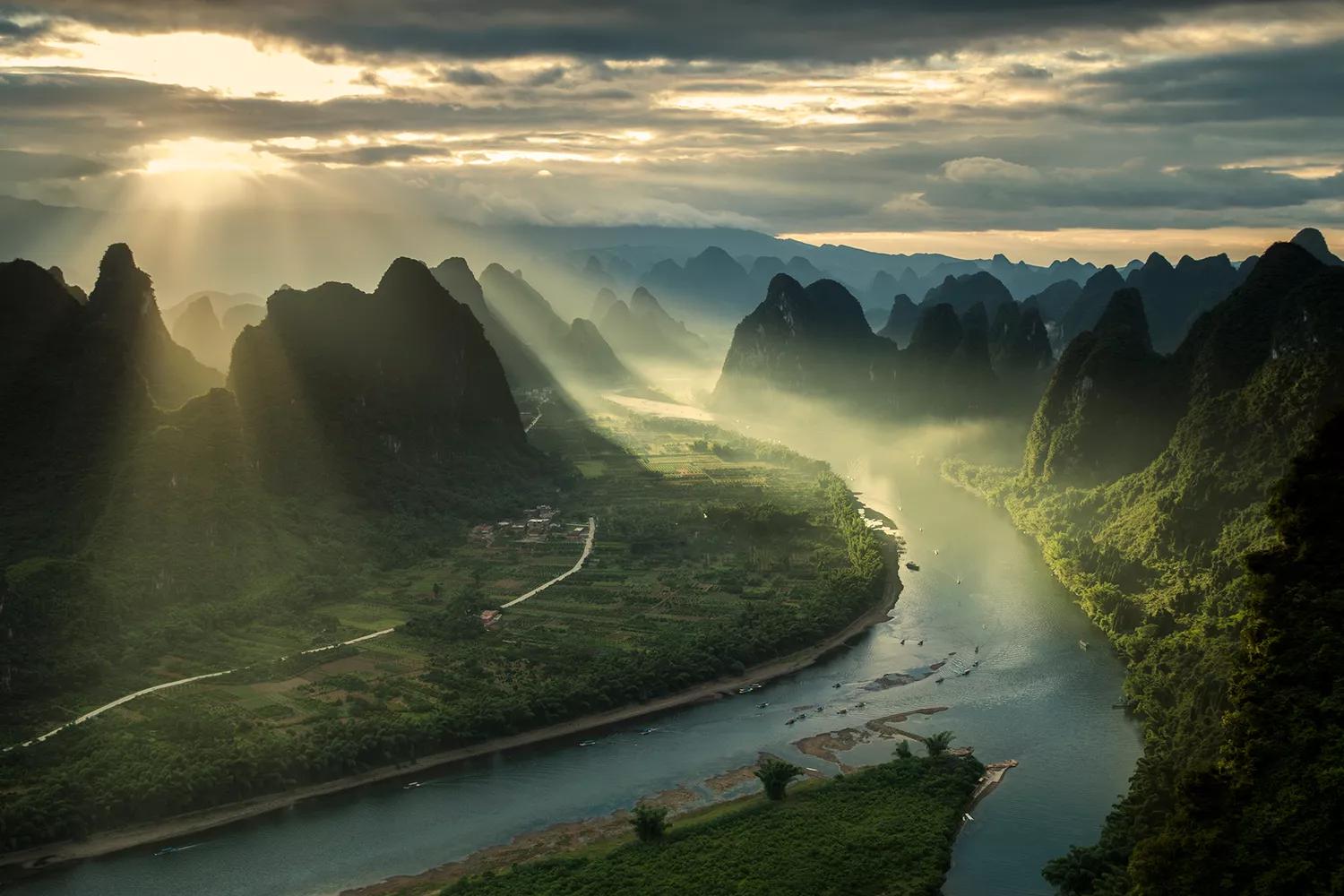
Jiuzhaigou — the 'Valley of Nine Villages' — is China's most beautiful natural park and one of the most extraordinary landscapes on Earth: a high valley of turquoise travertine lakes, terraced waterfalls, snow peaks and primeval forest, named a UNESCO World Heritage Site in 1992 and protected as a national park since 1982. The valley's colors — the impossibly blue-green lakes, the crystal water over the white travertine — have earned it the nickname 'the fairy tale world', and the name is not exaggeration: the lakes shift through jade, turquoise and sapphire with the light, and the valley's silence, broken only by the waterfalls and the birds, is the rarest luxury in Chinese travel. This guide covers the essential planning — the valley's layout, the routes, the seasons, the costs and the altitude — so the fairy tale arrives exactly as promised.
The Valley, Explained: The Three Great Routes
Jiuzhaigou is a Y-shaped valley of three arms meeting at the Nuorilang centre: the Shuzheng Valley (the western arm, the park's entry side, with the first lakes and the famous Nuorilang Falls), the Rize Valley (the eastern arm, the park's richest — the Five Flower Lake, the Pearl Shoal, the Arrow Bamboo Lake), and the Zechawa Valley (the longest arm, the highest, ending at the Long Lake at 3,100 metres and the Five-Color Pond). The park's shuttle buses (included in the entry) run the whole system, the boardwalks cover the lakes' edges, and the classic strategy is to take the shuttle to the far end of each arm and walk back down the boardwalks — the waterfalls and the lakes are best seen descending. The three arms divide the visit naturally: two full days (one for the Rize and the Zechawa, one for the Shuzheng and the slower second pass) or one intense day (the shuttle express through all three — possible, but the valley rewards the slower version).
The Signature Sights: What Not to Miss
The valley's icons, in the order the routes deliver them: the Nuorilang Falls (the widest travertine waterfall in the world — 320 metres of white water over the terraced rock, the valley's thunder); the Five Flower Lake (the Rize arm's jewel — the fallen tree trunks in the crystal water, the shifting blue-green-gold depths, the most photographed lake in China); the Pearl Shoal (the kilometre of water sliding over the travertine — the 'pearls' of the spray in the sun); the Long Lake (the Zechawa arm's great still sheet at 3,100 metres — the valley's highest and deepest water, the snow peaks on its far shore); the Five-Color Pond (the tiny perfect pool below the Long Lake — the most intense colors in the park); the Panda Lake and the Arrow Bamboo Lake (the upper Rize arm's mirrors); and the Shuzheng lakes' chain (the first valley, the villages and the mirror-still waters at dawn). Each is a postcard; together they are the valley's argument — that water, stone and light, arranged by nature, outdo every art.
Best Time to Visit: The Four Seasons of the Fairy Tale
Jiuzhaigou's seasons each rewrite the valley, and the calendar matters more here than almost anywhere in China. Autumn (late September–November) is the legend: the gold and red foliage over the turquoise lakes — the valley's most famous face, and its busiest (the peak falls mid-October; book everything early and go on a weekday). Winter (December–March) is the secret: the frozen lakes, the ice falls and the snow silence — the valley nearly empty, the colors muted and magical, the entry discounted (the park stays open; the high boardwalks close in deep snow). Spring (April–May) is the thaw: the water rising, the trees greening, the crowds thin. Summer (June–August) is the green full season: the waterfalls at their fullest, the valley cool against the Sichuan summer, the crowds significant. The honest advice: the autumn foliage is worth the crowds once; the winter and the early spring are the connoisseurs' windows; and the Chinese holidays (National Day above all — the valley's worst week) are to be avoided at all costs.
Getting There: The Journey Is Part of the Experience
Jiuzhaigou's remote location is the price of its purity, and the access has three forms. The flight: Chengdu–Jiuzhaigou Huanglong Airport (40–60 minutes, 800–1,400 RMB, with the morning flights the reliable ones) — the airport sits at 3,448 metres (the altitude hits on landing; the valley's 2,000–3,100 metres is gentler), and the 1.5–2 hour drive down to the park is itself a mountain spectacle. The road: the Chengdu–Jiuzhaigou highway (7–9 hours by bus or car through the mountains — long, winding and beautiful, with the Songpan grasslands on the route); and the new high-speed-era rail connections (the Chengdu–Huanglong–Jiuzhaigou railway's opening stages) are shortening the journey year by year. The organized tours (the 3-day Chengdu–Jiuzhaigou packages, 1,500–2,500 RMB including transport, hotels and the entry) handle the logistics for the first-timer; the independent traveler flies in and takes the airport shuttle or the private car. The one rule: the valley's altitude and the mountains' weather make the flexible itinerary (and the travel insurance) worth their weight.
Costs and Practicalities: The Honest Numbers
Jiuzhaigou's costs are the honest mirror of its fame. The entry: 169 RMB in the high season (April–November), 80 RMB in the winter low season, with the mandatory shuttle bus (90 RMB high season / 80 low) included in the ticket — the combined ticket is the only way to visit, and the online booking (the official platform, 3–7 days ahead in the seasons) is essential. The hotels: the park's entrance village (Zhangzha) holds the full range — the budget guesthouses 150–300 RMB, the mid-range 300–600, the few high-end properties more; the nearest town (Jiuzhaigou town, 15 minutes) adds the options. The food: the local Sichuan and Tibetan cooking (the yak, the mountain vegetables, the hotpot) runs 50–100 RMB per person. The complete 2-day visit: 1,200–2,000 RMB per person excluding the flight. And the altitude: the valley floor runs 2,000–2,400 metres (mild; the walkers notice the breath), the Long Lake 3,100 (the standard precautions apply — hydrate, go slowly), and the airport's 3,448 the real test (land gently, breathe, and descend to the valley for the relief).
A Perfect 2-Day Jiuzhaigou Plan
| Day | Plan | Notes |
|---|---|---|
| 1 | Rize Valley: shuttle to the Arrow Bamboo Lake, walk down through the Five Flower Lake, the Pearl Shoal, the Nuorilang Falls | The Rize arm's masterpieces |
| 2 | Zechawa Valley: Long Lake and the Five-Color Pond; then the Shuzheng arm's lakes and villages; the Nuorilang second pass | The high arm + the first valley |
The two-day plan gives each arm its full day — the Rize's lakes descending through the boardwalks, the Zechawa's high still water, and the Shuzheng's first-valley chain — with the Nuorilang as the connective thunder. The single-day express (the shuttle to the far ends, the boardwalks down, the Nuorilang at midday) is possible for the tight schedule but the valley's colors reward the slower water. The add-ons: the Huanglong valley (the sister park, 2 hours away — the golden travertine terraces, the 'Yellow Dragon' pools, a separate stunning day) and the Songpan grasslands on the road from Chengdu.
The Final Word: The Fairy Tale, Kept
Jiuzhaigou is the destination that makes travelers' descriptions sound like exaggeration — until they go. The turquoise lakes that look Photoshopped are real; the silence under the waterfalls is real; the autumn gold over the jade water is real; and the valley's protection — the boardwalks, the shuttle system, the careful limits on visitors — has kept the fairy tale intact. Between the Five Flower Lake's depths, the Nuorilang's thunder and the Long Lake's high stillness, the valley delivers the rarest gift in travel: a landscape that exceeds its photographs, and a silence that resets the soul. Come in the autumn or the winter, walk the boardwalks slowly, and let Jiuzhaigou make its case — the case that nature, protected and respected, is the greatest art China has.
The Story of Jiuzhaigou: Valleys, Villages and Protection
Jiuzhaigou's name — the 'Valley of Nine Villages' — remembers the Tibetan villages that lived in the valley for centuries before the park's creation, and the culture is part of the landscape. The valley's Tibetan communities (the remaining villages of the nine — the Shuzheng, the Heye, the Zechawa) built their watchtowers and prayer flags among the lakes, farmed the valley floors and named the waters with their own poetry — the 'Five Flower Lake' was the 'sea of the fallen tree', the 'Long Lake' the 'sea of the old dragon'. The park's modern story is China's conservation turning point: the logging that threatened the valley in the 1970s was stopped by the park's creation (1982, with the full protection and the UNESCO listing in 1992), and the management — the boardwalks, the shuttle system, the capped visitor numbers, the careful restoration after the 2017 earthquake — has made Jiuzhaigou the model of Chinese protected-area tourism. Walk the boardwalks with the villages' prayer flags in sight, and the valley tells its double story: the nature that made it, and the people who protected it.
Photographing Jiuzhaigou: The Color Science
Jiuzhaigou's colors are the photographer's obsession, and the science explains the art: the lakes' blues and greens come from the travertine (the calcium-carbonate deposits that coat the lake beds and scatter the light), the water's clarity from the mineral content (the lakes are among the clearest on Earth — the fallen trees are visible at ten metres), and the shifting hues from the light's angle and the sky's reflection. The photographic rules: the mid-morning light (09:00–11:00) flatters the lakes' colors (the sun high enough to light the travertine, low enough to keep the reflections); the still mornings give the mirror shots (the wind rises by late morning); the autumn foliage needs the overcast light (the colors saturate, the glare dies); and the Five Flower Lake and the Pearl Shoal are the tripod's prizes (the boardwalks' angles, the ND filters for the water's silk). The winter's ice and the spring's thaw add the empty-frame versions; and the drone is prohibited (the park's protection rules) — the boardwalks' heights are the allowed airspace, and they are the best in China.
Huanglong: The Sister Park, Worth the Second Day
The valley's natural companion is Huanglong — the 'Yellow Dragon' scenic area, 2 hours from Jiuzhaigou by road and often paired with it in the classic 3–4 day Sichuan itinerary. Huanglong is a different miracle: the golden travertine terraces — a 3.6-km chain of mineral pools, the 'Yellow Dragon' of the Chinese name, cascading down the mountain at 3,100–3,500 metres — with the Five-Color Pools at the summit the color climax. The practicals: the entry 170 RMB, the cable car (80 RMB) up and the walk down the terraces (the 3.6-km boardwalk, 2–3 hours, the altitude real at 3,500 — the standard precautions); the best light is the morning; and the season runs June–November (the winter closure is common). The pairing: Jiuzhaigou's lakes and waterfalls one day, Huanglong's terraces the next — the two parks are China's greatest natural double bill, and the combined visit is the standard 3-day package from Chengdu.
Jiuzhaigou FAQ: The Everyday Answers
Can I visit Jiuzhaigou in winter? Yes — the park stays open, the entry drops to 80 RMB, and the frozen lakes and the ice falls are the connoisseur's version; the high boardwalks may close in deep snow and the cold is real (dress for -10°C). Do I need to book ahead? The online tickets (entry + shuttle, combined) are essential in the seasons — book 3–7 days ahead, and the National Day week books out completely. Can I stay inside the park? The hotels are outside (the Zhangzha entrance village and the town); the park is a day-use area with the shuttle system, though the 2-day ticket allows the second entry. Is the valley accessible for less-mobile travelers? The shuttle system reaches the main sights and the boardwalks are well-built; the full arms involve real walking — the Long Lake's loop and the Five Flower Lake's boardwalks are the gentle choices. And the food: the entrance village's Sichuan and Tibetan cooking (yak, mountain vegetables, hotpot) is excellent and honest.
Sichuan's Other Valleys: Beyond Jiuzhaigou
Jiuzhaigou is the crown of a western-Sichuan natural world that rewards the extended trip. The neighboring Huanglong (the golden travertine terraces, the classic pairing) is the first addition; beyond it, the region's national parks and high valleys hold the deeper wilds: the Muni Valley (the 'small Jiuzhaigou' — the turquoise pools and the waterfall, 2 hours from the park, quieter and cheaper); the Siguniang (Four Girls) Mountain (the alpine valley of the Tibetan Qiang country, 6 hours toward Chengdu — the snow peaks, the meadows and the hiking); the Dagu Glacier (the modern glacier with the cable car, on the Jiuzhaigou–Chengdu road); and the Songpan grasslands' high pastures (the Tibetan horse country, the summer's green). The itineraries: the 4–5 day loop (Chengdu → Jiuzhaigou → Huanglong → the grasslands → Chengdu) is the classic western-Sichuan circuit, and the region's hotels and guesthouses (the Jiuzhaigou villages, the Songpan towns) support the independent traveler. The valleys beyond Jiuzhaigou are the Sichuan that the first-timer rarely reaches — and the reason many return.
Jiuzhaigou Packing and Preparation: The Practical List
- Layers for the valley's swings: the mornings and the evenings are cool even in summer; the autumn and the winter need the fleece and the down
- Waterproof shoes: the boardwalks are well-built, but the spray at the falls and the mountain showers are real
- Sun protection: the high-altitude UV is fierce — sunscreen, a hat and sunglasses (the lake glare is intense)
- The altitude kit: water (2 litres a day), paracetamol, and the slow pace — the valley floor is mild, the Long Lake and the airport are the tests
- Cash and cards: Alipay and WeChat cover the valley; carry some cash for the village stalls and the guesthouses
- A camera with spare batteries: the cold drains them fast, and the colors will empty them faster
- Book ahead: the combined entry-and-shuttle tickets online (3–7 days in the seasons), the flights early, and the entrance-village hotels before the autumn foliage week
- The insurance: the mountain roads and the altitude make the travel cover genuinely worth it
The packing rule: the valley is a high-altitude, weather-changing world in a remote pocket of Sichuan — prepare for the seasons, respect the altitude, book the essentials ahead, and the fairy tale will deliver exactly as planned.
Jiuzhaigou's Geology and Ecology: The Science of the Fairy Tale
The valley's beauty has a precise scientific basis, and the knowledge deepens the wonder. The geology: the valley lies in the Min Mountains' karst country, and the travertine — the calcium carbonate precipitated from the mineral-rich spring water — built the terraces, dams and pool rims that shape the lakes and the falls; the water's clarity and color come from the travertine's scattering and the absence of sediment — the lakes are among the clearest on Earth, and the blues and greens shift with the depth, the light and the sky. The ecology: the valley's altitudinal range (2,000–4,700 metres) spans the forest belts — the mixed forests of the valley floor, the conifers of the upper slopes, the alpine meadows above — with the giant pandas (the valley's southern reaches touch the panda country), the golden monkeys, the takin and the 140+ bird species; the autumn foliage is the same ecology's seasonal show. The conservation: the park's boardwalks, shuttle system and visitor caps protect the travertine (the foot traffic would otherwise erode the pools) and the forests (the logging that threatened the valley was stopped by the park's creation) — the science explains the rules, and the rules keep the fairy tale intact.
Jiuzhaigou in Culture: The Tibetan Valley's Traditions
The valley's human layer is the Tibetan culture of its nine villages, and the traditions live alongside the lakes. The villages' faith: the Tibetan Buddhism of the region — the prayer flags over the waters, the mani stone piles at the trailheads, the village temples (the Shuzheng village's temple and the Bon and Buddhist traditions of the region); the valley's crafts: the Tibetan brocade and the silverwork of the villages, the butter sculpture and the thangka paintings of the region's monasteries; the festivals: the village's Losar (the Tibetan New Year) and the summer's mountain festivals, when the herders' communities gather; and the modern balance: the park's creation moved the valley's residents to the managed villages, and the culture — the flags, the crafts, the welcome — continues as the park's human face. Walk the Shuzheng villages' lanes, read the prayer flags over the lakes and let the valley's double beauty — the nature and the faith that names it — complete the picture.
Frequently Asked Questions
When is the best time to visit Jiuzhaigou?
Autumn (late September–November) is the legendary foliage season — the gold and red over the turquoise lakes, and the busiest. Winter (December–March) is the secret — the frozen lakes and the snow silence, nearly empty and discounted. Summer is green and full; the Chinese holidays (National Day) are the worst weeks.
How do I get to Jiuzhaigou from Chengdu?
Fly (40–60 minutes to Jiuzhaigou Huanglong Airport, then 1.5–2 hours down to the park), or take the mountain highway (7–9 hours by bus or car through the Songpan grasslands — long and beautiful). Organized 3-day tours handle the full logistics.
How much does Jiuzhaigou cost?
Entry with the mandatory shuttle: 259 RMB combined high season (April–November), 160 RMB low season. Hotels at the entrance village run 150–600 RMB; food 50–100 RMB per person; a complete 2-day visit totals 1,200–2,000 RMB excluding the flight.
Is Jiuzhaigou affected by altitude?
The valley floor is mild (2,000–2,400 metres); the Long Lake sits at 3,100 metres (the standard precautions — hydrate, go slowly). The airport's 3,448 metres is the real altitude test — land gently and descend to the valley for the relief.
How many days do you need in Jiuzhaigou?
Two days is the ideal first visit (one day per arm of the Y-shaped valley); a single intense day covers the three arms by shuttle but rushes the boardwalks. Add a day for the Huanglong valley (the golden travertine sister park).
Plan this trip with our China team
Tickets, hotels, trains and local arrangements — free booking help, reply within hours.