Chengdu Panda Base Guide: Seeing Giant Pandas and Falling for Sichuan
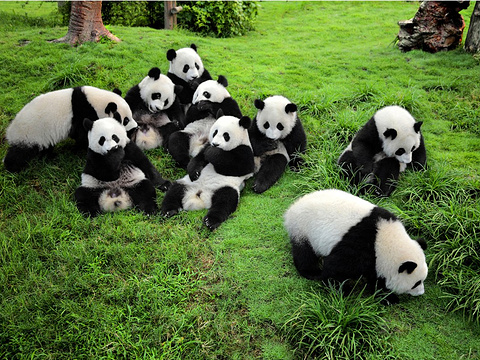
Chengdu is the panda capital of the world — home to the Giant Panda Breeding Research Base, where more than 100 giant pandas live in sprawling bamboo gardens, and the only city on Earth where you can watch a dozen pandas eat bamboo, nap in trees and roll downhill before your morning coffee. The pandas alone justify the trip; the teahouses, the Sichuan food and the laid-back rhythm of the city keep you there. This guide covers the Panda Base in detail — timing, tickets, what you will see, the volunteer programme — plus the best of the rest of Chengdu.
The Panda Base: When to Go and What to Expect
The Giant Panda Breeding Research Base sits 10 km north of central Chengdu. Entrance is 55 RMB (peak), 27 RMB (low season); the base opens at 07:30, and the golden rule of panda viewing is simple: pandas are most active in the cool morning hours, eating bamboo for hours on end, and mostly asleep by midday. Arrive at or before opening, take the shuttle or walk straight to the nursery and the 'Panda Kitchen' area first (where the youngest pandas are), then work your way through the enclosures as the tour groups arrive behind you.
What you will see: giant pandas of every age — mothers with cubs, teenagers wrestling in the trees, adults methodically munching bamboo (they spend 12–16 hours a day eating); red pandas, the smaller fox-like cousins, high in the trees; and, if you time it right (usually 08:30–10:30), keepers feeding the pandas and the famous 'panda kindergarten' sessions where cubs are released into their playground. The base is a genuine research institution, not a zoo — the pandas are healthy, the enclosures are huge, and the breeding programme has been spectacularly successful, growing the captive population from a few dozen to several hundred.
Practical notes: book tickets online (WeChat mini-programme or tour platforms) to skip the queue; take the metro (Line 3 to Panda Avenue station, then a shuttle or taxi) or Didi (30–40 minutes from the centre); allow 3 hours on site; and bring water and a hat — the base is large and open. The gift shop's panda merchandise is excellent, and the on-site restaurant is mediocre — plan lunch back in the city.
The Volunteer Programme: The Deeper Panda Experience
For the full experience, the base's volunteer programme lets you spend a day behind the scenes: cleaning enclosures, preparing bamboo, and watching the pandas up close under keeper supervision. The programme (about 700–800 RMB including lunch and a certificate, booking via the official channels or agencies months ahead) is a half-day to full-day commitment, and the memories — a panda rolling over to look at you through the fence, the sound of a bamboo breakfast — are the kind that end up in travel books.
If volunteering is booked out, the next best thing is the 'panda keeper' experience offered by the Dujiangyan Panda Base, an hour west of Chengdu — smaller, quieter, and with the same behind-the-scenes access. Both programmes fill up weeks in advance; book as early as you can.
Chengdu Beyond the Pandas: Teahouses and Temples
Chengdu's second great pleasure is doing nothing, and the city has perfected it: the teahouse. People's Park, the city's living room, holds the famous Heming Teahouse — bamboo chairs, spittoon-service tea masters, ear-cleaners with their terrifying tools, and chess players who have been coming for decades. Order a cup of jasmine or Sichuan green tea (15–30 RMB) and sit for an hour; it is the single most authentic Chengdu experience. The Wenshu Monastery, a serene Buddhist complex, has a beautiful teahouse and vegetarian restaurant; the Qingyang Palace and the newly restored Kuanzhai Alley offer the polished tourist version of the same culture.
History and culture: the Jinli Ancient Street is the picturesque old street (touristy but lovely at night); the Sichuan Opera at Shufeng Yayun includes the legendary face-changing (bian lian) performance; and the Sanxingdui Museum, an hour north, houses the mysterious bronze masks of an ancient Shu civilization that predates the written record — one of China's most fascinating museums, worth the trip for serious history lovers.
Sichuan Food: The Full Immersion
Chengdu is a UNESCO City of Gastronomy, and eating here is the trip's third pleasure. The essentials: hotpot (huoguo) — the numbing, spicy broth with tripe, beef and vegetables, best at the big chains (Haidilao, Shu Daxia) or a local lane joint; mapo tofu, twice-cooked pork, dan dan noodles, and the city's signature snacks — chuanchuan (skewers), cold rabbit head, and the incredible breakfast of bean jelly and dumplings. The rule of Sichuan food: it is not just hot — it is 'ma la' (numbing and spicy), the Sichuan pepper's tingle adding a dimension no other cuisine has.
Where to eat: the Yulin neighbourhood, the Kuanzhai side lanes, and any street with a long local queue. Say 'bu la' (not spicy) if you need milder versions; say nothing and you will be baptized in fire. And the teahouse ritual after dinner — a pot of jasmine tea to settle the stomach — is non-negotiable.
Two-Day Chengdu Plan
- Day 1 — Panda Base at opening (07:30), lunch back in the city, People's Park teahouse, Sichuan Opera with face-changing at night
- Day 2 — Wenshu Monastery morning, Jinli Ancient Street and Kuanzhai Alley, afternoon hotpot (go early — the queues are legendary), evening stroll along the Fu River
- Optional Day 3 — Leshan Giant Buddha (the 71-metre cliff Buddha, 1.5 hours by train) or Dujiangyan and Qingcheng Mountain (2 hours, the ancient irrigation system and the Taoist mountain)
Chengdu pairs the world's most charming animals with one of China's most livable cities — slow, warm, food-obsessed and proud of it. Between the pandas, the teahouses and the hotpot, you will leave with your heart (and your spice tolerance) permanently changed. Our Chengdu Travel Guide and the Sichuan travel pages cover the full region.
Sichuan Beyond Chengdu: The Province Worth Two Trips
Chengdu is the gateway to a province that could occupy a traveler for months, and a few additions transform a panda trip into a Sichuan itinerary. Leshan, 1.5 hours south by train, holds the world's largest stone Buddha — the 71-metre cliff-carved Maitreya, begun in 713 AD, whose toes alone can hold a dozen people; the cliffside staircase to its base is the classic view, and the river cruise from the opposite bank shows the whole statue at once (ticket 80 RMB, cruise about 70 RMB). Dujiangyan, an hour northwest, is the 2,300-year-old irrigation system that still waters the Chengdu plain — a masterpiece of ancient engineering, now a beautiful riverside park with the original fish-mouth diversion and the Anlan suspension bridge (80 RMB); pair it with Qingcheng Mountain, the birthplace of Taoism, a serene forested peak with temples and teahouses (80 RMB).
For the deeper Sichuan, the options multiply: Emeishan, the sacred Buddhist mountain (160 RMB, four days by pilgrimage path or two with cable cars, sunrise from the Golden Summit at 3,099 metres), the Jiuzhaigou valley (169 RMB, the turquoise lakes and waterfalls that are among China's most photographed landscapes — a 2-hour flight or the new rail connection), and the western Sichuan highlands — the Tibetan areas of Kangding, Daocheng and the grasslands, where the plateau scenery rivals Tibet itself. And the Sichuan Opera's face-changing and fire-spitting performances, which Chengdu's Shufeng Yayun runs nightly, are the province's theatrical signature.
Plan at least two Sichuan visits: one for Chengdu, Leshan and Dujiangyan (4–5 days), one for Jiuzhaigou and the western plateau (5–7 days, best in autumn). The province is China's most complete travel package — pandas, history, food, mountains and Buddhism in one.
Chengdu Practicalities: Transport, Seasons and Budget
Getting there: Chengdu Tianfu International Airport (TFU, the huge new hub 50 km southeast) and the older Shuangliu Airport (CTU) both connect every major Chinese city and many Asian hubs; the metro reaches Tianfu in about an hour, Shuangliu in 40 minutes. The high-speed rail station (Chengdu East) links Chongqing (1.5 hours), Xi'an (3.5–4 hours), Guiyang, Kunming and Wuhan. The metro (Line 3 reaches the Panda Base, Line 2 the city centre, Line 4 the old town's west) plus Didi cover the rest; the city is flat and walkable, and the shared bikes are everywhere.
Seasons: spring (March–May) and autumn (September–November) are the sweet spots — mild, dry and comfortable. Summer is hot and humid with monsoon rains; winter is cold, grey and damp (but the hotpot weather). Budget: Chengdu is cheaper than Beijing or Shanghai — budget travelers manage on 350–500 RMB/day, mid-range on 700–1,200 RMB, including the panda base, meals and hotels. The teahouse culture is the great free pleasure: a 15–30 RMB pot of tea buys an entire afternoon of chairs, chess and people-watching.
Chengdu Itinerary Options: 2, 4 and 7 Days
- 2 days — Panda Base morning, People's Park teahouse, Jinli and Kuanzhai, Sichuan Opera, one hotpot night
- 4 days — add Leshan Giant Buddha day trip, Dujiangyan and Qingcheng Mountain day trip, and a full food crawl through the Yulin neighbourhood
- 7 days — add Emeishan (2 days) or a flight to Jiuzhaigou (2–3 days), or the western Sichuan loop to Kangding and the grasslands
- Family tip — the Panda Base, the Chengdu Zoo's other animals, and the Wuhou Shrine's Three Kingdoms story make Chengdu the best family city in China
- Foodie tip — take a Sichuan cooking class (the city is full of them, 300–500 RMB), and you will go home able to make mapo tofu that actually tingles
Chengdu is the city where China slows down — where the pandas nap, the tea flows and the hotpot simmers until midnight. Between the bamboo gardens, the temple courtyards and the smoke of a thousand street kitchens, it makes the case for the easy life better than any city in the country. Our Chengdu Travel Guide, the Sichuan hotels and the Chengdu–Emeishan itineraries have the full detail.
Chengdu's Tea Culture and the Art of Doing Nothing
No understanding of Chengdu is complete without the teahouse, because the teahouse is the city's operating system. The tradition runs deep: Chengdu has been a tea city for over a thousand years, and the 'three-piece set' — the covered cup (gaiwan), the saucer and the lid — is the local invention, designed to keep the tea hot, the leaves steeping and the drinker's thumb free to clink for a refill. The ritual is unhurried: a pot of jasmine or Sichuan green tea arrives with a thermos of hot water, and the afternoon dissolves in chess games, mahjong tiles, ear-cleaning services (yes, with the long metal tools — try it, it is oddly wonderful) and the city's famous conversation.
The classic venues: People's Park's Heming Teahouse (the oldest and most famous — loud, essential, touristy in the best way), the Wenshu Monastery teahouse (temple calm, the monks' own blend), the riverside teahouses along the Fu River (bamboo chairs under the willows), and the modern courtyard teahouses of Kuanzhai Alley (polished, photogenic). The rules are simple: take a seat, order, pay the 15–40 RMB, and stay as long as you like — nobody hurries anyone in a Chengdu teahouse, and the only faux pas is leaving before your tea is weak.
The deeper lesson: Chengdu's famous 'slow life' (man shenghuo) is not laziness — it is a social technology. The teahouse is where deals are made, marriages are arranged, and philosophies are argued; the city's happiness rankings, the province's quality-of-life surveys and the sheer number of parks, tea tables and chess boards all reflect the same commitment: time together, done properly. Sit for an hour, and you will understand why the pandas chose this city — and why Chengdu is consistently rated one of China's most livable places.
Sichuan Cuisine Deep Dive: The Eight Flavours Explained
Sichuan cuisine is often reduced to 'spicy', which misses the entire point: the cuisine's genius is the layering of eight flavours — spicy (la), numbing (ma), sweet (tian), sour (suan), salty (xian), bitter (ku), fragrant (xiang) and umami (xianwei) — composed so that every dish hits several at once. The two signature ingredients: the Sichuan pepper (huajiao), whose numbing tingle is not heat but a physical vibration on the tongue, and the fermented broad-bean paste (doubanjiang) of Pixian, the 'soy sauce of Sichuan', which gives the cuisine its deep, smoky, savoury backbone.
The essential dishes, in order of importance: mapo tofu (the classic — soft tofu, minced beef, doubanjiang, the numbing finish), twice-cooked pork (huiguorou, the home-cooked classic with leeks and doubanjiang), dan dan noodles (the street legend), gongbao chicken (kung pao — peanuts, dried chilies, the sweet-sour-numbing balance), boiled beef in chilli oil (shuizhu niurou, the 'water-boiled' ritual), fish-fragrant eggplant (yuxiang qiezi, with no fish in it — the 'fish-fragrant' sauce is the name of the seasoning), and the cold dishes — husband-and-wife lung slices (fuqi feipian, actually beef offal), and smashed cucumber with garlic. Every one of them is a masterclass in balancing the eight flavours.
The hotpot deserves its own paragraph: the dual broth (spicy and clear), the sesame-oil dipping sauce, the raw ingredients — beef tripe, lotus root, enoki mushrooms, baby potatoes — and the ritual of communal cooking over the simmering pot. The Chengdu rules: order the medium spice on your first visit ('bu la' exists but robs the experience), never eat the peppercorns whole (they numb), and drink the warm soy milk or the local tea between bites — the 'cooling' counterbalance to the heat. By the end of your trip, the numbing tingle will feel like coming home.
Chengdu's Neighbourhoods: Where to Stay and Wander
Chengdu's districts each carry a personality. The old city centre — around Chunxi Road, the People's Park and the Wenshu Monastery — is the classic base: the teahouses, the temples and the food streets are all on foot, the metro crosses it, and the hotel range spans courtyard guesthouses to international chains. The Southern New District (around the Global Centre and the Financial City) is modern Chengdu — malls, office towers and the huge Global Centre complex, a sensible base for business or family stays near the airport lines. The Kuanzhai Alley and Jinli areas offer boutique hotels inside the old streets — touristy but atmospheric, ideal for a short stay. And the Yulin neighbourhood, west of the old city, is the food-and-arts quarter — the city's best street food, indie galleries and the night market, perfect for a second base if you are staying a week.
Wander these four routes: the Wenshu Monastery–People's Park loop (temples, teahouses, street chess), the Kuanzhai–Jinli–Fu River circuit (old streets, opera, river), the Yulin food crawl (dinner to midnight), and the Panda Avenue north run (base, bamboo gardens, and the north suburbs' parks). Each route is walkable in half a day, and together they give you the whole city.
Chengdu with Children: The Family Itinerary
Chengdu is China's best family city, and the reasons are obvious: pandas first (the base is a full morning and endlessly entertaining), then the Chengdu Zoo's tigers and elephants, the aquarium and the Science Museum for rainy days, the Wuhou Shrine's Three Kingdoms stories (the children's favourite legends), and the teahouse experience — kids love the ear-cleaning and the chess boards. The food is family-friendly with the 'bu la' (not spicy) ordering rule, and the city's parks and plazas are safe and stroller-friendly. The family planning notes: go to the panda base at opening (the cubs' morning feeding is the show), book a hotel with a pool, and keep one afternoon free for doing nothing — the Chengdu way — in People's Park.
Chengdu Weather, Health and the Practical Details
Chengdu's climate is gentle but distinctive: the 'celestial capital' nickname comes from its frequent overcast days — the basin traps the clouds, giving the city its soft light and its reputation for the region's best skin (locals joke about it). The practical consequences: summer heat is humid and sticky (30–35°C), winter is damp and cold (5–10°C, rarely freezing), and spring and autumn are the golden windows (15–25°C, dry, clear). Rain is frequent year-round — pack a compact umbrella; the city's vendors sell them everywhere. Air quality is generally good, with occasional winter haze; the pandas, notably, thrive on the mildness.
Health notes: the food is the main adventure — build spice tolerance gradually and keep 'bu la' (not spicy) in your vocabulary; the tap water is not drinkable (bottled water everywhere); the altitude is negligible (500 metres); and the local remedies — the herbal teas, the 'fire-clearing' soups — are worth trying at the medicine shops. The city is safe at all hours; the only hazards are the motorbikes on the pavements (look both ways) and the hotpot's boiling oil (mind the splash). For anything urgent, the West China Hospital is among China's best.
Chengdu FAQ and the Final Word
The questions travelers actually ask: Is Chengdu expensive? No — cheaper than Beijing or Shanghai across the board. Do I need to book the panda base? Yes, online, and the volunteer programme months ahead. Can I see pandas elsewhere? Dujiangyan base, an hour away, is smaller and quieter. Is Chengdu safe for solo travelers? Exceptionally — the teahouse culture makes solo dining and wandering effortless. When should I come? April–June or September–November for the weather; the base is wonderful in the mild months and the hotpot suits winter perfectly.
The final word: Chengdu is the city that makes the case for slowing down, and it does it with pandas, tea, fire and hospitality. Between the bamboo gardens, the temple courtyards and the thousand street kitchens, it delivers the easiest, warmest introduction to Sichuan — and to the China that knows how to live. Come for the pandas; stay for the teahouse; return for the hotpot. That is the Chengdu way.
Chengdu Shopping and Souvenirs: What to Bring Home
Chengdu's shopping is the souvenir collector's dream, and the best pieces are edible or wearable. The food souvenirs lead: Pixian doubanjiang (the fermented bean paste that defines Sichuan cooking — buy the real jarred version, not the tourist sachets), Sichuan pepper (huajiao, in whole or powdered form), the rose-flavoured pastries of the old city, the 'Dengying' beef jerky, and the famous Sichuan tea — jasmine, green and the 'Mengding' mountain teas. The craft souvenirs: Shu embroidery (the province's silk embroidery, museum-quality at the Shu Brocade Institute), panda-themed everything (the base's gift shop is the best), the lacquerware of the old workshops, and the bamboo weaving of the countryside.
Where to buy: the Jinli Ancient Street and Kuanzhai Alley have the atmospheric shops (tourist pricing — bargain gently); the Chunxi Road department stores and the Global Centre hold the fixed-price retail; the wet markets (the Daci Temple market, the Yulin food market) are where locals buy the tea, the spice and the bean paste; and the Shu Brocade Institute (Wenshu Monastery area) is the place for genuine embroidery with fair pricing. Ship the fragile pieces home (the shops arrange international courier), and pack the food in your checked luggage — the doubanjiang jar is the souvenir your kitchen will thank you for.
Frequently Asked Questions
What is the best time to see pandas in Chengdu?
Morning — the base opens at 07:30 and pandas are most active before 10:00. Arrive at opening, go to the nursery first, and you will see pandas eating, playing and climbing. By early afternoon most adults are asleep.
How much does the Chengdu Panda Base cost?
Entry is 55 RMB in peak season, 27 RMB off-peak. The volunteer programme costs about 700–800 RMB including lunch and a certificate. Metro Line 3 + shuttle or Didi (30–40 minutes) gets you there.
Can I hold or touch a panda?
No — touching adult pandas is not permitted at the Chengdu base (they are wild animals with formidable teeth and claws). The volunteer and keeper programmes let you work alongside them at safe distances. Some special programmes historically allowed cub contact, but current policy is observation-only.
How long do I need at the Panda Base?
Plan 3 hours for the full circuit. If you arrive at opening you can see the morning feeding, the nursery, the red pandas and the adults before the crowds peak around 10:30.
What else should I do in Chengdu?
Teahouses (People's Park is the classic), Sichuan hotpot, the Sichuan Opera's face-changing show, Wenshu Monastery, Jinli Street, and — with extra days — the Leshan Giant Buddha and Dujiangyan. Chengdu's food scene alone justifies three days.
Plan this trip with our China team
Tickets, hotels, trains and local arrangements — free booking help, reply within hours.